What is the 350 g-a-day vegetable guideline? Easy ways to achieve it

Summary of this article
The guide for one day's 350 g of vegetables is 120 g or more of green-and-yellow vegetables plus 230 g of other vegetables. The average Japanese intake is about 256 g, 94 g short, and it's especially serious among people in their 20s at 231 g for men and 212 g for women. One dish is about 70 g, equivalent to five dishes' worth. We explain realistic cooking methods to achieve it, plus a sample day's menu, covering how to work it into breakfast, veggie-first eating, and using frozen and dried vegetables.
Have you ever heard the phrase "eat 350 g of vegetables a day"?
This figure is the target value set by the Ministry of Health, Labour and Welfare in its health-promotion guideline "Health Japan 21." But even told 350 g, it's hard to picture just how much that actually is. In fact, the average Japanese vegetable intake is about 256 g — a full 94 g short of the 350 g target. People in their 20s are further behind, at about 231 g for men and 212 g for women.
The breakdown of 350 g of vegetables is a guide of 120 g or more of green-and-yellow vegetables and 230 g of other vegetables. Green-and-yellow vegetables include spinach, carrots, kabocha squash, tomatoes, and peppers. Other vegetables (light-colored vegetables) include cabbage, Chinese cabbage, cucumber, eggplant, daikon, and onion.
So, just how much is 350 g in practice?
TOC
Tips for working 350 g of vegetables into your meals
"There's no way I can eat that many vegetables!"
If that's what you thought, rest easy. In fact, one side dish holds about 70 g of vegetables. In other words, eat five vegetable dishes a day and you hit the target. Put that way, it's surprisingly realistic.
Since the average Japanese intake is about 256 g, just being mindful of "one more dish" of vegetables brings you much closer to the target. With a dish that uses plenty of vegetables, like a stir-fry, a single item can provide two dishes' worth (about 140 g).
Here are a few tips for increasing your vegetable intake in everyday meals.
Is Japanese vegetable intake below average? The latest data and improvement measures
Boost your vegetable intake even on busy mornings! Simple techniques you can do in 5 minutes
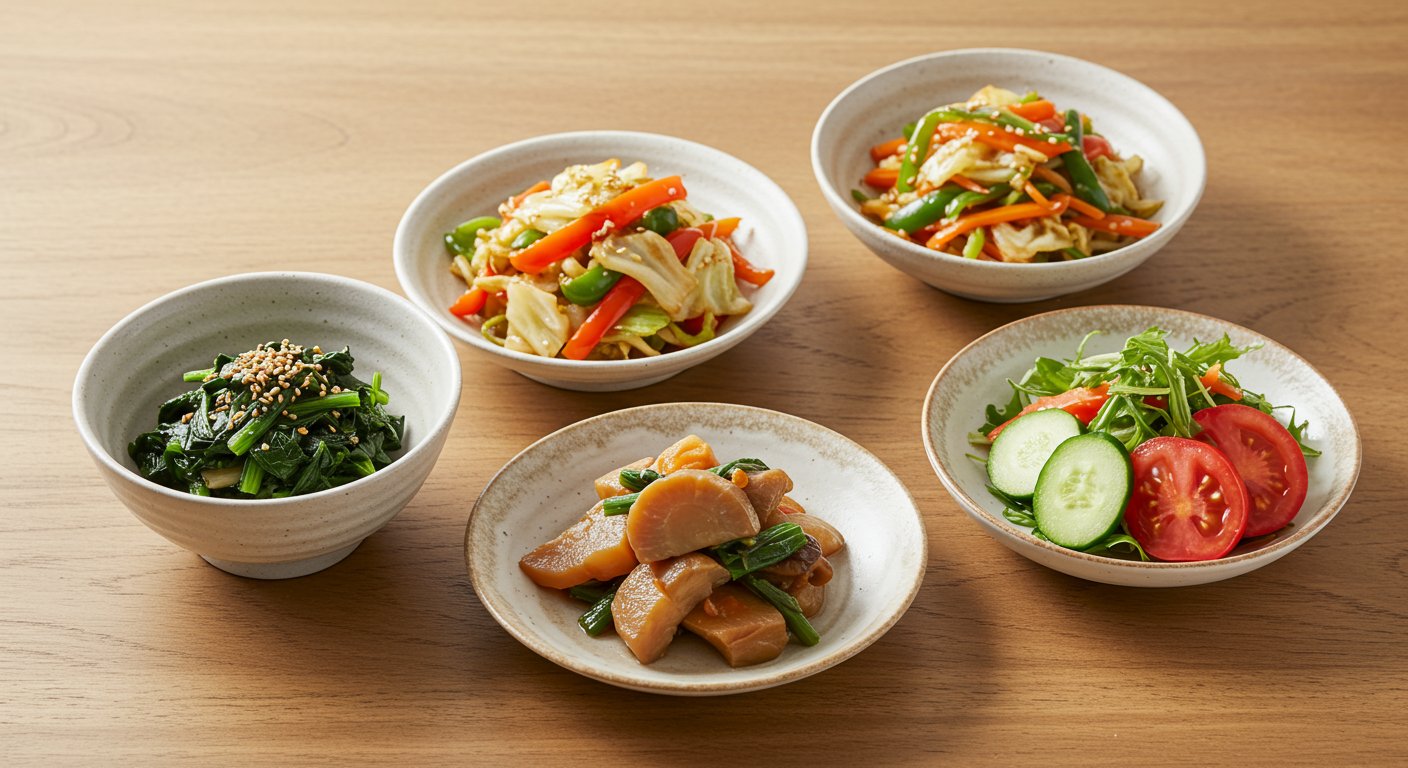
Work vegetables into breakfast
It's easy to keep breakfast simple, but getting vegetables in here matters. Just topping toast with tomato or avocado, drinking vegetable juice, or making a hearty miso soup lets you get vegetables easily from the morning on.
Even on a busy morning, just microwaving vegetables you cut the day before is an effective approach.
Build the habit of eating vegetables first
Eating vegetables first also makes it easier to feel satisfied after meals.
Chewing vegetables also brings a sense of fullness, so you naturally control your overall food intake.
Cooking methods that easily boost vegetable intake
Just tweaking how you cook vegetables can greatly increase how much you eat!
When raw vegetables alone are too much to finish, cooking with heat is recommended. Heating reduces the bulk of vegetables, making it possible to eat more. For example, cabbage is about 100 g for 1/8 of a head raw, but heating reduces the bulk and makes it easier to eat.
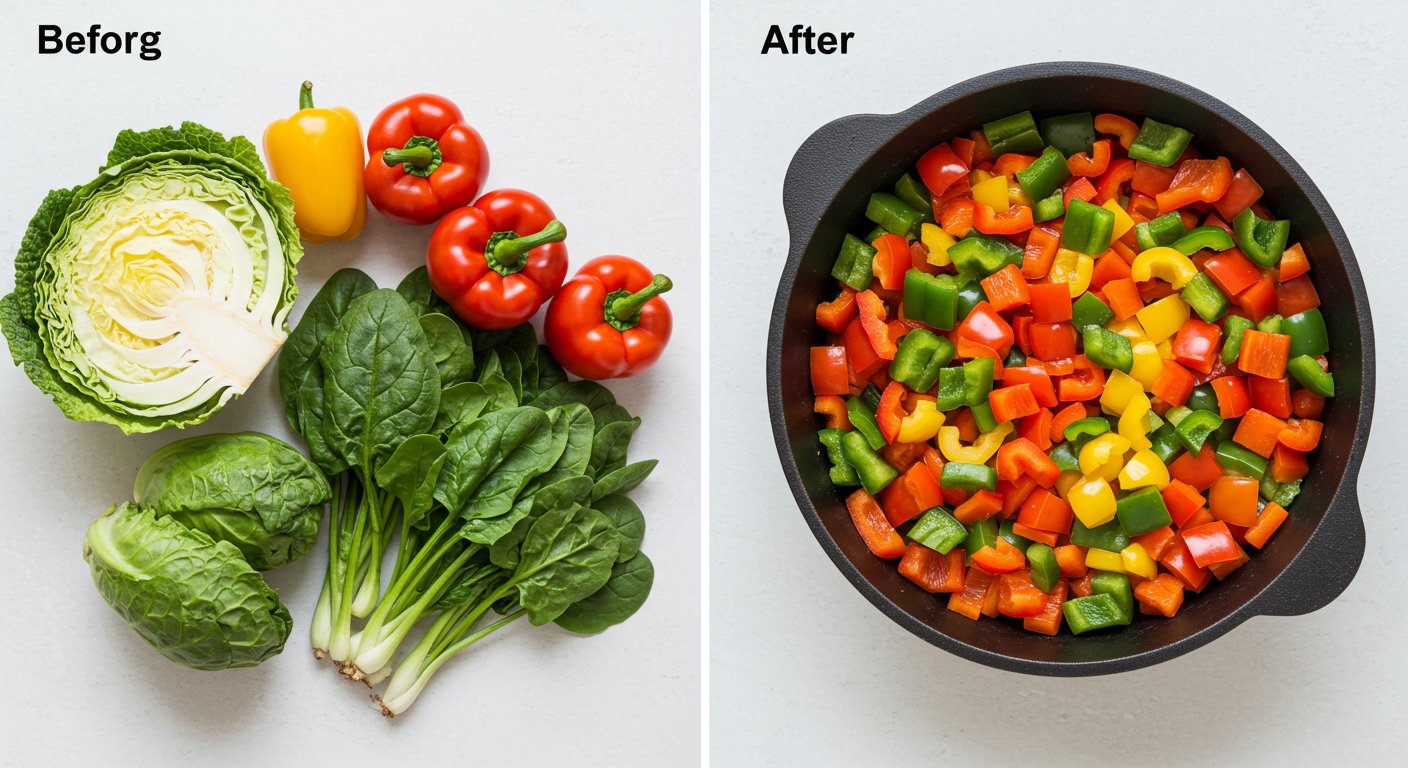
Use frozen vegetables
Preparing fresh vegetables every day amid a busy routine is hard. That's when frozen vegetables become a strong ally.
Pre-cut frozen vegetables can be used straight after thawing, saving time, and they keep long-term so you can make vegetable dishes anytime. The idea of a "frozen savings account" is handy too. Cut and freeze vegetables, and you can use them easily even when you're busy.
Spinach and broccoli in particular don't lose much nutritional value when frozen, so make active use of them.

Make use of dried vegetables
Amid a busy routine, washing and cutting vegetables takes surprising effort. That's where dried vegetables come in handy.
Dried vegetables can be used just by rehydrating with water or hot water, keep for a long time, and can be stocked at room temperature. Just add them straight to everyday dishes like miso soup, soup, stir-fries, or curry to easily add vegetables.
Another plus is that you can enjoy a variety of vegetables regardless of season. Onions, carrots, and spinach in particular keep a good texture even after rehydrating and don't lose much nutrition, making them easy to work into daily meals. Even on busy mornings or for those living alone, keeping dried vegetables on hand lets you achieve a nutritionally balanced meal without much effort.

Ways to make vegetables easier to eat
If you're not fond of vegetables, try varying the cooking method and seasoning.
For example, mincing vegetables into hamburger steak or meat sauce, blending them into smoothies, or making a vegetable-packed soup makes them easier to eat. Eating them with a favorite dressing or dip can also make the natural bitterness or grassiness of vegetables less noticeable.
That said, seasonings like dressings can contain a lot of salt, so be careful not to overuse them. Making use of citrus like lemon and of spices is also recommended.
Benefits of eating vegetables
What are the benefits of eating plenty of vegetables?
Vegetables are rich in vitamins, minerals, and dietary fiber. These nutrients are essential to maintaining our health.
8 Effective Ways to Relieve Constipation Caused by Vegetable Shortage
Change the Start of Your Day! The Relationship Between Dried Vegetables and Dietary Fiber
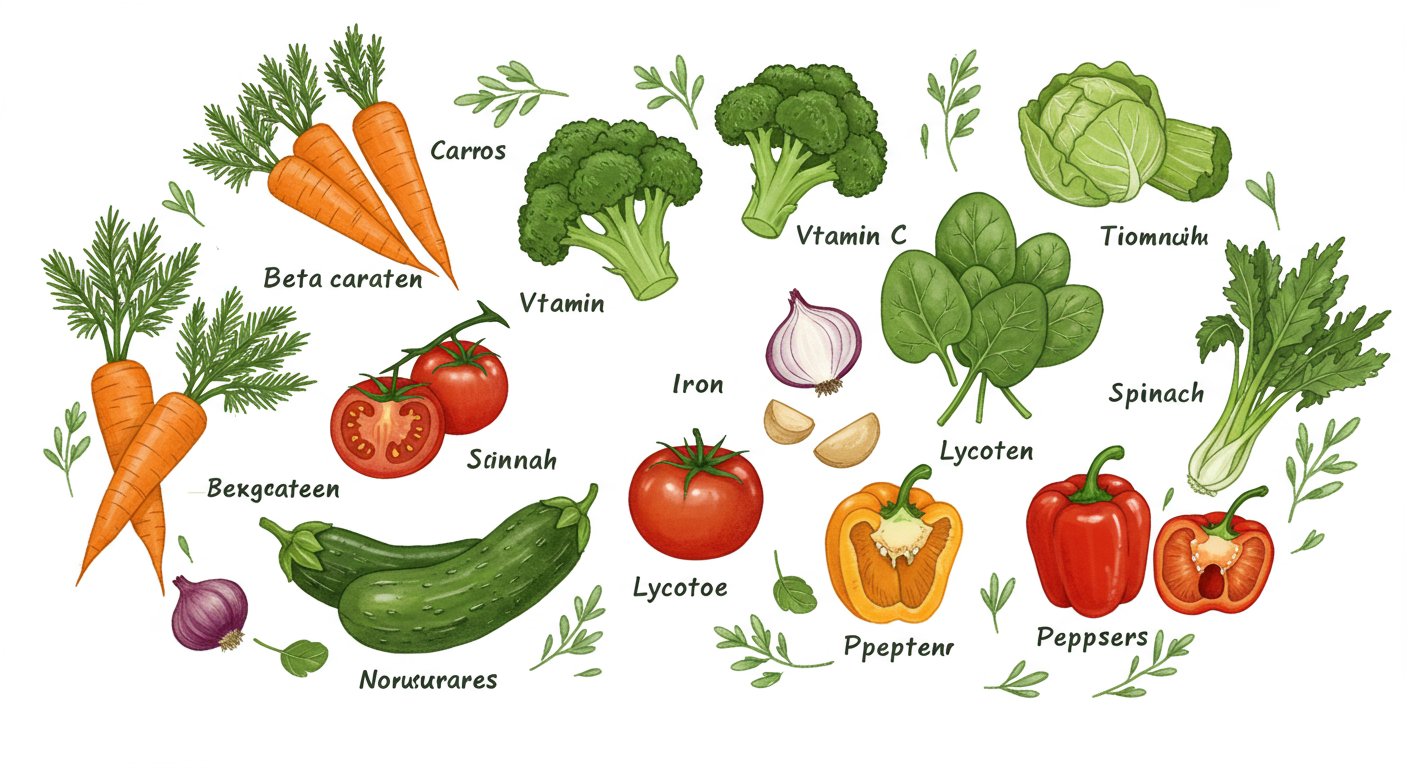
Improving your everyday diet
Getting enough vegetables is very important for maintaining health. The vitamins, minerals and dietary fiber in vegetables help keep the body in good condition.
People who eat more vegetables also tend to find it easier to avoid consuming too much fat and salt, which leads to more balanced meals. Including vegetables in your daily meals helps you improve your diet without strain.
A treasure trove of nutrients
The nutrients in vegetables are truly diverse.
Vegetables contain a wide range of nutrients: for example, beta-carotene abundant in carrots and spinach, vitamin C rich in green peppers and broccoli, potassium plentiful in spinach and kabocha squash, and calcium found in komatsuna and shungiku.
Burdock, okra and cabbage also contain a lot of dietary fiber.
A sample menu to hit 350 g of vegetables in a day
So what would a day's menu look like if you actually took in 350 g of vegetables? Here are sample meals for morning, noon, and night. Use them as a reference to plan a menu that fits your own lifestyle.
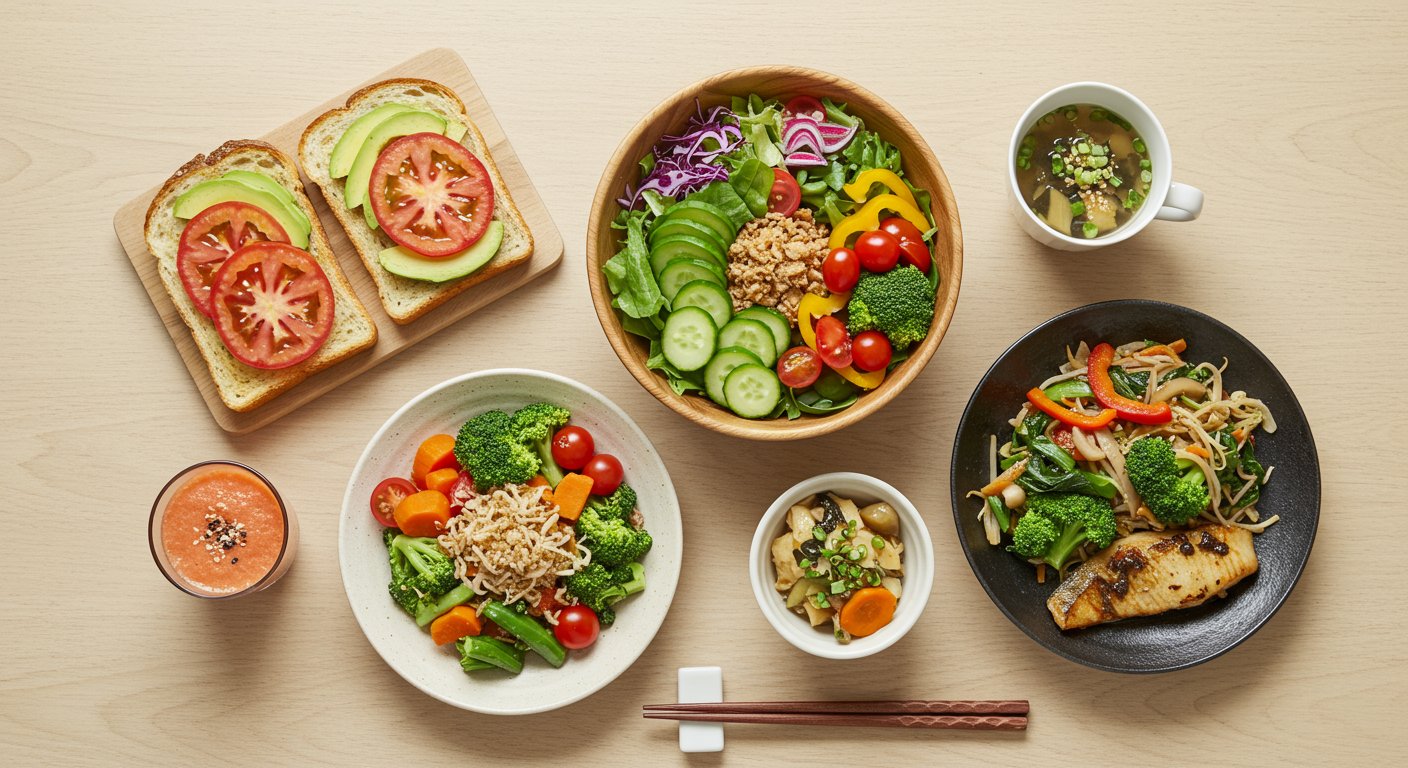
Breakfast vegetable menu (about 70 g)
Mornings are often short on time. Here's a menu that lets you get vegetables easily even then.
For example, just eating 1/4 of a tomato (about 40 g) and three florets of broccoli (about 40 g), raw or boiled, adds up to a good amount. Topping toast with tomato or avocado, or making a hearty miso soup, is also a good idea.
On mornings with no time, the trick is to use vegetables you prepared the day before.
Lunch vegetable menu (about 120 g)
For lunch, a menu that lets you get vegetables easily — such as a salad or a vegetable-packed noodle dish — is recommended.
Get around 120 g of vegetables total, such as simmered komatsuna (about 60 g) and a cabbage-and-onion salad (about 60 g). If you eat out often, one approach is to choose a set meal and add a side dish, or use a salad bar.
If you pack a bento, making a larger batch of vegetable dishes the night before is handy.
Dinner vegetable menu (about 160 g)
Dinner tends to allow relatively more time, so make dishes that use plenty of vegetables.
Aim for around 160 g of vegetables total, such as a stir-fry (cabbage, onion, etc., about 100 g) and kinpira renkon (about 60 g). Picture one dish with vegetables as the star and one vegetable side dish added.
Getting plenty of vegetables at dinner makes it easier to hit the day's vegetable target.
Summary: 350 g of vegetables is more achievable than you'd think!
The goal of 350 g of vegetables a day may feel daunting at first. But if you think "one side dish = 70 g of vegetables," it's a realistic target you can hit with five vegetable dishes a day.
Work vegetables into breakfast, eat vegetables first at meals, reduce their bulk by heating, use frozen vegetables — with little tweaks like these you can boost your vegetable intake dramatically.
Eating plenty of vegetables lets you get a good balance of nutrients such as vitamins, minerals and dietary fiber.
Why not start today by being mindful of "one more dish of vegetables" and aim for a healthier diet?
- Vegetable powder cost-performance comparison! 7 points on how to choose and use
- How to eat vegetables during hay fever season