Solve Vegetable Shortage Even with Convenience-Store Food! 5 Smart Ways to Supplement

Summary of this article
As 5 ways to resolve vegetable shortfall even with convenience-store food, we introduce vegetable juice at breakfast, combining salad chicken with a vegetable salad, hearty soups, making use of onigiri and small side dishes, and vegetable sticks or dried vegetables as snacks. In a survey by the Adult Diet Research Institute, 43.7% of frequent convenience-store-lunch users had unbalanced nutrition, and we explain how to choose with the PFC balance in mind.
In busy daily life, don't you end up relying on easy convenience-store food?
The daily vegetable intake recommended by the Ministry of Health, Labour and Welfare is 350g. However, the average intake among Japanese people stays at about 280g, and the reality is that many people fall short of the necessary amount. Those with a convenience-store-centered diet in particular are, before they know it, often falling into serious vegetable shortfall.
What is the 350 g-a-day vegetable guideline? Easy ways to achieve it
According to a survey by the Adult Diet Research Institute, about 43.7% of people who frequently use convenience-store lunches have a nutritionally unbalanced diet, with especially prominent extreme meal patterns such as carbohydrate-centered combinations like "cup noodles and onigiri," sweet bread alone, or salad alone.

Vitamins, minerals and dietary fiber tend to fall short, leading to an unbalanced diet.
But rest assured. If you make good use of convenience stores, resolving vegetable shortfall is entirely possible.
TOC
5 smart ways to resolve vegetable shortfall with convenience-store food
Convenience stores, as the name ("convenient shop") suggests, have an abundant selection. Depending on how you choose, you can make a meal with balanced nutrition.
From here, we introduce 5 concrete ways to resolve vegetable shortfall even with convenience-store food. All are easy to practice, so please try incorporating them from tomorrow.
1. Incorporate vegetable juice at breakfast
Many people have no time for vegetables in the morning. At such times, vegetable juice is recommended.
Vegetable juice available at convenience stores comes in many kinds, and 100% vegetable juice has few additives and lets you easily get vegetable nutrients. Simply making a habit of drinking vegetable juice with your breakfast bread or onigiri helps resolve vegetable shortfall.
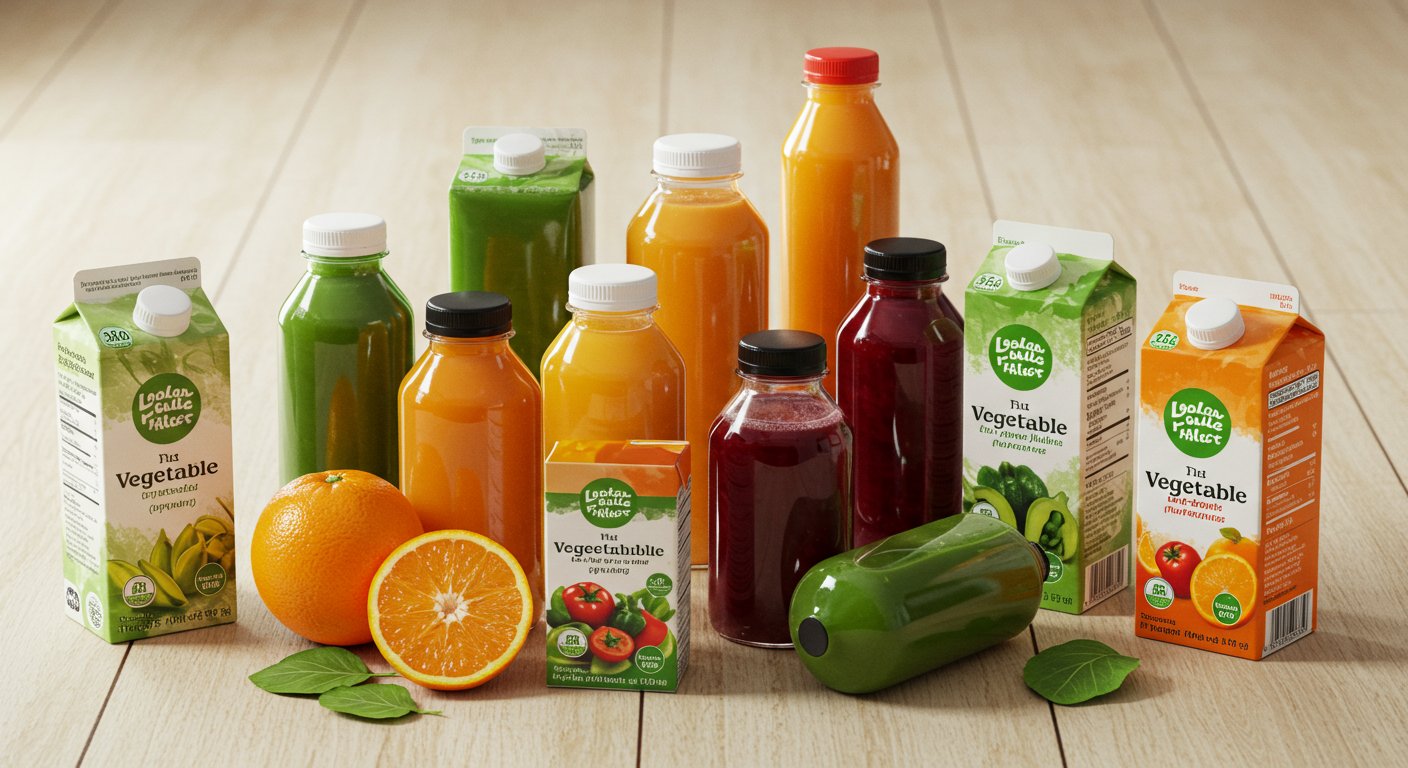
That said, some products are high in sugar, so if you're concerned about calories or sugar, check the nutrition label.
2. Combine salad chicken with a vegetable salad
Salad chicken, now a convenience-store staple, is high-protein and low-calorie, popular even with those on a diet. Combining it with a vegetable salad lets you get protein and vegetables at once.
Choosing salad dressing served on the side and adjusting the amount also enables calorie control. Also, choosing a salad with seaweed or corn improves the nutritional balance further.
3. Get vegetables easily with a hearty soup
Convenience stores also sell many soups packed with vegetables. In winter especially, they warm the body too—two birds with one stone.
Choosing tonjiru, minestrone, corn soup, or the like with plenty of vegetables is good. These can also be used as a snack, and making a habit of choosing soup over sweet bread when a little hungry naturally increases vegetable intake.
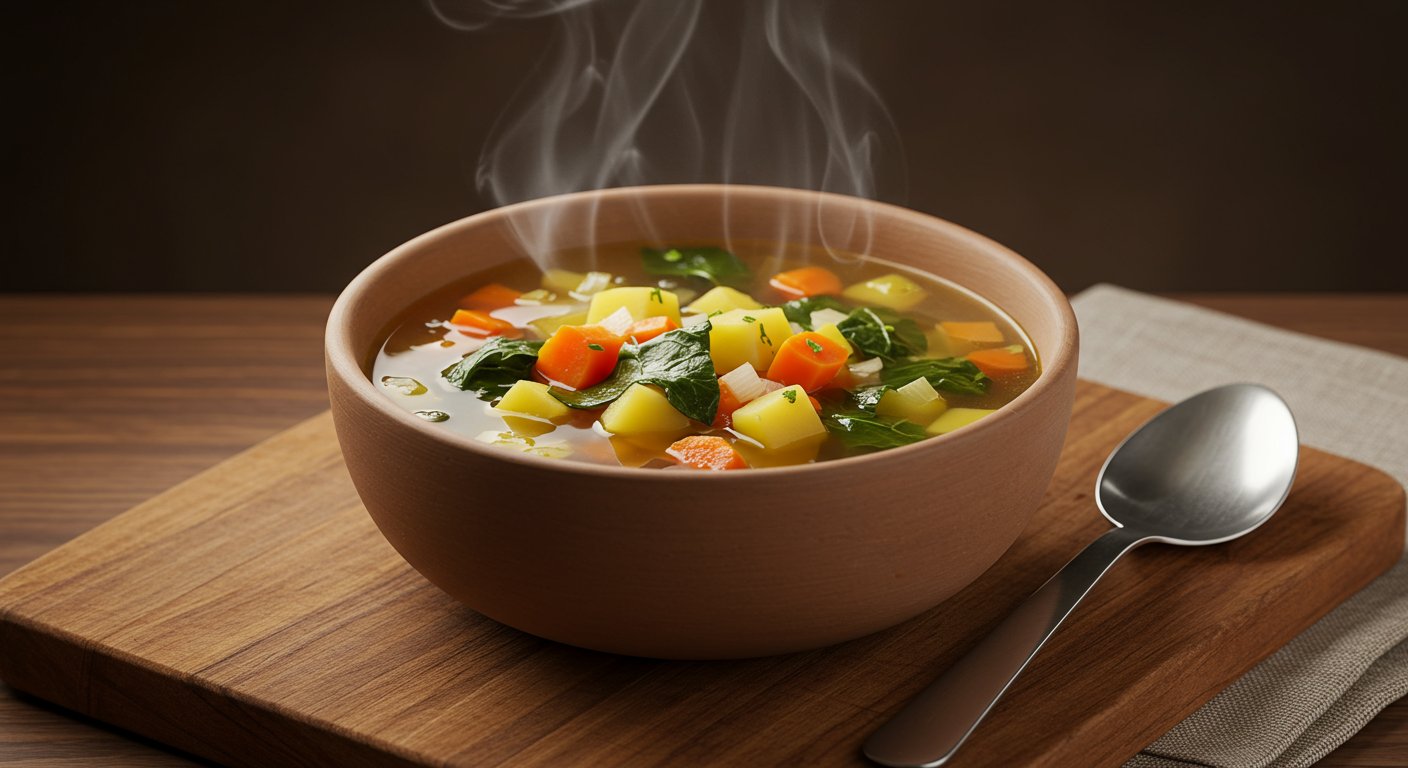
Some hearty soups let you get about 70–100g of vegetables per serving, covering roughly a quarter to a third of the daily 350g vegetable-intake goal. They're also ideal as a dish for lunch or dinner on a busy day.
4. Smart combinations of onigiri with small side dishes and prepared foods
Onigiri alone tilts toward carbohydrates, but convenience stores have a good selection of small-dish menus such as ohitashi, simmered dishes, and dressed salads.
Combining one or two onigiri with a small side dish makes a balanced meal. Greens ohitashi, simmered kiriboshi daikon, and simmered hijiki in particular are rich in dietary fiber and effective for resolving vegetable shortfall.
The "onigiri + small side dish" combination is close to Japan's traditional "one soup, three sides" concept, and it's easy to keep nutrition balanced too.
5. Use vegetable sticks or dried vegetables as a snack
When a little hungry, choosing convenience-store vegetable sticks or cut fruit as a snack is also a smart way.
Recent convenience stores have a good selection of vegetable sticks—cucumber, carrot, celery, and the like—cut ready, along with healthy nibbles such as cherry tomatoes and edamame. Using these lets you get vegetables even as a snack.
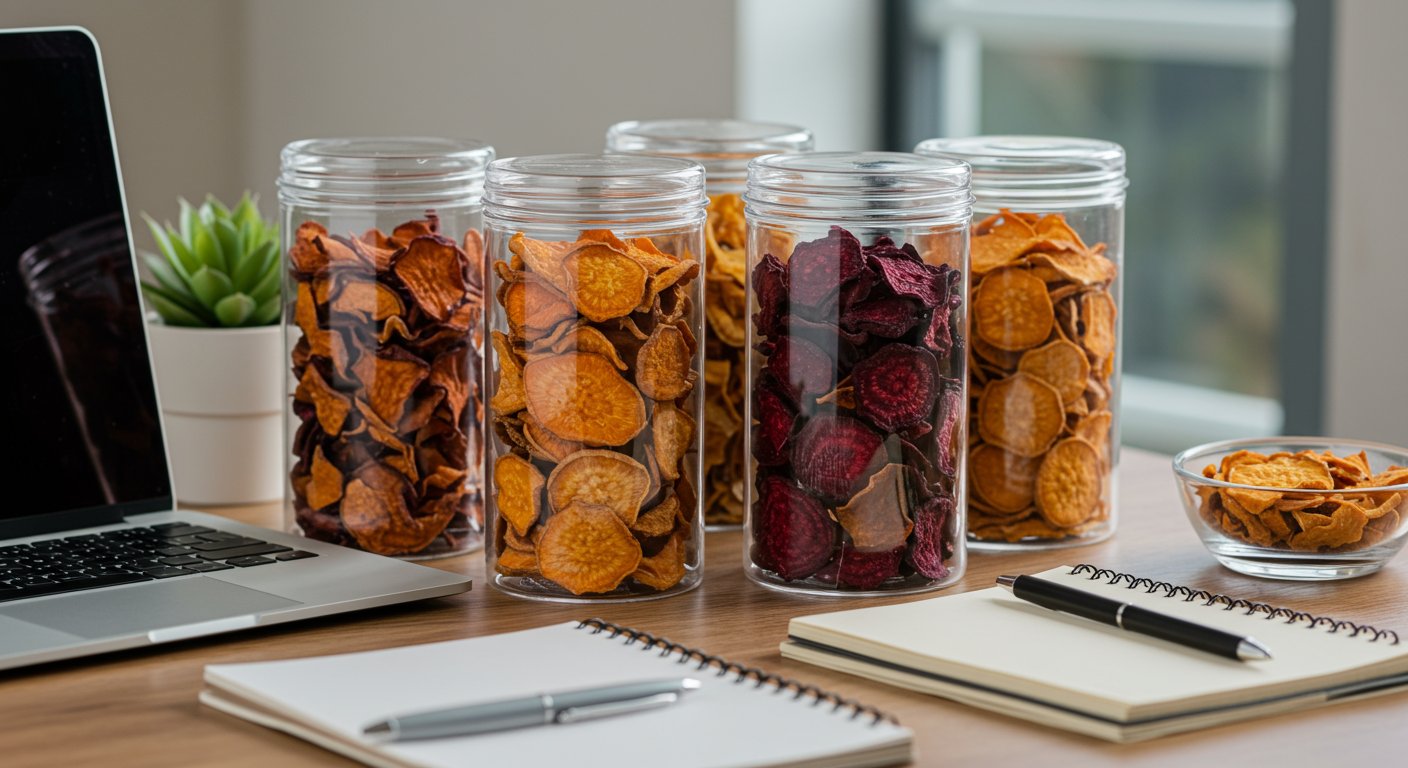
Also, dried vegetables and dried fruit are compact and easy to carry, ideal as a snack during desk work. Using the office-oriented dried vegetable service we offer lets you get vegetables easily even at the office.

3 points for balancing the nutrition of convenience-store food
Now that you know the knack for getting vegetables with convenience-store food, we introduce further points for balancing nutrition.
1. Make a habit of checking the nutrition label
Foods sold at convenience stores always have a nutrition label. Information such as energy (calories), protein, fat, carbohydrate, and salt equivalent is listed, so make a habit of checking it.
What to watch for especially is foods that look healthy but are actually high in calories or fat. For example, drenching a salad in dressing can make it unexpectedly high in calories.
Looking at the nutrition label lets you get the nutrients you need without excess or shortfall.
2. Choosing foods with the PFC balance in mind
PFC balance refers to the balance of protein, fat, and carbohydrate. A common problem with convenience-store food is tilting toward carbohydrates and tending to run short on protein.
For example, an "onigiri + sweet bread" combination has too much carbohydrate. Be mindful of combining protein and vegetables in good balance, like "onigiri + salad chicken + vegetable salad."
As a tendency of the PFC balance of convenience-store food, the characteristics are: "protein falls short in most items," "carbohydrate is over in most items," and "some are unexpectedly high in fat even if low in calories."
3. Think about nutritional balance across the whole day
Achieving perfect nutritional balance in a single meal can be hard. What matters is balancing across the whole day.
If you couldn't get vegetables at breakfast, the approach of adjusting across the whole day's meals is called for—consciously getting more vegetables at lunch, dinner, or as a snack.
There's also a simple method called "hand-measure nutrition." Vegetables and protein such as meat are guided by about a palmful for one meal. Plant proteins like tofu are best taken at a guide of four palmfuls a day.
Practical points for a healthy diet even with convenience-store food
Finally, we summarize practical points for a healthy diet while making use of convenience-store food.
Convenience-store food has the image of "many high-calorie items," but in fact many low-calorie, diet-oriented products are sold too. Salad chicken, boiled eggs, and tofu are rich in protein and low in energy.
Vegetable-based salads and smoothies are also low-calorie and excellent in nutritional balance. Check the nutrition label on the product package and choose one with the ideal energy amount for you.
The merits of incorporating convenience-store food into a diet include the following four.
You can buy easily anytime
You can choose an amount suited to your hunger
There's a nutrition label, making meal management easy
No cooking effort, easy to keep up
Summary: you can resolve vegetable shortfall even with convenience-store food!
Even with a convenience-store-centered life, resolving vegetable shortfall is entirely possible with a little ingenuity.
Practicing the 5 methods introduced here—"using vegetable juice at breakfast," "combining salad chicken with a vegetable salad," "using hearty soups," "combining onigiri with small side dishes," and "using vegetable sticks and dried vegetables as snacks"—lets you increase your daily vegetable intake.
The daily 350g of vegetables recommended by the Ministry of Health, Labour and Welfare may feel hard to achieve all at once. But dividing it among breakfast, lunch, dinner, and snacks and getting it little by little should let you reach the goal without strain.
The convenience-store product lineup grows richer year by year, and health-conscious products are increasing too. While checking the nutrition label, choose the products that suit you.
Addressing a lack of vegetables helps balance your nutrition. Start eating vegetables smartly from the convenience store today and aim for a healthy diet!
The new common sense of health maintenance that vegetable intake from your 40s can change
[2025 edition] A thorough comparison of 7 vegetable-delivery services
10 Ways to Solve Vegetable Shortage That Even Busy People Can Practice
Learn about Office Yaoya
We have prepared materials
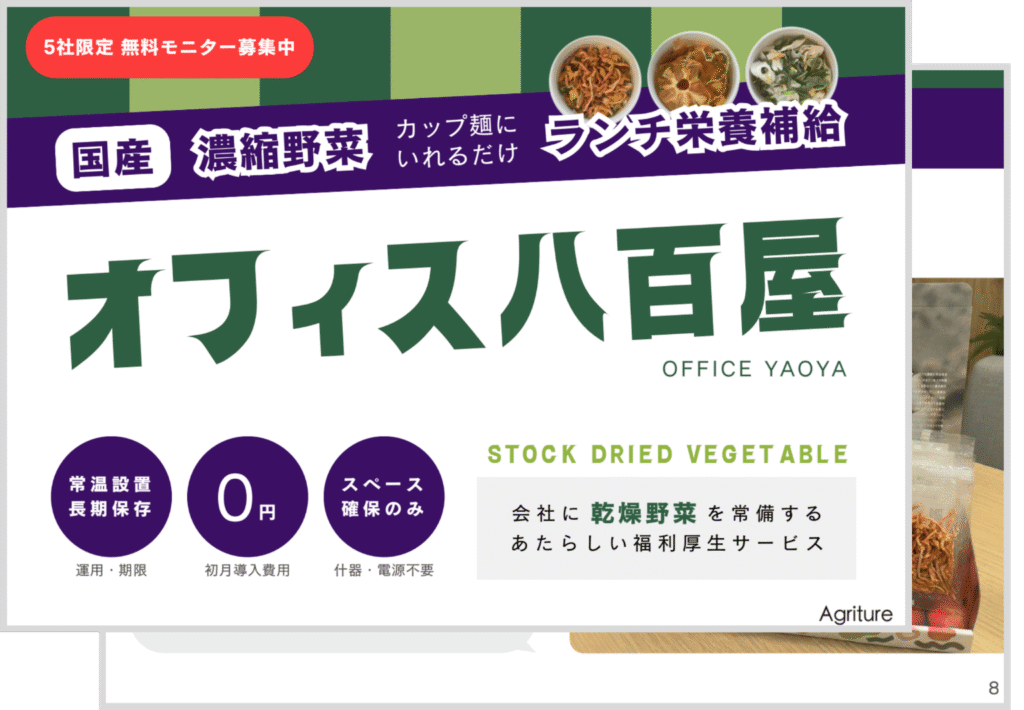
- Service details and vegetable lineup
- Pricing and plans
- How adoption and operation work
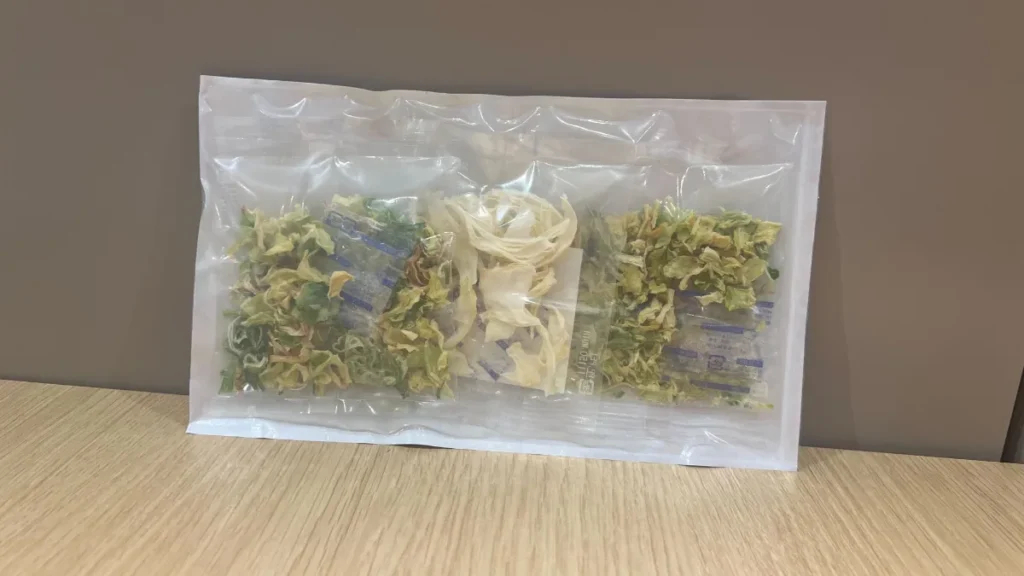
Sample sets are also available. Download the materials for details!
We offer sample sets so you can try Office Yaoya in small quantities. See the materials for details.
FAQ
We've compiled frequently asked questions about getting vegetables with convenience-store food.
Download the office dried vegetable materials
We will send the materials to your email address based on the information you provide.