Dried Karaki

Dried karaki is a commercial material made by drying the leaves and bark of "karaki" (Okinawa cinnamon / Chinese cinnamon and their relatives), an evergreen tree in the Lauraceae family. Karaki is an aromatic wood in the cinnamon family, with a sweet, gentle aroma resembling cinnamon, yet characterized by a mild aroma that is not as sharply stimulating as a cinnamon stick. At Agriture, we carefully seal in this sweet aroma with low-temperature drying and make raw material centered on the leaves. We also run it alongside karaki powder made by finely milling it (made to order), proposing a division of use: dried karaki for applications where you want to keep the leaf shape and fragments, and powder for scenting beverages, doughs, and powders.
Compared with ordinary cinnamon (sticks / powder), karaki can be differentiated by its "aroma that sits firmly on the leaf," "a refreshing aroma within the sweetness," and "a gentle character easy to pair with teas and Japanese mochi sweets." It is a material we get many prototype inquiries for, as a raw material for teas and herbal teas such as karaki tea, mochi sweets and Japanese sweets, confectionery such as baked goods and chocolate, chai and spice drinks, and flavoring curries and soups.
TOC
Agriture's dried karaki: three points of care
1. Low-temperature drying that makes the most of the sweet aroma
Karaki's appeal is a sweet, gentle aroma resembling cinnamon. At Agriture, we hold down the drying temperature and design the process to remove moisture in a short time, keeping the aroma components in the finished product as much as possible. Having the sweet aroma rise when soaked in hot water or heated is a factor that shapes the finish of teas, mochi sweets, and confectionery.
2. Shapes you can select to suit the application
Karaki is centered on the leaves and, depending on the application, dried as whole dried leaves or shaped into fragments before drying. Dried leaves pair easily with teas and simmering, and fragments with blends and confectionery blending. Leaf size and degree of crushing can be adjusted to match the application, so you can select to match the finished product's aroma output and appearance.
3. Assessing aroma and quality to make the raw material
At Agriture, we assess karaki's leaves and bark down to aroma strength, drying condition, and crushability to make the raw material. Because we select while confirming how the aroma comes up lot by lot, being able to curb aroma variation in prototypes by tea, mochi-sweets, and confectionery makers is one reason it is chosen.
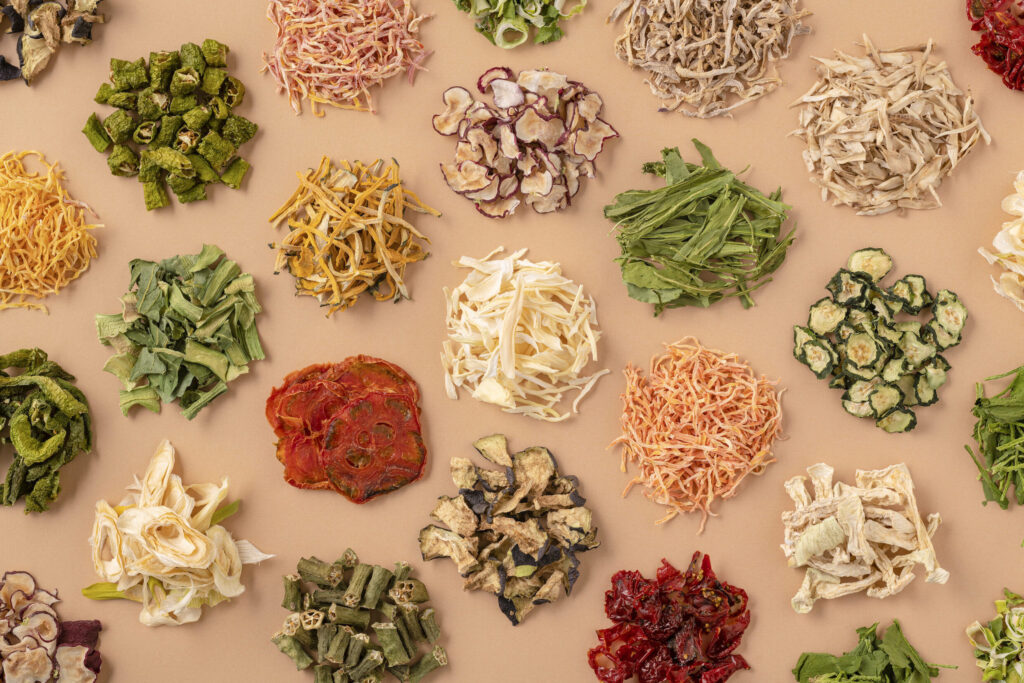
Product catalog showing the items we handle
Flexible support from small lots to large lots
- Sold in small lots from 1 kg
- Handling heirloom vegetables from across Japan
- Dried fruits and herbs also supported
Features of commercial dried karaki
Even among aroma-focused dried raw materials, karaki holds a unique position with its sweet aroma, gentle character, and ease of use across Japanese and Western applications. We organize, from six perspectives, its strengths centered on the leaves.
A sweet aroma resembling cinnamon
Karaki is an aromatic wood in the cinnamon family, with a sweet, gentle aroma. Its forte is a mild aroma that is not as sharply stimulating as a cinnamon stick, easy to pair with teas and Japanese sweets.
A material whose aroma sits on the leaf
Karaki is a material whose aroma sits firmly not only on the bark but also on the leaf. You can use the leaf—simmering dried leaves into tea, or crushing them and adding to blends.
Suitability for teas and herbal teas
Simmering dried leaves makes a tea with a sweet, cinnamon-like aroma. Beyond a single-item karaki tea, it can also be developed as a raw material for tea products blended with other herbs and tea leaves.
Affinity with Japanese sweets and mochi sweets
Karaki leaves are a material long used to scent mochi sweets and Japanese sweets made with mochi flour. With a gentle sweet aroma easy to pair with Japanese materials, it suits the flavor design of mochi sweets and baked goods.
Scenting confectionery and drinks
Usable for scenting confectionery and drinks where you want to make the most of a sweet aroma—baked goods, chocolate, caramel, chai, and more. It suits accents for product designs that highlight a cinnamon-like aroma.
Use in combination with powder
Used together with finely milled karaki powder (made to order), it enables recipe designs that balance simmering and blending (dried leaves and fragments) with even scenting of doughs and beverages (powder).
Product specifications (commercial)
Basic specifications at the prototype stage are as follows. Purchase lot, lead time, and packaging format are worked out through individual consultation.
| Item | Details |
|---|---|
| Product name | Dried Karaki |
| Raw material | Karaki (Okinawa cinnamon / Chinese cinnamon and their relatives) |
| Shape | Dried leaves. Processing into fragments is adjusted to match the application |
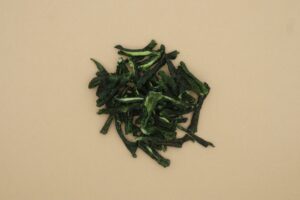
| Appearance | Brown to greenish-brown dried leaves |
| Aroma | A sweet, gentle aroma resembling cinnamon |
| Net content | Individual quote according to use and lot |
| Best-before date | About 6 months from the shipping date |
| Storage method | Avoid high temperature, high humidity, and direct sunlight; after opening, seal and store in a cool, dark place |
| Minimum prototype lot | Inquire |
Customization support
You can consult us from the prototype stage on shape, degree of crushing, packaging, and even finished-product development. Because we refine the recipe while keeping records, the specifications stay consistent between prototype and volume production.
| Item | Available | Details |
|---|---|---|
| Shape adjustment | Dried leaves / fragments | Design leaves as-is, or the degree of crushing, to match the finished product's aroma output and appearance |
| Powdering | Fine powder (made to order) | For scenting confectionery, beverages, and powder blends |
| Blend design | Combined with other herbs, tea leaves, and spices | Aroma design for tea blends and spice mixes |
| Packaging form | Commercial bulk / small bag / individual wrapping | From bulk for confectionery and tea material to small-portion packs |
| OEM productization | End-to-end support through the finished product | From concept to production for teas, mochi sweets, confectionery, and drinks |
For those considering the fine-powder type
For applications where you want to spread karaki's sweet aroma evenly, such as scenting confectionery and beverages, or powder blending, our finely milled Karaki Powder (made to order) is well suited. Please also see the list of powder raw materials.
Commitments to variety, grower, and growing region
Karaki is an evergreen tree in the Lauraceae family, an aromatic wood in the cinnamon family connected to Okinawa cinnamon, Chinese cinnamon, and the like. At Agriture, we base our raw-material design on the aroma strength and drying condition of the leaves and bark.
BRAND | Where karaki fits as a raw material
Karaki is an aromatic wood long used as a material that makes the most of a sweet aroma—in teas, mochi sweets, confectionery, drinks, and more. At Agriture, we translate this gentle sweet aroma into a commercial raw material that works across a wide range of finished products, from teas and Japanese sweets to confectionery and spice-based products.
PRODUCER | Basic policy for sourcing and coordination
We select lots directly with suppliers, matching on aroma strength, drying condition, and leaf condition. At the prototype stage we order small quantities from multiple suppliers, evaluating aroma retention during drying and how the aroma rises when simmered, then build the supply line for volume lots.
REGION | How we think about raw-material selection
Because karaki's aroma character emerges easily by material, at Agriture we assess lots with aroma suited to applications such as teas, mochi sweets, and confectionery and make the raw material. We select aroma strength and leaf or fragment condition to match the application, building supply tailored to the finished product.
CULTIVATION | Drying and aroma
Karaki is a material whose aroma sits on the leaf, and how the aroma comes out changes with the drying condition. At Agriture, we finish it carefully with low-temperature drying so the aroma remains firmly, and select ones with an aroma output suited to the application to make the raw material.
Low-temperature drying technology and quality control
Prompt drying after harvest
Karaki leaves lose their aroma easily as time passes after harvest. By moving promptly from harvest to drying, we arrange conditions that finish it while keeping the sweet aroma.
Retaining aroma through low-temperature drying
High-heat drying tends to let the sweet aroma escape. By drawing out moisture slowly at low temperatures, we finish it so the aroma rises when simmered or heated. As a material for teas, mochi sweets, and confectionery, we aim for a raw material that conveys karaki's characteristic sweet aroma. For tea, cutting the dried leaves and then simmering them in hot water makes the aroma come out more easily. For confectionery, kneading fragments or powder into the dough spreads the aroma when heated.
Use cases
We organize the applications customers bring to us for prototyping into six categories. All are examples of recipe design that make the most of karaki's sweet aroma and its leaf-centered shape.
1. Teas and herbal teas
Usable as a raw material for karaki tea made by simmering dried leaves, or for blended teas with herbs and tea leaves. It becomes a tea where a sweet, cinnamon-like aroma rises, an aroma accent both on its own and in a blend. It can be held as room-temperature stock, and being able to use it stably as a raw material for tea products is also valued in commercial use.
2. Mochi sweets and Japanese sweets
Usable as a scenting raw material for mochi sweets made with mochi flour, and Japanese sweets such as manju and baked sweets. An aroma that makes the most of the leaf is easy to pair with Japanese materials, suiting the flavor design of Japanese sweets with a sweet aroma added. Because leaves and fragments can be used pre-prepped, it also ties into cutting production man-hours.
3. Baked goods and chocolate
Usable for scenting baked goods such as cookies, scones, and pound cakes, and chocolate and caramel. Making the most of a cinnamon-like sweet aroma, it can be developed into confectionery products that highlight a spice feel. Kneading fragments or powder into the dough spreads the aroma when heated.
4. Chai and spice drinks
Usable for scenting chai, spiced milk, and hot drinks. With a sweet aroma unique to being in the cinnamon family, it becomes an accent for drink products with spices working. It can also be developed into blend designs with other spices and herbs.
5. Flavoring curries, soups, and dishes
Usable as a scenting spice for dishes—curries, simmered dishes, soups, and more. Adding dried leaves or fragments during heating transfers a sweet aroma to the dish. It can also be built into the aroma design of spice mixes and retort products.
6. Blend and spice products
Usable as an aroma material for tea blends, spice mixes, and seasonings. Because karaki has a gentle sweet aroma, it suits accents for products where you want to design the aroma combined with other herbs and spices. Combined with powder, it can balance simmering / blending with even scenting.
Commercial usage and rehydration
Basics of use
- For tea: cutting dried leaves to about 1cm width and simmering in hot water for 3 to 4 minutes makes the aroma come out easily
- For confectionery: made into fragments or powder and kneaded into the dough, the aroma spreads when heated
- For dishes: add dried leaves or fragments during the heating of curries, simmered dishes, and soups to transfer the aroma
- Because the simmered liquid carries a sweet aroma, it can also be used as a base for drinks and syrups
Blending guide
- Karaki tea: simmer about 12 to 15 dried leaves per 1L of water as a guide
- Baked goods: blend about 0.5 to 1g of fragments or powder per 100g of dough as a guide
- Chai: add a small amount of dried leaves or fragments per serving (200ml) and simmer
- Curries and simmered dishes: add 1 to 2 dried leaves per serving of the finished dish as a guide
How to store
- Before opening: store in a cool, dark place at room temperature, away from heat, humidity, and direct sunlight
- After opening: transfer to a zip bag or airtight container and use up within 1 to 2 months
- The best-before date is about 6 months from the shipping date. Note that moisture absorption and light make the aroma escape easily
- Refrigerated storage is possible. Because condensation forms right after taking it out, return it to room temperature before opening
Related cases and articles
- Dried Moringa – a material for aroma and blends
- Dried Mugwort – a Japanese aroma material
- Edible Rose – a material for aroma and confectionery
- List of dried raw materials
- Consult us on food OEM and raw material supply
Product catalog showing the items we handle
Flexible support from small lots to large lots
- Sold in small lots from 1 kg
- Handling heirloom vegetables from across Japan
- Dried fruits and herbs also supported
Frequently asked questions
What is the difference from cinnamon?
Karaki is an evergreen tree in the Lauraceae family, a member of the cinnamon family connected to Okinawa cinnamon, Chinese cinnamon, and the like. Whereas ordinary cinnamon (sticks / powder) uses the bark, karaki has aroma sitting firmly on the leaf too, allowing use that makes the most of the leaf. The aroma has a sweetness resembling cinnamon while being a mild aroma that is not too sharply stimulating, characterized by being easy to pair with teas and Japanese sweets.
How much of the aroma remains?
By moving promptly to low-temperature drying after harvest, we give a finish that keeps the sweet aroma. You can confirm karaki's characteristic cinnamon-like aroma when simmered or heated. Because the aroma escapes easily with high-temperature, long-time cooking, or moisture absorption and long-term storage, care is needed with the finished product's heating conditions and storage design.
Can it be used for tea?
This is one of the applications we get many inquiries about. Cutting dried leaves to about 1cm width and simmering in hot water for about 3 to 4 minutes makes a tea with a sweet, cinnamon-like aroma. Beyond a single-item karaki tea, it can also be developed as a raw material for tea products blended with other herbs and tea leaves.
How do I choose between it and karaki powder?
The division is that dried karaki suits "applications where you want to keep the leaf and fragment shape for simmering and blending," while powder suits "even scenting of confectionery, beverages, and powders." Karaki tea and simmered dishes call for dried leaves; scenting baked goods, chocolate, and drinks calls for powder. Using both together enables recipe designs that balance simmering / blending with even scenting.
What is the minimum prototype lot?
The minimum prototype lot is available on request. You can run prototypes in parallel across multiple conditions, such as comparing dried leaves and fragments, or tea versus confectionery specifications. You can consult us all the way through to OEM finished-product development. After hearing the specifications, lot, and schedule for your intended finished product, we propose individual quotes and delivery times.
Please tell me the best-before date and how to store it.
The best-before date is about 6 months from the shipping date. Unopened, store in a cool, dark place at room temperature, away from heat, humidity, and direct sunlight. Because karaki loses its aroma easily with moisture absorption and light, we recommend transferring it to a zip-lock bag or light-blocking container after opening and using it up within 1 to 2 months as a guide. Refrigerated storage is also possible, but beware of condensation right after removing it—let it return to room temperature before opening.
Recommended reading
- Dried Moringa – a material for aroma and blends
- Dried Mugwort – a Japanese aroma material
- Edible Rose – a material for aroma and confectionery
- List of dried ingredients
- List of powders
Download the product catalog
We will send the materials to your email address based on the information you provide.