Dried Japanese pepper (sansho)

Dried sansho pepper is a commercial ingredient made from "sansho," a plant of the genus Zanthoxylum in the citrus (Rutaceae) family. It's characterized by a sharp heat, a tingling numbness that lingers on the tongue, and a fresh, citrus-like aroma, with the heat and numbness coming from sanshool, a compound in the pericarp. At Agriture we develop it alongside a finely powdered sansho powder (made to order), proposing a division of roles: whole dried sansho with the berries used as-is for tsukudani, chirimen sansho, and simmered dishes, and powder for uniform blending into furikake and seasonings.
Compared with chili pepper, another aromatic in the same family, sansho differentiates itself through "not just heat but a numbness that lingers on the tongue," a "fresh, citrus-like aroma," and its presence as a Japanese aromatic essential to eel and mapo tofu. Because the source of sansho's heat is a different compound from chili's capsaicin, the very nature of the heat differs. It's an ingredient we get many prototype inquiries about as a raw material for tsukudani, chirimen sansho, grilled eel (kabayaki), mapo tofu, shichimi togarashi, and sansho oil.
TOC
Agriture's Dried Sansho: Three Points of Care
1. Low-Temperature Drying That Preserves Aroma and Numbness
Sansho's character is the numbness that lingers on the tongue and the fresh, citrus-like aroma. Because the aroma compounds are easily lost to heat, at Agriture we hold the drying temperature down and design the process to remove moisture in a short time, keeping as much of the aroma and numbness in the finish as possible. This is a factor that shapes the quality of end products—like tsukudani and sansho oil—that draw on both aroma and numbness.
2. Whole (Berry) Form
Sansho is dried whole, keeping the granular berries intact. Whole berries can be used as-is for cooking into tsukudani and chirimen sansho, adding to simmered dishes, and steeping in soy sauce or oil. They can also be processed into crushed or powdered forms, so you can select the form to match your end product's use. Forms like ground sansho, where the pericarp is milled, can also be discussed consistently starting from the raw berries.
3. Sourcing Wakayama-Grown Sansho as the Raw Material
At Agriture we use Wakayama-grown sansho, assessing aroma strength, the depth of numbness, and berry uniformity to prepare the raw material. Wakayama accounts for a large share of fresh sansho harvest volume, and among those, budo-sansho is known as a variety with large berries and a rich aroma. Raw materials with a visible growing region make traceability easier to design, one of the reasons they're chosen in prototyping by tsukudani and seasoning makers.
Product catalog showing the items we handle
Flexible support from small lots to large lots
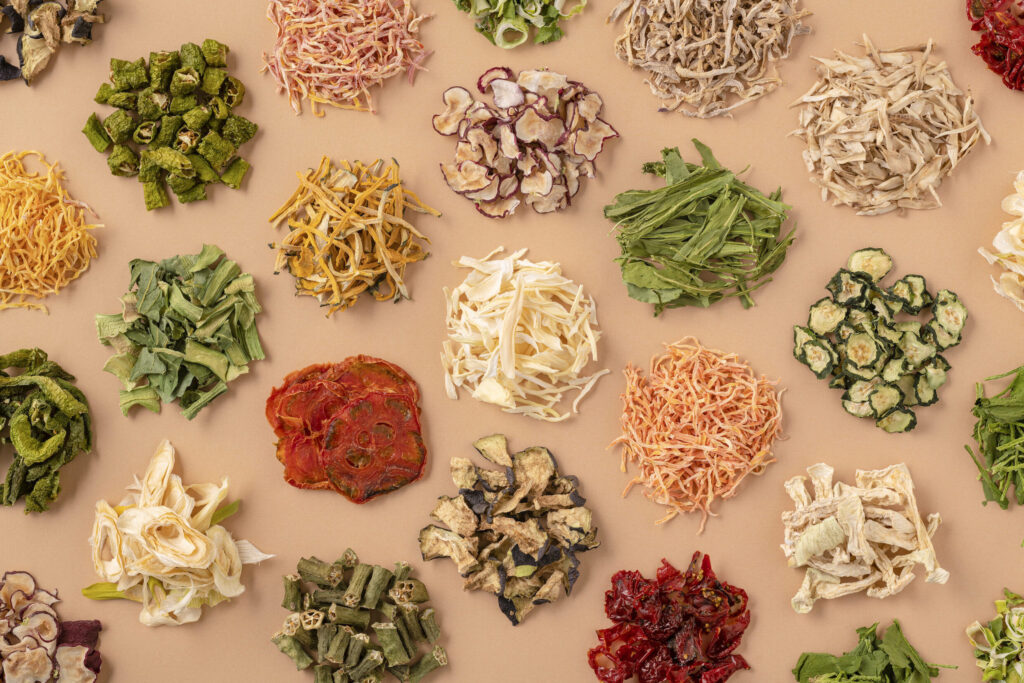
- Sold in small lots from 1 kg
- Handling heirloom vegetables from across Japan
- Dried fruits and herbs also supported
Features of Commercial Dried Sansho
Even among dried aromatic ingredients, sansho holds a unique position with its numbing heat, citrus-like aroma, and presence in Japanese cuisine. We organize the strengths of the whole form across six perspectives.
The Distinctive Numbness That Lingers on the Tongue
Sansho's heat comes from sanshool, a compound in the pericarp, characterized by a tingling, numbing sensation on the tongue. Because it differs in nature from chili's heat, it suits product designs that feature numbness—mala-style and Japanese aromatic types.
A Fresh, Citrus-Like Aroma
Sansho has a fresh, citrus-like aroma, and its green, cooling freshness tightens up a dish. It becomes a product's signature in uses that raise the aroma at the finish of eel, yakitori, and simmered dishes.
Suitability for Tsukudani and Chirimen Sansho
Dried sansho can be used as a main ingredient for chirimen sansho and tsukudani. Cooking the berries in as-is lets the numbness and aroma blend into the other ingredients, making it well suited to products that lead with Japanese meal-prep staples and rice accompaniments.
Low-temperature drying that retains the aroma
Sansho, whose aroma is easily lost in high-temperature drying, is dried slowly in a low-temperature range to preserve the aroma. The fresh aroma shines through in sansho oil, tsukudani, and furikake.
Effective in small amounts = cost efficiency
Because the numbness and aroma are strong, a small amount is enough to make a clear impression. It's an ingredient that can raise the efficiency of flavor design in aromatics, seasonings, and processed foods.
Use in combination with powder
Used together with finely powdered sansho powder (made to order), you can design recipes that combine appearance and texture (whole) with uniform blending into furikake and seasonings (powder).
Product specifications (commercial)
Basic specifications at the prototype stage are as follows. Purchase lot, lead time, and packaging format are worked out through individual consultation.
| Item | Details |
|---|---|
| Product name | Dried Japanese pepper (sansho) |
| Raw material | Sansho (Wakayama Prefecture) |
| Shape | Whole (berries). Processing into crushed or powdered forms also available |
| Appearance | Granular berries a few mm across, green to brownish |
| Aroma | A fresh, cooling, citrus-like aroma |
| Net content | Individual quote according to use and lot |
| Best-before date | About 6 months from the shipping date |
| Storage method | Avoid high temperature, high humidity, and direct sunlight; after opening, seal and store in a cool, dark place |
| Minimum prototype lot | From 100g of raw material (small-lot prototyping also available for discussion) |
Customization support
You can consult us from the prototyping stage on shape, blending, packaging, and through to finished product. Because we refine the recipe while keeping records, quality stays consistent between prototype and mass production.
| Item | Available | Details |
|---|---|---|
| Shape adjustment | Whole / crushed / powder | Whole for tsukudani and simmered dishes, crushed for aromatics, powder for furikake and seasonings |
| Powdering | Fine powder (made to order) | For powder blending in ground sansho, shichimi, and seasonings |
| Blend design | Blending with chili and other spices | Design the flavor of end products like mala and shichimi by blending with chili and others |
| Packaging form | Commercial bulk / small bag / individual wrapping | From bulk for seasoning raw material to packs for furikake |
| OEM productization | End-to-end support through the finished product | From planning to production of tsukudani, chirimen sansho, sansho oil, and shichimi |
For those considering the fine-powder type
For uses like blending into furikake, seasonings, and shichimi where you want to spread sansho's aroma and numbness uniformly, the finely powdered Sansho Powder (made to order) is well suited. See the sansho powder page for details.
Commitments to variety, grower, and growing region
Sansho is a deciduous shrub of the genus Zanthoxylum in the citrus (Rutaceae) family (scientific name Zanthoxylum piperitum), a spice that has grown wild in Japan since ancient times. At Agriture we make growing region, harvest timing, and the development of aroma the axes of our raw-material design.
BRAND|The Positioning of Sansho as a Raw Material
Sansho is the aromatic that has supported Japanese food culture—grilled eel (kabayaki), mapo tofu, tsukudani, shichimi togarashi. At Agriture we translate this numbness and aroma into a commercial raw material and offer it as an ingredient usable across a wide range of end products, from tsukudani and seasonings to processed foods.
PRODUCER | Basic policy for sourcing and coordination
We select lots with strong aroma, good development of numbness, and uniform berries by coordinating directly with the growing region. At the prototype stage we source small amounts from multiple suppliers, evaluate them for aroma retention during drying and stability of numbness, and then assemble the supply line for volume lots.
REGION | Characteristics of the main growing region
Wakayama is known as the main growing region for fresh sansho, and among its varieties, "budo-sansho" originating in Aridagawa Town is highly regarded as a large-berried variety whose fruit sets like a cluster of grapes. At Agriture we assess Wakayama-grown sansho for aroma and numbness suited to drying and prepare it as raw material.
CULTIVATION | Harvest timing and aroma
For sansho, the immature green berries (fresh sansho) are harvested in early summer, while the pericarp of the fully ripened berries in autumn is used as the raw material for ground sansho. The green berries have a fresh aroma and strong numbness, while the ripened pericarp has a deep aroma. At Agriture we select berries harvested at different times to match the use and prepare them as raw material.
Low-temperature drying technology and quality control
Prompt Drying After Sorting and Pretreatment
Because sansho consists of small granular berries, we sort out discoloration, damage, and stray twigs, apply pretreatment according to use, and then dry. By moving promptly to drying before post-harvest deterioration sets in, we finish it under conditions that balance aroma and numbness.
Preserving Aroma and Numbness Through Low-Temperature Drying
High-temperature drying drives off the aroma and can bring out harshness. By removing moisture slowly in a low-temperature range, we achieve a finish that keeps the fresh aroma and characteristic sansho numbness. When used in tsukudani, cooking it in whole lets the numbness and aroma blend in slowly. In sansho oil, slowly heating whole berries in low-temperature oil transfers the aroma and numbness without scorching.
Use cases
We organize the uses we get prototype inquiries about at Agriture into six categories. All are examples of recipe design that draws on sansho's numbness, citrus-like aroma, and whole form.
1. Tsukudani, Chirimen Sansho, and Rice Accompaniments
It can be used as a main ingredient for rice accompaniments like chirimen sansho and kelp tsukudani. Cooking the berries in as-is lets the numbness and aroma blend into the ingredients, so it can be developed into products that lead with Japanese meal-prep staples, starting with chirimen sansho, known as a Kyoto specialty.
2. Sansho Oil and Aromatic Oils
It can be used as an aroma raw material for sansho oil, aromatic oils, and edible seasonings. Slowly heating whole berries in low-temperature oil transfers the numbness and aroma without scorching. It suits products that aim to combine numbness and aroma, such as an accent in mala oil and chili oil.
3. Shichimi, Seasonings, and Spice Blends
Processed into crushed or powder form, it can be used in seasonings like shichimi togarashi, mala mixes, and ground sansho. Because a small amount produces strong numbness and aroma, it suits designing spice blends built around aromatics. Blending with chili lets you design the balance of heat and numbness.
4. Mapo Tofu and Chinese Prepared Foods
It can be used as a raw material for dishes that feature numbness, such as mapo tofu and mala-style prepared foods. You can draw the strength of numbness and the aroma into product design—sprinkling powder as a finish, adding whole berries to simmered dishes, and so on.
5. For Retort, Frozen Foods, and Eel
It can be incorporated as an aromatic and aroma-adding raw material—ground sansho to accompany grilled eel, retort mala-style prepared foods, frozen foods. It can be securely held as room-temperature stock, and by using whole, crushed, and powder forms as appropriate, you can adjust how the aroma comes through and the appearance.
6. Japanese Sweets, Confectionery, and Beverages
Drawing on sansho's citrus-like aroma, inquiries are also growing about using it as an aromatic accent in Japanese sweets, chocolate, and beverages like craft cola. With powder, the aroma can be dispersed uniformly, allowing development as an ingredient for product lines that lead with Japanese ingredients.
How to Use It Commercially
Basics of use
- Tsukudani and chirimen sansho: cook it in whole together with the ingredients so the numbness and aroma blend in
- Sansho oil and aromatic oils: heat whole berries slowly in low-temperature oil to transfer the aroma and numbness without scorching
- Aromatics and seasonings: crush or powder it and sprinkle over dishes or processed foods
- Simmered dishes: add whole to the simmer, checking the numbness and removing partway through
Blending guide
- Chirimen sansho: cook in about 1–2 tsp of dried sansho per 100g of chirimen jako as a guide
- Sansho oil: extract at low temperature using about 1–2 tsp of dried sansho per 100ml of oil as a guide
- Shichimi and seasonings: adjust the balance of heat and numbness by blending with chili
- Because a small amount produces strong numbness and aroma, start prototyping with a smaller quantity and adjust after tasting
How to store
- Before opening: store in a cool, dark place at room temperature, away from heat, humidity, and direct sunlight
- After opening: transfer to a zip bag or airtight container and use up within 1 to 2 months
- The best-before date is about 6 months from the shipping date. Because the aroma is easily lost, use it up soon after opening
- As an ingredient with a strong aroma, store it with care to avoid the smell transferring to other ingredients
Related cases and articles
- Dried Shima Togarashi – Okinawa's Extra-Hot Chili
- Dried Manganji Chili – a non-spicy Kyoto-vegetable chili
- Dried Purple Chili – a chili for color
- List of dried vegetable raw materials
- Consult us on food OEM and raw material supply
Product catalog showing the items we handle
Flexible support from small lots to large lots
- Sold in small lots from 1 kg
- Handling heirloom vegetables from across Japan
- Dried fruits and herbs also supported
Frequently asked questions
Is sansho's heat different from chili's?
It's different. Sansho's heat comes from sanshool, a compound in the pericarp, characterized by a tingling, numbing sensation on the tongue. It differs in nature from the heat of chili's capsaicin, and combining numbness with a citrus-like aroma is sansho's distinctive character. How intense the flavor is in the end product can be designed through the blend amount and combinations with other spices.
Can it be used as a raw material for chirimen sansho and tsukudani?
It's one of the uses we get many inquiries about. Cooking whole dried sansho in together with the ingredients lets the numbness and aroma blend in, making chirimen sansho and kelp tsukudani. It can be used as a core raw material for products that lead with rice accompaniments and Japanese meal-prep staples, starting with chirimen sansho, known as a Kyoto specialty.
Can I use it whole? Or should I crush it?
It depends on the use. Whole for tsukudani, simmered dishes, and steeping; crushed or powder for aromatics, furikake, and ground sansho. The difference is that whole has texture and appearance, while crushed and powder make it easier to spread the aroma and numbness uniformly. The form can be discussed at the prototype stage.
How should I choose between this and sansho powder?
Dried sansho (whole) is for "tsukudani, simmered dishes, and uses that draw on texture," while powder is for "uniform blending into furikake, seasonings, and shichimi." Whole suits tsukudani and sansho oil; powder suits ground sansho and coating uses. Using them together makes it possible to design recipes that combine texture with uniform aroma.
Where is the growing region?
We use Wakayama-grown sansho as the raw material. Wakayama accounts for a large share of fresh sansho harvest volume, and among its varieties, "budo-sansho" originating in Aridagawa Town is known as a large-berried, richly aromatic variety. At Agriture we assess lots suited to drying by aroma and development of numbness and prepare them as raw material.
What is the minimum prototype lot?
We accept prototyping from 100g of raw material, and because it's an ingredient with a strong aroma, small-lot comparative prototyping is also open to discussion. You can run multiple conditions in parallel—comparing whole, crushed, and powder forms, or comparing blends with chili. This can be discussed all the way through to full production and OEM end-product development.
Please tell me the best-before date and how to store it.
The best-before date is about 6 months from the shipping date. When unopened, store it in a cool, dark place at room temperature, away from high heat, high humidity, and direct sunlight. Because sansho easily loses its aroma, after opening we recommend transferring it to a zip bag or airtight container and using it up within 1–2 months as a guide. As an ingredient with a strong aroma, also take care to avoid the smell transferring to other ingredients.
Recommended reading
- Dried Shima Togarashi – Okinawa's Extra-Hot Chili
- Dried Manganji Chili – a non-spicy Kyoto vegetable
- Dried Purple Chili – a chili for color
- List of dried vegetables
- List of powders
Download the product catalog
We will send the materials to your email address based on the information you provide.