Heirloom vegetables

TOC
What Are Heirloom Vegetables?
Heirloom vegetables refers to varieties long cultivated in a particular region and rooted in that land's climate and food culture. Their seeds are passed down through generations, and they are deeply tied to the lives and ceremonial foods of the region's people—a concept that overlaps with "native varieties" and "fixed varieties."
In the agriculture and food industries, they are valued as "regional brand vegetables" and "local vegetables," and amid growing tourism demand and higher value-addition, cases of restaurants, department stores, and hotels actively adopting them are increasing.
Characteristics and Background of Heirloom Vegetables
The origins of heirloom vegetables often go back before the Edo and Meiji periods, and they have been cultivated by human hands protecting and selecting seeds since before pesticides and chemical fertilizers spread. As a result, many varieties have rich, distinctive flavor and aroma, with a unique appeal in cooking as well.
Representative programs include Kyoto Prefecture's "Kyoto Heirloom Vegetables (Kyoto vegetables),"Ishikawa Prefecture's "Kaga vegetables,"、Okinawa Prefecture's "island vegetables,"and more—cases defined, protected, and promoted by each municipality. There is not yet an international program, but they are also valued in contexts such as the Slow Food movement.
Recently, as food diversity and the reappraisal of regional resources advance, they are being reappraised as "one-of-a-kind ingredients." They are actively used, especially in dishes for inbound tourists to Japan and at local-production-for-local-consumption fine-dining restaurants, as ingredients that convey regional identity.
Examples of Heirloom Vegetable Use at Agriture
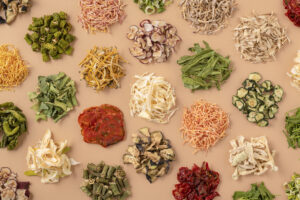
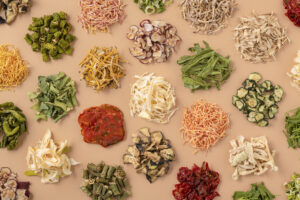
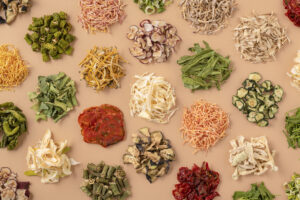
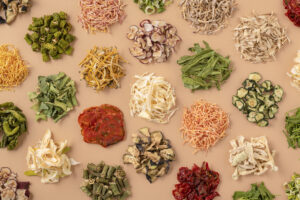
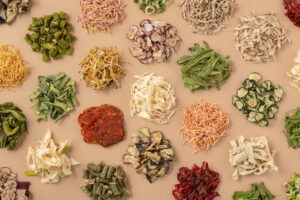
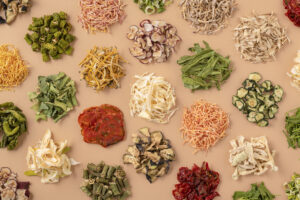
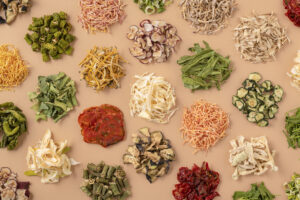
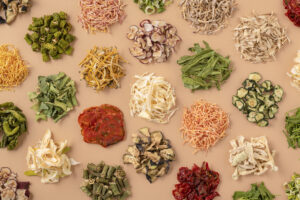
At Agriture, centered on the Kyoto and Kyotango regions, Kamo eggplant, Shogoin daikon, mibuna,、mizuna, Kyo-kurenai carrot, and other Kyoto heirloom vegetables—we handle many dried vegetables using them as raw material. These vegetables have an individuality in flavor, color, and texture not found in other varieties, and drying further brings out their umami and aroma.
For example, Dried Kamo eggplant produces a melt-in-your-mouth texture when cooked with heat, and Shogoin daikon lets you enjoy a firm, springy texture and a rich sweetness when rehydrated. Its high shelf stability in the dried state combined with its strong presence when used in cooking has earned high marks as an ingredient suitable for both commercial and home use.
Also, in SDGs・ethical product development that emphasizes regionality and cultural value, heirloom vegetables play a major role, and through OEM manufacturing and media outreach, Agriture delivers the appeal of heirloom vegetables at home and abroad.
Related keywords
Native variety vegetables
Fixed varieties
Regional brand agricultural products
Related articles
Japan's Heirloom Vegetables: Precious Varieties Handed Down in Each Region
Rediscover the Appeal of Heirloom Vegetables! OEM Using Local Vegetables
FAQ
Q. What's the difference between heirloom vegetables and ordinary vegetables?
A. Heirloom vegetables are native varieties long protected in a region, many with distinctive flavor and shape. Unlike today's F1 (hybrid) varieties, they have the feature that you can self-collect seeds and pass them to the next generation.
Q. Where can I buy heirloom vegetables?
A. You can buy them at local farm stands and farmers, markets, or at e-commerce sites and department stores handling Kyoto vegetables, Kaga vegetables, and the like. Agriture also sells dried and processed heirloom vegetables.
Q. Why are heirloom vegetables expensive?
A. Generally, distribution volume is small and cultivation often takes more effort. But for that reason, their rarity and rich flavor are valued, and they are treated as high-value-added ingredients.