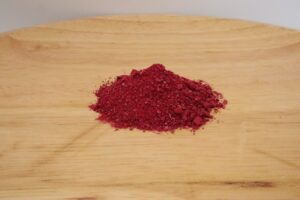
Maca powder

Maca powder is a commercial ingredient made by drying and finely milling the root of maca (scientific name: Lepidium meyenii), a functional plant in the Brassicaceae family. It contains minerals such as amino acids, iron, zinc, and calcium, as well as glucosinolate-type compounds characteristic of the Brassicaceae, making it a lead-grade ingredient for green juice, health drinks, protein mixes, supplements, and functional foods. At Agriture, Dried Maca and makes it into powder by adding a pulverizing process.
the same functional material A Japanese aroma / wagashi, dressings and Ashitaba powder combining it adds depth to a functional powder mix. Starting from domestically grown maca as the raw material, specifications can be refined from small quantities.
TOC
Agriture's maca powder: three points of commitment
1. Drying and milling designed to preserve functional components
Maca root contains minerals, amino acids, and glucosinolate-type compounds, and these components are prone to loss under heat or prolonged processing. At Agriture, we control the temperature range and operate drying and milling conditions with the balance of color, aroma, and components as a guide. We record conditions from the prototype stage, aiming for a finish suited to designing health foods and functional foods. Because maca on its own has a strong bitterness and pungency, we can propose formulations that balance drinkability by blending it with other ingredients.
Product catalog showing the items we handle
Flexible support from small lots to large lots
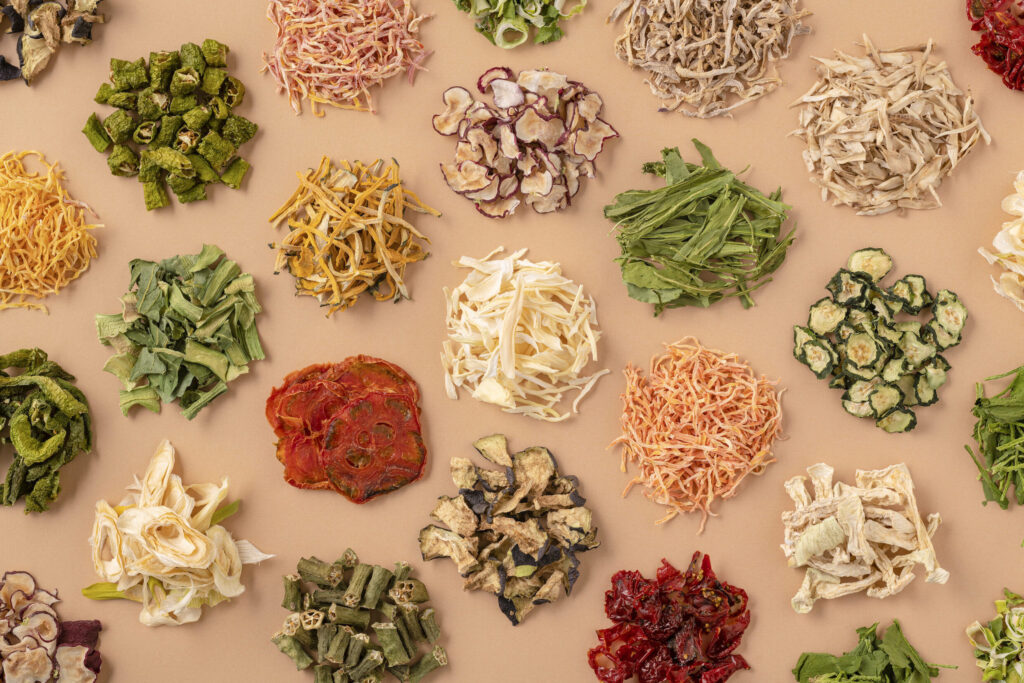
- Sold in small lots from 1 kg
- Handling heirloom vegetables from across Japan
- Dried fruits and herbs also supported
Features of commercial maca powder
Fine milling opens up application areas that shredded or chipped root cannot reach — "uniform blending into beverages," "functional powder mixes," and "filling into supplements." We organize the strengths unique to maca powder from six perspectives.
Positioning as a domestically grown functional plant
It is an ingredient whose typical focal points are amino acids, minerals, and glucosinolate-type components, and it has drawn attention as a highly nutritious plant. Component values vary with conditions, but it is well positioned for use as a lead ingredient in functional foods, health drinks, and supplements.
Blending with functional materials
Through pre-blending with ingredients such as moringa, ashitaba, mugwort, and young barley grass substitutes, you can design functional powder mixes, green-juice bases, and protein mixes from a single raw-material supplier. We accommodate mixing and bagging at your specified ratios.
Use together with the ingredient-shape version
For health-tea and blended-tea applications, Dried Maca (shredded root / coarsely crushed leaf type); for beverages and powders, use the powder — you can choose accordingly. Using both together also allows a design that develops tea blends and drink mixes in parallel.
Product specifications (commercial)
The basic specifications at the prototype stage are as follows. Procurement lots, delivery dates, and packaging forms for mass production and OEM are settled through individual consultation.
| Item | Details |
|---|---|
| Product name | Maca powder |
| Raw material | Maca (domestically grown, root) |
| Shape | Fine powder (root dried and milled) |
| Appearance | Pale yellowish-white to yellowish-brown fine powder |
| Aroma | The bitterness and pungency characteristic of the Brassicaceae, with a root-vegetable-like richness |
| Net content | Individual quote according to use and lot |
| Best-before date | About 6 months from the shipping date |
| Storage method | Avoid high temperature, high humidity, and direct sunlight; after opening, seal and store in a cool, dark place |
| Processing plant | Our own processing plant within Kyoto Prefecture |
| Minimum prototype lot | From 1 kg of raw material |
| Main production lot | From 10 kg (by consultation) |
Customization support
| Item | Available | Details |
|---|---|---|
| Part specification | Specify from root only / leaf only / both | Root suited to being the main ingredient; leaf suited to a supporting role in functional blends |
| Blend design | Pre-mixing of functional powder | Mixing at specified ratios with moringa, ashitaba, mugwort, etc. |
| Packaging form | From commercial bulk to small bags | Light-blocking aluminum bags, sticks and small bags, individual wrapping, and the like |
| OEM productization | End-to-end handling through the final product | Green juice, health drinks, protein mixes, supplements, etc. |
| Raw material supply | Own raw materials + contract processing | We also handle contract drying and grinding at a specified growing region |
For those with herbal-tea and health-tea uses (raw-material form version)
For health tea, blended tea, decoction ingredients, and the like, applications that make use of shredded/chipped root or leaf form are best served by dried maca (raw-material-form type). It brings out texture and an infused character that powder cannot achieve.
Commitments to variety, grower, and growing region
Maca is a plant of the genus Lepidium in the Brassicaceae family, known as a functional ingredient native to the high Andes of Peru. Cultivation has now spread within Japan as well, with efforts advancing mainly in highland areas such as Nagano and Yamanashi. Positioning domestically grown maca as your raw-material concept is a strength, allowing you to design traceability and an origin story.
BRAND
At Agriture, we manage everything from drying to milling and packaging in-house at our processing facility in Kyoto Prefecture, using domestically grown maca as the raw material. Our basic policy is a finish that balances the retention of functional components and color.
PRODUCER
We partner with contract growing regions and receive raw material after sharing harvest timing, root size, and storage conditions. We record raw-material lots and use them to reproduce color, aroma, and components in mass production.
REGION
The native Andes of Peru center on highlands of around 4,000 m elevation, but within Japan cultivation is advancing in highland areas such as Nagano and Yamanashi. Maca grown in a climate with large temperature swings is an easy-to-use raw material as a functional ingredient.
CULTIVATION
The cultivation period from sowing to harvest is long, and the firmness of the root and the balance of components change with harvest timing. After sorting the raw material, we proceed to washing, drying, and milling, ensuring reproducibility in the powdering process.
Powdering technology and quality control
The quality of maca powder is determined by three points: retention of functional components, retention of color, and control of dispersibility. At Agriture, we record conditions at each step of drying, milling, and packaging, maintaining operations that suppress lot-to-lot variation.
Retaining the functional components and color
Because minerals, amino acids, and glucosinolate-type compounds include component families that change readily with heat, light, and oxygen, we adjust the temperature range at the drying stage and operate under conditions that preserve the balance of color and components. By moving quickly to light-blocking packaging after milling, we aim for a finish that suppresses degradation of the pale yellowish-white to yellowish-brown color tone and the functional components.
Controlling bitterness and pungency
By adjusting the raw-material pretreatment conditions and the drying temperature range, we can achieve a finish with gently subdued bitterness and pungency. Conditions can be varied depending on whether you want to retain the flavor as a functional ingredient or prioritize drinkability in a protein drink. It also pairs well with sweetening ingredients, so drinkability can be adjusted at the formulation stage. For smoothies and protein drinks, use 1–3 g per 200 ml as a guide. In functional powder mixes, a 10–25% share combined with moringa and ashitaba is an easy-to-use range. In confectionery dough, 1–3% relative to the flour adds a distinctive richness and functional appeal to madeleines, cookies, and pound cake. If you want to soften the bitterness and pungency, it pairs well with cocoa, kinako, and sweetening ingredients, giving an easy-to-drink functional beverage.
Use cases and adoption examples
Because the powder disperses uniformly in liquids and powders, it opens up applications that shredded root cannot reach. We organize the applications we are often consulted about. From functional powder mixes, green-juice bases, protein mixes, and bases for meal-replacement foods, we handle everything through to mixing and bagging at specified ratios. To gently balance bitterness and pungency, blends with cocoa, kinako, and sweetening ingredients can also be prototyped.
Related articles and other health materials
These are the vegetable and functional powders handled by Agriture. Please use them for blend design with maca.
- Dried Maca: Raw-material-form type for decoction teas and tea bags
- A Japanese aroma / wagashi, dressings: a functional-material classic
- Ashitaba powder: A chalcone-type green-juice ingredient
- Dried Moringa: Leaf-type functional plant ingredient
- Food OEM Directory: A consultation window for OEM projects
Product catalog showing the items we handle
Flexible support from small lots to large lots
- Sold in small lots from 1 kg
- Handling heirloom vegetables from across Japan
- Dried fruits and herbs also supported
Frequently asked questions
How do dried maca (raw-material-form type) and powder differ in use?
Dried maca comes in shredded/chipped root or coarsely crushed leaf form, suited to applications that make use of texture and infusion — health tea, blended tea, decoction ingredients, soup ingredients, and the like. Powder, being finely milled, is suited to applications where you want to drink it down or blend it uniformly as a beverage or powder — green juice, protein drinks, functional foods, supplements, confectionery, and so on. In some cases both are developed in parallel to design a health-tea brand alongside a drink and supplement brand.
Are the bitterness and pungency strong?
Maca is an ingredient with the bitterness characteristic of the Brassicaceae and a root-vegetable-like pungency. By adjusting the raw-material pretreatment and drying conditions, a gently balanced finish is possible, or you can choose a finish that retains the flavor as a functional ingredient. We can also propose formulations that balance drinkability by blending with cocoa, kinako, and sweetening ingredients, or by combining with other green ingredients. You can leverage the strengths that imported raw materials struggle to offer — "a visible face for the growing region," "traceability you can design," and "processing completed entirely within Japan" — in the story design of your finished product. At Agriture, we manage domestically grown maca in-house at our processing facility in Kyoto Prefecture, from drying through milling and packaging.
Can it be pre-blended with other functional powders?
Yes. We accommodate pre-blending with functional and green-juice-type powders such as moringa, ashitaba, and mugwort. If you share the formulation you are aiming for in the finished product — green-juice bases, protein mixes, functional powder mixes, bases for meal-replacement foods, and so on — we will handle mixing and bagging at that ratio. To gently balance bitterness and pungency, blends with cocoa, kinako, and sweetening ingredients can also be prototyped.
What is the minimum prototype lot?
Please tell me the best-before date and how to store it.
The best-before date is about 6 months from the shipping date. Because color and functional components degrade readily with light and moisture, store the unopened product away from high temperature, high humidity, and direct sunlight, in a cool, dark place at room temperature. After opening, transfer it to a sealed container and use it up within 1–2 months as a guide. Commercial bulk uses light-blocking aluminum bags as standard, while small bags and sticks use light-blocking film.