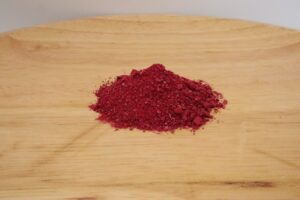
Garlic powder

Garlic powder is a seasoning ingredient made by drying garlic bulbs and then finely grinding them. Because it can spread allicin and aroma components throughout a dish in small amounts, it plays a leading role in a wide range of uses—garlic salt, spice mixes, processed meat (sausage, pate), ramen soup, and mapo sauce. At Agriture, Dried garlic and makes it into powder by adding a pulverizing process.
Note that Agriture also separately handles Garlic sprout powder using garlic sprouts, but this product is a general "garlic powder" made using the bulb (rhizome). In the prototyping of spice mixes, processed meat, sauces, and ramen soup, you can nail down the specifications from a small amount.
TOC
Three commitments of Agriture's garlic powder
1. A drying-to-grinding flow that does not let the aroma components escape
Because garlic's aroma components volatilize easily with heat and air, we adjust the temperature range from the drying stage and operate the grinding process under conditions that suppress heat generation. Aroma escaping due to heat during grinding is a common failure with aromatic-vegetable powders, and from the prototype stage we adjust the combination of temperature, grinding time, and lot size. Our guide for the finished powder is a level where the aroma of garlic rises the moment the bag is opened. We can accommodate any direction—Chinese, Western, or Japanese.
Product catalog showing the items we handle
Flexible support from small lots to large lots
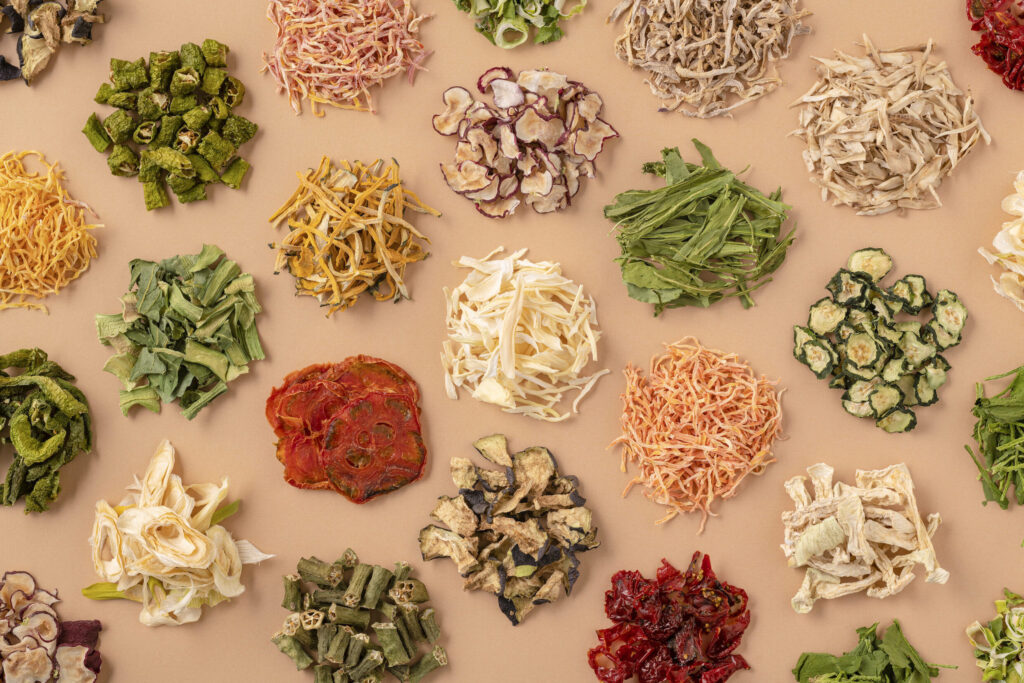
- Sold in small lots from 1 kg
- Handling heirloom vegetables from across Japan
- Dried fruits and herbs also supported
Features of commercial garlic powder
By finely grinding it, it can be developed into the application areas of "even aroma blending" and "turning into spice mixes" that slices, chips, and mince cannot reach. We organize garlic powder's distinctive strengths from six perspectives.
Spreading the aroma components in small amounts
It is a material where allicin-type aroma components are typically the point of focus, and blending a small amount spreads garlic's flavor throughout a dish. The amount of aroma components varies with conditions, but it is a powder easy to use as a leading ingredient for seasonings and spices.
Dispersibility in liquids and powders
It disperses evenly into ramen soup, sauces, and marinade liquids, and blending into spice mixes and seasonings comes out cleanly. You get an "even rising of aroma" that the ingredient form cannot deliver.
Compatibility with spices and seasonings
By pre-blending with salt, pepper, chili, paprika, and onion powder, you can design garlic salt, seasonings, and herb mixes from a single ingredient supplier. We also accommodate prototyping of seasonings for ramen soup.
Use together with the ingredient-shape version
For uses where you want to keep texture and appearance, Dried garlic (slices, chips), and for uses where you want to spread the aroma evenly, powder—you can use them differently. A design that uses both together to achieve both topping and flavoring is also possible.
Product specifications (commercial)
The basic specifications at the prototype stage are as follows. Procurement lots, delivery dates, and packaging forms for mass production and OEM are settled through individual consultation.
| Item | Details |
|---|---|
| Product name | Garlic powder |
| Raw material | Garlic (domestic, bulb) |
| Shape | Fine powder (peeled rhizome dried and ground) |
| Appearance | Cream to pale-yellow fine powder |
| Aroma | The strong aroma distinctive to garlic |
| Net content | Individual quote according to use and lot |
| Best-before date | About 6 months from the shipping date |
| Storage method | Avoid high temperature, high humidity, and direct sunlight; after opening, seal and store in a cool, dark place |
| Processing plant | Our own processing plant within Kyoto Prefecture |
| Minimum prototype lot | From 1 kg of raw material |
| Main production lot | From 10 kg (by consultation) |
Customization support
| Item | Available | Details |
|---|---|---|
| Aroma adjustment | Changing the drying conditions | Aroma-focused / mild finish / roasted finish |
| Blend design | Pre-mixing with spices and salt | Garlic salt, seasonings, mixes for processed meat, etc. |
| Packaging form | From commercial bulk to small bags | Light-blocking aluminum bags, sticks/small packs, spice jars, etc. |
| OEM productization | End-to-end handling through the final product | Garlic salt, ramen soup, processed meat, mapo sauce, etc. |
| Raw material supply | Own raw materials + contract processing | We also handle contract drying and grinding at a specified growing region |
For those who want to make use of texture and appearance (ingredient-form version)
For toppings, garlic chips, and flavoring stir-fries, uses that keep garlic's texture and appearance suit dried garlic (slices, chips). The crisp texture and presence that powder cannot deliver come alive.
Commitments to variety, grower, and growing region
Garlic is a bulb vegetable of the Allium genus in the Amaryllidaceae family. Domestic garlic is grown mainly in Tohoku and Kyushu, and the aroma strength, pungency, and sweetness differ by cultivar line. As a powder ingredient, we mainly use lines whose aroma components rise, choosing differently.
BRAND
At Agriture, using domestic garlic as the ingredient, we manage everything from drying to grinding and packaging in an integrated way at our own processing facility in Kyoto Prefecture. A finish that emphasizes retaining the aroma components is our basic policy.
PRODUCER
We partner with contract growing regions and receive the raw material after sharing the cultivar, harvest timing, and drying conditions. We record the raw-material lot and use it for reproducing the aroma during mass production.
REGION
The main growing regions are Aomori, Kagawa, and Miyazaki. Aomori centers on the White Six-Clove cold-region line, while Kagawa and Miyazaki center on warm-region lines, differing in the balance of aroma and pungency. Origin selection according to the application is possible.
CULTIVATION
Open-field cultivation is central. After sorting the raw material, we proceed to peeling, thin slicing, and drying, ensuring reproducibility in the powdering process. We decide the grinding conditions while watching how the aroma components remain.
Powdering technology and quality control
Temperature management of the grinding process
If the aroma components volatilize due to frictional heat during grinding, it ends up as a powder with a faint aroma. We adjust the grinding lot size, rotation speed, and rest time, choosing conditions where the powder does not get too hot. Because we record the conditions from the prototype stage, we can reproduce the same flavor during mass production. We adopt light-blocking aluminum bags for commercial bulk and light-blocking film for small packs and spice jars, proposing specifications that assume storage at stores and warehouses.
TIPS: guideline blend ratios that make the most of garlic powder
When finishing it into garlic salt, sprinkling in 10–20% garlic relative to the salt makes the balance easy to strike—an easy-to-use ratio for seasoning uses. In ramen soup, blending in about 2–5% of the total powdered seasoning makes garlic's aroma rise in the base. For processed meat (sausage, pate), the guide is a 0.2–0.5% blend relative to the meat weight. For mapo sauce, prototyping starts from a 0.5–1% blend of the sauce weight, and for dressings, a 0.3–0.8% blend.
Use cases and adoption examples
Because the powder disperses evenly into liquids and powders, it extends to uses that chips and slices cannot reach. We organize the applications we are often asked about. For garlic salt, spices for processed meat, seasonings for ramen soup, and more, we carry out everything from mixing at a specified ratio to bagging in an integrated way.
Related articles and other seasoning ingredients
These are the vegetable and seasoning powders Agriture handles. Use them for blend designs with garlic.
- Dried garlic: an ingredient that keeps the slice and chip form
- Onion powder: a staple blend of aromatic vegetables
- Negi powder: an aromatic ingredient for Japanese and Chinese cuisine
- Garlic sprout powder: a separate sprout-type series
- Food OEM Directory: A consultation window for OEM projects
Product catalog showing the items we handle
Flexible support from small lots to large lots
- Sold in small lots from 1 kg
- Handling heirloom vegetables from across Japan
- Dried fruits and herbs also supported
Frequently asked questions
How do you use dried garlic (with form) and powder differently?
Dried garlic is a type that keeps the slice and chip form, suited to uses where its presence comes alive—toppings, stir-fries, and garlic chips. Because powder is a fine powder, it suits uses where you want to spread the aroma evenly—garlic salt, ramen soup, processed meat, mapo sauce, dressings, and more.
How is it different from garlic-sprout powder?
This product is a general "garlic powder" using the ordinary garlic bulb (rhizome) as the ingredient, with the aroma and pungency familiar from use as a seasoning. Garlic-sprout powder is a separate series using sprouted garlic (sprouts), differing in how the aroma rises and in its applications. The two are handled in parallel as separate products. In many cases, you start by trying a mild aroma and nail down the direction you aim for in the final product while raising the blend ratio. Delivery with pre-blending with salt, pepper, paprika, and more is also possible.
Can you deliver it pre-blended with other spices?
Yes. We accommodate pre-blending with salt, pepper, chili, paprika, onion powder, basil, and more. For garlic salt, seasonings, seasonings for ramen soup, and more, if you share the blend you aim for in the final product, we carry out everything from mixing at that ratio to bagging.
What is the minimum prototype lot?
We accept prototypes from 1kg of raw material. For mass production and OEM, we provide individual quotes and lead times. You can consult us all the way through to final products such as garlic salt, ramen soup, processed meat, and mapo sauce.
Please tell me the best-before date and how to store it.
The best-before date is roughly 6 months from the shipping date. Because garlic powder's aroma degrades easily with light, oxygen, and moisture, while unopened store it in a cool, dark place at room temperature, away from heat, humidity, and direct sunlight. After opening, we recommend transferring it to an airtight container and using it up within 1–2 months as a guide.