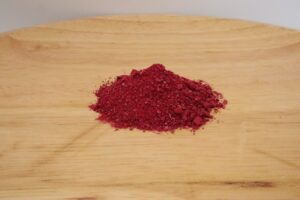
Kabu powder

Domestic turnip powder is a commercial powder material made by low-temperature drying of turnips—known for their gentle sweetness and smooth texture—and processing them through to grinding in-house at our processing facility in Kyoto Prefecture. Using no glucose, coloring, or antioxidants, it concentrates the turnip's own soft sweetness and creamy flavor into a powder. It's a material we frequently field inquiries about for food development that draws on a gentle taste and smooth texture—as a base material for potage, a thickening material for baby food and nursing-care food, kneading into bread dough, and more. We also support prototypes from 1 kg of raw leaf. For consultations on dried vegetable and powder OEM here Please let us know your intended use and desired specifications from
TOC
Agriture's turnip powder: 3 points of commitment
01 Concentrating gentle sweetness into powder with low-temperature drying
Turnip's delicate sweetness is heat-sensitive, and high-temperature drying turns it into a scorched nuance. At Agriture we use hot-air drying that keeps the product temperature in a low range, with a process designed to retain the turnip's own soft sweetness and creamy flavor even after grinding. Vegetable & herb powder list You can also consult us about blending with other materials from
02 Thickening properties ideal for a potage base
The turnip is a vegetable with little fiber and high moisture content, and powdered and dissolved in hot water, it produces a natural thickness. Because you can create potage thickness without a thickener or stabilizer, it's used in clean-label soup products. The nutritional value and benefits of vegetable powder.
03 Small-lot prototypes from 1 kg of raw leaf and comparison runs
At Agriture we accept turnip-powder prototypes in units of 1 kg of raw leaf, making it easy to compare potage viscosity and mouthfeel at the prototype stage—a form we're consulted on for early PB and OEM development.
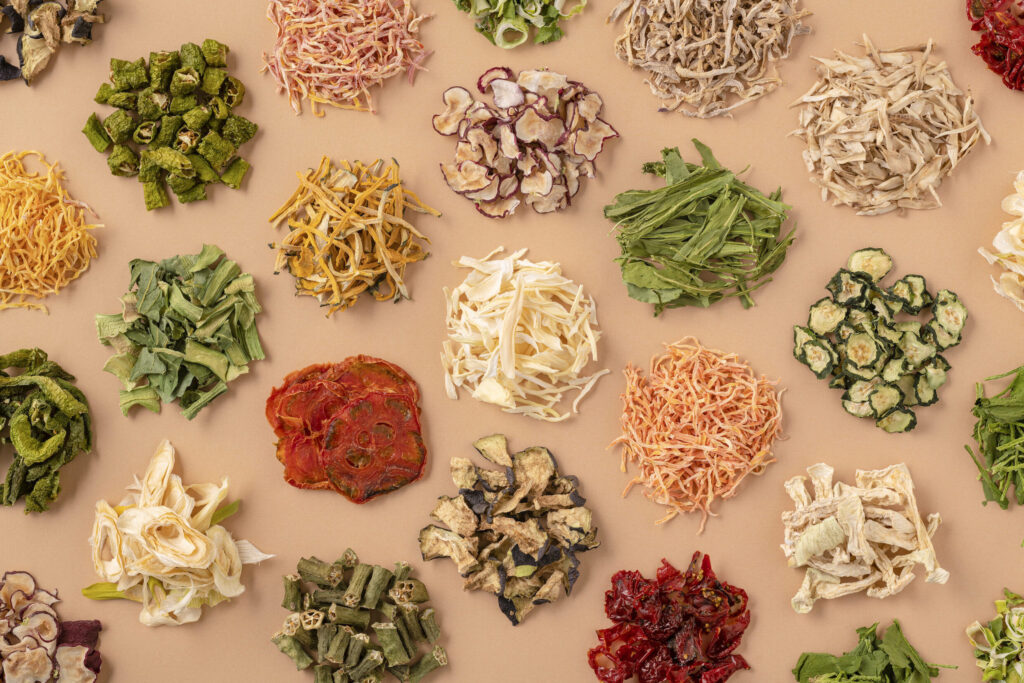
Product catalog showing the items we handle
Flexible support from small lots to large lots
- Sold in small lots from 1 kg
- Handling heirloom vegetables from across Japan
- Dried fruits and herbs also supported
Features of commercial turnip powder
Natural thickness ideal for potage
Dissolving turnip powder in hot water produces a natural thickness without a thickener. It's valued as a base material for potage in the development of clean-label soup products.
Gentle sweetness and creamy flavor
It concentrates the turnip's characteristic soft sweetness into a powder. With no off-notes and a refined taste, it suits uses that require care for delicate palates, such as baby food, nursing-care food, and weaning food.
Refined milky-white color development
It's a milky-white to pale cream powder made by powdering the turnip's white flesh. Dissolved into potage, it finishes as a white, refined soup, enhancing visual appeal.
Zero additives, no coloring
No glucose, dextrin, antioxidants, or coloring at all. You can use it with peace of mind for uses that require material safety, such as baby food and weaning food.
Flexible for blend design too
We also support pre-blending with root-vegetable powders such as carrot powder, onion powder, and kabocha powder. Material design for vegetable potage mixes and baby-food bases can also be consulted on.
Product specifications (commercial)
|
Item |
Details |
|---|---|
|
Raw material |
Kabu (domestic) |
|
Best-before date |
About 6 months from the shipping date |
|
Processing plant |
Our own processing plant within Kyoto Prefecture |
|
Shipping unit |
Choose from 500 g bag, 1 kg bag, or 5 kg commercial bag |
|
Minimum-lot OEM |
Prototype from 1 kg of raw leaves / main production from 10 kg of raw leaves |
*Prototype consultations are possible from 1 kg of raw leaf. Samples let you compare potage viscosity and mouthfeel.
Customization support
|
Item |
Available |
Details |
|---|---|---|
|
Blend design |
◎ |
Supports pre-blending with root-vegetable powders such as carrot, onion, and kabocha |
|
OEM small-lot prototyping |
◎ |
Multiple versions can be prototyped in parallel from 1 kg of raw leaf |
|
Packaging changes |
◎ |
500 g, 1 kg, and 5 kg bags can be sorted out |
|
Quality document issuance |
◯ |
Specification sheet, raw-material origin certification, microbiological test report (discussed per project) |
POWDER
A dried-leaf type is also available
In addition to powder, we also offer sliced and diced dried turnip. For uses where you want to retain texture—simmered-dish ingredients, pickling materials, and so on—the leaf type is suitable.
Commitments to variety, grower, and growing region
The raw material used in Agriture's turnip powder is domestic turnip sourced directly from partner farms in Japan. Kyoto has many landrace varieties, starting with the Shogoin turnip, and sweetness and flesh quality differ by growing region. At Agriture we select varieties and growing regions suited to drying, securing material whose gentle sweetness stays alive even after powdering.
BRAND
Variety: Turnip (Brassicaceae, genus Brassica). Characterized by a gentle sweetness and smooth texture. With little fiber and high moisture content, it has smooth solubility when powdered.
PRODUCER
Producer: In partnership with domestic farms, it's harvested at a size and ripeness suited to processing. We bring it into our own facility while keeping it fresh.
REGION
Growing region: Sourced from domestic root-vegetable regions centered on Kyoto Prefecture. Turnips grown in cool climate conditions tend to increase in sweetness.
CULTIVATION
Cultivation method: With managed cultivation that keeps pesticide use low,
Low-temperature drying technology and quality control
Turnip's delicate sweetness is heat-sensitive, and high-temperature drying turns it into a scorched nuance and advances browning. At Agriture we use hot-air drying that keeps the product temperature in a low range, with a design that removes only moisture and retains the turnip's own sweetness and white color. Grinding is done right after drying, in a process that minimizes oxidation.
Manufacturing is done at our own processing plant in Kyoto Prefecture, with integrated management from raw-material acceptance inspection to shipment. It is filled after passing through a foreign-matter removal process, and for OEM projects we issue necessary documents such as specification sheets, raw-material origin certificates, and microbiological test reports, upon consultation for each project.
TIPS | Turnip powder trivia
Use cases and adoption examples
A base ingredient for potage and soups
Just dissolving turnip powder in hot water lets you make a potage base with natural thickness and sweetness. Because you can achieve a creamy mouthfeel without a thickener, it's a use we frequently field inquiries about for clean-label retort potage.
- Suitable products: turnip potage, Japanese-style vegetable soup—it becomes a smooth paste simply by dissolving in hot water, enabling food design that's easy to swallow. As a domestic, additive-free material, it can also support safety messaging.
- Suitable products: vegetable paste for baby food, thickened dishes for nursing-care food—test solubility and mouthfeel in a prototype
- Suitable products: vegetable bread, vegetable muffins, weaning-food snacks
- Blending guide: 10–30 g per 1 kg of flour
- Points to note in development: adjusting the hydration ratio affects the finished texture
- Suitable products: vegetable dressings, salad sauces, vegetable dips
- Blending guide: 2–5% of the total sauce
- Points to note in development: knead it with a little oil first to avoid clumping, then blend
- Suitable products: vegetable smoothie powder, health-food mixes, veggie flakes
- Blending guide: 3–10% of the whole mix
- Points to note in development: turnip's flavor is mild, so it blends easily into other materials
- Suitable products: vegetable potage mix, root-vegetable powder blends. When using it as a potage base, dissolving the powder into hot water a little at a time as you add it helps avoid clumping and produces a smooth thickness. When kneading it into bread dough, dry-blending it with the flours in advance and then adding water mixes it evenly.
For storage, airtight storage away from light, heat, and moisture is best. Because turnip powder tends to absorb moisture, using it up promptly after opening—or reducing air contact with nitrogen filling or a zip-lock bag—keeps quality for longer.
- Dried turnip (Leaf-version product page)
- Vegetable & herb powder list
- The nutritional value and benefits of vegetable powder
- Sold in small lots from 1 kg
- Handling heirloom vegetables from across Japan
- Dried fruits and herbs also supported
- Dried turnip (Leaf-version details)
- Vegetable & herb powder list
- For consultations on dried vegetable and powder OEM here
Kneading into bread and confectionery dough
Kneading turnip powder into bread or cookie dough adds a hint of sweetness and moistness. It also adds a pale cream color without coloring, so it can be used to develop vegetable bread and vegetable cookies.
Adding thickness to dressings and sauces
Blending turnip powder into dressings or sauces adds natural thickness and sweetness. As a "vegetable-derived thickness" that uses no chemical thickener, there's demand in natural-oriented dressing products.
Blending material for health foods and green smoothies
As a blending material for health foods that lets you easily get turnip's nutrients, it's added in small amounts to smoothie mixes and green-juice bases. Its off-note-free, gentle sweetness harmonizes easily with other materials, contributing to easier drinkability.
Blending with other vegetable powders
We also support the design of vegetable potage mixes combined with root-vegetable powders such as carrot powder, onion powder, and kabocha powder. Vegetable powder list We can propose it in combination with
Related cases and articles
Product catalog showing the items we handle
Flexible support from small lots to large lots
Frequently asked questions
Q. What is the minimum lot and prototype handling?
A. We guide prototypes from 1 kg of raw leaf and full production from 10 kg of raw leaf. From 1 kg of raw leaf, roughly 80–100 g of finished powder is expected, and samples.
Q. What's the difference from radish powder?
A. Turnip powder has less fiber than radish powder and a smoother mouthfeel when dissolved in hot water. Its sweetness is also gentler and more refined, making it well suited as a base material for potage and baby food.
Q. What is the price guideline?
A. It varies with the packaging specification and lot count. For an accurate quotation, please consult us via the inquiry form.
Q. What is the lead time?
A. When in stock, shipment is possible in about 2–3 weeks after order. For projects involving new processing, please plan for a lead time of 4–8 weeks.
Q. Can you issue a certificate of raw material origin and an analysis table?
A. We proceed with issuing both a certificate of origin proving the material is domestic turnip and a microbiological test report, in consultation on a per-project basis.
Q. Can it be blended with other powders?
A. Yes. We support pre-blending with carrot powder, onion powder, kabocha powder, and the like.
Q. Please tell me the flow of an OEM consultation
A. We proceed as follows: consult via the inquiry form → concept hearing → sample delivery → paid prototype (from 1 kg of raw leaf) → specification finalization → full production. We can offer walk-alongside development support that works out potage viscosity and mouthfeel at the prototype stage.