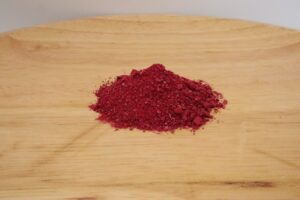
Bell-pepper powder

Domestic bell pepper powder is a commercial powder raw material made by drying large bell peppers with thick flesh like manganji chili at low temperature and handling everything through to milling at our own processing facility within Kyoto Prefecture. A two-color lineup in red and green is possible, and without glucose, colorants, or antioxidants, it concentrates the flesh's natural sweetness and vivid color into the powder. The red powder gets many inquiries for natural coloring and adding sweetness, and the green for kneading into dough and use as a soup base. Prototyping from 1kg of raw leaf is also available. For consultations on dried vegetable and powder OEM here Please let us know your intended use and desired specifications from
TOC
Agriture's Bell Pepper Powder: Three Points of Care
01 Low-Temperature Drying That Concentrates Thick-Flesh Sweetness and Pigment into the Powder
Bell peppers are a high-sugar, thick-fleshed variety, also rich in pigment components like carotenoids (red) and chlorophyll (green). At Agriture we adopt hot-air drying that holds the product temperature in a low range, designing the process to keep both the sweetness and the pigment in the powder. Vegetable & herb powder list You can also consult us about blending with other materials from
02 A Two-Color Red-and-Green Lineup That Widens the Range of Uses
The red powder is characterized by a vivid red from carotenoid pigments and can also be used as a natural coloring ingredient. The green powder, with its fresh flavor and green color development, suits kneading into dough. A red-green mix powder is also available for prototyping. The nutritional value and benefits of vegetable powder.
03 Small-lot prototypes from 1 kg of raw leaf and comparison runs
Product catalog showing the items we handle
Flexible support from small lots to large lots

- Sold in small lots from 1 kg
- Handling heirloom vegetables from across Japan
- Dried fruits and herbs also supported
Features of Commercial Bell Pepper Powder
Concentrating the Sweetness of Thick-Flesh Bell Peppers
We powder a variety with thick flesh like manganji chili. It's characterized by a refined flavor with stronger sweetness and less bitterness than ordinary bell pepper powder.
Natural Color in Two Shades, Red and Green
The red powder is a vivid red from carotenoid pigments, usable as a natural coloring ingredient. The green powder, a fresh green, can add natural color to dough and soups.
A Domestic Alternative to Paprika Powder
It suits food makers looking for domestic coloring and flavoring ingredients as an alternative to imported paprika powder. Differentiation is possible with a premium product design that appeals to domestic ingredients.
Zero additives, no coloring
Glucose, dextrin, antioxidants, and colorants are all unused. It is a specification well suited to the PB development of additive-free brands that want to keep the ingredient labeling simple.
Flexible for blend design too
Pre-blending with other ingredients like dried tomato powder, basil powder, and garlic powder is also available. Raw-material design for Italian mixes and vegetable powder blends is open to discussion.
Product specifications (commercial)
|
Item |
Details |
|---|---|
|
Raw material |
Bell pepper (domestically grown, red or green) |
|
Best-before date |
About 6 months from the shipping date |
|
Processing plant |
Our own processing plant within Kyoto Prefecture |
|
Shipping unit |
Choose from 500 g bag, 1 kg bag, or 5 kg commercial bag |
|
Minimum-lot OEM |
Prototype from 1 kg of raw leaves / main production from 10 kg of raw leaves |
*Prototype consultations are possible from 1 kg of raw leaf. Prototyping in red, green, or a two-color mix is also available.
Customization support
|
Item |
Available |
Details |
|---|---|---|
|
Color specification |
◎ |
Deliverable in red or green single-color or mixed |
|
Blend design |
◎ |
Pre-blending with other powder ingredients available |
|
OEM small-lot prototyping |
◎ |
Multiple versions can be prototyped in parallel from 1 kg of raw leaf |
|
Packaging changes |
◎ |
500 g, 1 kg, and 5 kg bags can be sorted out |
|
Quality document issuance |
◯ |
Specification sheet, raw-material origin certification, microbiological test report (discussed per project) |
POWDER
A dried-leaf type is also available
We also offer dried bell peppers in sliced and diced cuts rather than powder. For uses that draw on texture and appearance, like soup ingredients and pizza toppings, the leaf type is a good fit.
Commitments to variety, grower, and growing region
The raw material used in Agriture's bell pepper powder is large-variety bell peppers sourced directly from domestic partner farms. For the red, ripening them on the plant until fully mature accumulates carotenoid pigments, giving a raw material that combines a vivid red with high sugar content.
BRAND
Variety: Bell pepper (Capsicum, nightshade family). A variety larger and thicker-fleshed than ordinary bell peppers, with no heat and strong sweetness. The red has a vivid coloring power from the carotenoid pigments of fully ripe fruit.
PRODUCER
Producer: We partner with domestic partner farms and have set up a system to have them harvest at a size and ripeness suited to processing.
REGION
Growing region: Grown mainly in Kyoto Prefecture and other temperate regions of Japan. Sunlight conditions and temperature swings affect the accumulation of sugar and pigment.
CULTIVATION
Cultivation method: With managed cultivation that keeps pesticide use low,
Low-temperature drying technology and quality control
Bell pepper's pigment components (carotenoids, chlorophyll) and sweetness are heat-sensitive; high-temperature drying browns the color and turns the flavor toward a scorched note. At Agriture we adopt hot-air drying that holds the product temperature in a low range, designed to let only the moisture escape and keep both pigment and sweetness. Right after drying we mill it, shortening the contact time with oxygen so we can structure the process to keep the vivid color development.
Manufacturing is done at our own processing plant in Kyoto Prefecture, with integrated management from raw-material acceptance inspection to shipment. It is filled after passing through a foreign-matter removal process, and for OEM projects we issue necessary documents such as specification sheets, raw-material origin certificates, and microbiological test reports, upon consultation for each project.
TIPS|Bell Pepper Powder Trivia
Red and green bell pepper powders differ greatly in color and flavor after milling. The red has high coloring power and can add redness to dough and sauces even in small amounts, but note that it absorbs moisture easily because of its high sugar content. The green is characterized by a fresh flavor; its coloring power is more modest, but a matcha-like green shows well in dough.
Use cases and adoption examples
Use as a Natural Coloring Ingredient (Red Powder)
Red bell pepper powder is a use we get many inquiries about as a natural ingredient for adding red color to dishes and packaging without artificial colorants. Blended into pasta dough, bread dough, and fish paste, it adds a faintly reddish tint and sweetness.
- Suitable products: Red fresh pasta, colored bread dough, colorful fish paste, seasoning
- Blending guide: 5–20 g per 1 kg of flour
- Points to note in development: Because the red powder absorbs moisture easily, take care with storage
Raw Material for Soup Bases and Potage
Blending bell pepper powder into the base of a potage or vegetable soup spreads a natural sweetness and bell pepper flavor throughout the soup. Using the red powder also makes the soup color vivid, raising its visual appeal.
- Suitable products: Bell pepper potage, vegetable soup base, baby food base
- Blending guide: 3–8% of the soup powder
- Points to note in development: Because the flavor nuance changes between red and green, confirm in prototyping
Knead-in ingredient for confectionery and bakery
Kneading bell pepper powder into bread or cookie dough adds natural color and sweetness. In the development of vegetable breads and vegetable cookies, there's demand from bakeries seeking natural color without using colorants.
- Suitable products: Vegetable bread, vegetable cookies, focaccia
- Blending guide: 5–15 g per 1 kg of flour
- Points to note in development: Because the green powder may fade with heating, take care with the baking temperature
A Blending Ingredient for Seasonings and Spice Mixes
This is a use for blending domestic bell pepper powder into seasoning mixes as an alternative to paprika powder. A sweetness with a different quality from imported paprika powder becomes a differentiating element for original spices.
- Suitable products: Japanese-style seasoning, bell-pepper-flavored karaage coating, vegetable spice blend
- Blending guide: 3–10% of the total weight
- Points to note in development: Powdering makes it dissolve smoothly into a paste, suiting the design of easy-to-swallow foods.
- Suitable products: Baby-food vegetable paste, care-food thickened soup, confirm solubility in prototyping
- Suitable products: Italian vegetable powder mix, colorful veggie blend, vegetable soup base mix
- Blending guide: 10–20% of the overall blend
- Points to note in development: The finished color changes with the red-to-green mix ratio
- Dried bell pepper (Leaf-version product page)
- Vegetable & herb powder list
- The nutritional value and benefits of vegetable powder
- Sold in small lots from 1 kg
- Handling heirloom vegetables from across Japan
- Dried fruits and herbs also supported
Blending with other vegetable powders
We also handle designs for Italian mixes combining dried tomato powder, basil powder, garlic powder, and the like, and colorful vegetable powder blends. Vegetable powder list We can propose it in combination with
Points on commercial use and storage
For storage, sealed storage away from light, heat, and moisture is best. The red powder in particular absorbs moisture easily because of its high sugar content, so after opening, use it up quickly, or reduce air contact with nitrogen flushing or a zip bag to keep the color and flavor longer.
Related cases and articles
Product catalog showing the items we handle
Flexible support from small lots to large lots
Frequently asked questions
Q. What is the minimum lot and prototype handling?
A. We guide prototyping from 1kg of raw leaf and full production from 10kg of raw leaf as a guide. Prototyping in red, green, or a two-color mix is also available. Samples.
Q. How does it differ from paprika powder?
A. Whereas most paprika powder is imported, bell pepper powder is made from domestic raw materials. Because it's a variety with thick flesh close to manganji chili, the quality of its sweetness differs from imported paprika, and it can be used as a differentiating ingredient that appeals to domestic origin.
Q. What is the price guideline?
A. It varies by color (red/green), packaging spec, and lot count. Please consult our inquiry form for an accurate quote.
Q. What is the lead time?
A. If stock is available, we can ship in about 2–3 weeks after order as a guide. For projects involving new processing, please plan for a lead time of 4–8 weeks. Given the tie to the summer harvest season, for projects with a visible annual required volume, consulting us the year before makes it easier to plan a stable supply.
Q. Can you issue a certificate of raw material origin and an analysis table?
A. Both a raw-material origin certificate showing the bell peppers are domestic and a microbiological test report are issued after discussion on a per-project basis.
Q. Can it be blended with other powders?
A. Yes. We handle pre-blending with dried tomato powder, basil powder, garlic powder, and the like.