Dried mandarin


TOC
Product Overview of Dried Mikan
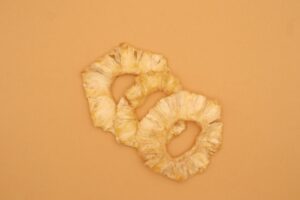
Made from Aichi-grown mikan mandarins dried whole with the peel on into dried chips. Because the outer peel contains plenty of nutrients, we finish them so you can take in the full nutritional value. Processing with the peel on tends to bring out bitterness, but we use a drying technique that draws on careful varietal selection and temperature control to keep the sweetness firmly while taming the peel's edge.
Beyond enjoying them straight as chips, they are also popular as a topping for tea, yogurt, and ice cream. Made without added sugar or glucose, they draw on the natural sweetness and aroma of the fruit as a natural-style snack and OEM ingredient suited to a wide range of uses.
Three Commitments Behind Our Dried Mikan
01 Sliced with the peel on to make the most of every nutrient
Mikan peel concentrates aromatic and functional compounds such as flavonoids and essential oils. At Agriture, we slice the fruit into rounds without peeling, finishing a dried mikan that makes the most of both aroma and nutritional value at once.
02 Varietal selection that minimizes peel bitterness
Drying with the peel on generally makes bitterness stand out, but at Agriture we use a variety within the Unshu group with an especially strong balance of sweetness and acidity. This keeps bitterness in check while achieving both the sweetness of the flesh and the aroma of the peel.
03 A natural design with zero added sugar or glucose
Most dried fruit is finished with a sugar-syrup soak or a glucose coating, but this dried mikan is unsweetened, additive-free, and uncolored. Because the sweetness is drawn out from the ingredient alone, it can be adopted as an OEM raw material for health-conscious brands.
Product catalog showing the items we handle
Flexible support from small lots to large lots
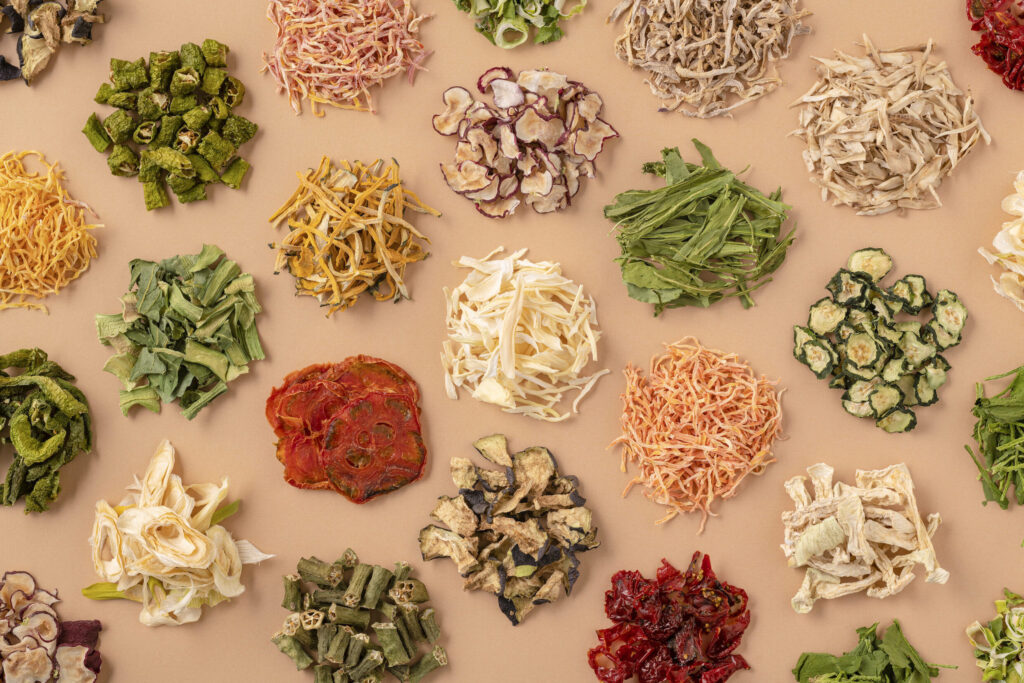
- Sold in small lots from 1 kg
- Handling heirloom vegetables from across Japan
- Dried fruits and herbs also supported
Features of Commercial Dried Mikan
Round slices of Japanese-grown mikan
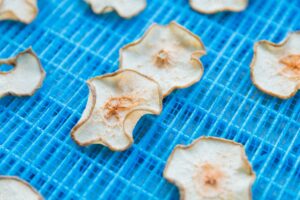
Japanese-grown mikan is sliced and dried with the peel on. Each slice keeps the fruit's cross-section intact, making it an ingredient chosen for its visual appeal.
Crisp texture
Low-temperature drying removes moisture evenly for a crisp, non-sticky texture. The physical properties make it easy to use both as a snack and as a topping.
Pairs well with black tea and herbal tea
A citrus aroma rises the moment hot water is poured, making it a good match as an ingredient for flavored teas and fruit blend teas.
Additive-free and coloring-free
A specification that uses no sugar, glucose, coloring, or preservatives. The design also makes it easy to repurpose for children's confectionery and natural gifts.
A pop of color for yogurt and cereal
Crushed and stirred into yogurt or cereal, it adds citrus aroma and a vivid orange color. It also works to strengthen the visual appeal of breakfast products.
Ready to perform as an OEM ingredient
An ingredient easy to add as an accent color to existing products such as unsweetened mixed nuts, fruit granola, and gift chocolates.
Main use
It can be used in natural-style dried chips and confectionery ingredients (sold as-is or developed for OEM), as an ingredient for black and flavored teas (for aroma and color), as a topping for yogurt, ice cream, and cereal, and as an OEM product ingredient (such as unsweetened, additive-free fruit mixes).
Product specifications
Item | Details |
|---|---|
Raw material growing region | Kyoto Prefecture (partner farm) |
Specification | Round slices |
Storage method | Room temperature (store away from high heat and humidity) |
Best-before date | 6 months from the shipping date |
Minimum lot | From 10 bags / 100 g |
Powder | Not possible |
Manufacturing period | February |
Customization support
Custom size support (cut-thickness change, shape adjustment): can be discussed for orders of 10kg and up. OEM support: available. Large-lot production: available (consultation required 3 months before the production period). Past initiative case studies are here。
POWDER
Mikan powder-type ingredients are also available on request
Dried mikan on its own cannot be made into powder, but depending on the use and formulation, we can discuss blends with other citrus powders. If you are considering development as a tea or baked-goods ingredient, please get in touch.
Variety, grower, origin
BRAND
Cultivar:Unshu mikan type. We select varieties with a good balance of sweetness and acidity that keep bitterness in check when dried with the peel on.
PRODUCER
Producer:Contract growers linked with citrus regions such as Aichi and Ehime. On the premise of drying, we sort by sugar content and peel thickness.
REGION
Production area:A major Japanese mikan-growing region. Centered on the mild Seto Inland and Tokai areas, we source fruit suited to drying.
CULTIVATION
Cultivation method:On the premise of eating the fruit peel and all, we give priority to growers who work to keep pesticide use low.
*Reference: OYAOYA product page
Low-temperature drying that protects the citrus aroma
Peel-on citrus has aromatic compounds that evaporate easily, and drying at high heat greatly damages the flavor. At Agriture, we take our time removing moisture at around 40℃, which lets us dry the fruit while keeping the fresh aroma inherent to mikan.
💡 TIPS | Drying-processing trivia
Citrus peel contains essential-oil compounds such as limonene, which are driven off if too much heat is applied. Low-temperature drying makes it easier to retain these oils, greatly changing how the aroma comes through when added to black tea or herbal tea. If your product design prioritizes aroma, please do ask about the drying temperature conditions as well.
Use cases
As a dried-fruit snack
The simplest product format, just bagging it up. The uses can be designed broadly, from natural snacks for children to office snacks for health-conscious brands and portable food for hiking and the outdoors.
As an ingredient for black and flavored teas
Put it in the pot with the tea leaves and pour hot water, and mikan's refreshing aroma transfers to the tea. It also suits OEM original blend teas and cafe signature menus.
As a topping for yogurt and granola
As a topping for yogurt and granola, it is effective for strengthening the visual appeal of breakfast products. Combined with other dried fruit and added to granola, its natural orange color and aroma lift the product's impression. Its room-temperature distribution and year-round availability also suit cereal products.
As a baked-goods and chocolate ingredient
It can be used broadly as a confectionery ingredient, crushed and kneaded into cookie dough or dipped into melted chocolate for an orangette-style finish. Because mikan's aroma and sweetness come alive, it becomes a differentiating ingredient for craft sweets built around Japanese citrus.
How to Use Commercial Dried Mikan
As a Japanese-grown dried fruit, dried mikan is an ingredient chosen for its aroma, visual appeal, and story rather than its price. It becomes easier to add value when combined with other ingredients, whether in pet treats, in confectionery development, or in gift designs built around dried fruit. Please see the related cases below.
- Why high-priced domestic dried fruit is scarce, and its potential in pet and confectionery development
- How to Choose a Dried Fruit Assortment: 10 Points to Avoid Regret
- How to Combine Dried Fruit and Nuts: 10 Rules for Boosting Nutritional Value
Product catalog showing the items we handle
Flexible support from small lots to large lots
- Sold in small lots from 1 kg
- Handling heirloom vegetables from across Japan
- Dried fruits and herbs also supported
Frequently asked questions (FAQ)
Q. What is the smallest lot you can handle?
A. Prototyping is possible from 10 bags of 100 g. For full adoption, production discussions center on 1 kg and 10 kg units.
Q. Can you give me a rough price range?
A. Because it varies greatly with purchase timing, lot size, and packaging format, we provide pricing by quote.
Q. How long is the lead time?
A. Around two weeks if stock is available. For planned production, we ask for consultation up to three months ahead, timed to the February production period.
Q. Can you disclose the origin of the raw material?
A. We use Japanese-grown mikan, and a certificate of origin can also be discussed.
Q. How do you handle pesticides and analysis for material dried with the peel on?
A. Because it is meant to be eaten peel and all, we select growers who use few pesticides and, depending on the project, can also handle residual-pesticide analysis.
Q. How are HACCP and hygiene management handled?
A. At our own plant we carry out hygiene management based on HACCP principles, and we can accommodate audits by OEM clients.
Q. Can I consult you about planning an OEM product using dried mikan?
A. Of course. We provide total support from recipe design to product concept and packaging.
RETAIL
For those looking to purchase in small packs
Small packs for general consumers are sold at the online shop of our sister brand OYAOYA. If you first want to check the flavor, we recommend trying OYAOYA's dried mikan.
Yakuzen properties (for fresh mikan)
From the yakuzen perspective, mikan is classified in the "qi-regulating" category. Unusually among citrus, it has a warming nature, and has long been valued as an ingredient that warms the body while regulating the function of the stomach, intestines, and lungs.
With a good balance of sweetness and acidity, it is considered a fruit well suited to the depths of a cold winter. Fragrant and beloved, it has long been a staple fruit on the winter table.
💡 TIPS | Yakuzen trivia
Mikan peel is known by the crude-drug name "chinpi" and is one of the representative ingredients for regulating the function of the stomach and intestines. Dried mikan, dried whole with the peel on, makes the most of chinpi's character while letting you enjoy the sweetness of the flesh together with it. When making it into tea, lightly crushing it before pouring hot water helps the aroma rise more easily.
Because dried mikan is easy to incorporate regardless of season, it also serves as a pantry staple for those who keep yakuzen in mind day to day.
YAKUZEN
For those who want to know more about mikan from a yakuzen view
Our sister media Yasai Yakuzen covers the yakuzen properties of mikan and winter ways to eat it in detail. Please make use of it as inspiration for product planning.
Recommended reading
- Why there are so few high-priced Japanese-grown dried fruits(OEM)
- How to choose a dried-fruit assortment(Sustainable)
- How to combine dried fruit and nuts(Sustainable)
Download the product catalog
We will send the materials to your email address based on the information you provide.