The difference between dried vegetables and vegetable supplements: comparing the benefits and drawbacks

Summary of this article
We thoroughly compare dried vegetables and vegetable supplements from the perspective of pros and cons. Vegetable supplements have the appeal of ease of intake and portability, but face the issue of vitamins being lost through heat treatment. Dried vegetables retain fiber in a natural form, can be stored long-term, and contribute to food-loss reduction too. We explain how to choose based on lifestyle and purpose, and how to make the most of the synergy of using both together.
Are you eating the amount of vegetables you need each day?
The daily vegetable intake recommended by the Ministry of Health, Labour and Welfare is 350 g. Yet the average intake for Japanese people stays at about 280 g. This gap of 70 g amounts to about the volume of a small side dish. Busy businesspeople and those living alone in particular probably feel it's hard to get enough vegetables in their daily meals.
"With convenience-store bento and eating out continuing, vegetables inevitably fall short..."
There are not a few people who hold this worry. In fact, among the younger generations in their 20s to 40s, vegetable shortage is becoming serious.

Vegetable shortage isn't merely a problem of nutritional balance. When important nutrients such as vitamins, minerals, and fiber run short, it leads to a variety of complaints, such as feeling unwell, reduced concentration, and rough skin.
That's where the "Vegetable Supplements" is drawing attention. It's gaining popularity as an easy way to make up for vegetable shortage. But we think that beyond supplements, "Dried vegetables" could also be a means of solving vegetable shortage. This time, we explain about these two.
TOC
The basic difference between vegetable supplements and dried vegetables
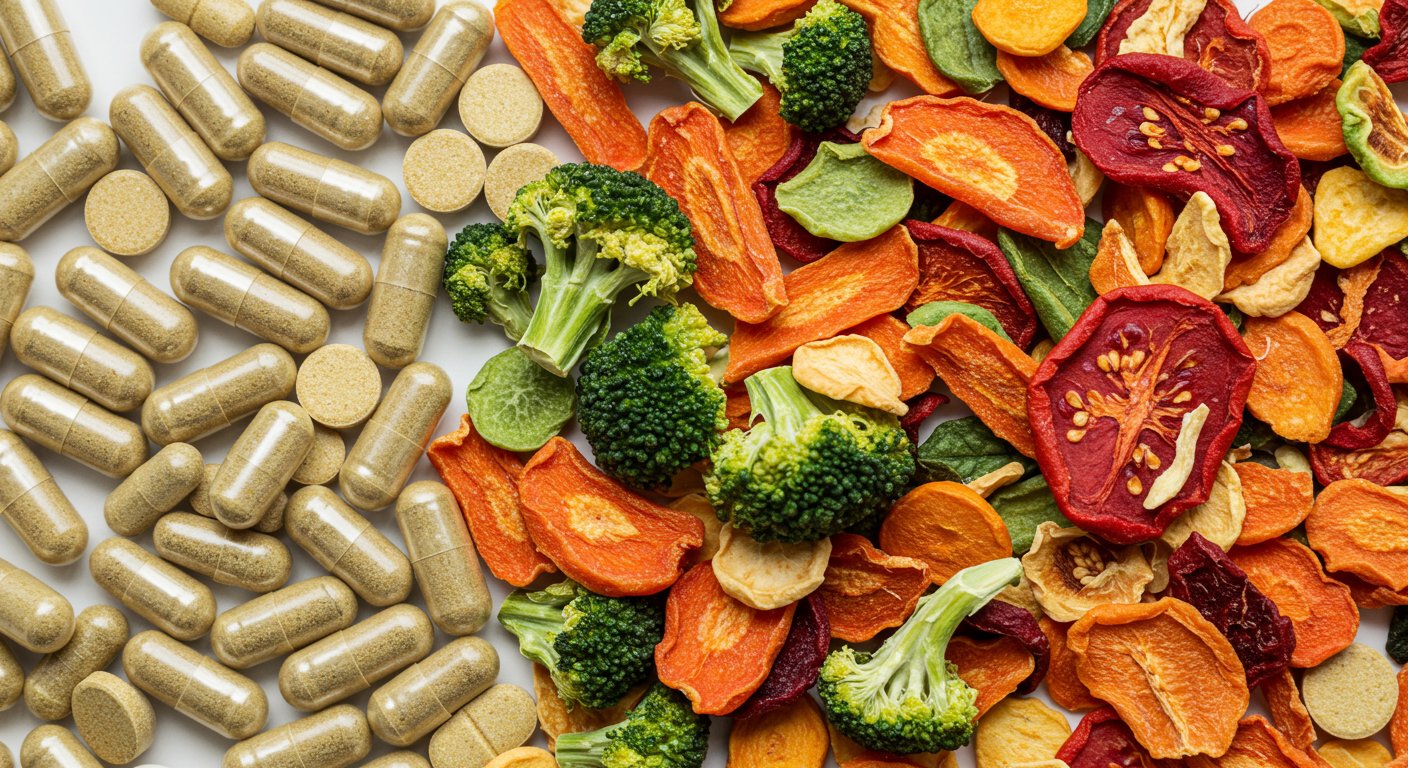
Vegetable supplements are made by concentrating nutrients extracted from vegetables and processing them into forms such as tablets, capsules, powder, and pills. Dried vegetables, meanwhile, are literally dried vegetables, with the moisture removed to raise storability and concentrate the nutrients.
The biggest difference between the two lies in "the form as food." Because dried vegetables process the vegetable itself, Dietary fiber and other nutrients remain in a more natural form. Vegetable supplements, by contrast, extract and concentrate specific nutrients, so while intake is efficient, they don't necessarily contain all of a vegetable's inherent nutrients.
I myself used to worry about vegetable shortage. In busy days, I even felt reluctant to spend the time making a salad. At such a time, a friend recommended vegetable supplements and I tried them. They were certainly convenient, but I felt something was missing.
After that, when I tried dried vegetables, it was refreshing that they had texture and a satisfying chew. The ease of keeping them stocked on my office desk and eating them quickly when a little hungry was also appealing.
So let's look at the features of each in a bit more detail.

Pros and cons of vegetable supplements
Vegetable supplements are a strong ally for busy modern people. Ease and high portability could be said to be their greatest appeal.
The main benefits of vegetable supplements
First, the biggest benefit of vegetable supplements is "ease of intake." As long as you have water, you can easily supplement nutrients anytime, anywhere. Keep them in your bag, and you don't need to worry about vegetable shortage even when out.
Also, being able to efficiently take in specific nutrients is a major advantage. For example, it suits cases where you want to focus on making up a particular component, such as vitamin C or polyphenols.
Furthermore, being able to take them without resistance even for those who dislike the taste or smell of vegetables is also appealing. For children and those who dislike vegetables in particular, there's the benefit of an added option for getting vegetable nutrients.
The main drawbacks of vegetable supplements
However, there are points to note with vegetable supplements. The most important is that "they don't necessarily contain all of a vegetable's nutrients."
Because vegetable supplements go through processes such as heat treatment and drying during manufacture, heat-sensitive nutrients such as vitamin B1, vitamin C, and folate can be lost. It also can't be denied that unknown trace components contained in vegetables may be missing.

Moreover, vegetable supplements are, after all, food, not medicine. Because you can't expect a disease-treating effect, they should be used with the aim of maintaining health and supplementing nutrition.
From the standpoint of the enjoyment of eating, too, vegetable supplements have limits. The satisfaction of the taste, aroma, and texture gained from a meal can't be had from a supplement.
Pros and cons of dried vegetables
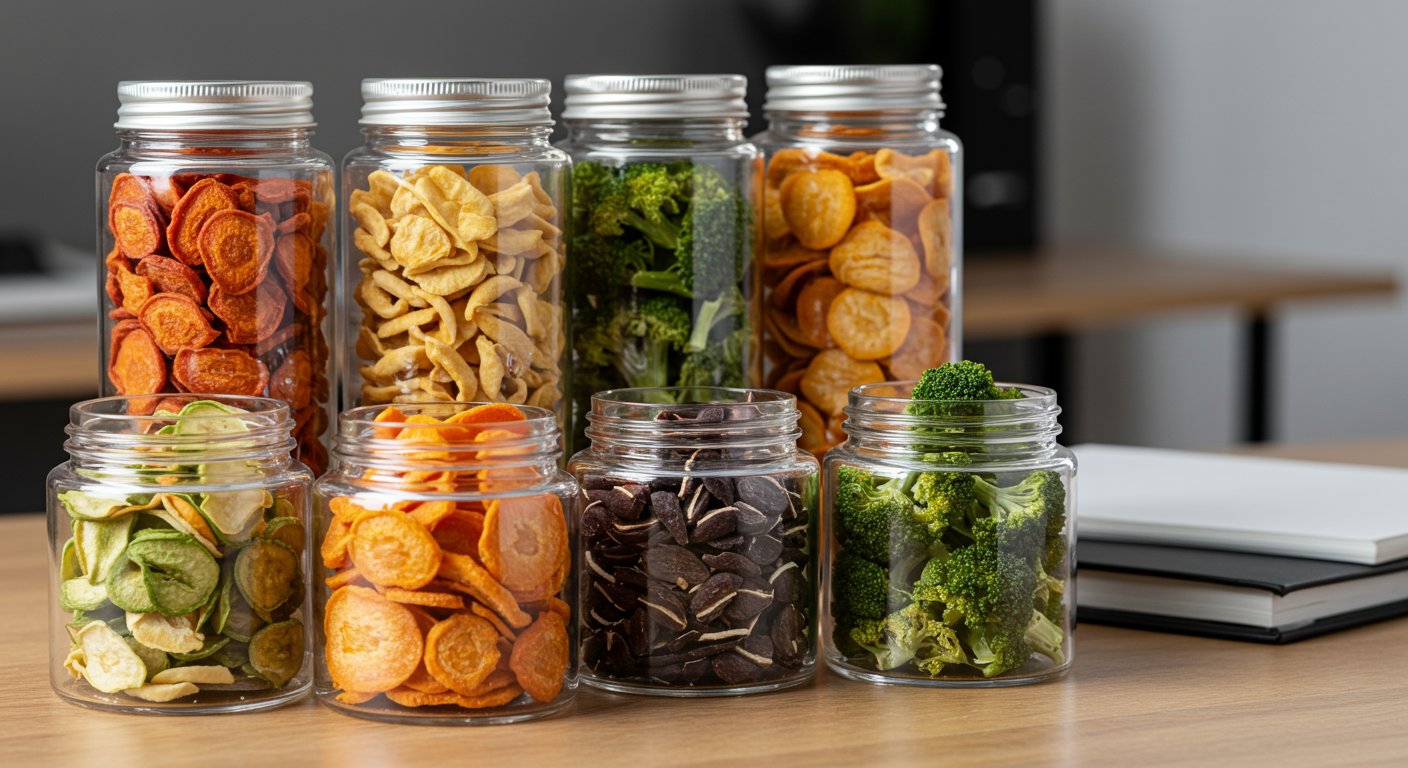
Dried vegetables are, as the name suggests, made by removing moisture from vegetables and drying them.
The main benefits of dried vegetables
The greatest appeal of dried vegetables is that "you can take in the vegetable's inherent nutrients in a more natural form." With moisture removed, the nutrients concentrate, so you can efficiently supplement nutrition even in small amounts.
Also, being long-term storable is a major benefit. Unlike fresh vegetables, they can be stored for a long time even at room temperature, so they contribute to reducing Food loss as well. For those living alone in particular, there's no worry of letting vegetables rot, which is economical.
Furthermore, another appealing point is that they take little cooking effort and can be used differently by purpose -- eaten as-is or rehydrated with hot water. Even on a busy morning, you can easily take in vegetables just by adding them to miso soup or soup.
The main drawbacks of dried vegetables
On the other hand, dried vegetables have a few points to note. First, some nutrients (especially heat-sensitive vitamin C) can be lost during the drying process. That said, the loss isn't as large as with vegetable supplements.
Also, because the texture and flavor differ from fresh vegetables, the fact that preferences split is worth considering. Those who are particular about texture in particular may feel a sense of unfamiliarity at first. Furthermore, compared with vegetable supplements, dried vegetables are bulkier, so they're a little inconvenient to carry. They're good for keeping stocked at the office, but in terms of portability for going out, they fall short of vegetable supplements.
The other day, when I got a little hungry at the office, I was eating a dried-vegetable mix I keep stocked on my desk. A colleague asked, "What's that? A snack?" and when I explained it was dried vegetables, they got interested. When they actually tasted it, they were surprised -- "It's tastier than I thought!" -- and after that several colleagues also started keeping dried vegetables on hand.
Like this, dried vegetables tend to be shunned on appearance or preconception, but once you actually try them, they're surprisingly easy to accept.
Points for making the choice that suits you
Vegetable supplements or dried vegetables -- which suits you?
The points for the choice lie in your lifestyle and purpose. Let's think about it from the following perspectives.
How to choose based on lifestyle
For those who are simply busy and move around a lot, vegetable supplements are recommended. Keep them in your bag, and you can easily supplement nutrition anytime, anywhere. They suit those with a lot of outside work such as sales, or those with irregular meal times, in particular.
On the other hand, for those who center on office work and spend long hours at the desk, dried vegetables are well suited. Keep them stocked at your desk, and you can eat them as a healthy snack when a little hungry. Also, for those who don't have time to cook properly at home but can manage simple cooking, dried vegetables are convenient.
How to choose based on purpose
When you want to efficiently take in a specific nutrient, a vegetable supplement formulated with the target component is suitable. For example, when you want to focus on making up vitamin C, or expect a particular health effect.
On the other hand, when you want to get plenty of fiber, or also want the satisfaction of chewing, dried vegetables are recommended. Also, for those who want to broaden the range of their cooking or reduce food loss, dried vegetables are useful.
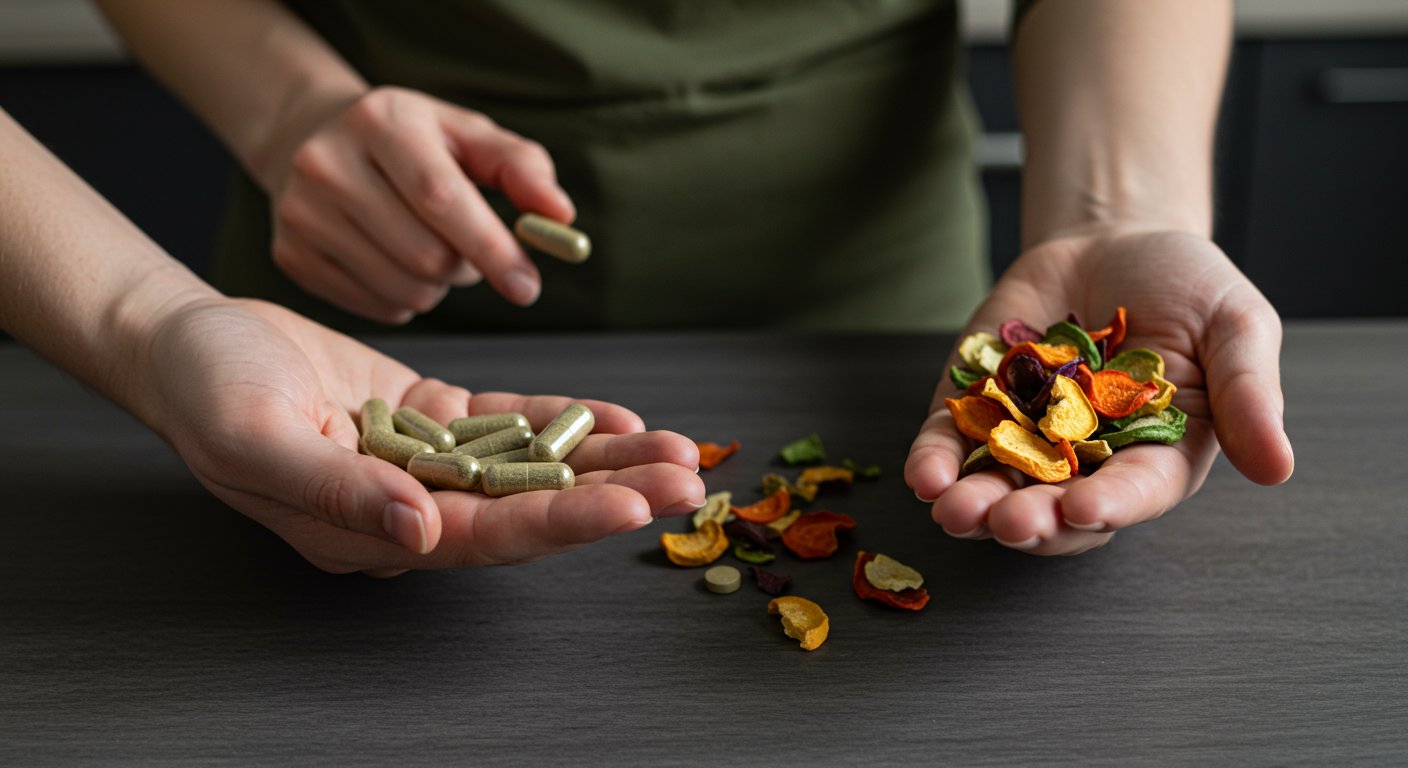
The option of using both
In fact, vegetable supplements and dried vegetables aren't in opposition; by using them together well, you can expect a synergistic effect.
For example, you can use them differently -- easily supplementing nutrition with vegetable supplements during busy weekday hours, and enjoying simple dishes using dried vegetables at night or on weekends. Also, there's the method of carrying vegetable supplements when out, while keeping dried vegetables stocked at the office or home.
In my case, I make use of vegetable supplements during weeks with a lot of business travel, and keep dried vegetables on my desk during weeks centered on office work. By using them differently depending on the situation like this, more effectively, vegetables
Summary: Make the choice that suits your life
We've seen that vegetable supplements and dried vegetables each have their own features and pros and cons. Vegetable supplements excel in ease and portability, letting you efficiently take in specific nutrients. Dried vegetables, on the other hand, let you take in the vegetable's inherent nutrients in a more natural form and broaden the range of your cooking.
What matters is making the choice that fits your lifestyle and purpose. For those who are busy and move around a lot, vegetable supplements; for those who center on office work, dried vegetables; and there's also the option of using both together depending on the situation.
Vegetable shortage is a challenge common to modern people. While aiming for the 350 g of daily vegetable intake recommended by the Ministry of Health, Labour and Welfare, it's important to find a method you can keep up without strain. Make good use of vegetable supplements and dried vegetables, and lead a healthy daily life.
Change the Start of Your Day! The Relationship Between Dried Vegetables and Dietary Fiber
How to Make Dried Vegetables | Tips for Easy Home-Dried Vegetables and Recipe Uses
Why Dried Vegetables Now? 5 Benefits Beyond Just Convenient and Nutrient-Concentrated