Is Not Eating Vegetables Unhealthy? Lifestyle Improvements You Can Start for Now

Summary of this article
Not eating vegetables leads to four troubles: skin problems, chronic fatigue, a worsening gut environment, and lower immunity. The Japanese average vegetable intake is 256 g, 94 g short of the 350 g target, and it's especially serious among people in their 20s at 231 g for men and 212 g for women. We explain seven effective remedies in concrete terms, such as vegetable juice at breakfast, keeping dried vegetables at the office, stocking frozen vegetables, and using vegetable powder.
Have you felt somehow off lately?
The daily vegetable intake recommended by the Ministry of Health, Labour and Welfare is 350 g. Yet according to the FY2023 National Health and Nutrition Survey, the Japanese average vegetable intake stands at only about 256 g. The vegetable-intake situation among people in their 20s in particular is serious, at 230.9 g for men and 211.8 g for women — far off the target.
Seeing these figures, you can tell many Japanese are falling into a vegetable shortfall. So what effects appear on our bodies when vegetables fall short?
When a vegetable shortfall continues, important nutrients like vitamins, minerals, and dietary fiber fall short, and multiple troubles appear. Let's take a detailed look at exactly what symptoms show up.
TOC
Four symptoms that appear with a vegetable shortfall
When vegetables fall short, nutrients like vitamins, minerals, and dietary fiber run low, and signs appear all over the body. Here we look at four symptoms that are especially easy to notice.
| Symptom | Signs like these are easy to appear | A guide for self-checking |
|---|---|---|
| Skin trouble | Skin breaks out easily; canker sores form easily | Days keep continuing where your condition looks off when you check the mirror in the morning |
| Fatigue and sluggishness | Fatigue doesn't lift even after sleeping | You get strong drowsiness or sluggishness in the afternoon |
| Disrupted bowel movements | Your stomach feels bloated; constipation or diarrhea continues | The rhythm of bowel movements isn't stable |
| Prone to poor condition | You catch colds easily and they're slow to heal | The number of times you feel under the weather has increased |
An increase in skin trouble
The vitamins in vegetables are nutrients essential to maintaining healthy skin. Vitamins A, B2, B6, and C in particular are deeply involved in skin health.
When these fall short, skin turnover doesn't function well and skin condition can be hard to keep balanced. Vitamin C is known as a nutrient involved in collagen synthesis.
If you increasingly feel, when you check the mirror on waking, that "my skin seems off," it may be a sign of a vegetable shortfall.
Chronic fatigue
"Lately, for some reason, I tire quickly…"
Such a symptom may also be caused by a vegetable shortfall. Vegetables are rich in B vitamins, and B1, B2, and B6 in particular are deeply involved in the body's energy metabolism. When these fall short, you can't efficiently draw energy from food, and you may feel tired more easily.
Minerals like iron and magnesium are also important nutrients for keeping nutrition in balance. When these nutrients fall short, the body can't perform at its true capacity, and you may feel tired even in everyday activity.
Deterioration of the gut environment
Vegetables are rich in dietary fiber. Dietary fiber stimulates gut movement and promotes bowel movements. It also serves as food for good bacteria, balancing gut flora.
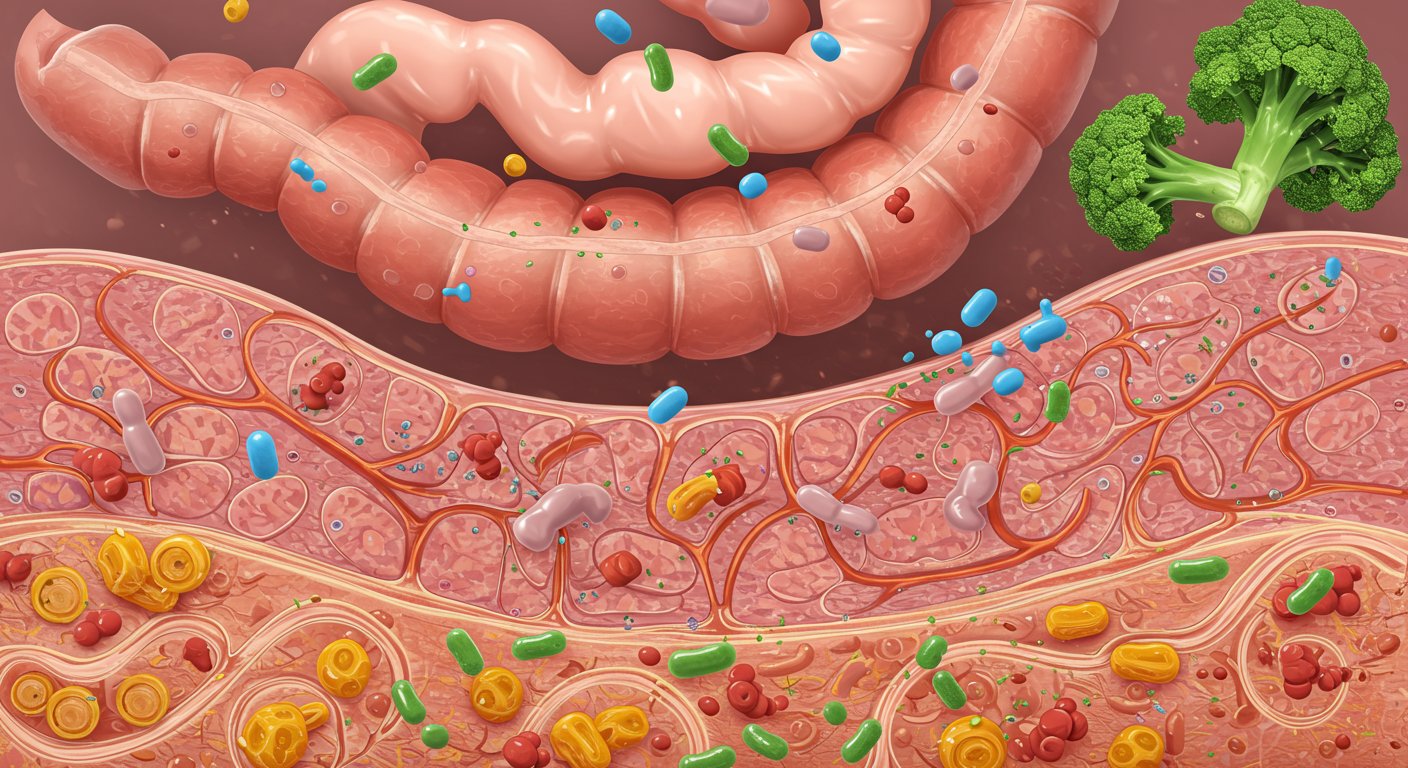
With a vegetable shortfall, this dietary fiber runs low and digestive troubles like constipation and diarrhea are more likely. When the gut environment worsens, it can affect not just bowel movements but the balance of your whole diet.
If days keep continuing where your stomach feels unsettled, it's worth rethinking your vegetable intake.
Change the Start of Your Day! The Relationship Between Dried Vegetables and Dietary Fiber
The impact on physical condition
Vegetables contain a wide range of components, including beta-carotene, vitamins C and E, and polyphenols.
Pigment components like beta-carotene and lycopene in green-and-yellow vegetables have especially high antioxidant power. When these fall short, the body's antioxidant power drops, and the immune system may not function normally.
If you've become prone to catching colds or slow to recover, an impact on physical condition may be suspected. Getting plenty of vegetables makes it easier to supplement the nutrients involved in physical condition.
These symptoms can appear singly or several at once. When signs like the following continue, it's a cue to rethink the amount and variety of vegetables.
- Skin is hard to keep balanced; canker sores form easily
- You eat properly yet fatigue doesn't lift
- Bowel movements are disrupted and your stomach bloats easily
- You catch colds easily and they're slow to heal
If troubling symptoms continue for a long time or you feel strongly unwell, it's important not to settle it by your own judgment alone but also to consult a medical institution.
*The target value for vegetable intake references the Ministry of Health, Labour and Welfare's "Health Japan 21," the average intake references the "FY2023 National Health and Nutrition Survey," and the workings of vitamins and dietary fiber reference the Ministry of Health, Labour and Welfare's "Green-and-yellow vegetables」「Dietary fiber." This article is intended to provide general information and is not intended for diagnosis or treatment.
Seven effective ways to resolve a vegetable shortfall
Now that you understand the dangers of a vegetable shortfall, let's look at concrete improvement measures. Here we introduce seven ways to increase vegetable intake that even busy modern people can keep up without strain.
These methods are aimed at reaching the 350 g of vegetables a day recommended by the Ministry of Health, Labour and Welfare. Thinking of one small bowl as about 70 g, the goal is to get five dishes' worth of vegetables a day. By practicing even a little at a time, let's resolve the vegetable shortfall.
| Remedy | In a word | Suited to |
|---|---|---|
| Vegetable juice in the morning | A morning glass just by drinking | People with no time in the morning |
| Keeping dried vegetables on hand | Just add to soup or miso soup | People whose work centers on the office |
| Stocking frozen vegetables | A dish from the microwave | People who have weeks they can't get to the store |
| Vegetable powder | Sneak them into dishes | Those who dislike vegetables / for children |
| Hearty, ingredient-packed dishes | Several kinds at once in one dish | People who cook for themselves |
| Increase your salad variety | Make it a staple at every meal | People who prioritize ease of continuing |
| Visualize your intake | Measure to raise awareness | People who want to make it a habit |

1. Incorporate vegetable juice at breakfast
Mornings especially leave no time, and many find they have no room to get vegetables. In that case, using vegetable juice is effective. Store-bought vegetable juice is fine, but if possible, a smoothie made with fresh vegetables and fruit is recommended.
Add banana or apple to leafy greens like spinach or kale for a nutritious breakfast drink. Being able to get around 100 g of vegetables from the morning with just this is a big benefit.
By working in a "morning veggie" habit, you can start resolving a vegetable shortfall from the very start of the day.
2. Keep dried vegetables at the office
For those whose work centers on the office, keeping dried vegetables on your desk is recommended. Dried vegetables have excellent shelf life, don't take up space, and can be eaten right away when needed.
Getting dried vegetable chips, dried tomato, and the like during a break between meetings or an afternoon snack lets you increase your vegetable intake without strain. Being able to get vegetables regardless of time or place is a big benefit for busy businesspeople in particular.
With the office-oriented dried-vegetable service we offer, you can eat vegetables anytime.
Dried vegetables rehydrate just by adding a pinch to cup soup or miso soup and pouring in hot water. Since you can add vegetables without adding shopping or cooking, they're easy to keep up with, the busier you are.
At Agriture, we buy from producers domestic vegetables that are sufficient in taste and nutrition but hard to bring to market because their shape doesn't meet standards, then dry them in partnership with contract farms and welfare facilities in northern Kyoto. Because we dry nearly 100 varieties including Kyoto vegetables and heirloom vegetables at low temperature, they retain the ingredient's flavor without relying on sugar or additives. Since they make use of non-standard vegetables, the act of eating itself leads directly to reducing food loss. (Insight from our own production floor)
3. Stock frozen vegetables
Fresh vegetables are hard to keep on hand, and on busy weeks there may be no time to go shopping. That's when frozen vegetables help. Frozen vegetables can be stored long-term while retaining nutritional value, and their appeal is that you can use just what you need.
Stock spinach, broccoli, mixed vegetables, and the like, and you can easily add them to stir-fries and soups. Even on a busy day, just taking vegetables out of the freezer and cooking them can prevent a vegetable shortfall.
With the idea of a "frozen savings account," prepping and freezing vegetables all at once on the weekend is recommended too. Cut and freeze vegetables, and you can use them easily even on busy weekdays.
4. Use vegetable powder
Vegetable powder is dried vegetables ground into powder, characterized by high nutritional value even in small amounts. Adding it to multiple dishes — soup, curry, hamburger-steak mixture — lets you get vegetable nutrition easily.
For those who dislike the flavor or texture of vegetables, or households with small children, in particular, using vegetable powder lets you work in vegetables without strain. Beyond using store-bought vegetable powder, drying leftover vegetables at home to make your own is another option.
Vegetable powder cost-performance comparison! 7 points on how to choose and use
[Latest 2025] A thorough comparison of 7 recommended vegetable powders
5. Add more hearty one-dish meals
Being mindful of making hearty dishes that use plenty of vegetables is also effective. For example, a vegetable-packed minestrone, curry, or stew lets you get many kinds of vegetables at once.
Also, just adding one dish with vegetables as the main — a vegetable stir-fry or a simmered vegetable dish — greatly increases vegetable intake. Combining green-and-yellow and light-colored vegetables in balance in particular lets you take in more nutrients.
How many vegetable-centered dishes are on your table?
6. Increase the variety and amount of salad
One of the easiest ways to get vegetables is salad. Just working salad into every meal greatly increases vegetable intake. But since the same salad every time gets boring, it's important to expand your repertoire of salads using several kinds of vegetables.
Working in not just raw vegetables but also steamed, boiled, and grilled vegetables lets you add variety in texture and flavor. And just changing the dressing greatly changes the impression, so you can keep it up without getting bored.
Think of salad as a main dish and add a protein source (chicken, tofu, egg, etc.), and it becomes a nutritionally balanced plate.
7. Visualize your vegetable intake
Finally, visualizing your vegetable intake is effective too. Using a vegetable-intake assessment device such as "VegeCheck" lets you know your vegetable-intake status objectively.
Using a meal-logging app to record your daily vegetable intake is also a good method. Knowing your current status and setting a goal raises your awareness of vegetable intake.
By making your vegetable intake "visible," you can more readily feel the effect of improvement, which leads to continuous improvement of your eating habits.
Summary: start resolving your vegetable shortfall today
A vegetable shortfall is a dietary imbalance that easily arises amid busy days. Against the 350 g of vegetables a day recommended by the Ministry of Health, Labour and Welfare, the Japanese average intake stands at only about 256 g. Among younger people in their 20s in particular, the situation is serious, at 230.9 g for men and 211.8 g for women.
When a vegetable shortfall continues, symptoms appear such as an increase in skin trouble, chronic fatigue, a worsening gut environment, and impact on physical condition. When such troubles pile up, they can lead to disruption of your daily condition and your whole diet.
But just changing your daily choices a little makes it possible to increase your vegetable intake. Try practicing methods like working vegetable juice into breakfast, keeping dried vegetables at the office, stocking frozen vegetables, using vegetable powder, adding more hearty one-dish meals, increasing the variety and amount of salad, and visualizing your vegetable intake.
Your health is built by the accumulation of small daily choices. Why not take a step today toward resolving your vegetable shortfall?
The more you keep it up, the more naturally your food choices fall into place.
Recommended reading
- The difference between dried vegetables and vegetable supplements: comparing the benefits and drawbacks
- [2025 edition] A thorough comparison of 7 vegetable-delivery services
- What is the 350 g-a-day vegetable guideline? Easy ways to achieve it
- Boost your vegetable intake even on busy mornings! Simple techniques you can do in 5 minutes
- Solve Vegetable Shortage Even with Convenience-Store Food! 5 Smart Ways to Supplement
Learn about Office Yaoya
We have prepared materials
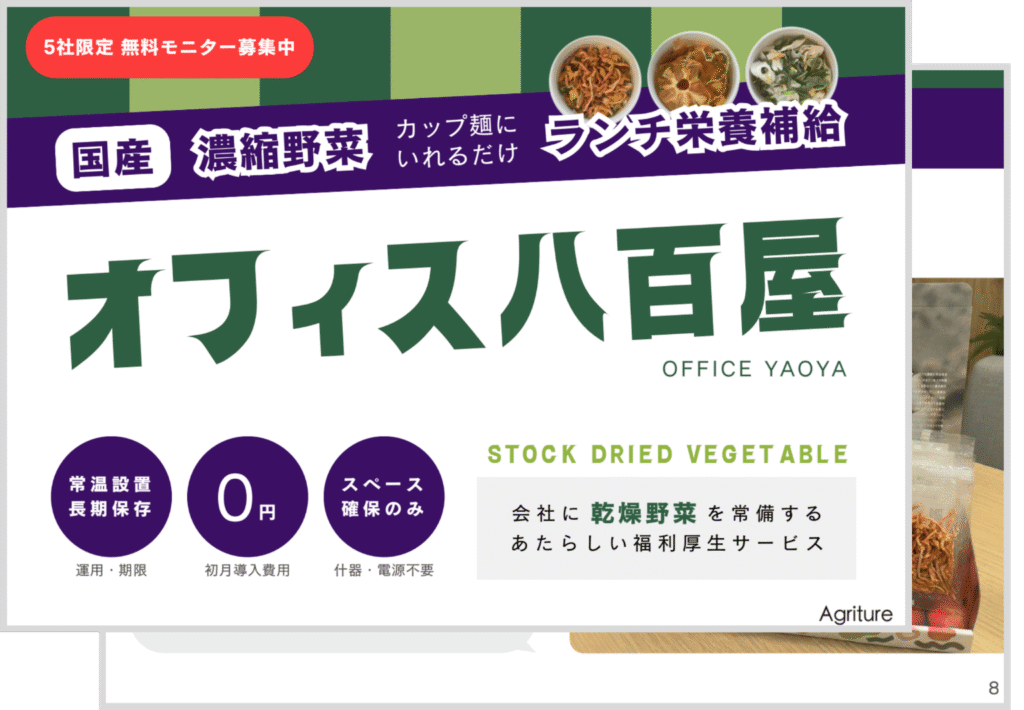
- Service details and vegetable lineup
- Pricing and plans
- How adoption and operation work
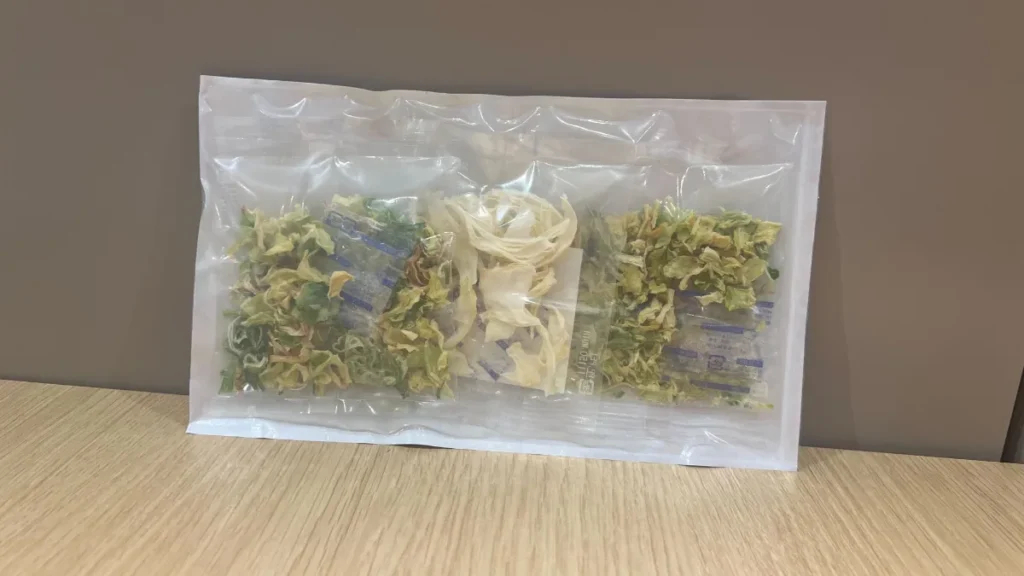
Sample sets are also available. Download the materials for details!
We offer sample sets so you can try Office Yaoya in small quantities. See the materials for details.
FAQ
We've compiled frequently asked questions about vegetable shortfall and physical condition.
Download the office dried vegetable materials
We will send the materials to your email address based on the information you provide.
- [Latest 2025] A thorough comparison of 7 recommended vegetable powders
- 食物繊維が多い食べ物は?野菜・豆・海藻・きのこを多い順に見る