
How to Make Ginger Tea and Shogayu That Bring Out Heat and Aroma

Summary of this article
How to make ginger tea and shogayu, from choosing between fresh and dried ginger to brewing methods and variations like honey lemon. Includes tips for making it easily with Japanese dried ginger and pointers for product development.
Ginger tea can be made just by pouring boiling water over grated ginger. Even so, people often stumble with "it was too spicy," "the aroma is weak" or "how is it different from shogayu?" What makes the difference is choosing between fresh and dried ginger, and how you draw out its heat and aroma.
This article covers the basics of making ginger tea and shogayu, choosing between fresh and dried ginger, variations with honey, lemon and black tea, and blend design. Drawing on our experience producing dried vegetables and dried ginger in Kyoto, we also share tips for making it easily with Japanese dried ginger. If you want to create an original ginger tea as a product, see tea OEM and product development.
- The differences between ginger tea, shogayu and ginger ale
- Choosing between fresh and dried ginger
- Brewing hot, cold-brewed and sparkling, plus variations
- How to commercialize it as a cafe menu item or your own product
TOC
Ginger tea vs. shogayu: the differences and basics
Sorting out the differences between these similar drinks first makes it easier to choose how to make them. All use ginger, but the base and preparation differ.
The differences between ginger tea, shogayu and ginger ale
Even if the names sound similar, a different base changes the direction of the flavor. Working backward from the impression you want makes it easier to decide.
| Drink | Base | Features |
|---|---|---|
| Ginger tea | Hot water, or tea such as black tea | A drink in which the aroma and heat of ginger are transferred to tea |
| Shogayu (Japanese ginger drink) | Hot water + sweetener | A Japanese-style drink of grated ginger with sweetener (some versions are thickened) |
| Ginger ale | Sparkling water + syrup | A soft drink made by mixing ginger syrup with sparkling water |
Before getting into the recipe, picturing when you want to drink it makes it easier to choose how to prepare it. Here are some example occasions.
- As a cup to savor slowly on cold mornings or evenings
- As a clean hot drink to refresh the palate after meals
- As an aromatic blend for entertaining guests
- Cold-brewed or iced for a refreshing summer drink
What changes with fresh ginger vs. dried ginger
Even with the same ginger, fresh and dried differ in how the flavor comes out and the effort involved. Remember: fresh for a fresh aroma, dried for convenience and a sharp heat.
| Comparison axis | Fresh ginger | Dried Ginger |
|---|---|---|
| Aroma | Juicy and vibrant | Concentrated and sharp |
| Heat | Fresh and crisp | Direct and powerful |
| Convenience | Needs peeling and slicing | Just pour hot water |
| Storage | Meant to be used up at once | Store at room temperature and use only what you need |
Types of ginger and how to choose
Ginger varies in aroma and heat depending on harvest time and growing region. For ginger tea, choosing based on how aromatic it is and how strong its heat is gets you closer to the flavor you want.
| Type | Features | Best style |
|---|---|---|
| Young ginger | Juicy with mild heat and a fresh, clean aroma | Thinly sliced for a gentle hot drink |
| Mature ginger (available year-round) | Strong heat and aroma, fibrous | Grated or simmered |
| Dried Ginger | Concentrated, sharp aroma; convenient | Just add hot water, or cold-brew |
When choosing fresh ginger, firm, glossy skin and a juicy cut surface are signs that the aroma is intact. For dried ginger, check the origin labeling and drying method, and choose a domestic product whose aroma hasn't faded for more consistent results. Field-grown new ginger is richly aromatic from the moment it is dug up, and drying such ingredients slowly at low temperatures preserves the aroma well (based on Agriture's experience).
What you need and basic ratios
Here is a guide for your first time. Preferences for heat vary widely, so start with less and adjust next time to avoid mistakes.
- For 1 cup (about 150-180ml), use 2-3 thin slices or 1 teaspoon of grated fresh ginger as a guide
- With dried ginger, start with 2-3 pieces; with ginger powder, 1/4-1/2 teaspoon
- Add about 1 teaspoon of honey or maple for sweetness, adjusting to taste
- A cup and spoon are all you need. A small pot is handy if simmering
Basic ginger tea with fresh ginger
Fresh ginger is characterized by a fresh aroma and crisp heat. The flavor changes with how it is prepped and heated, so let's go through it step by step.
Prep (peeling, slicing, grating)
Much of ginger's aroma is just beneath the skin, so peel it thinly or wash it well and use it skin-on. Thin slices give a gentle aroma, while grating brings out plenty of heat. Choose the cut based on the impression you want.
- Thin slices: when you want to enjoy a soft aroma
- Julienne: a balance of aroma and heat
- Grated: when you want plenty of heat
How to brew it hot
For a quick version, just put the ginger in a cup, pour in boiling water, cover and steep for a few minutes. When you want to bring out plenty of aroma and heat, simmering it briefly in a small pot deepens the flavor.
- Put sliced or grated ginger in a cup
- Pour in freshly boiled water, cover and steep for 3-5 minutes
- For a stronger brew, put water and ginger in a small pot and simmer over low heat for about 5 minutes
- Adjust the flavor with honey or lemon to taste
Tips for drawing out heat and aroma
To bring out heat, choose grating and simmering; to preserve aroma, choose thin slices and a shorter steep. If it's too spicy, adding honey softens the edge and makes it easier to drink. Ginger keeps releasing heat if left in, so removing it once it reaches your preferred strength keeps the result consistent.
If the flavor isn't coming out right, use the fixes below as a guide. Once you know the cause, you can get closer to the flavor you want next time.
| Problem | Main cause | Remedy |
|---|---|---|
| Too spicy | Too much grated ginger, simmered too long | Use less and soften the edge with honey |
| Weak aroma | Not steeped long enough, ginger has lost its aroma | Steep longer and switch to an ingredient that retains its aroma |
| Watery | Too little ginger, too much water | Add more ginger or simmer to concentrate |
| Harsh taste | Peeled too thickly, heated at high temperature for too long | Peel thinly and keep heating short |
Storing leftover ginger
Fresh ginger dries out easily, and flavor is lost from the cut surface. For tea, where it is used a little at a time, how you store leftovers affects how long the aroma lasts. If you can't use it up quickly, freezing or drying it avoids waste.
- To use within a few days: wrap in plastic wrap, put in a plastic bag and refrigerate
- For bulk purchases: slice or grate, freeze in portions and use from frozen
- To keep on hand long-term: slice and dry, and store as dried ginger
Making it easily with dried ginger or ginger powder
When you want to drink it every day or make it quickly on busy mornings, dried ginger is convenient. No peeling or grating is needed; just pour in hot water.
Steps for making it with dried ginger
- Put 2-3 pieces of dried ginger in a cup and pour in boiling water
- Cover and steep for 3-5 minutes until the ginger plumps up
- For ginger powder, simply dissolve 1/4-1/2 teaspoon in hot water
- Combine with honey, lemon or black tea to taste
Choosing between fresh and dried
Using fresh on days you want to enjoy a fresh aroma and juiciness, and dried on days you want an easy, sharp heat, keeps things interesting. Dried ginger can also be rehydrated and eaten, or left in the cup to enjoy. Dried is also suited to cold brew made ahead or tea bags to take with you.
With Japanese dried ginger, how much aroma remains depends on the growing region and drying method. Dried ginger made from Kyotango new ginger dried slowly at low temperatures has an aroma reminiscent of freshly dug ginger and a crisp heat, and even one piece gives plenty of flavor (based on Agriture's experience). When you want both convenience and aroma, choosing an ingredient dried in a way that preserves its aroma, such as Dried ginger, makes each cup more satisfying.
Making it with tube ginger or store-bought products
For an even quicker version, you can use grated ginger from a tube. Just squeeze 1-2cm into a cup, pour in boiling water and stir. The aroma is milder than fresh ginger, so adding lemon or honey to round out the flavor makes it taste good. Ginger powder can likewise be prepared simply by dissolving it in hot water.
- Tube ginger: squeeze 1-2cm into a cup and pour in boiling water
- Ginger powder: dissolve 1/4-1/2 teaspoon in hot water
- If it's lacking, add flavor with honey, lemon or black tea
How to make shogayu
Shogayu is a Japanese drink that combines grated ginger with sweetener and thickening. It has a thicker mouthfeel than ginger tea and suits times when you want to sip slowly.
Shogayu with grated ginger
- Put 1 teaspoon of grated ginger and 1-2 teaspoons of honey (or sugar) in a cup
- Pour in boiling water and stir well
- Add a few drops of lemon or yuzu juice to taste
Thickening with potato starch
For a thick mouthfeel, use potato starch. Add potato starch dissolved in water and bring to a brief boil for a smooth shogayu. This preparation has long been a winter favorite.
- Put water, grated ginger and sweetener in a small pot and warm
- Add potato starch slurry (about 1 teaspoon potato starch + 2 teaspoons water)
- Bring to a brief boil while stirring, and turn off the heat once thickened
Easy shogayu with dried ginger
With dried ginger or ginger powder, you can make it in just a cup without using the stove. You can make two versions: a light type without heating for busy mornings, and a thickened type for when you want to sip slowly.
- Light type: put 1/4-1/2 teaspoon ginger powder + 1 teaspoon honey in a cup, pour in boiling water and stir
- Thickened type: warm water, ginger powder and sugar in a small pot, then thicken with potato starch slurry (1 teaspoon potato starch + 2 teaspoons water)
- A few drops of lemon or yuzu juice at the end sharpens the finish
Sweetener and thickening variations for shogayu
Simply changing the sweetener and thickening broadens the character of shogayu considerably. Here are some combinations for when you want to vary the classic. Choose based on your preferred sweetness and richness.
| Type | Turnip and daikon look similar, but there is a clear difference in their characteristics after drying. Please use this as a reference for material selection. | Finished impression |
|---|---|---|
| Honey shogayu | Honey | Mellow with a gentle aroma |
| Brown sugar shogayu | Kokuto (Okinawan brown sugar) | Rich, deep sweetness |
| Kuzuyu style | Sugar + kudzu or potato starch | Thick with a smooth mouthfeel |
If you want to cut back on sweetness, adding a small amount of sweet fruit such as apple keeps it from tasting lacking even with less sugar. A few drops of yuzu or lemon juice sharpen the finish so you won't tire of it.
Ginger tea variations and blend design
Once you're used to the basic method, change its character with the ingredients you pair. Ginger is assertive, so blending with the partner ingredient as an equal rather than a mere supporting player makes the flavor come together.
A classic cup with honey and lemon
The easiest and most reliable combination is honey and lemon. Honey softens the sharp edge of the heat, and lemon's acidity lightens the finish. The trick is to add small amounts of sweetness and acidity at the same time.
- Basic: ginger + boiling water with 1 teaspoon of honey
- Refreshing: a few drops of lemon juice or one lemon slice
- Less sweet: reduce the honey and add a small amount of sweet fruit such as apple
Pairing with black tea or hojicha
Ginger goes well with black tea, making the classic ginger tea. Pairing it with hojicha adds roasted notes for a Japanese feel. Just dropping a piece of dried ginger into brewed black tea makes the aroma rise noticeably. This way of drinking it is also a popular use for dried ginger.
- Black tea x ginger: the classic. Add milk for a chai-like drink
- Hojicha x ginger: roasty with a Japanese feel. Goes well after meals
- Green tea x ginger: clean. Astringency tightens up the heat
Blending with yuzu, apple and spices
Adding a small amount of citrus, fruit or spice gives the aroma depth. Keeping ginger as the star and adding just one supporting ingredient is the basis of a blend that doesn't fail. Refer to the chart below. You can also check each product page from the ingredient names.
| Ingredient to add | How to combine | Finished impression |
|---|---|---|
| Dried lemon | One piece in ginger + hot water + honey | Refreshing acidity for a clean finish |
| Dried yuzu | Together with ginger in a hojicha base | Peel aroma with a Japanese finish |
| Dried apple | Add to black tea + ginger | Mellow with gentle sweetness |
| Cinnamon / clove | A small amount when simmering | Vibrant chai-like aroma |
Recommended blends you can copy
If you can't decide on a combination, try one of the three below. All use easy-to-find ingredients and have a clear aroma profile. Quantities follow the "1 cup" guide above.
Classic: honey ginger lemon
Pour boiling water over 1 teaspoon of grated ginger and add 1 teaspoon of honey and a few drops of lemon juice. The heat becomes milder, and the acidity keeps the finish light. This is the cup we recommend making first.
Japanese-style: yuzu ginger hojicha
Add 1 piece of dried ginger and a small amount of dried yuzu to brewed hojicha and steep. The roasted hojicha is layered with the crispness of ginger and the aroma of yuzu peel for a calm Japanese-style cup. Well suited as a hot drink after meals.
Spiced: ginger chai style
When simmering black tea in a small pot, add small amounts of ginger, cinnamon and clove. Finish by pouring in milk for an aromatic chai-style ginger tea. Perfect for a relaxed day off.
Making ginger syrup ahead
Keeping ginger syrup on hand lets you make a cup anytime just by adding hot water or sparkling water. Make a batch and refrigerate it, and you can easily use it for both iced and hot drinks.
- Put thinly sliced ginger and about the same amount of sugar or honey in a small pot
- Add just enough water to cover and simmer over low heat for about 15 minutes
- Add cinnamon or lemon to taste, strain and refrigerate in a clean jar
- Versatile: mix with hot water or sparkling water, or add to black tea
Iced, cold-brew and sparkling variations
In hot weather, iced ginger tea made strong and cooled with ice, or cold brew made by soaking dried ginger in cold water overnight, works well. With ginger syrup on hand, you can also mix it with sparkling water for a homemade ginger ale-style drink.
| Preparation | Steps at a glance | Flavor |
|---|---|---|
| Iced | Brew stronger than hot tea and pour all at once into a glass of ice | Crisp heat with a clean finish |
| Cold brew | Put dried ginger and water in a bottle and refrigerate overnight | Mellow heat without sharp edges |
| Sparkling | Mix ginger syrup with unsweetened sparkling water | A light, homemade ginger ale-style drink |
Since ice dilutes it, the trick for iced tea is to make it stronger than hot tea. Cold brew brings out a softer heat, so it suits people who don't like spiciness or when you want to pair it with meals. For sparkling drinks, keeping the ginger syrup described above on hand lets you make a cup quickly with just a squeeze of lemon or lime.
We have materials available to help you understand dried processing OEM
Agriture OEM, flexibly handling everything from small lots to large lots
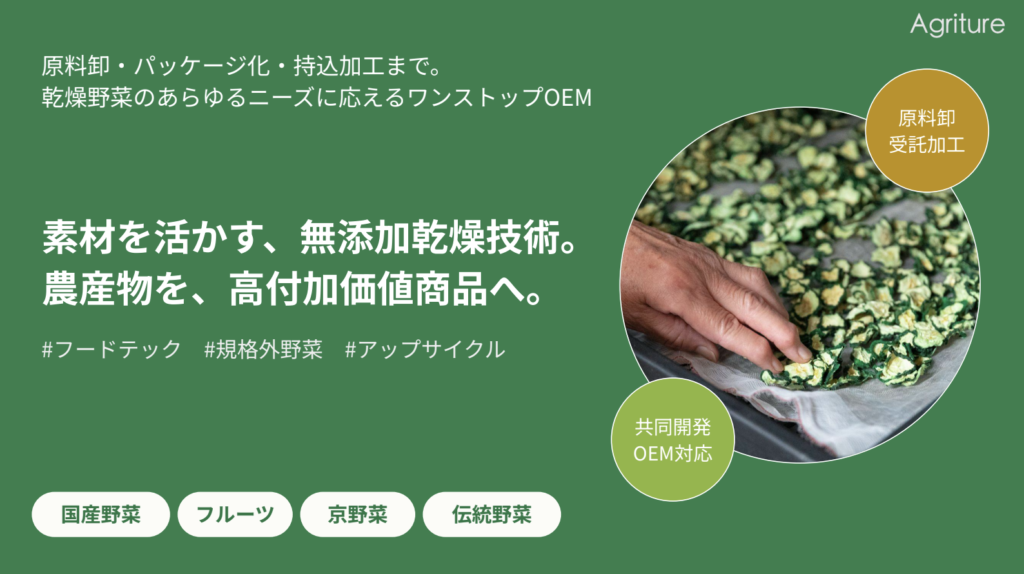
- OEM available from small lots of 10 kg
- Drying of brought-in raw materials also possible
- Support from processing to filling in one place
Choosing Japanese dried ginger
If you want an easy, tasty daily cup, the quality of dried ginger determines the result. How it's dried in particular directly affects how much aroma remains.
Why slow, low-temperature drying matters
When ginger is dried quickly at high temperatures, its aroma tends to escape. Drying slowly at low temperatures preserves an aroma reminiscent of freshly dug ginger and a crisp heat, which come through clearly when rehydrated. In Agriture's experience as well, the more an ingredient depends on its aroma, as ginger does, the more the finished result changed with the design of the drying temperature.
- Whether it's dried in a way that preserves aroma (low-temperature drying)
- Whether it's domestic with a stated growing region
- Whether even one piece gives enough flavor (value and ease of use)
Storing and using up dried ginger
Dried ginger that retains its aroma lasts differently depending on how it's handled after opening. Since tea uses small amounts at a time, a little care in storage lets you enjoy it to the last piece.
- After opening, store in an airtight container or zip bag away from direct sunlight, heat and humidity
- Absorbed moisture can dull the aroma, so adding a desiccant is a good idea
- Divide portions you won't use right away to reduce how often the bag is opened
Serving or making ginger tea at a cafe or as a product
Once people are making good ginger tea at home, some move on to wanting to "serve it in a shop" or "make it a product for their own brand." Turning the enjoyment of drinking it into a product requires a different design from home brewing.
Homemade vs. commercial production (OEM)
At home you can change the heat and sweetness depending on your mood, but as a product you need a fixed recipe that tastes the same no matter who brews it, a stable supply of raw materials, and compliance with best-before date and labeling rules. This is where a system that can dry and blend ginger, fruits and spices at consistent quality makes a difference. Our strength in drying domestic ingredients in-house is described in detail in OEM for edible black tea and fruit tea.
| Aspect | Enjoying at home | Making a product (OEM) |
|---|---|---|
| Recipe | Change freely depending on your mood | Fixed so it tastes the same no matter who makes it |
| Raw materials | Made with ginger on hand | Requires stable sourcing and consistent quality |
| Labeling / shelf life | Drink without worrying about it | Must comply with best-before dates and ingredient labeling |
| Quantity | One cup at a time | Planned with prototyping through mass production in mind |
Choosing to start with a small-lot prototype
Rather than jumping straight into mass production, you can start with a small-lot prototype to check the flavor and response. Agriture handles everything from raw material selection, drying and blending to small-pouch filling as a single contract, starting from small lots of as little as 100g. We can also build original ginger teas and blended teas combining ginger with citrus or spices based on the drying characteristics of each ingredient. Our range of services is summarized in OEM for creating original teas. For making teas starring fruit, see How to make fruit tea as well.
We have materials available to help you understand dried processing OEM
Agriture OEM, flexibly handling everything from small lots to large lots
- OEM available from small lots of 10 kg
- Drying of brought-in raw materials also possible
- Support from processing to filling in one place
FAQ
Here are answers to common questions about making ginger tea and shogayu.
Summary
The basic way to make ginger tea and shogayu is to pour hot water over ginger to draw out its aroma and heat. What creates differences in flavor is choosing between fresh and dried, and how you draw out the heat and aroma. Try dried ginger if you want an easy daily drink, and fresh if you want to enjoy it fresh.
Adding small amounts of honey, lemon, black tea, citrus or spices broadens the character of each cup. If you want to turn a ginger tea you love at home into a cafe menu item or your own product, you can make use of a system that handles everything from drying onward. Feel free to contact us about creating your original ginger tea or blended tea.
Recommended reading
- How to Make Fruit Tea: Types and Blending Tips with Dried Fruit
- OEM for Tea with Your Own Original Flavor
- Dried ginger
Download the OEM contract processing materials
We will send the materials to your email address based on the information you provide.
- How to Make Fruit Tea: Types and Blending Tips with Dried Fruit
- How to Make Hibiscus Tea That Makes the Most of Its Tartness and Ruby Color
Author of this article
Related articles
-
 How to Make and Use Yuzu Kosho: Ingredients, the Difference Between Green and Red, and Matching Dishes
 -
7 ways for vegetable-averse adults to overcome it without strain
-
 A Complete Guide to Using Moringa Powder: Effective Ways to Take It and Recipes
 -
 What is eating vegetables first? Eating order and how to practice it
 -
 What are the benefits of hot-air drying lemon? Explaining the difference from other drying methods
 -
A Guide to Rehydrating and Eating Dried Kikurage: Heating Tips to Prevent Food Poisoning and Recipes
-
 7 Innovative Cases of Overseas Fair Trade Companies Changing the World
 -
 A Thorough Guide to Drying Apples! 3 Steps and Tips You Can Do Easily at Home