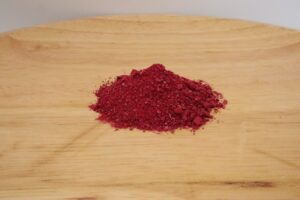
Sansho Powder

Sansho powder is a raw material made by drying sansho pericarp and then finely milling it. For applications such as blending shichimi togarashi, mapo sauce bases, seasoning tsukudani, Japanese-style seasonings, and confectionery accents, it aims to spread sansho's characteristic citrus-like aroma and tingling flavor evenly. Sansho is a deciduous shrub of the genus Zanthoxylum in the family Rutaceae (scientific name Zanthoxylum piperitum); the sanshool in its pericarp carries the tingling pungency and the volatile components carry the refreshing aroma. Agriture uses the same raw material as Dried Japanese pepper (sansho) and powders it with an added step of finely grinding the pericarp.
Sansho's tingle and aroma work by a different mechanism from the heat of chili pepper's capsaicin. To widen the range of flavor design, combining it with citrus-scented yuzu powder and Sudachi powder and the heat of chili pepper powder lets you design the powder blending for shichimi blends, Japanese-style seasonings, and mapo sauce all together. Specifications can be worked out from small quantities.
Sansho is a spice used in a wide range of ways, including green sansho berries, sansho powder, and sansho leaves. Among these, sansho powder made by drying and grinding the pericarp of ripe berries has long been enjoyed as a condiment for grilled eel, mapo tofu, and tsukudani. The powder suits even blending into sauces and powdered seasonings that are difficult with the whole berry, and for commercial use it can be developed as a blending raw material for shichimi, for seasoning aroma, and as an aroma accent in confectionery. Because the particle size can be selected, one advantage is that a single raw material readily covers everything from sprinkle applications to blending applications.
TOC
Agriture's sansho powder, three points of care
1. A drying design that keeps sansho's characteristic aroma
Sansho's appeal lies in its citrus-like refreshing aroma, and the aroma components are readily affected by heat and time. Agriture adjusts the temperature range and operates under conditions where sansho's characteristic aroma and tingling flavor remain. We also control the frictional heat during grinding, aiming for a finish where the aroma does not escape too much. Blend prototyping across application genres is possible, spanning shichimi, seasonings, confectionery, and sauces.
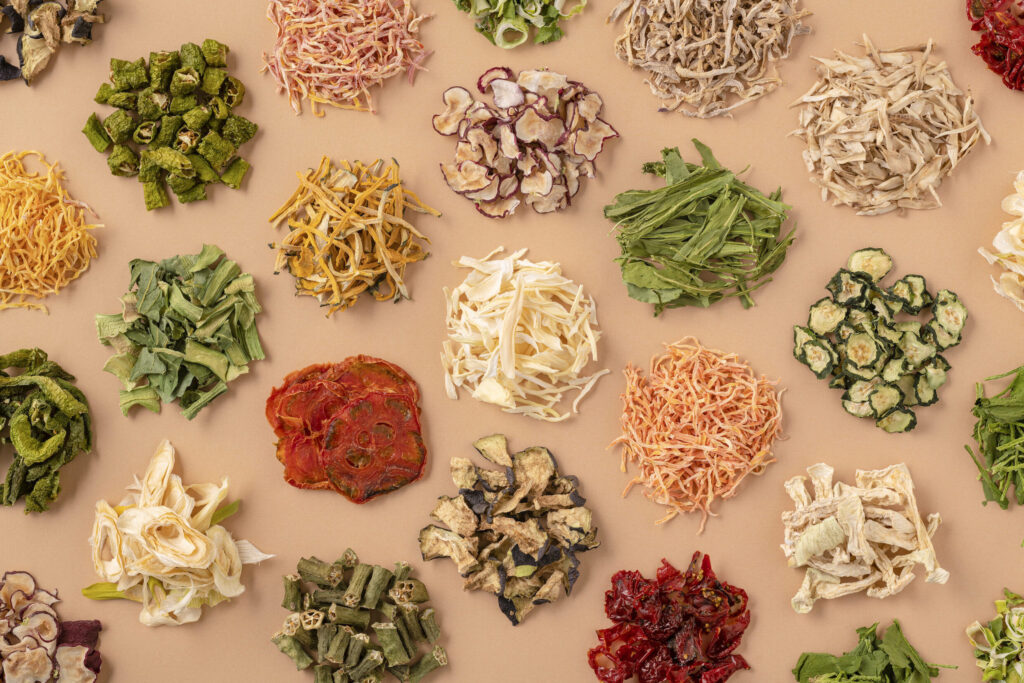
Product catalog showing the items we handle
Flexible support from small lots to large lots
- Sold in small lots from 1 kg
- Handling heirloom vegetables from across Japan
- Dried fruits and herbs also supported
Characteristics of commercial sansho powder
By finely milling it, you can expand into the application domain of "even blending into sauces and powdered seasonings" that the whole berry cannot reach. Here are the strengths unique to sansho powder organized across six points.
Concentrating sansho's aroma and tingle
The powder concentrates sansho's citrus-like aroma and the sanshool-derived tingling flavor. A small amount of blending adds a sansho-like accent to dishes such as shichimi blends, mapo sauce, and tsukudani. It is an ingredient whose flavor blends into the whole dish more readily than using the whole berry.
Flavor design different from chili pepper
Sansho's tingle comes from sanshool and works by a different mechanism from the heat of chili pepper's capsaicin. A tingle accompanied by a citrus-like aroma, when combined with chili pepper in shichimi or mapo sauce, makes it easier to build a blend with clearly defined aroma and heat.
Supports Japanese, Chinese, and confectionery blends
By pre-blending it with powders such as yuzu, sudachi, chili pepper, and ginger, you can design shichimi, Japanese-style seasonings, mapo sauce, and sweet accents from a single raw material supplier. It can be used across application genres.
Use together with the ingredient-shape version
For applications where you want to keep sansho's grain and appearance, Dried Japanese pepper (sansho) suits, and for applications where you want to spread aroma and tingle evenly, the powder suits. The grain feel and the base flavor can be balanced in the same recipe.
Raising blending precision by selecting the particle size
The fine powder disperses evenly in liquids and powders, raising blending precision in sauces and seasonings. A slightly coarser particle size can be left in as a textural or visual accent. You can select the particle size to match the aim of the finished product.
A defined edge from a small amount
Because sansho has a distinctive aroma and tingle, even a small amount gives the dish a defined edge. It suits situations where you want to make its character felt, such as powder for grilled eel, tsukudani, and Japanese-sweet accents. How strongly it comes through can be designed by the blend amount.
Product specifications (commercial)
The basic specifications at the prototype stage are as follows. Procurement lots, delivery dates, and packaging forms for mass production and OEM are settled through individual consultation.
| Item | Details |
|---|---|
| Product name | Sansho Powder |
| Raw material | Sansho (Wakayama Prefecture) |
| Shape | Fine powder (pericarp dried and ground) |
| Appearance | Yellow-green to brownish fine powder |
| Aroma | A citrus-like refreshing aroma and a tingling flavor |
| Net content | Individual quote according to use and lot |
| Best-before date | About 6 months from the shipping date |
| Storage method | Avoid high temperature, high humidity, and direct sunlight; after opening, seal and store in a cool, dark place |
| Minimum prototype lot | From 100 g of raw material |
| Main production lot | On consultation |
Customization support
| Item | Available | Details |
|---|---|---|
| Particle-size adjustment | From fine powder to slightly coarse | Fine powder for sauce use, slightly coarse for applications that keep texture |
| Blend design | Pre-mixing with spices and vegetable powders | Mixing at a specified ratio with chili pepper, yuzu, sudachi, ginger, etc. |
| Packaging form | From commercial bulk to small bags | Light-blocking aluminum bags, sticks and small bags, individual wrapping, and the like |
| OEM productization | End-to-end handling through the final product | Shichimi, mapo sauce, tsukudani, Japanese-style seasonings, etc. |
| Raw material supply | Raw material supply plus contract processing | We also handle contract drying and grinding at a specified growing region |
For those who want to make use of grain and appearance (raw-material-shape version)
For applications that keep sansho's grain and appearance, such as tsukudani or a finishing condiment, dried sansho is well suited. The presence of sansho's grain, which a powder cannot give, comes alive in the recipe.
Commitments to variety, grower, and growing region
Sansho is a deciduous shrub of the genus Zanthoxylum in the family Rutaceae. In Japan, lineages are known by growing region, such as "Budo sansho" from Wakayama Prefecture and "Asakura sansho" from Tajima in Hyogo Prefecture, each with its own character in pericarp thickness, how the aroma rises, and the strength of the tingle. As a powder raw material, we select it by looking at the balance of aroma and pericarp.
BRAND
Agriture manages everything from drying to grinding and packaging in one place, using sansho grown in Wakayama Prefecture as the raw material. Our basic policy is a finish that keeps sansho's characteristic citrus-like aroma and tingling flavor.
PRODUCER
We partner with contract growing regions and accept raw material after sharing rough guides on cultivar, harvest timing, and pericarp state. We record raw-material lots and use them to reproduce aroma and flavor in mass production.
REGION
The main growing regions are Wakayama and Hyogo Prefectures. From areas known as famous sansho-producing regions, we intensively source raw material during the season when the aroma rises. We can also provide a stable supply of raw material through a relay across growing regions.
CULTIVATION
We process mainly the pericarp from ripe berries into raw material, accepting it with the balance of aroma and tingle as a guide. We set conditions through the grinding step to ensure reproducibility between lots.
Powdering technology and quality control
Aroma retention and particle-size control
Sansho is an ingredient whose aroma components are readily affected by heat and time. We adjust the temperature range and operate under conditions that dry and grind it while keeping sansho's characteristic aroma. We also control the frictional heat during grinding, aiming for a finish where the powder does not hold too much heat. We adjust the particle size so it can be selected to suit the application, handling everything from fine powder for sauces to slightly coarse to keep texture. Commercial bulk uses light-blocking aluminum bags, and small bags and sticks use moisture- and light-blocking film, with specifications proposed to suit storage at the storefront and warehouse.
Lot control and reproducibility
Sansho's aroma and tingle character changes with growing region, cultivar, and harvest timing. We record raw-material lots and operate so that mass production comes close to the same flavor. If you share the flavor you are aiming for in the finished product, we raise reproducibility from both raw-material selection and blend formulation.
TIPS: A guide to blends that make the most of sansho powder
When used in a shichimi blend, combining it with chili pepper, chenpi, sesame, and aonori and allocating sansho to 10 to 20% of the whole is the range where tingle and aroma come through. In a mapo sauce base, blending it at 2 to 4% of the powdered seasoning lets the sansho-like tingle settle into the sauce. For finishing tsukudani, about 1 to 3% of a salt- or soy-based mixture is a guide. As an accent in Japanese sweets and chocolate, a small blend of 0.5 to 1% lets you work in an aromatic hook. In each case, how strongly it comes through is designed by the blend amount.
Use cases
Because the powder disperses evenly in liquids and powders, it extends to applications the whole berry cannot reach. Here are the applications we are often asked about, organized. For seasoning shichimi, mapo sauce, and tsukudani, we handle everything from mixing at a specified ratio to bagging in one place. We can also handle blends for confectionery and sauce applications.
Shichimi and Japanese-style seasonings
Shichimi togarashi has long included sansho as one of its components. We pre-blend it with chili pepper, chenpi, sesame, and others, and handle everything from mixing to bagging in a formulation that brings out sansho's aroma and tingle.
Mapo sauce and Chinese seasonings
For tingle-forward Chinese menu items such as mapo tofu, sansho's tingle and aroma can be evenly blended into the sauce. Combined with chili pepper powder, we supply a sauce base designed with a defined edge of heat and tingle.
Seasoning eel and tsukudani
Sansho powder is a standard condiment for grilled eel and tsukudani. The fine powder blends its aroma readily into the whole dish, and it can also be developed for powdered seasoning and furikake in finished products.
Seasonings and spice mixes
It can be used as an accent in Japanese-style seasonings and spice mixes combined with powders such as yuzu, sudachi, and ginger. Because the particle size can be selected, it suits both sprinkle and blending applications.
Accents for confectionery and sweets
Sansho's citrus-like aroma is also used as an aromatic accent in chocolate, baked goods, and Japanese sweets. The fine powder mixes evenly into batters and bean paste, and a small blend can add a distinctive aroma.
Sauces and dressings
Sansho's aroma and tingle can be worked evenly into Japanese-style dressings, dips, and sauces. Making use of its dispersibility in liquids, it can be built into the seasoning design of finished products. Combined with citrus powders such as yuzu and sudachi, sauce design centered on a Japanese aroma can be advanced together.
Commercial usage and blending points
Blending basics
- The fine powder disperses evenly in liquids and powders, so it can be blended from small amounts into sauces and powdered seasonings
- Because sansho has a distinctive aroma and tingle, start by testing a small blend and confirm how strongly it comes through
- Design the blend amount to match the aim of the finished product, such as shichimi, mapo sauce, or tsukudani
Blending guide
- Shichimi blend: allocate sansho to 10 to 20% of the whole
- Mapo sauce base: 2 to 4% of the powdered seasoning
- Finishing tsukudani: 1 to 3% of a salt- or soy-based mixture
- Confectionery accent: a small blend of 0.5 to 1%
How to store
- Before opening, store in a cool, dark place at room temperature, away from heat, humidity, and direct sunlight
- After opening, transfer to an airtight container and use it up before the aroma escapes
- The best-before date is about 6 months from the shipping date
Related ingredients and articles
- Dried Japanese pepper (sansho): the raw-material-shape version that keeps the grain
- yuzu powder: the citrus-aroma partner
- chili pepper powder: the heat side for shichimi and mapo
- Consult us on wholesale and OEM: the contact point for raw-material supply and OEM
Product catalog showing the items we handle
Flexible support from small lots to large lots
- Sold in small lots from 1 kg
- Handling heirloom vegetables from across Japan
- Dried fruits and herbs also supported
Frequently asked questions
How do dried sansho (whole) and powder differ in use?
Dried sansho is the type that keeps the grain's shape, suited to applications that make use of grain and appearance, such as tsukudani or a finishing condiment. The powder is a fine powder, suited to applications where you want to spread sansho's aroma and tingle evenly, such as seasoning shichimi, mapo sauce, and tsukudani, or accents in confectionery. Using both together balances grain feel and base flavor.
Is sansho's tingle different from chili pepper's heat?
The mechanism differs. Sansho's tingle comes from a component called sanshool contained in the pericarp, a different sensation from the heat of chili pepper's capsaicin. Sansho is characterized by an accompanying citrus-like aroma, and combining it with chili pepper in shichimi or mapo sauce makes it easier to build a blend with a defined edge of aroma and heat. How strongly the tingle and aroma come through is adjusted by blend amount and blend design.
Can it be pre-blended with other spices and vegetable powders?
Yes. We handle pre-blending with spices and vegetable powders that pair well in Japanese and Chinese styles, such as chili pepper, yuzu, sudachi, ginger, and chenpi. If you share the blend you are aiming for in the finished product, such as shichimi, mapo sauce, or Japanese-style seasoning, we handle everything from mixing at that ratio to bagging.
Can the particle size be chosen?
You can select it to suit the application. For even blending into sauces and powdered seasonings we propose a fine powder, and for keeping it as a sprinkle or a textural accent we propose a slightly coarser particle size. If you share the aim of the finished product, we design from both particle size and blend.
What is the minimum prototype lot?
Prototypes are accepted from 100 g of raw material. For mass production and OEM, we propose a quote and lead time individually. You can consult us on everything through to finished-product production, such as shichimi, mapo sauce, tsukudani, and Japanese-style seasonings.
Please tell me the best-before date and how to store it.
The best-before date is about 6 months from the shipping date. Because sansho powder readily loses aroma and absorbs moisture, before opening store it in a cool, dark place at room temperature, away from heat, humidity, and direct sunlight. After opening, transfer it to an airtight container and we recommend using it up while the aroma remains.
Recommended reading
- Dried sansho – the raw-material-shape version that keeps the grain
- Yuzu powder – the citrus-aroma partner
- Sudachi powder – a Japanese citrus accent
- List of vegetable powders – a list of the raw materials we handle
Download the product catalog
We will send the materials to your email address based on the information you provide.