A Guide to Eating and Prepping Tamogitake: Popular Recipes for the Yellow "Phantom Mushroom"

Summary of this article
We explain how to eat and prepare tamogitake, the yellow "phantom mushroom." We cover prepping fresh mushrooms and rehydrating dried tamogitake, popular recipes such as miso soup, takikomi rice, butter sauté, and tempura, and storage methods.
With its vivid yellow and fine aroma, tamogitake (tamogitake) is sometimes called the "phantom mushroom." Long enjoyed in Hokkaido and elsewhere, it delivers rich umami and stock when made into miso soup or takikomi rice. At the same time, many people wonder "How do I prep it?" "What's the standard way to eat it?" "How do I rehydrate dried tamogitake?"
This page covers prepping tamogitake and rehydrating the dried kind, popular recipes such as miso soup, takikomi rice, and butter sauté, and storage methods. We focus on the points unique to tamogitake, such as its yellow appearance and how readily it gives off stock.
TOC
What is tamogitake?
Tamogitake is a mushroom characterized by its vivid yellow cap. A relative of the oyster mushroom, it's grown and gathered mainly in Hokkaido and elsewhere, and because the amount reaching stores is limited, it's sometimes called the "phantom mushroom." Heating tones down the yellow somewhat, but the aroma and rich umami stand out, and its strong point is how well it gives off stock. Fresh supply is limited in quantity and season, but lately it's also seen as dried products and powder, making it easier to use at home.
The Difference Between Fresh, Dried, and Powder
Tamogitake comes fresh, dried, and finely ground into powder. Fresh is limited in season and region, but dried tamogitake can be used year-round, with concentrated umami that gives off plenty of stock. Powder adds aroma and umami to miso soup or soup with no rehydrating needed. Choose to match availability and how you'll use it.
| Shape | Features | Suitable use |
|---|---|---|
| Fresh | Vivid yellow with a good texture | Stir-fries, tempura, soups |
| Dried | Usable year-round, rich stock | Miso soup, takikomi rice, simmered dishes |
| Powder | Adds umami without rehydrating | Miso soup, soups, base seasoning |
For sorting out how to use other dried mushrooms, Dried mushroom usage guide, and the article on the fragrant Dried Maitake and Dried shiitake is also worth a look.
Prepping tamogitake and rehydrating dried tamogitake
Prep differs for fresh versus dried tamogitake. Either way, cooking before eating is the rule.
Prepping fresh tamogitake
For fresh tamogitake, cut off the tough base of the cluster (the stem end) and pull it apart into small clusters by hand. Mushrooms lose aroma and umami easily when soaked in water, so if dirt bothers you, just wipe them lightly with a dampened paper towel. Since it spoils easily, it's best to use it up soon after buying.
Rehydrating dried tamogitake
Rehydrate dried tamogitake by soaking it in plenty of water for about 10–30 minutes. The soaking liquid holds umami too, so don't discard it — use it as stock for miso soup or simmered dishes. For miso soup or takikomi rice, adding it without rehydrating and simmering it out is an easy method too. Over-soaking softens the texture, so lift it out promptly once rehydrated. For rehydrating dried vegetables in general, A guide to rehydrating dried vegetables is also a helpful reference.
- Cut off the stem end of fresh mushrooms and pull apart into small clusters by hand
- Don't soak fresh mushrooms in water; just wipe off dirt
- Soak dried in water for 10–30 minutes; use the soaking liquid as stock
- For miso soup or takikomi rice, you can add it without rehydrating and simmer it out
A product catalog that shows around 100 items we handle
Agriture, flexibly handling everything from small lots to large lots
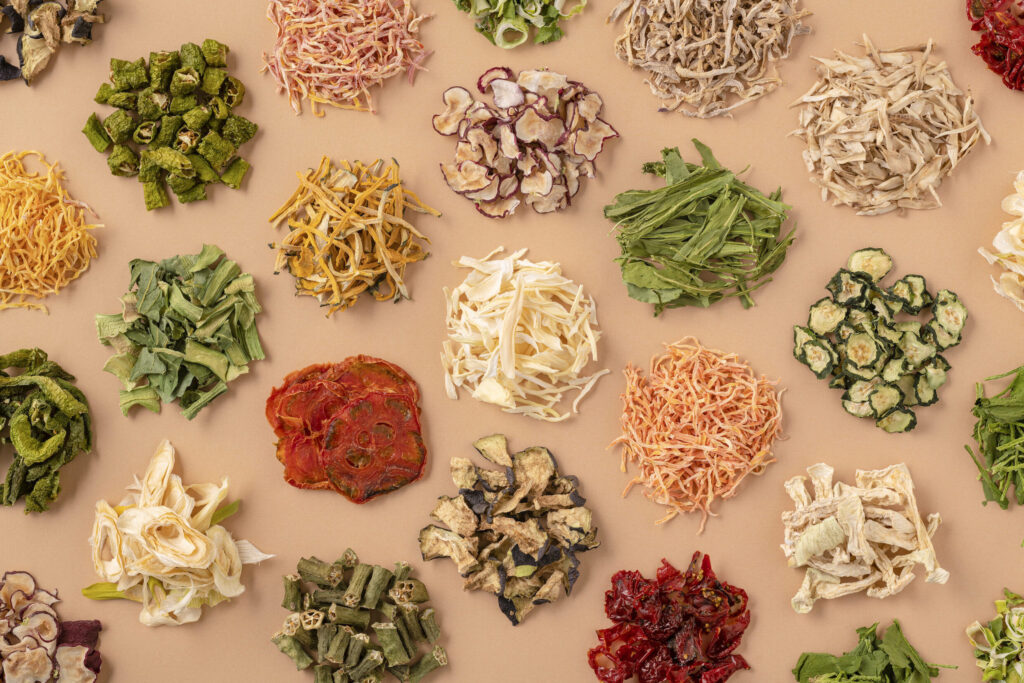
- Available for purchase in small lots from 1 kg
- We handle heirloom vegetables from across Japan
- Dried fruit and herbs also supported
FOR BUSINESS
乾燥野菜を業務用でお探しですか
国産の野菜・果物を乾燥し、必要に応じて粉砕してお出ししています。扱っている品目は100種前後で、規格は 乾燥品の一覧・パウダーの一覧 に掲載しています。
少量でのご購入は、姉妹ブランドの通販サイト OYAOYA で承っています。
Popular ways to eat and cook tamogitake
Tamogitake gives off plenty of stock, so it pairs superbly with soups. Here are standard ways to eat it that make the most of its aroma and texture.
Miso soup, soups, takikomi rice
The go-to standard is miso soup. Tamogitake gives off a rich stock that boosts the umami of the whole bowl. In takikomi rice, cooking it with the rice tints the grains faintly yellow and lets you enjoy the aroma too. Added to Chinese-style soup or clear broth, it makes a bowl full of good stock.
Butter sauté and tempura
Tamogitake also pairs well with butter and olive oil. A quick butter sauté brings out its aroma and texture. Fresh tamogitake, drained well, can be battered and made into tempura too. For recipes combining it with other dried vegetables, 10 selected dried vegetable recipes is also a helpful reference.
| Dish | Form used | Point |
|---|---|---|
| Miso soup | Fresh or dried | Gives off stock, serving as both ingredient and stock |
| Takikomi gohan (seasoned rice) | Dried | Cooked with rice to transfer the yellow and aroma |
| Butter sauté | Fresh or rehydrated | Sauté quickly to lift the aroma |
| Tempura | Fresh | Drain and batter |
How to store tamogitake
Storage methods differ by form. Fresh spoils easily and dried is vulnerable to moisture, so store each in the way that suits it.
Storage tips for fresh and dried
Fresh tamogitake spoils easily, so refrigerate and use it up as soon as possible. If you won't use it right away, dividing it into small clusters and freezing keeps the umami intact. Store dried tamogitake sealed, away from moisture and direct sunlight, and after opening, keep it with a desiccant and use it up promptly for a longer-lasting flavor. For detailed tips on storing dried vegetables, how to store dried vegetables and their best-before date.
- Refrigerate fresh and use it soon, or divide into small clusters and freeze
- Store dried sealed, away from moisture and direct sunlight
- After opening, keep with a desiccant and use it up promptly
- Refrigerate rehydrated mushrooms and use them that same day
Using tamogitake for commercial and OEM purposes
There are also situations that go beyond the home scale — using it in quantity at a restaurant, or wanting it as an ingredient in your own product. A distinctive mushroom like tamogitake can also help differentiate a product.
Using it as a raw material or via contract processing
When you want to make your own brand product using mushrooms including tamogitake, contract processing that handles everything from drying to grinding the raw material is convenient. Making the most of its stock-giving quality, you can also use it as an ingredient in dashi packs or soup bases. For commercial mushroom OEM, the Commercial Mushroom OEM Guide, and for contract processing of dried vegetables in general, see Dried vegetable OEM and contract processing introduced here. Domestic raw materials can be discussed from small lots, with a setup that's easy to use from the prototyping stage.
FOR BUSINESS
乾燥野菜を業務用でお探しですか
国産の野菜・果物を乾燥し、必要に応じて粉砕してお出ししています。扱っている品目は100種前後で、規格は 乾燥品の一覧・パウダーの一覧 に掲載しています。
少量でのご購入は、姉妹ブランドの通販サイト OYAOYA で承っています。
Frequently asked questions
Summary: make the most of tamogitake's stock in miso soup and takikomi rice
The greatest strength of tamogitake, the yellow phantom mushroom, is how well it gives off stock. In miso soup or takikomi rice you can enjoy it easily even added without rehydrating, and in butter sauté or tempura its aroma and texture stand out. Use fresh soon and store dried away from moisture, making the most of each one's virtues.
If you want to use it commercially at a restaurant, or as an ingredient in your own product, consider contract processing of domestic raw materials as well. As a distinctive mushroom, it also helps differentiate a product.
Download the product catalog
We will send the materials to your email address based on the information you provide.
- How to Rehydrate and Use Dried Maitake: Popular Recipes for Takikomi Gohan and Tempura
- 山椒の種類は?実山椒・粉山椒・青山椒の違いを一覧で