
What Is Citrus Powder? Manufacturing Methods, Uses, How to Choose for Commercial Use, and OEM Explained

Summary of this article
柑橘パウダーは柚子・すだち・かぼす・レモン・夏みかんの皮などを乾燥・粉末化した素材で、水分を加えずに香りと酸味を足せます。果汁/果皮タイプの違い、製法と香りを残す工夫、業務用で選ぶチェック項目(粒度・産地・吸湿・香り)、製菓・飲料・調味料での品目別用途、Agritureの京都産柚子パウダーなどの実績、OEM・小ロット調達の進め方までを解説します。
Citrus powder—made by powdering the peel of yuzu, sudachi, natsumikan, and the like—is a handy material that adds aroma and tartness without moisture. In developing confectionery, beverages, and seasonings, we're seeing more inquiries like "we want to use a domestic citrus powder in small lots" and "we're looking for a powder with a strong aroma."
On this page, we organize—from the perspective of a maker engaged in dried vegetables and powder processing—the types and features of citrus powder, the process and ingenuity for retaining aroma, checkpoints for commercial selection, uses, and how to proceed with small-lot OEM and sourcing. For how to choose fruit powders in general, see How to choose commercial fruit powders.
TOC
What is citrus powder?
Citrus powder is a processed material made by drying and powdering citrus juice or peel. There's a type using the juice and a type using the peel, which has more aroma components, and you use them differently by application. Because you can add aroma and tartness without adding liquid, you can adjust the flavor without upsetting the blend of dough or sauce.
Juice type and peel type
Powder made by drying juice gives firm tartness and suits adding tartness to drinks and candies. The type made by powdering peel is rich in aroma and shines in flavoring confectionery and seasonings. Both set the flavor with a small amount, offering advantages in both material cost and workability.
Main types of citrus powder
Citrus powders come in a wide range of items, centered on acidic citrus. The table below organizes the representative ones.
| Citrus | Part used | Flavor tendency | Main use |
|---|---|---|---|
| Yuzu | Peel | Bright, Japanese-style aroma | Confectionery, Japanese and Western sweets, seasonings |
| Sudachi | Peel, juice | Fresh, sharp tartness | Seasonings, drinks |
| Kabosu | Peel, juice | Mellow tartness | Ponzu, sauces, beverages |
| Lemon | Peel, juice | Strong tartness and a Western-style aroma | Confectionery, beverages, Western cuisine |
| Natsumikan peel | Peel | Mild bitterness and a refreshing aroma | Confectionery, marmalade flavor |
The process for citrus powder and ingenuity for retaining aroma
Citrus powder's quality changes greatly across the process from drying to grinding. How much aroma can be retained in particular determines citrus powder's value.
The flow from drying to powdering
Citrus powder is made by washing and cutting the raw material, drying it, and then grinding it. Drying methods include hot-air drying and freeze-drying, chosen according to the desired aroma, color, and cost. The fineness of the grind (grain size) is also adjusted to the application. Managing each step determines the finished aroma and usability.
FOR BUSINESS
乾燥野菜のOEM・受託加工を承ります
国産の野菜・果物の乾燥、100メッシュ相当までの粉砕、10g以上の小袋充填までをお受けしています。小ロットの試作から量産までご相談ください。寄せられた相談の実例は OEM・卸のご相談 に掲載しています。
乾燥品の賞味期限は、出荷日から6ヶ月程度を目安にご案内しています。
The difficulty of retaining aroma and tartness
Over-heating citrus makes the aroma fly off and leaves only tartness. Thin-peeled acidic citrus in particular is hard to gauge, and adjusting temperature and time divides the quality. The lower the temperature and the slower the drying, the easier the aroma is to retain—but it takes time and cost. If you seek reproducible aroma, it's important to choose a maker considering the process, management system, and confirmation of aroma in a prototype. At Agriture, we vary the drying method by citrus and are particular about the process for locking in aroma.
Checkpoints for commercial selection
When choosing a commercial citrus powder, confirming not only aroma but also usability and labeling-related items in advance keeps you from stumbling at commercialization.
- Grain size: is the fineness right for the use (solubility for beverages, mixability for confectionery)
- Material origin: domestic or imported, and whether origin can be labeled
- Additives: presence of anti-caking agents and the like, and whether you can confirm the ingredient labeling
- Moisture absorption: does it tend to clump during storage, and can it be addressed with packaging
- Retained color and aroma: the finished color and the strength and persistence of aroma
Because citrus powder is a moisture-absorbing material, discussing packaging form and storage conditions together brings peace of mind. Confirming the actual dissolution and aroma with a sample before adoption prevents trouble after mass production.
We have materials available to help you understand dried processing OEM
Agriture OEM, flexibly handling everything from small lots to large lots
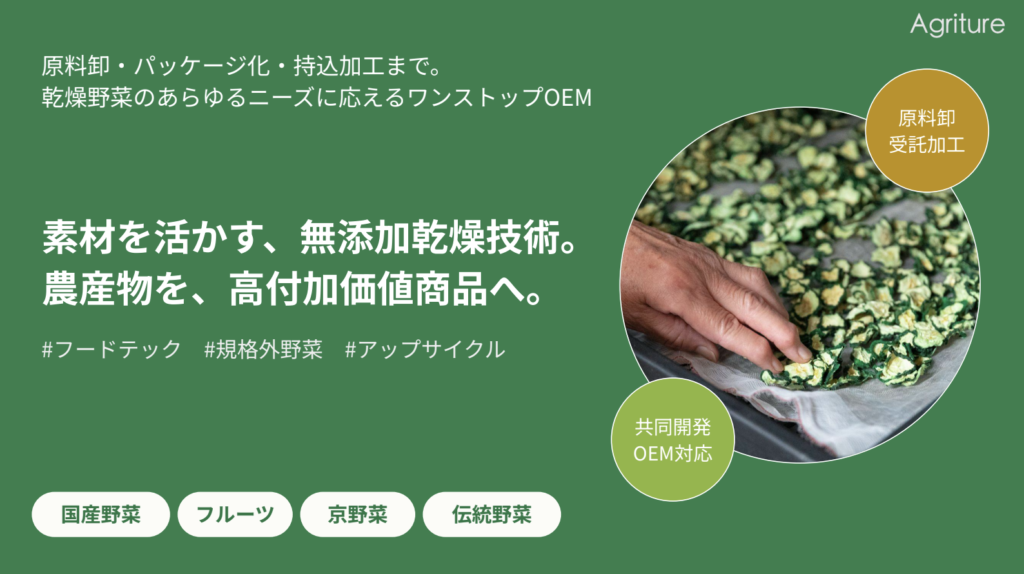
- OEM available from small lots of 10 kg
- Drying of brought-in raw materials also possible
- Support from processing to filling in one place
Uses of citrus powder
Citrus powder is used in a wide range of products, drawing on the strength of adding aroma and tartness without adding moisture.
Confectionery / bakery
Mixed into cookie, muffin, or pound-cake dough, it adds a refreshing citrus aroma. Because you can add flavor without increasing moisture, an advantage unique to powder is that you can use it without upsetting the dough's blend. It also suits flavoring icing and cream.
Beverages, seasonings, seasoning powders
It's also active in seasoning—powdered drinks and drink bases, citrus salt combined with salt, seasoning for dressings and sauces. Because a small amount sets the aroma, it raises the freedom of blend design.
Suitable uses by citrus item
Even for the same citrus powder, the uses where it shines differ by item. Yuzu suits Japanese and Western sweets and seasonings where you want to front a bright aroma; sudachi suits seasonings and drinks that draw on a sharp tartness. Kabosu, with mellow tartness, suits powdering ponzu and sauces, and natsumikan peel suits grown-up confectionery drawing on the mild bitterness from the white part of the peel. Lemon can be used widely in confectionery and beverages with tartness and a Western-style aroma. Once you decide whether it's a product that sells on aroma or one that functions on tartness, the citrus and part to choose become clear.
Types and grain-size guidelines by use
Citrus powder divides into the "peel type" made by powdering peel, the "juice type" made by drying juice, and the "blend type" combining both. Which to choose changes with whether you prioritize aroma or tartness, and with the use. The table below organizes guidelines for representative uses.
| Use | Suited type | Particle-size guide | Aim |
|---|---|---|---|
| Beverages, powdered drinks | Juice type / blend type | Finer (prioritizing solubility) | Dissolve tartness and aroma into water |
| Baked goods, confectionery | Peel type | Medium to thin | Draw on aroma that remains after baking |
| Seasonings, citrus salt | Peel type | Medium | Sprinkle to lift the aroma |
| Sauces, ponzu bases | Juice type / blend type | Finer | Make the tartness work firmly |
| Tea, blended tea | Peel type (coarse OK) | Coarse to medium | Transfer aroma during steeping |
Beverages and dissolve-to-use applications suit a fine grain size, while sprinkle and steep applications are easier to handle at medium to coarse. If you make aroma the star, choose the peel type; if you make it function on tartness, choose the juice type—working backward from the use reduces the number of prototypes.
Agriture's citrus-powder track record
In handling domestic dried vegetables and dried fruits, Agriture has also worked on powder processing of citrus. We're particular about drying and grinding that retain aroma, and we vary the drying method by citrus.
Powders of yuzu, sudachi, and natsumikan
京都産の柚子を使ったYuzu powder (Kyoto-grown) that draws on Tokushima-origin aroma, Sudachi powder that uses often-discarded peel, and more—we powder mainly acidic citrus. All use domestic materials, based on low-temperature drying that draws on the aroma. Natsumikan peel powder and more—we powder mainly acidic citrus. All use domestic materials, based on low-temperature drying that draws on the aroma.
Support for prototypes and small lots
We also support prototypes of off-grade fruit and not-yet-commercialized citrus. Through grain-size and packaging adjustments and test production from small quantities, our strength is designing together from the pre-commercialization stage. We bring our wide-ranging track record in processing dried vegetables and dried fruits to citrus-powder development too. You can see a list of powders on the vegetable and fruit powders page.
How to make citrus powder in OEM / small lots
If you want to develop an original citrus powder or a product using it, it starts with finding a maker that handles powder processing. Choosing a partner you can consult on the whole chain—from material sourcing through drying, grinding, and packaging—makes development smooth. Organizing the following items before consulting moves things along faster.
- The citrus and part you want to use (juice or peel), and origin preference
- Whether you can bring in the raw material, or the maker arranges it
- Grain-size specification (fineness for beverages, mixability for confectionery)
- Minimum lot and desired quantity, delivery timing
- Packaging form (small bags / commercial large bags) and storage conditions
- How to proceed with confirming aroma, color, and dissolution in a prototype
Aroma in particular is hard to convey in numbers, so confirming it with a prototype sample as you work out the details is the sure way. It's also good to check early whether the maker can accommodate bringing in your own material and test production.
Finding one on Foodoem
Makers that handle powder and drying processing can be found on Food OEM Directory. The table below is an example of makers listed on the same site that handle powder and drying processing. You can use it as a window when considering powdering materials including citrus.
| Maker | Handling features |
|---|---|
| Agriture | Domestic dried vegetables and dried fruits, powder processing of acidic citrus |
| Nikka Foods | Processing of various fruits and vegetables |
| Oki Bussan | Food processing centered on Okinawan materials |
| Yasai Yakuzen | Processing of vegetables and medicinal-herb materials |
Minimum lots, delivery timing, and the citrus types they can handle differ by maker. First organize the citrus and use you want and your desired quantity before consulting, and things move along faster.
Download the OEM contract processing materials
We will send the materials to your email address based on the information you provide.
FOR BUSINESS
乾燥野菜のOEM・受託加工を承ります
国産の野菜・果物の乾燥、100メッシュ相当までの粉砕、10g以上の小袋充填までをお受けしています。小ロットの試作から量産までご相談ください。寄せられた相談の実例は OEM・卸のご相談 に掲載しています。
乾燥品の賞味期限は、出荷日から6ヶ月程度を目安にご案内しています。
FAQ
Summary: making citrus powder that draws on aroma
Citrus powder is a handy material that adds aroma and tartness without adding moisture, usable widely across confectionery, beverages, and seasonings. What sways quality is the ingenuity in drying and grinding—how much aroma can be retained. When choosing for commercial use, confirm grain size, origin, additives, moisture absorption, and retained aroma, and check with a sample before adoption, and you won't go wrong.
Agriture works on processing citrus powder that draws on aroma, centered on domestic acidic citrus. We also support prototypes and small lots, so if you're considering an original citrus powder or product development, please feel free to inquire.
If you are considering product development with off-spec or your own farm's vegetables:From planning to processing, materials, package printing and novelties, you can consult us through a single point of contact. → Learn more about one-stop product development
- What is spice OEM? Development of original mixed spices made with dried vegetables and small-lot manufacturing
- Commercial mushroom OEM and drying & powdering processing guide | Domestically grown, small-lot support
Author of this article
Related articles
-
 Original coffee marketing strategy | Ways to grow sales
 -
 ベジタリアンとは?国の規格が分けている4つの区分と食べられないもの
 -
 長ねぎと白ねぎは同じもの?ねぎの種類と呼び名を国の資料で確かめる
 -
 柚子の種類は何種類あるのか、公の資料で名前が残る系統を数えた
 -
 ゆずの時期は年に二度、青ゆずは7月から黄ゆずは10月から
 -
 ゆずの産地は高知が半分を占め、二位は徳島から愛媛に変わった
 -
 Preventing Food OEM Failures: Common Failure Cases and Countermeasures for Success
 -
 How to find a food OEM | How to efficiently find the best manufacturing partner