What Is Fair Trade? From the Mechanism and Certification System to the Latest 2026 Trends Explained

Summary of this article
Fair trade is a mechanism that achieves sustainable livelihoods through fair transactions with producers in developing countries. It originated in a movement by Western church groups in the 1940s, and in 1988 the Max Havelaar certification was born in the Netherlands. We explain the latest trends and future outlook, including the "Fair Trade Million Action Campaign" reaching 2.8 million actions in 2025 and fair trade being certified in the official procurement code at the Osaka-Kansai Expo.
Opportunities to hear the term "fair trade" are increasing. From seeing certification-marked products at supermarkets and cafes to their coverage in corporate sustainability reports, it is steadily spreading in Japan as well.
In this article, we explain everything from the basic definition of fair trade to how the certification system works, the products covered, and market trends as of 2026, weaving in the perspective of practitioners involved in the food industry.
TOC
What is fair trade? Its definition and basic mechanism
Fair trade is a mechanism of conducting fair transactions between producers in developing countries and consumers, supporting producers' improved livelihoods and sustainable production. It originated in a movement by Western church groups in the 1940s, and in 1988 the world's first fair-trade certification label, "Max Havelaar," was born in the Netherlands.
It is not merely a trading rule of "not buying cheap." On top of guaranteeing fair prices, it functions as a comprehensive mechanism that supports the entire society of the producing region, including improving working conditions, banning child labor, and protecting the environment.
The three standards of fair trade
International fair-trade certification sets standards based on the following three pillars.
| Criterion | Details | Examples |
|---|---|---|
| Economic standards | Guaranteeing a minimum price and paying the Fair Trade Premium | Buying at or above a set amount even when market prices fall, and using an additional premium (incentive) for regional development |
| Social standards | Protecting workers' rights and contributing to the community | Banning child and forced labor, securing safe working conditions, and supporting organization-building |
| Environmental standards | Sustainable agriculture and reducing environmental burden | Restricting pesticide use, protecting soil and water resources, and maintaining biodiversity |
By meeting these three standards, fair trade's distinctive feature is that it simultaneously achieves producers' escape from poverty and economic independence, along with the conservation of the natural environment.
Products covered by fair trade
Coffee and cacao are the representative products covered by fair trade, but the range is widening year by year.
| Item | Domestic market share | Main producing regions |
|---|---|---|
| Coffee | 78.2% | Ethiopia, Colombia, Peru |
| Cacao | 12.2% | Ghana, Côte d'Ivoire |
| Black tea | Growth rate 160% | India, Sri Lanka, Kenya |
| Banana | – | Ecuador, Colombia |
| Cotton | – | India, Pakistan |
| Sugar & spices | Spice growth rate 109% | Paraguay, Fiji |
In Japan, coffee holds an overwhelming share, but the growth of items such as cacao (169% year-on-year) and black tea (160% year-on-year) stands out. In corporate product development too, the choices of fair-trade-certified raw materials are widening.
The history of fair trade and its international spread
The history of fair trade began in 1946 when an American church-affiliated group sold Puerto Rican handicrafts. In Europe, the UK's Oxfam began efforts to support producers in developing countries from the 1950s.
From the establishment of the certification system to WFTO's 10 principles
Since the "Max Havelaar" certification was born in the Netherlands in 1988, fair trade has evolved from "goodwill support" to a "standards-based certification system." Today, two major certification frameworks exist internationally.
The WFTO (World Fair Trade Organization) sets out the 10 principles of fair trade: providing fair trading opportunities, transparency and accountability, fair trading practices, payment of fair prices, elimination of child and forced labor, ending discrimination, good working conditions, support for capacity building, promotion of fair trade, and respect for the environment.
In Japan, it began in 1974 when the NGO "Shapla Neer" introduced Bangladeshi handicrafts, and in 1993 Fairtrade Japan was established. For details on the differences between certification systems, see "How the fair-trade certification system works and its significance".
The Fair Trade Town initiative
In 2011, Kumamoto City became Japan's first "Fair Trade Town." A Fair Trade Town is a city that promotes fair trade across the whole community and meets six certification criteria (a promoting body, product diffusion, corporate involvement, government support, awareness activities, and local collaboration).
As of 2026, six cities—including Nagoya, Zushi, Hamamatsu, Sapporo, and Inabe—have been certified, and more than 13 cities continue activities aiming to become Fair Trade Towns. Awareness stands at about 30% in Japan against about 80% in the UK, a gap that raises expectations for future expansion.
FOR BUSINESS
乾燥野菜を業務用でお探しですか
国産の野菜・果物を乾燥し、必要に応じて粉砕してお出ししています。扱っている品目は100種前後で、規格は 乾燥品の一覧・パウダーの一覧 に掲載しています。
少量でのご購入は、姉妹ブランドの通販サイト OYAOYA で承っています。
The latest 2026 trends in the fair trade market
Japan's fair trade market continues to grow steadily. The estimated domestic market size in 2025 was about 21.5 billion yen, a 2.2% increase year-on-year. The estimated annual purchase per capita has also risen 100 yen over this decade, from 74 yen to 174 yen.
Growth trends by item
What stands out is the difference in growth rates by item. In fiscal 2024 results, cacao grew 169% year-on-year and black tea 160%, both major gains. Spices were also solid at 109%. The structure in which coffee holds most of the share is unchanged, but the rising interest in cacao and black tea shows that consumer choices are widening.
The point of contact between the Osaka Expo and fair trade
At the 2025 Osaka-Kansai Expo, fair trade certification was adopted in the official procurement code. Fair-trade-certified items were introduced among the foods, drinks, and gift products offered on the grounds, creating opportunities for visitors to encounter them up close. Attention is on whether the consumer segment that came to know fair trade through the Expo will bring change to their everyday purchasing behavior.
The results of the Million Action Campaign
The "Fair Trade Million Action Campaign" run by Fairtrade Japan reached 2.8 million actions in 2025. The number of participating companies also increased to 104% year-on-year. Nationwide events timed to "World Fair Trade Day" on May 10 are expanding in scale year by year, and awareness activities linking companies, local governments, and citizens are spreading.
Fair trade and corporate due diligence
Attention to human rights and the environment in corporate supply chains is increasingly required by law as well. In Europe, the "Corporate Sustainability Due Diligence Directive" has been adopted, and it is beginning to have an indirect effect on Japanese companies too.
The backdrop to traceability's growing importance
Traceability—being able to track where, by whom, and under what conditions a raw material was produced—is the foundation that supports fair trade's credibility. With the introduction of digital technology, making production history transparent using blockchain is beginning as well.
For food makers and trading companies, sourcing fair-trade-certified raw materials can become one practical means of responding to due diligence. Benefits such as enhanced brand value and gaining consumer trust can also be expected. Cases of fair trade adoption by Japanese companies please also use as a reference.
Fair trade in practice: Agriture's efforts
Under the banner of "sustainable agriculture built with farmers around the world," Agriture is advancing collaboration with overseas producers, centered on Asia. Beyond sourcing, wholesale, and retail of raw materials based on fair-trade principles, we also operate media that convey information about producing regions.
Collaboration with coconut farmers in Vietnam's Mekong Delta
The first initiative we are working on is a collaboration with Sokfarm, located in the Mekong Delta of southern Vietnam. Sokfarm built a new revenue model using coconut flower nectar amid a harsh environment where climate change and salt damage reduce harvests by 30 to 70%.
Flower nectar can be tapped daily without felling the tree and is less affected by salt damage, so it functions as a stable year-round income source for farmers. They cultivate based on international organic standards and, in the manufacturing process, achieve circular production such as reusing distilled water.
Currently, Agriture handles coconut sugar and coconut flower nectar (nectar). As a natural sweetener that is low-GI and high in nutritional value, it is a raw material well suited to developing health-oriented products. For details on Agriture's fair trade business, see "Fair Trade business page".
A sustainable agriculture model that responds to climate change
Sokfarm's efforts are also noteworthy as a measure to adapt to climate change. Coconut trees serve to maintain the groundwater level, prevent erosion, and act as windbreaks, and mature trees absorb a large amount of CO₂ per year. Because nectar tapping makes use of existing coconut groves, it involves no new land development or deforestation.
Agriture CEO Kojima met Sokfarm CEO Ngai when he visited organic farmers in Vietnam in 2022. Resonating with the stance of building sustainable communities starting from agriculture—such as providing free fertilizer and English education locally—he began sales in Japan.
The challenges and future outlook of fair trade
The walls of price and awareness
Fair trade products tend to be priced higher than ordinary products. This is because, on top of the fair price, the Fair Trade Premium (incentive) is added. For consumers to understand "why it's expensive," awareness of the fair trade mechanism itself is a prerequisite, but Japan's awareness rate stays at about 30%.
On the other hand, interest in ethical consumption is steadily rising, centered on Gen Z. If the consumer segment that sees the price difference as "an investment in society" grows, the pace of market expansion could accelerate further.
Unifying certification standards and maintaining quality
Multiple certification frameworks coexist in fair trade. The lack of unified standards—international fair-trade certification, WFTO certification, companies' own fair-trade standards, and more—is one factor that causes consumer confusion.
Maintaining the quality of certified producers is also a challenge. While fair prices are guaranteed, incentives for quality improvement may weaken, so continuous technical support and strengthened auditing are called for. On how to tell certification labels apart, see "How to choose and identify fair trade products" for details.
Trend forecast for 2026 and beyond
After the Osaka Expo, Japan's fair trade market is seen as entering a further expansion phase. If supply-chain due diligence becomes mandatory for companies, demand for fair-trade-certified raw materials may shift from "social contribution" to "business necessity."
The range of fair trade products is also diversifying, from the traditional coffee-and-cacao focus to black tea, spices, fruit, and flowers. Looking at innovative efforts by overseas companies, it can be said there is ample room for new product categories to enter the Japanese market as well.
A practical guide to choosing fair trade products
5 actions consumers can take today
- Choose products bearing the fair-trade certification mark at supermarkets and cafes
- Introduce fair trade products into workplace benefits and office supplies
- Take part in events during May's Fair Trade Month
- Find your favorite fair trade brand and keep buying it
- Introduce fair trade products on social media and by word of mouth to broaden awareness around you
A checklist for corporate procurement managers
Companies considering fair-trade-certified products for raw-material sourcing will find introduction smoother by checking the following points.
- Check whether your current procurement items include products eligible for fair-trade certification
- Compare the cost difference of certified raw materials against brand value and CSR effect
- Check with suppliers on their certification status and traceability support
- Work with your in-house marketing department to design methods of consumer appeal
- The latest trends in fair trade consumption and consider product planning that takes them into account
FOR BUSINESS
乾燥野菜を業務用でお探しですか
国産の野菜・果物を乾燥し、必要に応じて粉砕してお出ししています。扱っている品目は100種前後で、規格は 乾燥品の一覧・パウダーの一覧 に掲載しています。
少量でのご購入は、姉妹ブランドの通販サイト OYAOYA で承っています。
Frequently asked questions about fair trade
A product catalog that shows around 100 items we handle
Agriture, flexibly handling everything from small lots to large lots
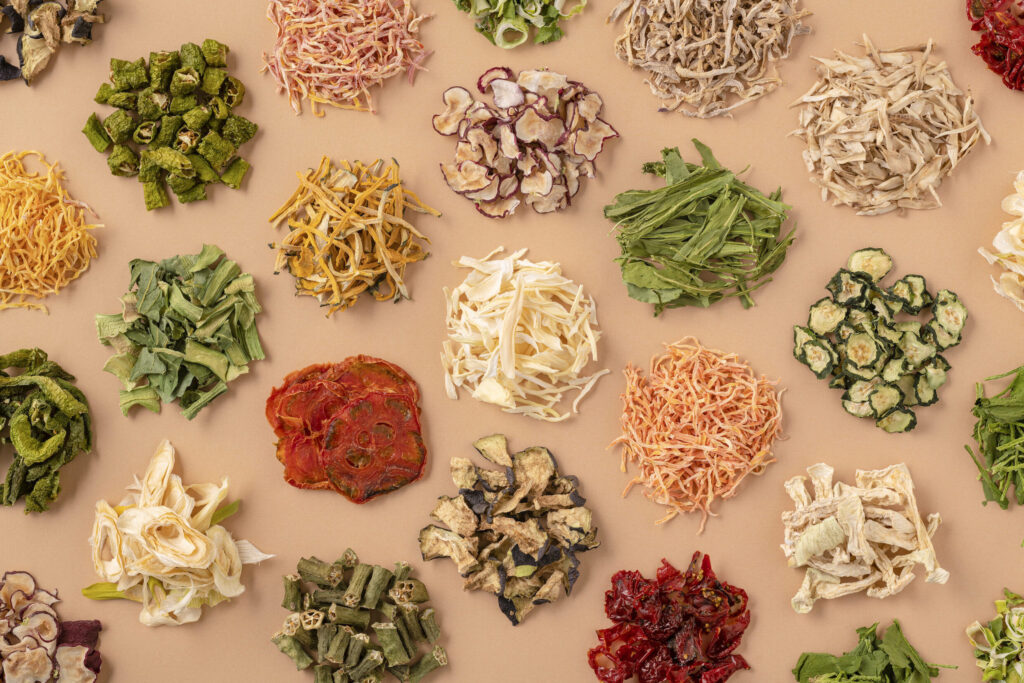
- Available for purchase in small lots from 1 kg
- We handle heirloom vegetables from across Japan
- Dried fruit and herbs also supported
Summary
Fair trade is a mechanism that trades with producers in developing countries at fair prices, balancing improved livelihoods and environmental conservation. Japan's market has reached 21.5 billion yen, and a further rise in awareness is expected with the Expo as a springboard.
As consumers, you can start by choosing fair trade products; as companies, by sourcing certified raw materials and making supply chains transparent. Agriture, too, practices the philosophy of fair trade through its collaboration with Vietnam's Sokfarm. As the phrase "shopping is voting" suggests, please be mindful that daily choices are connected to the lives of producers around the world.
Download the product catalog
We will send the materials to your email address based on the information you provide.
- Z世代とは1997年から2012年生まれ、2026年は14歳から29歳
- The Latest Cases and Success Strategies of Japanese Companies Working on Fair Trade