
What are Hyogo’s heirloom vegetables? Features, season, and ways to eat the 24 items listed by the association explained

Hyogo Prefecture's heirloom vegetables are varieties that have been handed down amid a diversity of terrain spreading from the mountainous areas of Tajima to the Harima Plain, the Tamba Basin, the Hanshin area, and Awaji Island. Hyogo Prefecture has no heirloom-vegetable certification system of its own, and the prefecture is advancing regional branding as "Hyogo vegetables." Meanwhile, The Japan Traditional Vegetable Promotion Association lists 24 native varieties of Hyogo Prefecture (19 vegetables, 4 melons, 1 bamboo shoot), and in this article we organize those 24 items and then explain 7 representative items from among the 19 vegetables.
We introduce native varieties handed down in Hyogo—from tribute varieties dating to the Edo period, such as Asakura sansho (Yabu City), Iwatsu negi (Asago City), Tamba black soybean (Tambasasayama City), Tanou taro (Amagasaki City), ebiimo (Himeji City), and Oichi eggplant (the former Oichi-mura area of Nishinomiya City), to the regional ingredients of Hanshin, Harima, Tajima, and Tamba.
TOC
The definition of "heirloom vegetable" and the scope of this article
There is no nationwide unified definition of “heirloom vegetables,” and criteria differ by certifying body. We lay out the criteria of the main certifying bodies.
| Certifying body | Main criteria |
|---|---|
| Kyoto Prefecture "Kyoto Heirloom Vegetables" | Has a cultivation history from before Meiji and covers the whole prefecture (includes bamboo shoots, excludes mushrooms and ferns, and includes extinct items) |
| Osaka Prefecture "Naniwa Heirloom Vegetables" | Cultivated within Osaka Prefecture from roughly 100 or more years ago |
| Nara Prefecture "Yamato Heirloom Vegetables" | Production in this prefecture confirmed from before the war; distinctive cultivation method, flavor and aroma, form, and provenance characteristics |
| Shiga Prefecture, "Omi heirloom vegetables" | Origin within Shiga Prefecture, generally introduced before the Meiji era; characteristics of appearance and taste; and preservation of the seed |
| Hyogo Prefecture | No heirloom-vegetable certification system of its own. The "Hyogo Native Variety Preservation Society" handles the preservation and continuation of native varieties |
In this article, of the 24 Hyogo Prefecture items organized by the Japan Heirloom Vegetable Promotion Association, we treat the 19 vegetables in the main section, and introduce the 4 melons—which lean strongly toward being fruit—and the 1 bamboo shoot separately in the "Other local specialty varieties" section at the end of the article.
What are Hyogo's heirloom vegetables? The food culture of Tajima, Tamba, Harima, and Hanshin
| Area | Representative items | Regional characteristics |
|---|---|---|
| Tajima (Yabu, Asago, Kami) | Asakura sansho, Iwatsu negi, Heike kabura | The mountainous areas at the foot of Mt. Hyonosen and Mt. Hachibuse, and the Sea of Japan coast |
| Tamba (Sasayama, Tamba) | Tamba black, Tamba black edamame, Sumiyama gobo, yama no imo, azamina | The day-night temperature difference and fog of the Tamba Basin |
| Harima (Himeji, Shiso, Tatsuno, Akashi, Kakogawa) | Aboshi mizuna, Himeji wakana, ebiimo, Himeji lotus root, Oichi bamboo shoots, Shiso sanjaku (Shiso City), petchin uri, Mitsu blue melon, Aboshi melon, Kakogawa melon, Fukashino melon, Mega melon | The Harima Plain, the Ibo River basin, and the Seto Inland Sea coast |
| Hanshin (Amagasaki, Nishinomiya) | Ama imo, Tanou taro, Muko issun broad bean, Oichi eggplant (the former Oichi-mura area of Nishinomiya City) | The Osaka Bay coast and the southern foot of Mt. Rokko |
| Hokusetsu (Sanda) | Sanda udo | The cool climate of the Sanda Basin |
In Hyogo, items are concentrated in the Harima region, reflecting the historic agricultural belt of the Seto Inland coast and the Ibo River basin. Diverse native varieties line up by region—Tajima's sansho and negi, Tamba's black soybean and gobo, Hanshin's taro and broad bean, and the udo of Hokusetsu and Sanda.
Historical background — the 400-year-old Asakura sansho and Tamba black soybean
- Asakura sansho — Originating in Asakura, Yoka Town, Yabu City. It has a record of being presented to Tokugawa Ieyasu by the Ikuno magistrate in Keicho 16 (1611) and has a cultivation history of nearly 400 years. In Meiji 45, Tomitaro Makino recorded its scientific name as "Asakura-zansho"
- Tamba black — A large-grained black soybean grown in Tambasasayama City. With large grains weighing 80–90 g per hundred grains and a quality in which the skin is not easily broken, it is distributed nationwide as a premium item for the New Year osechi "simmered black beans"
- Iwatsu negi — A native negi of the Iwatsu district of Asago City, with characteristics intermediate between the Kanto-lineage "deep-rooted negi" and the Kansai-lineage "leaf negi." Both the leaves and the blanched white part can be eaten
- Tanou taro — A taro handed down in the Tanou district of Amagasaki City, said by tradition to "not make you itchy" when peeling (Amagasaki City official)
FOR BUSINESS
乾燥野菜を業務用でお探しですか
国産の野菜・果物を乾燥し、必要に応じて粉砕してお出ししています。扱っている品目は100種前後で、規格は 乾燥品の一覧・パウダーの一覧 に掲載しています。
少量でのご購入は、姉妹ブランドの通販サイト OYAOYA で承っています。
List of Hyogo's 19 heirloom vegetables and a seasonal calendar (the 4 melons and 1 bamboo shoot are listed separately at the end)
Wild vegetables, aromatic vegetables, leafy vegetables
| Item | Features | Growing region | Season |
|---|---|---|---|
| Asakura sansho | Large-grained, little astringency, a citrusy aroma | Asakura, Yoka Town, Yabu City | Late May–early June |
| Sanda udo | Few fibers, an elegant aroma | Sanda City | February to March |
| Sumiyama gobo | Fair-colored, a rustic aroma and bite | Sumiyama, Tambasasayama City | Mid-August–March |
| Azamina | Characterized by many thorns on the leaves | Tamba City | Early October to late March |
| Aboshi mizuna | Somewhat thick stems and few fibers | Aboshi, Himeji City | Winter |
| Himeji wakana | Cold-hardy, pale-green round leaves | Himeji City | December–late March |
Tubers and negi
| Item | Features | Growing region | Season |
|---|---|---|---|
| Ama imo | Earlier-maturing than ordinary sweet potato | Amagasaki City | July–August |
| Ebiimo | Fine-textured and does not fall apart when simmered | Himeji City | October–February |
| Tanou taro | Sticky, does not make the hands itchy | Tanou, Amagasaki City | November |
| Yama no imo | Very sticky and pure white | Tambasasayama City, Tamba City | November–December |
| Iwatsu negi | Both leaves and blanched white part edible, tender and aromatic | Iwatsu, Asago City | Late November–late March |
Beans, eggplant, lotus root, turnip, for pickling
| Item | Features | Growing region | Season |
|---|---|---|---|
| Tamba black / Tamba black edamame | 80–90 g per hundred grains, large-grained, skin not easily broken | Tambasasayama City | Edamame in October, dry beans year-round |
| Muko issun broad bean | Grain diameter about 3 cm, the savory essence of the bean when boiled in salted water | Amagasaki City | Spring |
| Oichi eggplant | Bulb-shaped, meltingly soft when heated | The former Oichi-mura area of Nishinomiya City (Kami-Oichi, Shimo-Oichi, Mondo, etc.) | July–October |
| Himeji lotus root | White, fine-textured, and crisp | Himeji City | July–the following April (the peak is late autumn to early winter, around year-end) |
| Heike kabura | Thorns on the leaf stalks, suited to soups | Kasumi District, Kami Town, Mikata District | Winter |
| Shiso sanjaku | A long type of 36–44 cm, crisp | Shiso City | Late June–mid-August |
| Petchin uri | Deep green, ideal for light pickles | Akashi City | July–early September |
| Mitsu blue melon | Characterized by white vertical stripes | Mitsu, Tatsuno City | Mid-June–mid-September |
A product catalog that shows around 100 items we handle
Agriture, flexibly handling everything from small lots to large lots
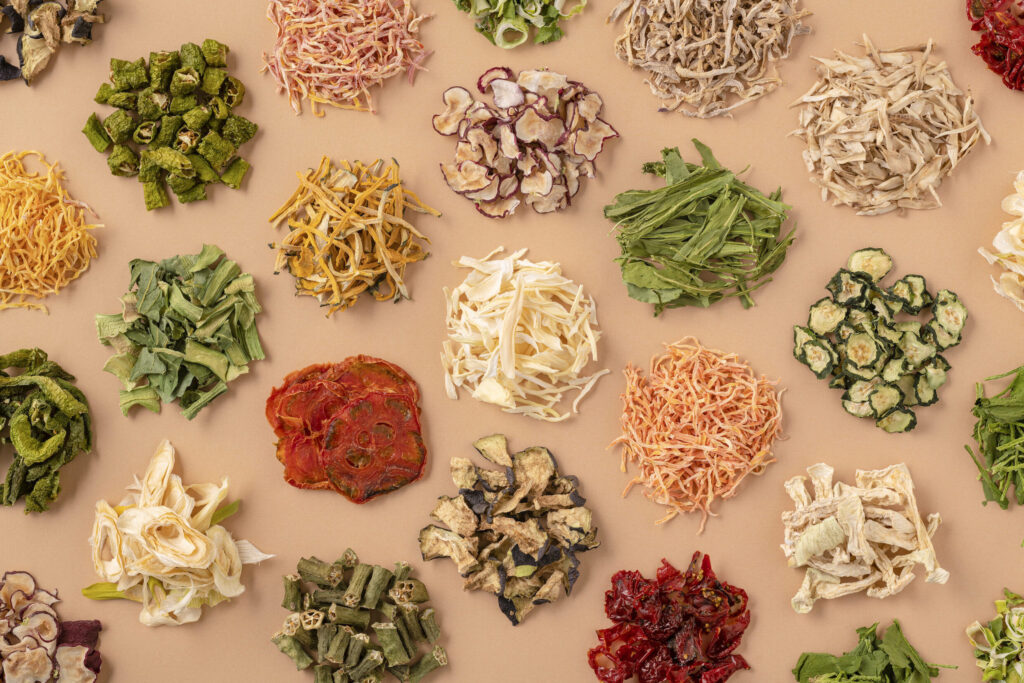
- Available for purchase in small lots from 1 kg
- We handle heirloom vegetables from across Japan
- Dried fruit and herbs also supported
Characteristics and ways to eat seven representative Hyogo heirloom vegetables
Asakura sansho — a large-grained sansho, a 400-year-old tribute item
| Season | Late May–early June |
| Growing region | Asakura, Yoka Town, Yabu City |
| Well-suited dishes | Tsukudani, sansho miso, an eel condiment, spices |
Asakura sansho is a large-grained sansho originating in the Asakura district of Yoka Town, Yabu City, characterized by little astringency and a citrusy aroma. In Keicho 16 (1611), a record remains of the Ikuno magistrate Shinzaemon Mamiya presenting it to Tokugawa Ieyasu at Sunpu Castle, and records remain of it being presented from the Tajima and Tamba regions to the Edo shogunate throughout the Edo period. In Meiji 45, Tomitaro Makino recorded its scientific name as "Asakura-zansho."
In its late-May to early-June season, the fresh berries are shipped and processed into tsukudani, sansho miso, dried powder, and the like. Spreading after Tomitaro Makino's recording of it as a new variety, it is considered one of the varieties that became the origin of the large-grained lineage among Japan's cultivated sansho.
Iwatsu negi — Tajima's Kanto-Kansai intermediate-type negi
| Season | Late November–late March |
| Growing region | Iwatsu, Asago City |
| Well-suited dishes | Hot pots, sukiyaki, grilled negi, sumiso dressing |
Iwatsu negi is a native negi grown in the Iwatsu district of Asago City, with characteristics intermediate between the Kanto-lineage "deep-rooted negi" and the Kansai-lineage "leaf negi." Both the green part of the leaves and the blanched white part are tender and can be eaten. Its appeal is a distinctive sweetness that spreads when heated, along with a high aroma.
The sweetness stands out in hot pots, sukiyaki, and grilled negi, and you can enjoy the raw crispness in sumiso dressing too. It is shipped from farmers' markets and JA farmers' markets in the winter Tajima region and is also handled at supermarkets within Hyogo Prefecture.
Tamba black / Tamba black edamame — a large-grained black soybean weighing 80–90 g per hundred grains
| Season | Edamame in October, dried soybeans year-round |
| Growing region | Tambasasayama City, Hyogo Prefecture |
| Well-suited dishes | Simmered black beans (osechi), salt-boiled edamame, miso, amanatto |
Tamba black is a native variety of black soybean grown in Tambasasayama City, large-grained at 80–90 g per hundred grains. Because of a quality in which the skin is not easily broken, it is distributed nationwide as a premium item for the New Year osechi dish "simmered black beans." The day-night temperature difference and fog of the Tamba Basin are the growing conditions that cultivate its sweetness and taut skin.
In the October edamame season, new-crop beans shipped nationwide as "Tamba black edamame" appear, and you can enjoy the beans' sweetness and aroma simply salt-boiled. The dried soybeans have wide uses—miso, amanatto, simmered beans—and are distributed as a specialty of Tambasasayama.
Ebiimo — Himeji's fine-textured taro
| Season | October–February |
| Growing region | Himeji City |
| Well-suited dishes | Simmered dishes, dengaku, karaage, miso soup |
Ebiimo is a kind of taro grown in Himeji City, named for its long, slender shape and shrimp-like stripe pattern. Its appeal is fine-textured flesh that does not easily fall apart when simmered, and it is a Kansai taro belonging to the same ebiimo lineage as Kyoto's ebiimo (one of the Kyoto heirloom vegetables).
In simmered dishes it keeps its shape for an elegant finish, and made into dengaku or karaage you can enjoy a fluffy texture. In its October–February season it is shipped from JA farmers' markets within Himeji City.
Oichi eggplant — a bulb-shaped native round eggplant
| Season | July–October |
| Growing region | The former Oichi-mura area of Nishinomiya City (the present Kami-Oichi, Shimo-Oichi, and the area around Mondo-Yakujin Station) |
| Well-suited dishes | Dengaku, simmered dishes, agebitashi, grilled eggplant |
Oichi eggplant is a native round eggplant that has been grown in the former Oichi-mura area of Nishinomiya City (a settlement around Hankyu Mondo-Yakujin Station said to have been renowned for its good flavor in the Meiji era; the present Kami-Oichi to Shimo-Oichi area), characterized by a bulb-like shape. When heated, the flesh becomes meltingly soft while the skin keeps a firm bite. It is a round-eggplant native variety similar in shape to Kyoto's Kamo eggplant and Sabae's Yoshikawa eggplant.
The softness of the flesh comes alive in dengaku and agebitashi, and in grilled eggplant its distinctive sweetness stands out. In its July–October season it is shipped from farmers' markets within Nishinomiya City (the production area's "Oichi" is a former village name in the Hanshin area, a different region from the Oichi district of Kamigyo Ward, Kyoto City).
Aboshi mizuna — a native mizuna of the lower Ibo River
| Season | Winter |
| Growing region | Aboshi, Himeji City |
| Well-suited dishes | Hot pots, ohitashi, salads, miso soup |
Aboshi mizuna is a native mizuna grown in the Aboshi district of Himeji City. Its appeal is a crisp texture with somewhat thick stems that leave no fiber. It is a Brassicaceae leafy vegetable of the same family as Kyoto's mibuna and mizuna and has been used as a Kansai winter vegetable in pickles and hot pots.
You can enjoy the texture of the stems in hot pots, ohitashi, and salads, and as an ingredient in miso soup its moderate bitterness and aroma make an accent. It is shipped from farmers' markets within Himeji City in winter.
Tanou taro — Amagasaki's taro that does not make the hands itchy
| Season | November |
| Growing region | Tanou, Amagasaki City |
| Well-suited dishes | Simmered dishes, imoni, dengaku, koromokatsugi |
Tanou taro is a native taro that has been handed down in the Tanou district of Amagasaki City. It is very sticky and has the rare characteristic of not making the hands itchy when peeling. Cultivation continues in Tanou, where farmland dating to the Edo period remains despite being in the urban Hanshin area, and it is cherished in local home cooking.
The stickiness comes alive in simmered dishes and imoni, and you can enjoy a fluffy feel in dengaku and koromokatsugi. Its season is short, in November, and it is shipped from farmers' markets within Amagasaki City.
How to buy Hyogo's heirloom vegetables and tips for storage
| Item | Main sources | Timing |
|---|---|---|
| Asakura sansho | Farmers' markets in Yabu City and Asago City, JA Tajima | Late May–early June (processed products year-round) |
| Iwatsu negi | JA farmers' markets in Asago City, JA in the Tajima region | Late November–late March |
| Tamba black edamame | Farmers' markets in Tambasasayama City, JA Tamba Hikami | October |
| Tamba black (dried beans) | Tambasasayama City, within Hyogo Prefecture, nationwide | Year-round |
| Ebiimo | JA farmers' markets within Himeji City | October–February |
| Oichi eggplant | Farmers' markets within Nishinomiya City | July–October |
| Tanou taro | Farmers' markets in Tanou, Amagasaki City | November |
| Sanda udo | Farmers' markets within Sanda City, JA Hyogo Rokko | February to March |
| Sumiyama gobo | Farmers' markets in Sumiyama, Tambasasayama City | Mid-August–March |
| Muko issun broad bean | Farmers' markets in Amagasaki City (mainly for home use, with little distribution) | Spring |
| Yama no imo | Farmers' markets in Tambasasayama City and Tamba City | November–December |
| Aboshi mizuna | Farmers' markets in Aboshi, Himeji City | Winter |
| Himeji wakana | Farmers' markets within Himeji City | December–late March |
| Azamina | Farmers' markets within Tamba City | Early October to late March |
| Himeji lotus root | JA farmers' markets within Himeji City | July–the following April (the peak is late autumn to early winter) |
| Shiso sanjaku | Farmers' markets within Shiso City | Late June–mid-August |
| Petchin uri | Farmers' markets within Akashi City | July–early September |
| Mitsu blue melon | Farmers' markets in Mitsu, Tatsuno City | Mid-June–mid-September |
| Heike kabura | Farmers' markets in Kasumi District, Kami Town, Mikata District | Winter |
Mail order / hometown tax to outside the prefecture
- Tamba black / Tamba black edamame — As a hometown-tax gift of Tambasasayama City, edamame is shipped in October and dried beans year-round
- Asakura sansho — Distributed year-round via Yabu City's hometown tax and processed-goods mail order
- Iwatsu negi — Shipped in winter as a hometown-tax gift of Asago City
- Processed products — Asakura sansho tsukudani and powder, simmered ebiimo, and Muko issun broad bean are mainly home-cultivated, with very limited market distribution (Amagasaki City official, "phantom bean")
A product catalog that shows around 100 items we handle
Agriture, flexibly handling everything from small lots to large lots
- Available for purchase in small lots from 1 kg
- We handle heirloom vegetables from across Japan
- Dried fruit and herbs also supported
Efforts to protect Hyogo's heirloom vegetables
| Efforts | Details |
|---|---|
| Hyogo Native Variety Preservation Society | An NPO that handles the preservation and continuation of native varieties within Hyogo Prefecture. It carries out seed-exchange events, cultivation guidance, and the like |
| Hyogo vegetables | A vegetable page where Hyogo Prefecture advances regional branding. It disseminates information on native varieties and specialty products |
| JA Tajima's promotion of Asakura sansho and Iwatsu negi | JA in the Tajima region supports production-area branding and channel expansion |
| Tamba Hikami's Tamba black brand | An effort to distribute Tambasasayama's black soybeans and edamame to the nationwide market |
FOR BUSINESS
乾燥野菜を業務用でお探しですか
国産の野菜・果物を乾燥し、必要に応じて粉砕してお出ししています。扱っている品目は100種前後で、規格は 乾燥品の一覧・パウダーの一覧 に掲載しています。
少量でのご購入は、姉妹ブランドの通販サイト OYAOYA で承っています。
FAQ
Other regional specialty varieties
Of the Japan Heirloom Vegetable Promotion Association's 24 Hyogo Prefecture items, the 4 melons that lean strongly toward being fruit (Aboshi melon, Kakogawa melon, Fukashino melon, Mega melon) and the 1 bamboo shoot among the bamboo-shoot category (Oichi bamboo shoots) are introduced in a separate frame from the vegetables.
| Item | Category | Growing region | Features |
|---|---|---|---|
| Aboshi melon | Melon (fruit) | Aboshi, Himeji City | Strong sweetness with a sugar level of 15–16 degrees |
| Kakogawa melon | Melon (fruit) | Kakogawa City | Large and with a good bite |
| Fukashino melon | Melon (fruit) | Fukashino, Himeji City | Fruit weight about 200 g, strong sweetness |
| Mega melon | Melon (fruit) | Mega, Himeji City | Cracks along the vertical grooves, strong sweetness |
| Oichi bamboo shoots | Bamboo shoots | Oichi, Himeji City | White, fine-textured, low in astringency—a taste of spring |
Summary
Hyogo's 24 heirloom vegetables (19 vegetables, 4 melons, 1 bamboo shoot) are varieties that have been handed down in the Tajima, Tamba, Harima, Hanshin, and Hokusetsu regions. They line up with items reflecting the food culture of each part of Hyogo—Asakura sansho with its 400-year tribute history, Tamba black at around 80 g per hundred grains, Iwatsu negi usable for both leaf and blanched white, Himeji's ebiimo, Nishinomiya's Oichi eggplant, Amagasaki's Tanou taro, and more.
You can enjoy Hyogo's native varieties throughout the four seasons—Asakura sansho and Sanda udo in spring; Oichi eggplant, petchin uri, and Shiso sanjaku in summer; and Tamba black edamame, Iwatsu negi, ebiimo, and Tanou taro from autumn to winter. Through hometown tax and farmers' markets, you can taste Hyogo's regional ingredients at home too.
References / information sources
- Japan Heirloom Vegetable Promotion Association, "Hyogo Prefecture" — a list of 24 items
- Hyogo Prefecture, "Hyogo vegetables" — official prefectural vegetable information
- JA Tajima, "Asakura sansho" — production-area information
- National Agriculture and Food Research Organization Genebank "Native Variety Database"
Related articles
- Heirloom vegetables of Japan
- Kyoto Heirloom Vegetables
- Heirloom vegetables of Naniwa
- Yamato vegetables (Nara)
- Omi heirloom vegetables
- Mie heirloom vegetables
Download the product catalog
We will send the materials to your email address based on the information you provide.
- What are Omi’s heirloom vegetables? Features, season, and ways to eat the 19 items selected by Shiga Prefecture explained
- What are Wakayama’s heirloom vegetables? Features, season, and ways to eat the 10 items explained
Author of this article
Related articles
-
 Okinawa island vegetables: individualistic vegetables nurtured by a subtropical climate
 -
 Kaga vegetables: Kanazawa brand vegetables where tradition lives on
 -
 The appeal of Kansai heirloom vegetables | Specialties of Naniwa, Kyoto, and Yamato thoroughly explained
 -
 Kyoto heirloom vegetables: Kyoto specialties with a long history
 -
 A list of heirloom vegetables of the 8 prefectures of Kyushu and Okinawa|A thorough introduction to characteristics, growing regions, and seasons
 -
 Know the heirloom vegetables of Edo Tokyo | The city’s vanishing food culture
 -
 They'll make you smile! The fun names of heirloom vegetables and their origins
 -
 5 cases and strategies that succeeded in branding heirloom vegetables