
What are Mie’s heirloom vegetables? Features, season, and ways to eat the 6 + 2 selected items explained

Mie Prefecture's heirloom vegetables are varieties handed down amid the varied terrain spanning the Ise plain, the Shima Peninsula, the Kumano-nada coast, the Suzuka Mountains, and the Iga basin. Mie Prefecture operates its own "Mie Heirloom Vegetables" designation system, and Mie Prefecture's official page lists 6 official designations. To these we add The Japan Traditional Vegetable Promotion Association and introduce 8 items centered on those, including Ugata no mizu-nasubi and Misono daikon listed by the association.
This article organizes 8 items combining the prefecture's 6 official items and the association's 2 listed items, and explains 7 representative items (vegetables) in detail. It compiles the native varieties handed down in Mie, including the very sticky yamato-imo "Ise-imo," the beautifully crimson "Matsusaka aka-na," the Ise Jingu-connected "Misono daikon," Shima's "Ugata no mizu-nasubi," and "kinko," a processed product introduced in a separate section.
TOC
The definition of "heirloom vegetable" and the scope of this article
There is no nationwide unified definition of “heirloom vegetables,” and criteria differ by certifying body. We lay out the criteria of the main certifying bodies.
| Certifying body | Main criteria |
|---|---|
| Kyoto Prefecture "Kyoto Heirloom Vegetables" | Cultivated in Kyoto since before the Meiji era; unique to Kyoto |
| Osaka Prefecture "Naniwa Heirloom Vegetables" | Cultivated within Osaka Prefecture from roughly 100 or more years ago |
| Akita Prefecture "Akita Heirloom Vegetables" | Cultivated within the prefecture from before the Showa 30s |
| Yamagata Prefecture "Yamagata Heirloom Vegetables" | Cultivated within the prefecture from before Showa 20 |
| Mie Prefecture "Mie Heirloom Vegetables" | Meeting all 5 conditions: production volume, historicity (50+ years), regional character, commercial value, and variety quality |
Mie Prefecture's "Mie Heirloom Vegetables" has, as of 2025, 6 designated items (Ise-imo, kinko, Geno zuiki, takana, Matsusaka aka-na, Mie nabana). This article organizes 8 items in total, adding Ugata no mizu-nasubi and Misono daikon, which are listed by the Japan Heirloom Vegetable Promotion Association, to these 6. The processed product "kinko" and the separately designated "Mie Heirloom Fruits" (Ichigi orange, Gokasho ko-ume, Rendaiji kaki, Maekawa jiro kaki) are introduced separately in the "Other regional specialty varieties" section at the end of the article.
What are Mie's heirloom vegetables? The food culture of Ise, Shima, and Kumano
| Area | Representative items | Regional characteristics |
|---|---|---|
| Hokusei (Kuwana, Kisosaki) | Mie nabana | The delta region of the lower Kiso Three Rivers |
| Chusei (Tsu, Matsusaka, Taki) / Nansei (Ise) | Matsusaka aka-na, Mie nabana, Geno zuiki, Ise-imo, Misono daikon | The core of the Ise plain. The home of Matsusaka beef and Ise Jingu |
| Nansei / Shima (Shima, Toba) | Ugata no mizu-nasubi, kinko | The mild climate of the Shima Peninsula and its ria coastline |
| Higashi-Kishu (Kumano, Owase) | Takana | The Kumano-nada coast and the mountainous land of Minamimuro |
In Mie, heirloom vegetables concentrate in the Chusei region of the Ise plain, and independent food cultures line up by terrain—along Shima Peninsula's Ugata and Ago Bay, and Higashi-Kishu on the Kumano-nada coast. Against the backdrop of a food culture that developed as a temple-gate town of Ise Jingu, region-specific varieties have been handed down.
Historical background—Ise Jingu and heirloom vegetables
- Misono daikon — a white-necked daikon variety grown in Misono-cho, Ise City (the former Misono village). It is said to have been lineage-improved for Ise takuan by the Mie Prefectural Agricultural Experiment Station in the early Showa era
- Ise-imo — a yamato-imo-lineage native variety grown in Taki-cho. Its strong stickiness is its hallmark
- Matsusaka aka-na — a vividly crimson kabu-na grown in Matsusaka City. It has supported the local pickle culture
- Geno zuiki — the taro stem (zuiki) of Geno-cho, Tsu City. Its azuki color is its feature
FOR BUSINESS
乾燥野菜を業務用でお探しですか
国産の野菜・果物を乾燥し、必要に応じて粉砕してお出ししています。扱っている品目は100種前後で、規格は 乾燥品の一覧・パウダーの一覧 に掲載しています。
少量でのご購入は、姉妹ブランドの通販サイト OYAOYA で承っています。
A list of Mie's 8 heirloom vegetables (7 vegetables + 1 processed product) and a seasonal calendar
Quick-reference table of 7 vegetables (+ processed product "kinko")
| # | Item | Category | Main growing region | Prefecture-designated |
|---|---|---|---|---|
| 1 | Ise-imo | Yamato-imo | Taki-cho | ◯ |
| 2 | Geno zuiki | Taro stem | Geno-cho, Tsu City | ◯ |
| 3 | Takana (red broad-leaf, green broad-leaf) | Leafy vegetable (takana) | Kumano City | ◯ |
| 4 | Matsusaka aka-na | Leafy green (crimson kabu-na) | Matsusaka City | ◯ |
| 5 | Mie nabana | Leafy green (nabana) | Nagashima-cho and Kisosaki-cho in Kuwana City, Matsusaka City | ◯ |
| 6 | Misono daikon | Daikon | Misono-cho, Ise City | Association-listed |
| 7 | Ugata no mizu-nasubi | Nasu (mizu-nasu lineage) | Ugata, Ago-cho, Shima City | Association-listed |
*The prefecture's official "Mie Heirloom Vegetables" 6 items include "kinko" (a dried-sweet-potato processed product). This article introduces 7 vegetable items in the main text, while the processed product "kinko" is covered in the specialty-varieties section at the end.
Seasonal calendar of main items
| Month | Main items coming into season |
|---|---|
| June–August | Geno zuiki |
| Mid-June to October | Ugata no mizu-nasubi |
| November–December | Ise-imo, Misono daikon (late November to early December) |
| November–March | Matsusaka aka-na, Mie nabana, takana (through April) |
With summer's Geno zuiki and Ugata no mizu-nasubi, the winter-spring leafy greens (Matsusaka aka-na, Mie nabana, takana), and the root vegetables (Ise-imo, Misono daikon), Mie-grown seasonal vegetables line up throughout the year.
A product catalog that shows around 100 items we handle
Agriture, flexibly handling everything from small lots to large lots
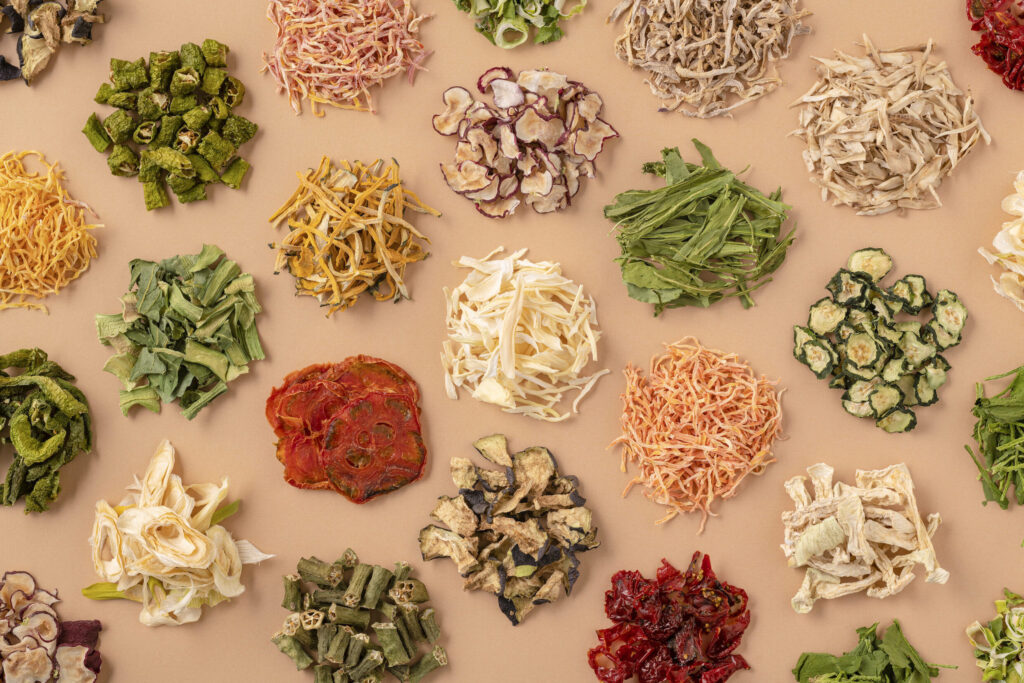
- Available for purchase in small lots from 1 kg
- We handle heirloom vegetables from across Japan
- Dried fruit and herbs also supported
The characteristics and preparation of 7 representative Mie heirloom vegetables
Ise-imo — a yamato-imo with a mochi-like stickiness
| Season | November–December |
| Growing region | Taki-cho, Taki District |
| Well-suited dishes | Tororo, okonomiyaki, tsukune, imo-jiru |
Ise-imo is a yamato-imo-lineage native variety grown in Taki-cho, characterized by a ball-shaped lump and a bumpy white skin. Grated, it releases a strong, mochi-like stickiness, offering a creamy, rich taste. Long grown in Taki-cho, it is established as a local variety with strong stickiness.
Tororo gohan is the standard, and using it as a binder for okonomiyaki or in tsukune firms up the texture. In its season of November–December, it can be obtained at farm stands within Taki-cho and through hometown-tax donations.
Matsusaka aka-na — a kabu-na with crimson roots and leaf stalks
| Season | November–March |
| Growing region | Matsusaka City |
| Well-suited dishes | Asazuke, vinegar pickles, salad, ohitashi |
Matsusaka aka-na is a type of kabu-na grown in Matsusaka City, characterized by roots and leaf stalks that dye a beautiful crimson throughout. A crisp bite and a faintly bitter flavor are its hallmarks. It has taken root locally as an ingredient supporting Matsusaka's pickle culture.
Made into asazuke or vinegar pickles, the crimson shows off even more, usable to add color to the table. Even as salad or ohitashi the color remains, making it valued at the winter table.
Mie nabana — the early-spring rape blossom of Kuwana and Nagashima
| Season | November–March |
| Growing region | Nagashima-cho and Kisosaki-cho in Kuwana City, Matsusaka City |
| Well-suited dishes | Ohitashi, karashi-ae, pasta, miso soup |
Mie nabana is a leafy green made by picking the stems and leaves of rape, characterized by a faint bitterness and a juicy texture. Nagashima-cho and Kisosaki-cho in Kuwana City and Matsusaka City are the main growing areas, where the fertile soil of the lower Kiso Three Rivers and a mild climate make early-spring shipping possible.
Ohitashi and karashi-ae are standard ways to eat it, and the bitterness characteristic of rape blossom signals the arrival of spring. It also suits use as a miso-soup or pasta ingredient, and during the November–March winter-spring period it is even shipped to metropolitan supermarkets.
Geno zuiki — the azuki-colored summer vegetable
| Season | June–August |
| Growing region | Geno-cho, Tsu City |
| Well-suited dishes | Sunomono, simmered dishes, tsukudani, ae-mono |
Geno zuiki is a summer vegetable grown in Geno-cho, Tsu City, in which the leaf stalks (stems) of taro are eaten, characterized by a beautiful azuki color, plenty of dietary fiber, and a juicy, crisp texture. "Zuiki," the practice of eating taro stems, exists nationwide, but Geno zuiki is known for the vividness of its coloring.
Sunomono, simmered dishes, and tsukudani are standard, and it has taken root in Mie households as a summer table's color and a source of dietary fiber. In its June–August season it ships from farm stands in Geno-cho, Tsu City.
Takana — Kumano's two lineages of red and green broad-leaf
| Season | November–April |
| Growing region | Kumano City |
| Well-suited dishes | Takana pickles, stir-fries, onigiri filling, mixed rice |
Kumano's takana comes in two lineages: the "red broad-leaf" type, whose leaves take on a reddish-purple color, and the green "green broad-leaf" type. A sharp pungency and thick leaves are its features, and processed into takana pickles it draws out a distinctive flavor. Both the mild climate of the Kumano-nada coast and the cool climate of the mountains suit its cultivation.
Made into takana pickles, it is used as an onigiri filling, in stir-fries, and in mixed rice. It is in season from November to April, with both fresh leaves and processed goods (takana pickles) distributed.
Misono daikon — the white daikon connected to Ise Jingu
| Season | Late November to early December |
| Growing region | Misono-cho, Ise City |
| Well-suited dishes | Ise takuan (sake-lees pickled), simmered dishes, pickles, oroshi |
Misono daikon is a white-necked daikon variety grown in Misono-cho, Ise City. White throughout with a slender shape about 50 cm long, it is said to be a lineage improved for Ise takuan by the Mie Prefectural Agricultural Experiment Station in the early Showa era. Because its sweetness increases when dried, it has long been used as the raw material for Ise takuan.
Its main use is Ise takuan, and processed Ise takuan is distributed year-round as a Mie brand. Fresh Misono daikon has a short shipping window from late November to early December and can be obtained around Misono-cho, Ise City.
Ugata no mizu-nasubi — Shima's summer mizu-nasu
| Season | Mid-June to around October |
| Growing region | Ugata, Ago-cho, Shima City |
| Well-suited dishes | Asazuke, fresh eating, salad, yaki-nasu |
Ugata no mizu-nasubi is a native eggplant of the mizu-nasu lineage grown in Ugata, Ago-cho, Shima City. High in moisture, with little harshness even when eaten raw, it has been beloved locally as a variety with a perceptible sweetness. It is a separate lineage from the Osaka Senshu mizu-nasu, differing in plant form, fruit shape, and fruit color—a variety handed down independently in Shima.
Asazuke is the most common preparation, bringing out the juiciness of the flesh. Being enjoyable in salad and eaten raw is characteristic of mizu-nasu, and even made into yaki-nasu it retains a melting texture.
How to buy Mie's heirloom vegetables and tips for storing them
| Item | Main sources | Timing |
|---|---|---|
| Ise-imo | JA farm stands within Taki-cho, hometown-tax donations | November–December |
| Matsusaka aka-na | JA farm stands within Matsusaka City | November–March |
| Mie nabana | JA farm stands of Kuwana, Nagashima, Kisosaki, and Matsusaka | November–March |
| Geno zuiki | Farm stands in Geno-cho, Tsu City | June–August |
| Takana | JA farm stands within Kumano City; processed goods year-round | November–April |
| Misono daikon | Farm stands around Misono-cho, Ise City (Ise takuan year-round) | November–December |
| Ugata no mizu-nasubi | Farm stands in Ugata, Ago-cho, Shima City | June to October |
Mail order / hometown tax to outside the prefecture
- Ise-imo — Shipped nationwide on an autumn-winter-only basis as a Taki-cho hometown-tax donation gift
- Mie nabana — Distributed at metropolitan supermarkets too in winter
- Processed products — Matsusaka aka-na pickles, takana pickles, Ise takuan from Misono daikon, and kinko (dried sweet potato) distributed year-round
A product catalog that shows around 100 items we handle
Agriture, flexibly handling everything from small lots to large lots
- Available for purchase in small lots from 1 kg
- We handle heirloom vegetables from across Japan
- Dried fruit and herbs also supported
Efforts to protect Mie's heirloom vegetables
| Efforts | Details |
|---|---|
| Mie Heirloom Vegetables designation system | Mie Prefecture designates them by 5 criteria: production volume, historicity (50+ years), regional character, commercial value, and variety quality. Currently 6 items |
| Mie Heirloom Fruits designation system | Separately from vegetables, it certifies 4 items (Ichigi orange, Gokasho ko-ume, Rendaiji kaki, Maekawa jiro kaki) |
| Mie Food Selection | A regional-ingredient brand designated by the prefecture. Processed goods using heirloom vegetables are also eligible |
| JA Zennoh Mie's growing-region support | Supports the brand distribution of Mie nabana, Matsusaka aka-na, and others |
FOR BUSINESS
乾燥野菜を業務用でお探しですか
国産の野菜・果物を乾燥し、必要に応じて粉砕してお出ししています。扱っている品目は100種前後で、規格は 乾燥品の一覧・パウダーの一覧 に掲載しています。
少量でのご購入は、姉妹ブランドの通販サイト OYAOYA で承っています。
FAQ
Other regional specialty varieties
Among the designated items of "Mie Heirloom Vegetables" and "Mie Heirloom Fruits," we introduce the processed foods and fruit-tree items separately.
| Item | Category | Growing region | Features |
|---|---|---|---|
| Kinko | Dried sweet potato (processed product) | Shima City | A Shima traditional food made by simmering and sun-drying Hayato-imo (a sweet-potato lineage). The only processed food among the 6 Mie Heirloom Vegetables items |
| Ichigi orange | Citrus (fruit tree) | Kumano City | One of the Mie Heirloom Fruits. A native citrus of the Kumano-nada coast |
| Gokasho ko-ume | Plum (fruit tree) | Minamiise-cho | One of the Mie Heirloom Fruits. A small plum from around Gokasho Bay |
| Rendaiji kaki | Persimmon (fruit tree) | Ise City | One of the Mie Heirloom Fruits. A native astringent persimmon of the Ise Rendaiji district |
| Maekawa jiro kaki | Persimmon (fruit tree) | Ureshino, Matsusaka City | One of the Mie Heirloom Fruits. A sweet persimmon of Matsusaka Ureshino |
Summary
Mie's heirloom vegetables comprise 8 items in total: the prefecture's 6 officially designated items (Ise-imo, kinko, Geno zuiki, takana, Matsusaka aka-na, Mie nabana) plus the association-listed Ugata no mizu-nasubi and Misono daikon. They are varieties tied to the climate and food culture of the Ise plain, the Shima Peninsula, and the Kumano-nada coast.
Distribution periods split by season: Ugata no mizu-nasubi and Geno zuiki in summer; Mie nabana, Matsusaka aka-na, and takana in winter-spring; Ise-imo and Misono daikon in late autumn. Through hometown-tax donations and farm stands, you can bring the food culture of Ise-Shima and Kumano to your household table.
References / information sources
- Mie Prefecture "Mie Heirloom Vegetables / Mie Heirloom Fruits" — The prefecture's official certification system
- Japan Heirloom Vegetable Promotion Association "Mie Prefecture" — Designated items and additionally listed items
- JA Zennoh Mie "Item introductions" — Growing regions and distribution information
- National Agriculture and Food Research Organization Genebank "Native Variety Database"
Related articles
- Heirloom vegetables of Japan
- Kyoto Heirloom Vegetables
- Heirloom vegetables of Naniwa
- Yamato vegetables (Nara)
- Aichi's heirloom vegetables
- Hida-Mino heirloom vegetables
- Shizuoka's Heirloom Vegetables
Download the product catalog
We will send the materials to your email address based on the information you provide.
- What are Aichi’s heirloom vegetables? Features, season, and ways to eat the 37 items explained
- What are Omi’s heirloom vegetables? Features, season, and ways to eat the 19 items selected by Shiga Prefecture explained
Author of this article
Related articles
-
 Okinawa island vegetables: individualistic vegetables nurtured by a subtropical climate
 -
 Kaga vegetables: Kanazawa brand vegetables where tradition lives on
 -
 The appeal of Kansai heirloom vegetables | Specialties of Naniwa, Kyoto, and Yamato thoroughly explained
 -
 Kyoto heirloom vegetables: Kyoto specialties with a long history
 -
 A list of heirloom vegetables of the 8 prefectures of Kyushu and Okinawa|A thorough introduction to characteristics, growing regions, and seasons
 -
 Know the heirloom vegetables of Edo Tokyo | The city’s vanishing food culture
 -
 They'll make you smile! The fun names of heirloom vegetables and their origins
 -
 5 cases and strategies that succeeded in branding heirloom vegetables