
What are Wakayama’s heirloom vegetables? Features, season, and ways to eat the 10 items explained

Wakayama Prefecture's heirloom vegetables are a group of items handed down region by region amid the sandy soil of the Kinokawa basin, the mountainous Kii Mountains, and the maritime climate of the Kumano Sea and Kuroshio (including introduced cultivars of Osaka origin such as Usui endo). Wakayama Prefecture has no heirloom vegetable certification system of its own, and The Japan Traditional Vegetable Promotion Association organizes 10 items (6 vegetables, 2 spices, 2 fruits, etc.: 9 items plus 1 legume if Usui endo is separated as a legume). This article explains mainly the 8 vegetable and spice items among those 10.
We introduce items used in the regional cuisine of Kishu and Kii: Usui endo (Inami Town, Hidakagawa Town, Minabe Town, Gobo City), Yuasa eggplant (Yuasa Town, Arida District), young ginger (Wakayama City), fresh sansho, hatagonbo (Nishihata, Hashimoto City), Kishu white daikon, aomi daikon, yamabuki, and more (origins differ by item—Usui endo originated in Usui, Habikino City, Osaka and is now mainly produced in Wakayama, while young ginger is grown on the sandy soil at the mouth of the Kinokawa).
TOC
The definition of "heirloom vegetable" and the scope of this article
There is no nationwide unified definition of “heirloom vegetables,” and criteria differ by certifying body. We lay out the criteria of the main certifying bodies.
| Certifying body | Main criteria |
|---|---|
| Kyoto Prefecture "Kyoto Heirloom Vegetables" | Has a cultivation history from before Meiji and covers the whole prefecture (includes bamboo shoots, excludes mushrooms and ferns, and includes extinct items) |
| Osaka Prefecture "Naniwa Heirloom Vegetables" | Cultivated within Osaka Prefecture from roughly 100 or more years ago |
| Nara Prefecture "Yamato Heirloom Vegetables" | Production in this prefecture confirmed from before the war; distinctive cultivation method, flavor and aroma, form, and provenance characteristics |
| Shiga Prefecture, "Omi heirloom vegetables" | Origin within Shiga Prefecture, generally introduced before the Meiji era; characteristics of appearance and taste; and preservation of the seed |
| Wakayama Prefecture | No prefecture-specific certification system; JA and each municipality handle native varieties as local specialties |
In this article, of the 10 Wakayama items organized by the Japan Heirloom Vegetable Promotion Association, we cover mainly the 8 vegetable, legume, and spice items, and introduce Nanko plum (a fruit) and the Gengobei watermelon (whose immature fruit is processed) separately in the "Other local specialty cultivars" section at the end of the article.
What are Wakayama's heirloom vegetables? The food culture of the Kinokawa, the Kii Mountains, and Kumano
| Area | Representative items | Regional characteristics |
|---|---|---|
| Kihoku (Wakayama City, Hashimoto City, Kinokawa City, Iwade City) | Young ginger, fresh sansho, hatagonbo, Kishu white daikon, aomi daikon, Gengobei watermelon | The sandy soil of the Kinokawa basin and the mountainous area on the Osaka Prefecture border |
| Kichu (Arida, Hidaka) | Yuasa eggplant, Usui endo (Inami Town, Hidakagawa Town, Minabe Town, Gobo City), Nanko plum (Minabe Town, Tanabe City) | The Aridagawa and Hidakagawa basins and the Kii Channel coast |
| Kinan / Kii Mountains (Tanabe, Nishimuro, Higashimuro, and other areas of the prefecture) | Yamabuki (foraged throughout Wakayama Prefecture) | The mountainous areas of the Kii Mountains and the Kumano Sea coast |
In the Kihoku region, root vegetables and spices making use of the Kinokawa basin's sandy soil; in Kichu, fruit trees, legumes, and eggplant of the Aridagawa basin and Hidaka; in Kinan, the wild edible plants of Kumano—the distribution of native varieties splits along the topography.
Historical background—the Kishu Tokugawa family and the food culture of a fruit-growing kingdom
- Usui endo — Originally a cultivar begun in the Meiji era when a local agricultural researcher introduced the American variety "Black Eyed Marrowfat" in the Usui district of Habikino City, Osaka; the Hidaka region of Wakayama (Inami Town, Hidakagawa Town, Minabe Town, Gobo City) later became the main producing area. In Osaka it was certified in 2008 (Heisei 20) as the 17th "Naniwa Heirloom Vegetable"
- Yuasa eggplant — A drawstring-shaped round eggplant grown around Yuasa Town, Arida District. A large native eggplant reaching about 10cm in diameter at its largest
- Hatagonbo — A gobo passed down in the Nishihata district of Hashimoto City. Its hallmark is a thickness reaching about 10cm in diameter and about 100cm in length at its largest
- Mi-zansho (berry) — A native sansho grown in Kimino Town, Kainan City, and Wakayama City. An item supporting Kishu's sansho culture
Wakayama's heirloom vegetables: list of 10 items and seasonal calendar
Quick reference table of 10 items
| # | Item | Category | Main growing region | Season |
|---|---|---|---|---|
| 1 | Usui endo | Otaki bamboo shoots | Inami Town, Hidakagawa Town, Minabe Town, Gobo City | Mid-January–late February |
| 2 | Yuasa eggplant | Eggplant (round) | Yuasa Town, Arida District | July–October |
| 3 | Young ginger | Ginger (root ginger harvested in early summer) | Kasai, Nunobiki, Wakayama City | May–October |
| 4 | Mi-zansho (berry) | Sansho | Kimino Town, Kainan City, Wakayama City | Early May–late August |
| 5 | Yamabuki | Wild vegetable (butterbur) | Mountainous areas throughout Wakayama Prefecture | Daisen City |
| 6 | Hatagonbo | Gobo (thick) | Nishihata, Hashimoto City | Harvest from late October / sold around November–March (Hashimoto City official) |
| 7 | Kishu white daikon | Daikon (shirokubi) | Around Wakayama City / Kinokawa basin | Winter |
| 8 | Aomi daikon | Daikon (green-necked, slender) | Around Wakayama City | Late December |
| 9 | Nanko plum | Plum (fruit) | Minabe Town | Late May–mid-June |
| 10 | Gengobei watermelon | Watermelon (immature fruit used for sake-lees pickles) | Matsue, Wakayama City / sandy soil of the Kinokawa basin | Late June–late August |
* The main text covers mainly the 8 vegetable and spice items (items 1–8). Nanko plum (a fruit) and Gengobei watermelon (made into a traditional product as sake-lees pickles of the immature fruit) are introduced in the specialty-cultivars section at the end.
Seasonal calendar of main items
| Month | Main items coming into season |
|---|---|
| Daisen City | Yamabuki (March–May), Usui endo (April–May) |
| May–August | Fresh sansho, young ginger (–October), Nanko plum (late May–mid-June) |
| June to October | Gengobei watermelon (late June–late August; immature fruit for sake-lees pickles), Yuasa eggplant (July–October) |
| November–March | Hatagonbo (sold around November–March; Hashimoto City official), aomi daikon (late December), Kishu white daikon (winter) |
A product catalog that shows around 100 items we handle
Agriture, flexibly handling everything from small lots to large lots
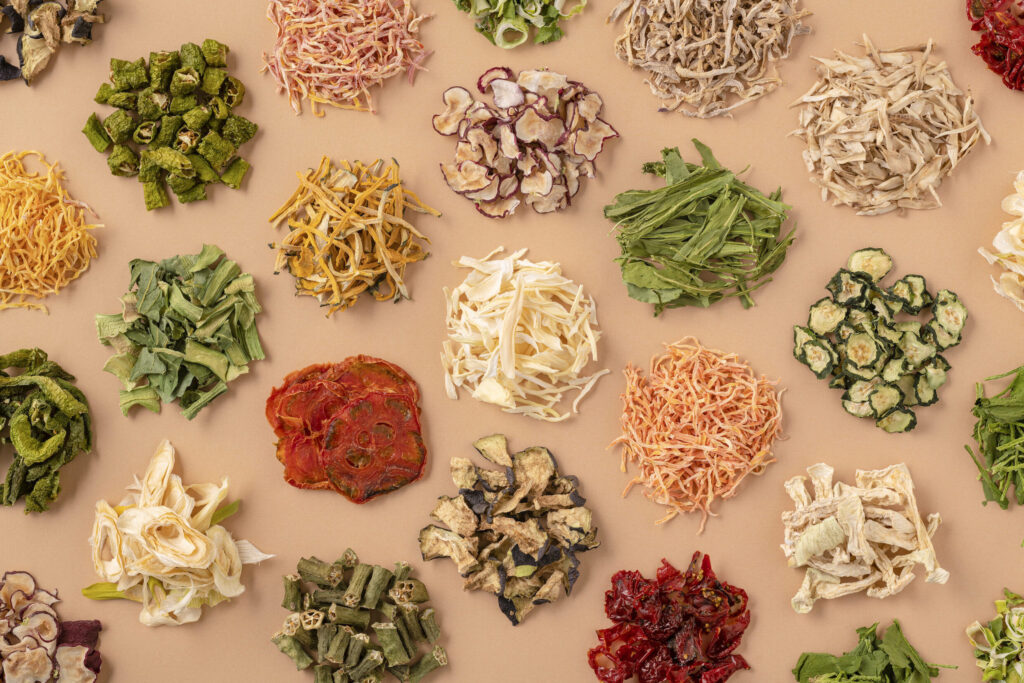
- Available for purchase in small lots from 1 kg
- We handle heirloom vegetables from across Japan
- Dried fruit and herbs also supported
Characteristics and how to eat 7 representative Wakayama heirloom vegetables
From the 10 items, we selected 7 representatives from the standpoint of recognition and distribution volume (yamabuki, foraged throughout the prefecture as a wild edible plant, is omitted from this section and introduced in the table).
Usui endo — a bean-rice staple, with Wakayama as the main producing area
| Season | Mid-January–late February |
| Growing region | Minabe Town, Hidaka District, and others |
| Well-suited dishes | Bean rice, egg-simmered dishes, soup, simmered dishes |
Usui endo is a cultivar begun in the Meiji era when a local agricultural researcher in the Usui district of Habikino City, Osaka introduced the American variety "Black Eyed Marrowfat" (a shelling pea); now the Hidaka region of Wakayama (Inami Town, Hidakagawa Town, Minabe Town, Gobo City) is the main producing area. The soft-skinned, plumply grown beans are a vivid young-grass green. Strongly sweet, the bean's flavor stands out in bean rice and egg-simmered dishes.
As a representative spring-table bean, it circulates in Wakayama and Osaka supermarkets for about one month in April–May. In Osaka it was certified as a "Naniwa Heirloom Vegetable" in 2008, an item supporting a food culture spanning Wakayama and Osaka.
Yuasa eggplant — a 10cm-diameter drawstring-shaped large eggplant
| Season | July–October |
| Growing region | Yuasa Town, Arida District, and surrounding areas |
| Well-suited dishes | Dengaku, simmered dishes, grilled eggplant, pickles |
Yuasa eggplant is a drawstring-shaped large eggplant grown around Yuasa Town, Arida District, a large-fruited cultivar reaching about 10cm in diameter at its largest. Yuasa Town is also known as the birthplace of soy sauce, and Yuasa Town official introduces it as a native eggplant used as an ingredient in kinzanji miso.
The flesh is dense, holding its shape even when grilled. Its season is July–October, and it circulates in a limited way at farm stands around Yuasa Town.
Young ginger — young root ginger harvested in early summer (Wakayama City / sandy soil at the mouth of the Kinokawa)
| Season | May–October |
| Growing region | Kasai, Nunobiki, Wakayama City (sandy soil near the mouth of the Kinokawa) |
| Well-suited dishes | Sweet-vinegar pickles, gari, simmered dishes, condiment |
Wakayama's young ginger is young root ginger harvested in early summer in the sandy soil belt near the mouth of the Kinokawa in Kasai and Nunobiki, Wakayama City (Wakayama Prefecture official). It's characterized by a pale, plump rhizome and a distinctive look with the stem base dyed red. The prefecture official describes it as "young root ginger," "refreshing pungency," and "low in fiber."
Made into sweet-vinegar pickles (gari), a pale pink stands out against the white, and it's used as a garnish for sushi. It also suits simmered-dish condiments and as a garnish for grilled fish.
Fresh sansho — a native variety supporting Kishu's sansho culture
| Season | Early May–late August |
| Growing region | Kimino Town, Kainan City, Wakayama City |
| Well-suited dishes | Chirimen sansho, tsukudani, sansho miso, spice |
Wakayama's fresh sansho is a native sansho grown in Kimino Town, Kainan City, and Wakayama City, characterized by a tongue-tingling pungency and a numbing aftertaste. Locally grown fresh sansho has been supplied to processors as the raw material for chirimen sansho and tsukudani.
Shipping of immature fruit (fresh berries) begins in early May, and fully ripened, dried berries circulate through late August into summer. Beyond salt-boiling and freezing for storage, it's used year-round as processed products such as tsukudani, sansho miso, and chirimen sansho.
Hatagonbo — the thick gobo of Hashimoto Nishihata
| Season | Harvest from late October / sold around November–March (Hashimoto City official) |
| Growing region | Nishihata, Hashimoto City |
| Well-suited dishes | Kinpira, simmered dishes, tempura, burdock steak |
Hatagonbo is a native gobo grown in the Nishihata district of Hashimoto City, whose hallmark is a thickness reaching about 10cm in diameter and about 100cm in length at its largest. Far thicker than ordinary long, slender gobo (about 2cm in diameter), it has a chunky presence. The flesh is dense with smooth fiber.
Cut into rounds or chunks for simmered dishes, kinpira, and tempura, its texture stands out, and it also suits straightforward dishes like gobo steak. Harvest begins in late October, and sales continue through around November–March (Hashimoto City official). It ships in a limited way at farm stands within Hashimoto City.
Kishu white daikon — a white-necked daikon of the Kinokawa basin
| Season | Winter |
| Growing region | From around Wakayama City to the Kinokawa basin |
| Well-suited dishes | Grated, simmered dishes, pickles, namasu |
Kishu white daikon is a native cultivar of the white-necked daikon type grown in the sandy soil of the Kinokawa basin. Its hallmark is a crisp texture with restrained pungency. Uses include zoni, pickles, and grated daikon, but per public-agency materials, it's now mainly for home consumption with about 5ha planted in the prefecture, the mainstream being green-necked cultivars (prefecture official).
It ships at farm stands in the Kihoku region in winter, circulating within Wakayama Prefecture and the Kansai area.
Aomi daikon — a slender daikon with a green neck
| Season | Late December |
| Growing region | Around Wakayama City |
| Well-suited dishes | Grated, quick pickles, simmered dishes, grated daikon |
Aomi daikon is a native daikon whose neck part takes on a vivid green color, characterized by a slender shape about 25cm long and about 4cm thick. Grown around Wakayama City, its season is limited to the very brief period of late December.
Grated, its green neck stands out vividly, and being slender, flavor also soaks in easily in quick pickles and simmered dishes. Miss the season and you won't meet it again until the next year—a rare item.
How to buy Wakayama's heirloom vegetables and storage tips
| Item | Main sources | Timing |
|---|---|---|
| Usui endo | JA farm stands in the Hidaka region (Inami Town, Hidakagawa Town, Minabe Town, Gobo City) | Mid-January–late February |
| Yuasa eggplant | Farm stands around Yuasa Town | July–October |
| Young ginger | JA farm stands within Wakayama City | May–October |
| Mi-zansho (berry) | Farm stands in Kimino Town and Kainan City | May–August |
| Hatagonbo | Farm stands within Hashimoto City | Late October–around March (Hashimoto City official) |
| Kishu white daikon | JA farm stands in Wakayama City and Kinokawa City | Winter |
| Aomi daikon | Farm stands around Wakayama City | Late December |
Mail order / hometown tax to outside the prefecture
- Usui endo — Shipped nationwide as a spring-only Minabe Town hometown tax gift
- Nanko plum — As a Minabe Town / Tanabe City hometown tax gift: year-round (processed umeboshi) / May–June (green plums)
- Young ginger — Shipped by farm-direct and mail order from Wakayama City from early summer to early autumn
- Processed products — Chirimen sansho, Yuasa eggplant pickles, young-ginger sweet-vinegar pickles, Gengobei watermelon sake-lees pickles, and the like circulate year-round
A product catalog that shows around 100 items we handle
Agriture, flexibly handling everything from small lots to large lots
- Available for purchase in small lots from 1 kg
- We handle heirloom vegetables from across Japan
- Dried fruit and herbs also supported
Efforts to protect Wakayama's heirloom vegetables
| Efforts | Details |
|---|---|
| JA Wakayama-ken Nou (JA Fruit Kingdom) | Supports regional branding of fruit and vegetables. Actively promotes Nanko plum, Usui endo, Yuasa eggplant, and others |
| Yuasa Town's regional branding | Developing processed products combining Yuasa eggplant and Yuasa soy sauce |
| Processing of Kishu sansho and chirimen sansho | Processors in Kimino Town and Kainan City develop fresh sansho into raw material for nationwide distribution |
| Usui endo and Nanko plum of the Hidaka and Kinan regions | Usui endo's main producing area is the Hidaka region (Inami Town, Hidakagawa Town, Minabe Town, Gobo City); Nanko plum's is the Kinan region including Minabe Town and Tanabe City. They circulate via hometown tax gifts and mail order |
FAQ
Other regional specialty varieties
Included in the Japan Heirloom Vegetable Promotion Association's list, we introduce separately the fruits and processing-use immature fruits that don't fit the vegetable category.
| Item | Category | Growing region | Features |
|---|---|---|---|
| Nanko plum | Plum (fruit) | Minabe Town, Hidaka District | A nationally known plum with thin skin and thick flesh. The Minabe-Tanabe plum system was designated a Globally Important Agricultural Heritage System (GIAHS) in 2015 |
| Gengobei watermelon | Watermelon (immature fruit used for sake-lees pickles) | Matsue, Wakayama City / sandy soil of the Kinokawa basin | The ripe fruit isn't eaten; the immature fruit is the ingredient for a traditional sake-lees pickle |
Summary
Wakayama's 10 heirloom vegetables include items passed down in the Kinokawa basin, the Kii Mountains, and Kumano, along with an item of out-of-prefecture origin for which Wakayama became the main producing area (Usui endo). We introduced 8 items as vegetables—Usui endo, Yuasa eggplant, young ginger, fresh sansho, hatagonbo, Kishu white daikon, aomi daikon, and yamabuki—and organized Nanko plum and the Gengobei watermelon as specialty cultivars.
Yamabuki and Usui endo in spring, young ginger, fresh sansho, and Yuasa eggplant in summer, hatagonbo (sold around November–March), Kishu white daikon, and aomi daikon in late autumn to early spring—Wakayama's native varieties line up through the four seasons. Through hometown tax gifts and farm stands, you can enjoy Kishu's local ingredients at your home table.
References / information sources
- Japan Heirloom Vegetable Promotion Association, "Wakayama Prefecture" — Certified item list
- JA Wakayama-ken Nou (Fruit Kingdom) — production-area information
- Habikino City, "Usui endo" — The history of Usui endo and its cultivation in Habikino City
- National Agriculture and Food Research Organization Genebank "Native Variety Database"
Related articles
- Heirloom vegetables of Japan
- Kyoto Heirloom Vegetables
- Naniwa Heirloom Vegetables (including Usui endo)
- Yamato vegetables (Nara)
- Omi heirloom vegetables
- Heirloom vegetables of Hyogo
Download the product catalog
We will send the materials to your email address based on the information you provide.
- What are Hyogo’s heirloom vegetables? Features, season, and ways to eat the 24 items listed by the association explained
- What are Tottori’s heirloom vegetables? Features, season, and ways to eat the 4 items (including GI-registered sand-dune rakkyo and Hakushu bijin) explained
Author of this article
Related articles
-
 Okinawa island vegetables: individualistic vegetables nurtured by a subtropical climate
 -
 Kaga vegetables: Kanazawa brand vegetables where tradition lives on
 -
 The appeal of Kansai heirloom vegetables | Specialties of Naniwa, Kyoto, and Yamato thoroughly explained
 -
 Kyoto heirloom vegetables: Kyoto specialties with a long history
 -
 A list of heirloom vegetables of the 8 prefectures of Kyushu and Okinawa|A thorough introduction to characteristics, growing regions, and seasons
 -
 Know the heirloom vegetables of Edo Tokyo | The city’s vanishing food culture
 -
 They'll make you smile! The fun names of heirloom vegetables and their origins
 -
 5 cases and strategies that succeeded in branding heirloom vegetables