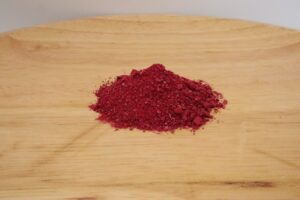
Broccoli powder

Broccoli powder is a raw material made by drying and micro-pulverizing domestic broccoli, aimed at spreading broccoli-derived nutrition and vivid green color evenly into aojiru, smoothies, green powders, and confectionery dough. Known as a vegetable containing sulforaphane, vitamin C, and fiber, it's finished into a form that makes deployment into health foods and functional foods easy through powdering. At Agriture, Dried broccoli from the same raw material as (a type that keeps the floret shape), we powder it by adding a micro-pulverizing step.
TOC
Agriture's broccoli powder: three points of care
For broccoli powder, controlling the freshness of the green color and the grassy smell determines quality. At Agriture we manage drying, grinding, and packaging at our own processing facility, aiming for a finish easy to use as a green-powder material.
1. Low-temperature drying that protects chlorophyll
Broccoli's vivid green color comes from chlorophyll, and if it fades with heat and shifts toward yellow-green or brown, the product value drops. By finishing at a low temperature range from the raw-material drying stage and operating under conditions that curb frictional heat during grinding, we make it easy to keep a vivid green color even after powdering.
2. Pretreatment that curbs the grassy smell
With broccoli powder, if the drying conditions don't fit, a strong grassy smell remains, producing a hard-to-drink finish for aojiru and smoothies. By adjusting the raw material's pretreatment (blanching conditions and drying temperature range), we can achieve a finish that keeps a broccoli-like flavor while gently curbing the grassy smell. This enables a flavor design easy to blend into functional foods for children and seniors.
3. Green-powder blend design
Because Agriture handles green-family vegetable powders such as Swiss chard, zucchini, and okra on the same line, you can design a "green powder mix" centered on broccoli from a single raw-material supplier. Blend design for aojiru, smoothies, and functional powders can be done all at once.
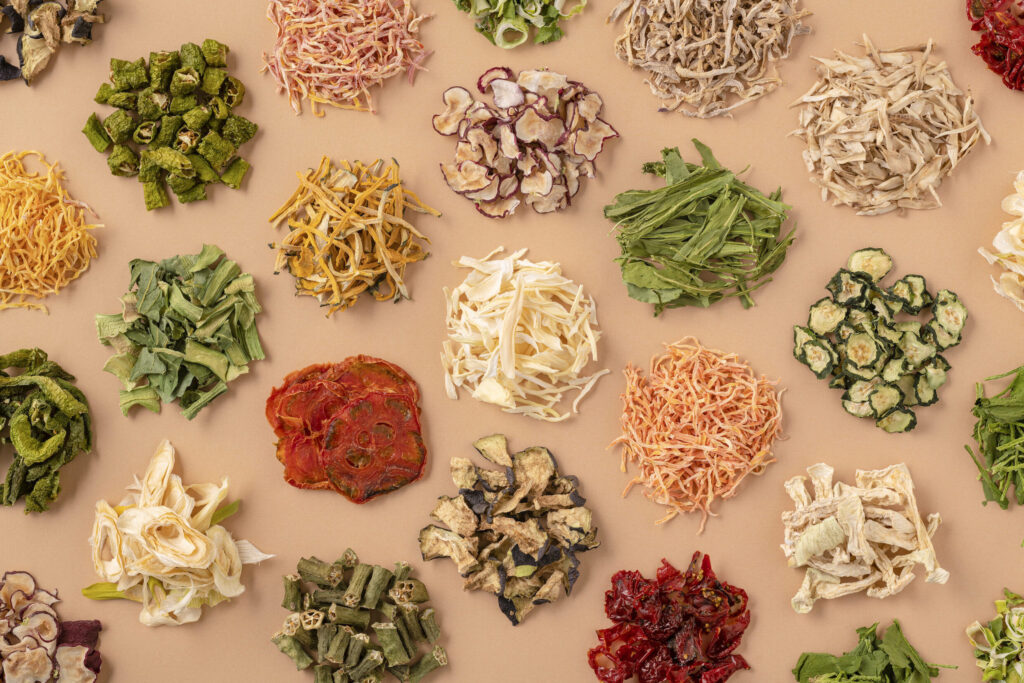
Product catalog showing the items we handle
Flexible support from small lots to large lots
- Sold in small lots from 1 kg
- Handling heirloom vegetables from across Japan
- Dried fruits and herbs also supported
Features of commercial broccoli powder
Vivid green color
The deep chlorophyll-derived green spreads evenly into aojiru, smoothies, and confectionery dough. It suits functional powder mixes as the main pigment of a green powder.
Concentrates broccoli's nutrients
You can use it as a material that adds nutritional value in small amounts as a powder—broccoli containing fiber, vitamin C, β-carotene, and more.
Dispersibility in liquids and powders
Disperses evenly into aojiru, smoothies, and protein drinks. It handles the "drink it all as a beverage" use that's difficult with the floret shape.
Easy to work into green-powder blends
Pre-blendable with green-family powders such as Swiss chard, zucchini, and okra. You can design aojiru and smoothie mixes all together.
Use together with the ingredient-shape version
For uses that want to keep texture, use dried broccoli; for uses that want to spread nutrition and color evenly, use powder.
Product specifications (commercial)
The basic specifications at the prototype stage are as follows. Procurement lots, delivery dates, and packaging forms for mass production and OEM are settled through individual consultation.
| Item | Details |
|---|---|
| Product name | Broccoli powder |
| Raw material | Broccoli (domestic) |
| Shape | Micro-powder (florets and stems dried and ground) |
| Appearance | Vivid green to deep-green micro-powder |
| Aroma | The gentle green-leaf aroma distinctive to broccoli |
| Net content | Individual quote according to use and lot |
| Best-before date | About 6 months from the shipping date |
| Storage method | Avoid high temperature, high humidity, and direct sunlight; after opening, seal and store in a cool, dark place |
| Processing plant | Our own processing plant within Kyoto Prefecture |
| Minimum prototype lot | From 1 kg of raw material |
Customization support
| Item | What we support |
|---|---|
| Part specification | Florets only (color- and nutrition-focused) / with stems (fiber-focused) / whole blend |
| Blend design | Pre-blend prototypes with Swiss chard, zucchini, okra, and other green vegetables |
| Packaging form | Commercial bulk, sticks and small bags, individual packs, and more |
| OEM productization | Consistent support through aojiru, smoothie mixes, protein, baby food, and functional powders |
| Raw material supply | Besides our own raw material, we also support contract drying and grinding at a specified growing region |
For those who want to make use of texture (raw material shape version)
For soup ingredients, salad toppings, stir-fry ingredients, and other uses that leverage the florets' texture and appearance, we recommend dried broccoli (a type that keeps the shape). The presence of broccoli that powder can't provide comes alive.
Commitments to variety, grower, and growing region
Broccoli is a vegetable of the Brassica genus in the Brassicaceae family, eaten for the florets (a cluster of buds) and stems. In Japan it's grown year-round, centered on Hokkaido and Kyushu, with floret density, color, and stem sweetness differing by variety.
Main growing region
| Growing region | Features |
|---|---|
| Hokkaido | A major growing area for summer-autumn broccoli. Firm florets, deep color |
| Saitama Prefecture | A growing area for winter-spring broccoli. Strong sweetness |
| Aichi Prefecture | Grown both in open fields and greenhouses. Handles year-round supply |
| Kagawa and Tokushima Prefectures | Broccoli growing areas of Shikoku. Good floret color and aroma |
Using different parts
Florets-only powder is deep in color with concentrated nutrients, suited to aojiru and smoothies. Powder including the stems raises the fiber content and is advantageous on cost too. Depending on the product concept,
Powdering technology and quality control
For broccoli powder, the retention of green color and control of the grassy smell determine quality. At Agriture we manage drying, grinding, and packaging consistently.
Countermeasures against chlorophyll fading
Chlorophyll is a pigment that fades easily with heat, light, and oxygen. We adjust the grinding lot size, rotation speed, and rest time, operating under conditions where the powder temperature doesn't rise too much. Moving it promptly into light-blocking packaging after grinding keeps the vivid green color.
Controlling the grassy note
By adjusting the raw material's blanching conditions and drying temperature range, we can achieve a finish that gently curbs the grassy smell. A design tailored to uses that don't want to assert flavor, such as beverages and baby food, is possible. In combinations with other green powders (kale, young barley grass, etc.), a broccoli allocation of 30–40% yields a mild green with the grassy smell curbed. In confectionery dough, kneading in a guide of 1–2% relative to the wheat flour keeps green color in the baked result. For baby and toddler food, mixing 0.5–1 g at a time into porridge or steamed bread lets you supplement nutrition even in a period when it's hard to get them to eat broccoli.
Use cases and adoption examples
Because powder disperses evenly into liquids and powders, it expands into uses the floret shape can't reach. We organize the uses we're most often asked about. We handle green-powder mixes, functional powder mixes, and more consistently—blending and bagging at your specified ratio.
Related articles and other vegetable raw materials
These are the vegetable powders and related raw materials Agriture handles. Use them for blend design with broccoli.
- Dried broccoli: a type that keeps the floret shape
- Swiss chard powder: colorful vegetable powders
- Zucchini powder: a mild green vegetable powder
- Okra powder: a vegetable powder that leverages thickening
- Food OEM Directory: A consultation window for OEM projects
Product catalog showing the items we handle
Flexible support from small lots to large lots
- Sold in small lots from 1 kg
- Handling heirloom vegetables from across Japan
- Dried fruits and herbs also supported
Frequently asked questions
How do dried broccoli (with shape) and the powder differ?
Dried broccoli is a type that keeps the floret shape, suited to uses that leverage texture and appearance, such as soup ingredients, salad toppings, and stir-fries. The powder, being micro-fine, suits uses that want to spread nutrition and color evenly, such as aojiru, smoothies, functional powders, and baby food.
Is the grassy note strong?
By adjusting the raw material's pretreatment and drying conditions, we can achieve a finish that gently curbs the grassy smell. A design for uses that don't want to assert flavor, such as aojiru and baby food, is possible. For flavor-focused uses, we can also accommodate a specification that deliberately keeps the green-leaf aroma.
Can you powder the florets and stems separately?
Yes. Florets-only powder is deep in color and nutrition, suited to aojiru and smoothies. Powder including the stems is high in fiber and advantageous on cost too. Depending on the product concept,
Can you pre-blend it with other green powders and deliver it?
Yes. We handle pre-blending with green-family vegetable powders such as Swiss chard, zucchini, and okra. Share the blend you're aiming for in the final product—aojiru mixes, smoothie mixes, and so on—and we'll mix and bag it at that ratio.
What is the minimum prototype lot?
We accept prototypes from 1 kg of raw material. For mass production and OEM, we propose quotes and lead times individually. You can consult us consistently through to finished products such as aojiru, smoothie mixes, protein, baby food, and functional powders.
Please tell me the best-before date and how to store it.
The best-before date is roughly six months from the shipping date. Because the green color fades easily with light and moisture, before opening store it in a cool, dark place at room temperature, away from high heat, humidity, and direct sunlight. After opening, transfer it to a sealed container and use it up within a guide of 1–2 months.
What applications are you consulted about often?
We're most often asked about aojiru, smoothie mixes, protein, baby and toddler food, health foods and functional powders, and confectionery and bakery. Because it can add color and nutritional value at the same time, it's prototyped in final products that want to balance functionality with drinkability.