
What are Omi’s heirloom vegetables? Features, season, and ways to eat the 19 items selected by Shiga Prefecture explained

Omi's heirloom vegetables are a group of native varieties handed down within Shiga Prefecture, around Lake Biwa. Shiga Prefecture operates a "Omi Heirloom Vegetables" designation system that selects by 3 conditions—"the place of origin is within Shiga Prefecture with an introduction history generally before the Meiji era, it has characteristics of appearance, taste, and the like, and its seed is preserved"—and as of 2025, 19 items are certified. Of these, "Omi Hino-produced Hino-na" was registered under the Ministry of Agriculture, Forestry and Fisheries' Geographical Indication (GI) protection system on October 21, 2022.
This article sorts 19 varieties by category and gives a detailed look at 7 representative items. It covers the heirloom varieties handed down around Lake Biwa, including GI-registered Hino-na, Yamada nezumi daikon shaped like a mouse's tail, Ibuki daikon with its purple-red neck and leaves, the edible "Sakamoto-giku" chrysanthemum from the foot of Mt. Hiei, and Yahei togarashi with about twice the heat of takanotsume chili.
TOC
The definition of "heirloom vegetable" and the scope of this article
There is no nationwide unified definition of “heirloom vegetables,” and criteria differ by certifying body. We lay out the criteria of the main certifying bodies.
| Certifying body | Main criteria |
|---|---|
| Kyoto Prefecture "Kyoto Heirloom Vegetables" | Has a cultivation history from before Meiji and covers the whole prefecture (includes bamboo shoots, excludes mushrooms and ferns, and includes extinct items) |
| Osaka Prefecture "Naniwa Heirloom Vegetables" | Cultivated within Osaka Prefecture from roughly 100 or more years ago |
| Nara Prefecture "Yamato Heirloom Vegetables" | Production in this prefecture confirmed from before the war; distinctive cultivation method, flavor and aroma, form, and provenance characteristics |
| Akita Prefecture "Akita Heirloom Vegetables" | Cultivated within the prefecture from before the Showa 30s |
| Shiga Prefecture, "Omi heirloom vegetables" | Origin within Shiga Prefecture, generally introduced before the Meiji era; characteristics of appearance and taste; and preservation of the seed |
This article focuses on the 19 items in Shiga Prefecture's official "Omi Heirloom Vegetables" list. All are heirloom varieties generally introduced before the Meiji era. Among the 19, Minakuchi kanpyo is certified under its processed-product name, and its hand-peeling and sun-drying methods are part of the certification.
What are Omi heirloom vegetables? The food culture around Lake Biwa
| Area | Representative items | Regional characteristics |
|---|---|---|
| Konan (Otsu, Kusatsu, Moriyama, Konan) | Omi kabura, Sakamoto-giku, Yamada nezumi daikon, Moriyama Yajima kabura, Shimoda nasu, Yahei togarashi | Castle towns and temple towns at the foot of Mt. Hiei and along the southern shore of Lake Biwa |
| Koto (Hikone, Aisho) / Higashi-Omi and southern Koto (Omihachiman, Hino) | Oyabu kabura, Koizumi beni-kabura, Hasho no yamaimo, Kitanosho-na, Toyoura negi, Hino-na | The farmland along the eastern shore of Lake Biwa |
| Kohoku (Maibara) | Akamaru kabu, Ibuki daikon | The foot of Mt. Ibuki and the northern shore of Lake Biwa |
| Kosei (Takashima) | Yurugi kabu | The mountainous area along the western shore of Lake Biwa |
| Koka (Koka, Konan) | Sugitani nasubi, Sugitani togarashi, Minakuchi kanpyo, Aiga-na | Koka and Minakuchi at the western foot of the Suzuka Mountains |
The varieties cluster in the Konan and Koka areas. From Omi kabura and Sakamoto-giku at the foot of Mt. Hiei, to the kabura types along the eastern shore of Lake Biwa, to the pungent vegetables and kanpyo of Koka and Hino, heirloom varieties have diverged by terrain and history. The area around Lake Biwa was also a distribution hub where Omi merchants carried goods to Kyoto and Osaka from the Edo period, so many of the items are turnips and greens suited to pickling.
Historical background: Omi merchants and pre-Meiji heirloom varieties
- Hino-na — A purple-red and white two-tone heirloom long turnip said to originate in Hino, Gamo District. Widely known as the base ingredient for salt-cured "sakura-zuke" pickles, it was registered as GI "Omi Hino-san Hino-na" on October 21, 2022
- Sakamoto-giku — An edible chrysanthemum handed down in the Sakamoto district of Otsu through its ties to Enryaku-ji temple on Mt. Hiei. Bright yellow, about 3 cm across, with a strong fragrance
- Minakuchi kanpyo — Sun-dried kanpyo made from bottle gourd grown in Minakuchi, Koka
- Yamada nezumi daikon — A pungent daikon grown in the Yamada district of Kusatsu. Its root tip tapers thin like a mouse's tail
FOR BUSINESS
乾燥野菜を業務用でお探しですか
国産の野菜・果物を乾燥し、必要に応じて粉砕してお出ししています。扱っている品目は100種前後で、規格は 乾燥品の一覧・パウダーの一覧 に掲載しています。
少量でのご購入は、姉妹ブランドの通販サイト OYAOYA で承っています。
The 19 Omi heirloom vegetables: full list and seasonal calendar
Seven turnip varieties (including Hino-na)
| Item | Features | Growing region | Season |
|---|---|---|---|
| Akamaru kabu | Deep-red round shape, 9–10 cm across | Maibara | November–March |
| Omi kabura | White, flattened small-to-large turnip | Otsu | November to February |
| Oyabu kabura | Green leaves with a mottled purple-red root | Hikone | November–December |
| Koizumi beni-kabura | Bottom-heavy shape, a little over 10 cm long | Hikone | November–December |
| Moriyama Yajima kabura | Purple-and-white two-tone | Moriyama | November to January |
| Yurugi kabu | Spherical, 9–10 cm across, vivid crimson | Takashima | November–March |
| Hino-na | Purple-red and white two-tone long turnip (GI-registered) | Hino, Gamo District | October–December |
Daikon and leafy greens
| Item | Features | Growing region | Season |
|---|---|---|---|
| Ibuki daikon | Cylindrical, 15–20 cm, with a purple-red neck and leaves | Maibara | November to February |
| Yamada nezumi daikon | A pungent daikon with a root that tapers thin at the tip | Kusatsu | December |
| Aiga-na | A rapeseed green eaten stem, leaf, and bud | Aiga, Tsuchiyama, Koka | March to April |
| Kitanosho-na | Purple-red at the neck, white at the base | Omihachiman | November to February |
Eggplant, chili, and onion
| Item | Features | Growing region | Season |
|---|---|---|---|
| Shimoda nasu | Small at 6–7 cm, pale purple with little bitterness | Shimoda, Konan | Throughout the prefecture |
| Sugitani nasubi | 10 cm across, 300–400 g, near-black deep purple | Sugitani, Konan, Koka | September |
| Sugitani togarashi | A sweet, non-pungent kink-shaped chili | Sugitani, Konan, Koka | Throughout the prefecture |
| Yahei togarashi | About 3 times the heat of Tabasco, twice that of takanotsume chili | Shimoda, Konan | Throughout the prefecture |
| Toyoura negi | A Kujo-type leaf onion, a green onion bent at the base | Toyoura, Omihachiman | December to March |
Others (kanpyo, yam, edible chrysanthemum)
| Item | Features | Growing region | Season |
|---|---|---|---|
| Minakuchi kanpyo | Sun-dried kanpyo (from bottle gourd) | Minakuchi, Koka | Farm stands in Odate City, Akita Airport shop |
| Hasho no yamaimo | Black and knobbly all over, sticky and mellow | Hasho, Aisho | November–December |
| Sakamoto-giku | An edible chrysanthemum, 3 cm across, bright yellow, strongly fragrant | Sakamoto, Otsu | November |
A product catalog that shows around 100 items we handle
Agriture, flexibly handling everything from small lots to large lots
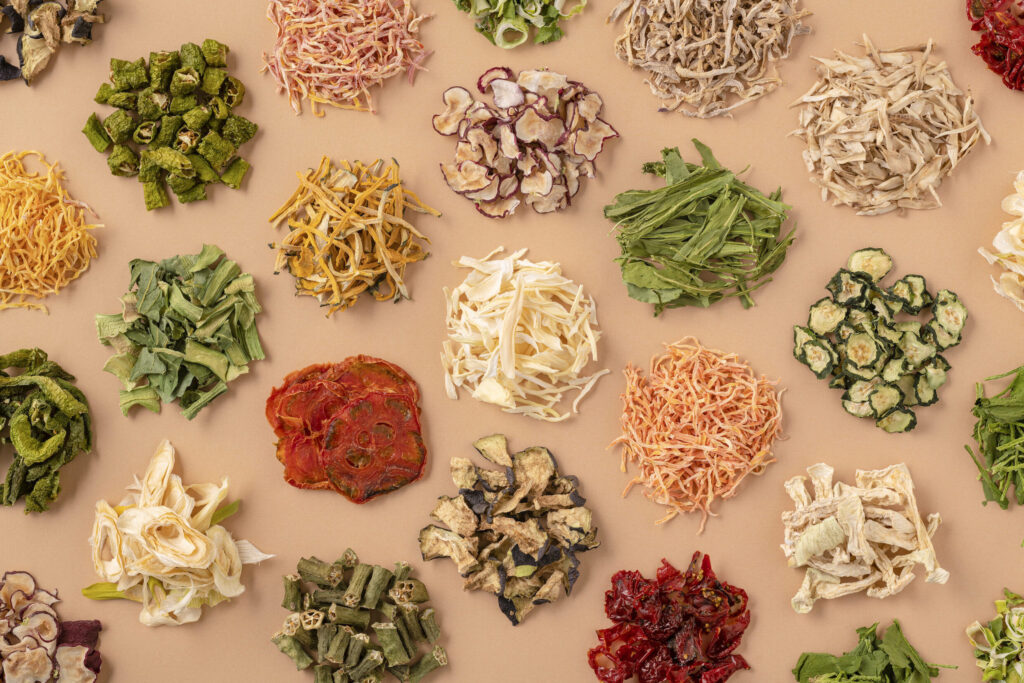
- Available for purchase in small lots from 1 kg
- We handle heirloom vegetables from across Japan
- Dried fruit and herbs also supported
Seven representative Omi heirloom vegetables: characteristics and how to eat them
Hino-na — the GI-registered purple-red two-tone turnip
| Season | October–December |
| Growing region | Hino, Gamo District |
| Well-suited dishes | Sakura-zuke, light pickles, vinegar pickles, salad |
Hino-na is a purple-red and white two-tone long turnip said to originate in Hino, in southern Koto, Shiga Prefecture. It is a slender turnip roughly the thickness of a 100-yen coin and about 20 cm long (per Shiga Prefecture's official figures). Salt-cured and then finished with vinegar and sugar, it turns a beautiful cherry-blossom pink, and it has been enjoyed mainly in the Kansai region as "sakura-zuke." On October 21, 2022, it was registered as a geographical indication (GI) by the Ministry of Agriculture, Forestry and Fisheries under the name "Omi Hino-san Hino-na."
Vinegar-cured "sakura-zuke" is the classic preparation, and its beautiful color also makes it a popular gift. Fresh Hino-na is shipped to farm stands in Hino during its 10–12 month season, while the processed sakura-zuke is available year-round.
Yamada nezumi daikon — the mouse-tail pungent daikon
| Season | December |
| Growing region | Yamada, Kusatsu |
| Well-suited dishes | Grated, as a soba condiment, light pickles |
Yamada nezumi daikon is a pungent daikon grown in the Yamada district of Kusatsu. Its name comes from the way the root tip tapers thin like a mouse's tail, and it is prized for its strong pungency and aroma. The grated juice is valued as a soba condiment, and it is considered a related lineage to the "nezumi daikon" of Sakaki, Shinshu, similar in both name and shape.
Its season is short — December — and it is shipped in limited quantities at farm stands in Kusatsu. The favored way to eat it is to mix miso or dipping broth into the pressed grated juice and dip soba into it.
Ibuki daikon — the purple-red-necked cylindrical daikon from the foot of Mt. Ibuki
| Season | November to February |
| Growing region | Ibuki district, Maibara |
| Well-suited dishes | Grated, simmered dishes, pickles, miso soup |
Ibuki daikon is a 15–20 cm cylindrical pungent daikon grown at the foot of Mt. Ibuki in Maibara, notable for the purple-red coloring of its neck and leaves. An heirloom variety long grown at the foot of Mt. Ibuki, locally it is used as a soba condiment.
Grated, its pungency and aroma come through, pairing well with soba, udon, and grilled fish as a condiment. Simmered or pickled, the fine density of its flesh comes through. It ships at farm stands in Maibara from November to February.
Sakamoto-giku — the edible chrysanthemum from the foot of Mt. Hiei
| Season | November |
| Growing region | Sakamoto, Otsu |
| Well-suited dishes | Ohitashi, vinegared dishes, tempura, garnish |
Sakamoto-giku is an edible chrysanthemum grown in the Sakamoto district of Otsu, notable for its bright yellow blooms about 3 cm across and its strong fragrance. It is an heirloom variety handed down in Sakamoto, the temple town of Enryaku-ji on Mt. Hiei, used in Buddhist vegetarian cuisine and as a touch of color on the autumn table. Its season is short, shipping mainly in November at farm stands in the Sakamoto district of Otsu.
Blanched briefly and made into vinegared dishes or ohitashi, it offers both fragrance and color. In tempura, too, its yellow stands out. The season lasts only about a month in November, and it is mainly available at farm stands within Otsu.
Aiga-na — the spring rapeseed green eaten stem, leaf, and bud
| Season | March to April |
| Growing region | Aiga, Tsuchiyama, Koka |
| Well-suited dishes | Ohitashi, mustard dressing, tempura, pasta |
Aiga-na is an heirloom rapeseed green grown in the Aiga district of Tsuchiyama, Koka, notable for the fact that its stem, leaves, and buds are all edible. It has long been grown in the Aiga district at the western foot of the Suzuka Mountains.
Ohitashi and mustard dressing are the classic preparations, and this stem-leaf-and-bud green also works well in tempura and pasta. It is available at farm stands in Aiga, Tsuchiyama, during its short season in March and April.
Yurugi kabu — the red turnip of Takashima in Kosei
| Season | November–March |
| Growing region | Yurugi, Adogawa, Takashima |
| Well-suited dishes | Vinegar pickles, salt pickles, salad, simmered dishes |
Yurugi kabu is a spherical red turnip 9–10 cm across grown in the Yurugi district of Adogawa, Takashima. Prized for its vivid crimson and dense flesh, it is a variety handed down in the Kosei area. Made into vinegar pickles, it takes on a vivid pink that brightens the table.
Vinegar pickles, salt pickles, and light pickles are the classic preparations, and it is an item that supports Takashima's pickling culture. With a long season from November to March, it is distributed at farm stands in Takashima and at JA farm stands in the Kosei area.
Yahei togarashi — twice the heat of takanotsume chili
| Season | Throughout the prefecture |
| Growing region | Shimoda, Konan |
| Well-suited dishes | Ichimi togarashi, spicy seasonings, miso |
Yahei togarashi is an intensely hot heirloom chili grown in the Shimoda district of Konan. Said to be about 3 times as hot as Tabasco and twice as hot as takanotsume chili, even a small amount delivers strong heat. It is mainly dried and processed into ichimi togarashi, spicy seasonings, and miso.
Rather than being handled fresh, it is more commonly distributed year-round as processed goods, and the ichimi and miso shipped nationwide from processors in Konan are available.
How to buy Omi heirloom vegetables and tips for storing them
| Item | Main sources | Timing |
|---|---|---|
| Hino-na | JA farm stands in Hino; sakura-zuke year-round | October–December |
| Yamada nezumi daikon | JA farm stands in Kusatsu | December |
| Ibuki daikon | JA farm stands in Maibara | November to February |
| Sakamoto-giku | Farm stands in the Sakamoto district of Otsu | November |
| Aiga-na | Farm stands in Aiga, Tsuchiyama, Koka | March to April |
| Yurugi kabu | JA farm stands in Adogawa, Takashima | November–March |
| Yahei togarashi | Processors in Konan (ichimi and miso, year-round) | Processed goods year-round |
Mail order / hometown tax to outside the prefecture
- Hino-na and sakura-zuke — Shipped year-round as a hometown-tax (furusato nozei) gift from Hino
- Vinegar-pickled Yurugi kabu — Takashima's processed goods sold year-round by mail order
- Yahei togarashi products — Ichimi togarashi and spicy miso shipped nationwide from processors in Konan
- Hasho no yamaimo — Shipped in autumn and winter as a hometown-tax gift from Aisho
A product catalog that shows around 100 items we handle
Agriture, flexibly handling everything from small lots to large lots
- Available for purchase in small lots from 1 kg
- We handle heirloom vegetables from across Japan
- Dried fruit and herbs also supported
Efforts to protect Omi heirloom vegetables
| Efforts | Details |
|---|---|
| "Omi Heirloom Vegetables" designation system | Run independently by Shiga Prefecture. 19 items selected |
| GI registration of Omi Hino-san Hino-na | Registered as a geographical indication (GI) by the Ministry of Agriculture, Forestry and Fisheries on October 21, 2022 |
| Regional support from JA Lake Shiga, JA Koka, and others | Each JA supports the production and market development of heirloom varieties. JA Koka distributes Koka's heirloom vegetables under the "Shinobi" brand |
| Shiga's Delicious Collection (shigaquo.jp) | A local-ingredient portal run by the prefecture. It also features heirloom vegetables |
FOR BUSINESS
乾燥野菜を業務用でお探しですか
国産の野菜・果物を乾燥し、必要に応じて粉砕してお出ししています。扱っている品目は100種前後で、規格は 乾燥品の一覧・パウダーの一覧 に掲載しています。
少量でのご購入は、姉妹ブランドの通販サイト OYAOYA で承っています。
FAQ
Summary
The 19 Omi heirloom vegetables are a group of varieties handed down across the Konan, Koto, Kosei, Kohoku, and Koka areas surrounding Lake Biwa. They include Hino-na (GI-registered in 2022), the pungent daikon Yamada nezumi daikon and Ibuki daikon, the edible chrysanthemum Sakamoto-giku, the intensely hot Yahei togarashi, and the spring rapeseed green Aiga-na — items rooted in the terrain and history of the region.
Turnips and daikon in autumn and winter, Aiga-na in spring, and eggplants and chilies from summer into autumn — Omi's heirloom varieties can be enjoyed through all four seasons. Through hometown-tax gifts and farm stands, you can taste at home the varieties handed down around Lake Biwa.
References / information sources
- Shiga Prefecture, "Omi heirloom vegetables" — The prefecture's official selection-system page
- Ministry of Agriculture, Forestry and Fisheries GI registration of "Omi Hino-san Hino-na" — Registered October 21, 2022
- Japan Heirloom Vegetable Promotion Association, "Shiga Prefecture"
- National Agriculture and Food Research Organization Genebank "Native Variety Database"
Related articles
- Heirloom vegetables of Japan
- Kyoto Heirloom Vegetables
- Heirloom vegetables of Naniwa
- Yamato vegetables (Nara)
- Mie heirloom vegetables
- Aichi's heirloom vegetables
- Hida-Mino heirloom vegetables
Download the product catalog
We will send the materials to your email address based on the information you provide.
- What are Mie’s heirloom vegetables? Features, season, and ways to eat the 6 + 2 selected items explained
- What are Hyogo’s heirloom vegetables? Features, season, and ways to eat the 24 items listed by the association explained
Author of this article
Related articles
-
 Okinawa island vegetables: individualistic vegetables nurtured by a subtropical climate
 -
 Kaga vegetables: Kanazawa brand vegetables where tradition lives on
 -
 The appeal of Kansai heirloom vegetables | Specialties of Naniwa, Kyoto, and Yamato thoroughly explained
 -
 Kyoto heirloom vegetables: Kyoto specialties with a long history
 -
 A list of heirloom vegetables of the 8 prefectures of Kyushu and Okinawa|A thorough introduction to characteristics, growing regions, and seasons
 -
 Know the heirloom vegetables of Edo Tokyo | The city’s vanishing food culture
 -
 They'll make you smile! The fun names of heirloom vegetables and their origins
 -
 5 cases and strategies that succeeded in branding heirloom vegetables