
What are Fukui’s heirloom vegetables? Features, season, and ways to eat the 23 items explained

Fukui Prefecture's heirloom vegetables are a group of native varieties handed down within a geography of great diversity – the maritime climate of Wakasa Bay, the sand dunes of the Echizen coast, the heavy-snow country of the Ono basin, and the mountainous districts of Katsuyama and Okuetsu. The Japan Traditional Vegetable Promotion Association recognizes 23 items, a highly distinctive lineup that includes GI-registered items such as Yoshikawa eggplant, Yamauchi kabura, Kamishō satoimo, and Kōchi aka-kabura.
This article organizes the 23 items into a single list and takes a detailed look at 7 representative ones. We introduce the native varieties that underpin Fukui's food culture: Yoshikawa eggplant, the first heirloom vegetable in Japan to earn GI registration; Kōchi aka-kabura, handed down over many years; Yatabe negi, which curves like a fishhook; and Tateishi eggplant, a native medium-long eggplant of the Wakasa region.
TOC
The definition of "heirloom vegetable" and the scope of this article
There is no nationwide unified definition for "heirloom vegetable," and the criteria differ by certifying body. To help you understand this article's content accurately, we organize the criteria of major certifying bodies.
| Certifying body | Main criteria |
|---|---|
| Kyoto Prefecture "Kyoto Heirloom Vegetables" | Cultivated in Kyoto from before the Meiji era and unique to Kyoto |
| Osaka Prefecture "Naniwa Heirloom Vegetables" | Cultivated within Osaka Prefecture from roughly 100 or more years ago |
| Nara Prefecture "Yamato Heirloom Vegetables" | A variety with a cultivation history of more than 40 years |
| Akita Prefecture "Akita Heirloom Vegetables" | Cultivated within the prefecture from before the Showa 30s |
| Yamagata Prefecture "Yamagata Heirloom Vegetables" | Cultivated within the prefecture from before Showa 20 |
| The Japan Traditional Vegetable Promotion Association | Independent certification criteria (broader) |
In this article we introduce the 23 items using the certification of the Japan Heirloom Vegetables Promotion Association as our primary source. Fukui Prefecture has no official certification system of its own, but the prefecture's Department of Agriculture, Forestry and Fisheries and its municipalities support the conservation and distribution of native varieties as regional brands. Of the 23 items, the main text focuses on 22; Kataura, which is grown throughout the prefecture and has no specific growing region, is introduced separately in the "Other local specialty varieties" section at the end of the article.
What are Fukui's heirloom vegetables? A food culture spanning Wakasa Bay to Okuetsu
Fukui Prefecture has diverse terrain: the mild maritime climate along the Wakasa Bay coast, the sand dunes of the Echizen coast, the Kuzuryū River alluvial fan of the Sakai plain, the heavy-snow country of Ono and Katsuyama, and the mountainous districts of Okuetsu. Bordering Kyoto, Shiga, and Ishikawa, its food culture draws a blend of influences from Kyoto, Hokuriku, and Etchū cuisine, and that shows in the rich variety of its native vegetables too.
The three areas and the distribution of items
| Area | Representative items | Regional characteristics |
|---|---|---|
| Reihoku (Fukui City, Sakai, Katsuyama, Ono) | Akari negi, Shinbo eggplant, Myokin eggplant, Katsuyama mizuna, Kawachi aka-kabura, Arashi kabura, Anama kabura, Itagaki daikon, Echizen shirokuki gobo, Kamisho satoimo, Sannenko rakkyo, Kaeru-uri, Kida chiso, Naoke | The dune land of the Echizen coast and the heavy-snow region of the Ono basin. The largest number of varieties |
| Reinan (Tsuruga, Obama, Wakasa, Mihama, Takahama) | Yatabe negi, Yamauchi kabura, Furutagari kabura, Kubomaru nasu, Sugihashi akakanba, Tateishi eggplant, Kurokawa mana | The maritime climate of Wakasa Bay. A meeting point of food culture with Kyoto and Omi |
| Tannan (Sabae, Echizen City, Ikeda) | Yoshikawa eggplant | A GI product with over a thousand years of history in the former Yoshikawa Village of Sabae City |
Reihoku (Fukui City to Okuetsu) stands head and shoulders above in number of varieties, while Reinan (the Wakasa Bay coast) has varieties that reflect its food-culture ties with Kyoto. Tannan is symbolized by Sabae's Yoshikawa eggplant, which has nationwide recognition as a GI-registered heirloom vegetable.
Historical background—millennia-old heirlooms and slash-and-burn / dune cultivation
- Yoshikawa eggplant — A round eggplant long cultivated in the former Yoshikawa Village of Sabae City. Also said to be the root of the Kamo eggplant; registered as GI No. 14 on July 12, 2016 (the first-ever GI registration for a heirloom vegetable)
- Kawachi aka-kabura — A red turnip passed down over many years in the Miyama district of Fukui City
- Yamauchi kabura — A conical turnip from the Yamauchi district of Wakasa Town. Registered as GI No. 16 on September 7, 2016
- Kamisho satoimo — A small, highly sticky taro from the Kamisho district of Ono City. Registered as GI No. 43 on November 10, 2017 (listed as "Okuetsu satoimo" on the association's list)
- Arashi kabura — A small turnip grown by slash-and-burn cultivation in the Kamiuchinami Arashi district of Ono City
- Sannenko rakkyo — Dune scallions raised over 3 years in the Sanrihama dunes of Sakai City
Fukui's heirloom vegetables carry a multilayered food culture, from the millennium-old lore of the Yoshikawa eggplant to terrain-specific cultivation methods like slash-and-burn and dune cultivation. The current GI registrations are 3 varieties (Yoshikawa eggplant, Yamauchi kabura, Kamisho satoimo); Yatabe negi's registration was removed on August 4, 2022. In the heirloom-vegetable category, Fukui is one of the prefectures with multiple GI-registered varieties.
FOR BUSINESS
乾燥野菜を業務用でお探しですか
国産の野菜・果物を乾燥し、必要に応じて粉砕してお出ししています。扱っている品目は100種前後で、規格は 乾燥品の一覧・パウダーの一覧 に掲載しています。
少量でのご購入は、姉妹ブランドの通販サイト OYAOYA で承っています。
The full list of Fukui's 23 heirloom vegetables and a seasonal calendar
We've organized the 23 heirloom vegetables of Fukui Prefecture certified by the Japan Heirloom Vegetable Promotion Association, sorted by category. With a composition of 5 eggplant varieties, 6 turnip varieties, and 2 negi varieties, the root, leaf, and fruit vegetables that support Fukui's table are well balanced.
Quick-reference chart of the 23 varieties
We've organized the 23 varieties along with their categories and growing regions. Because the region-wide Katauri is covered in the specialty-varieties section at the end, this main section focuses on 22 varieties.
| # | Item | Category | Main growing region |
|---|---|---|---|
| 1 | Yoshikawa eggplant | Eggplant (GI) | Sabae City (former Yoshikawa Village) |
| 2 | Kubomaru nasu | Eggplant (round) | Kubo district, Mihama Town |
| 3 | Shinbo eggplant | Eggplant | Shinbo district, Fukui City |
| 4 | Sugihashi akakanba | Turnip (red / for pickling) | Sugihashi, Tsuruga City |
| 5 | Tateishi eggplant | Eggplant | Takahama Town |
| 6 | Myokin eggplant | Eggplant (small) | Katsuyama City |
| 7 | Yamauchi kabura | Turnip (GI) | Yamauchi district, Wakasa Town |
| 8 | Kawachi aka-kabura | Turnip (red) | Miyama district, Fukui City |
| 9 | Anama kabura | Turnip (two-tone) | Former Izumi Village, Ono City |
| 10 | Arashi kabura | Turnip (slash-and-burn) | Kamiuchinami Arashi district, Ono City |
| 11 | Furutagari kabura | Turnip (white) | Furutagari district, Tsuruga City |
| 12 | Akari negi | Negi | Akari district, Fukui City |
| 13 | Yatabe negi | Negi (bent) | Yatabe district, Obama City |
| 14 | Itagaki daikon | Daikon (for condiments) | Kida district, Fukui City |
| 15 | Echizen shirokuki gobo | Burdock (white-stalk) | Harue Town, Sakai City |
| 16 | Kamisho satoimo | Taro (GI) | Kamisho district, Ono City |
| 17 | Katsuyama mizuna | Leaf vegetable (thick-stemmed) | Takashima district, Katsuyama City |
| 18 | Kurokawa mana | Leaf vegetable (slightly bitter) | Tsuruga City |
| 19 | Naoke | Leaf vegetable (for pickling) | Okabo district, Fukui City |
| 20 | Kida chiso | Shiso | Kida district, Fukui City |
| 21 | Sannenko rakkyo | Scallion (dune) | Sanrihama dunes, Sakai City / Fukui City |
| 22 | Kaeru-uri | Makuwa melon | Former Higashi-agui / Takaya-cho, Fukui City |
The composition of 5 eggplant varieties and 6 turnip varieties shows that Fukui's food culture developed around eggplant and turnip. That 3 GI-registered varieties (Yoshikawa eggplant, Yamauchi kabura, Kamisho satoimo) are included is also a feature—each is a nationally known heirloom that represents Fukui.
Seasonal calendar of main items
| Month | Main items coming into season |
|---|---|
| February to March | Katsuyama mizuna, Kurokawa mana (March) |
| Daisen City | Echizen shirokuki gobo, Naoke (March–April) |
| June–July | Sannenko rakkyo, Kaeru-uri, Kida chiso |
| July–September | Yoshikawa eggplant (official prefectural season July–August; Sabae City shipping June–November), Kubomaru nasu, Shinbo eggplant, Tateishi eggplant, Myokin eggplant |
| October–November | Itagaki daikon (October), Yamauchi kabura, Akari negi, Sugihashi akakanba, Arashi kabura |
| November–December | Anama kabura, Furutagari kabura, Kamisho satoimo, Yatabe negi (through the following March) |
| October to the following March | Kawachi aka-kabura, Echizen shirokuki gobo (November–December) |
Summer centers on eggplants, autumn to winter continues with turnips, negi, and taro, and spring brings mizuna, mana, and burdock—heirloom varieties line up without a break through the seasons. November–December in particular is a concentrated period when the turnips of Ono, Tsuruga, and Wakasa come into season all at once—what you might call "Fukui's month of turnips."
A product catalog that shows around 100 items we handle
Agriture, flexibly handling everything from small lots to large lots
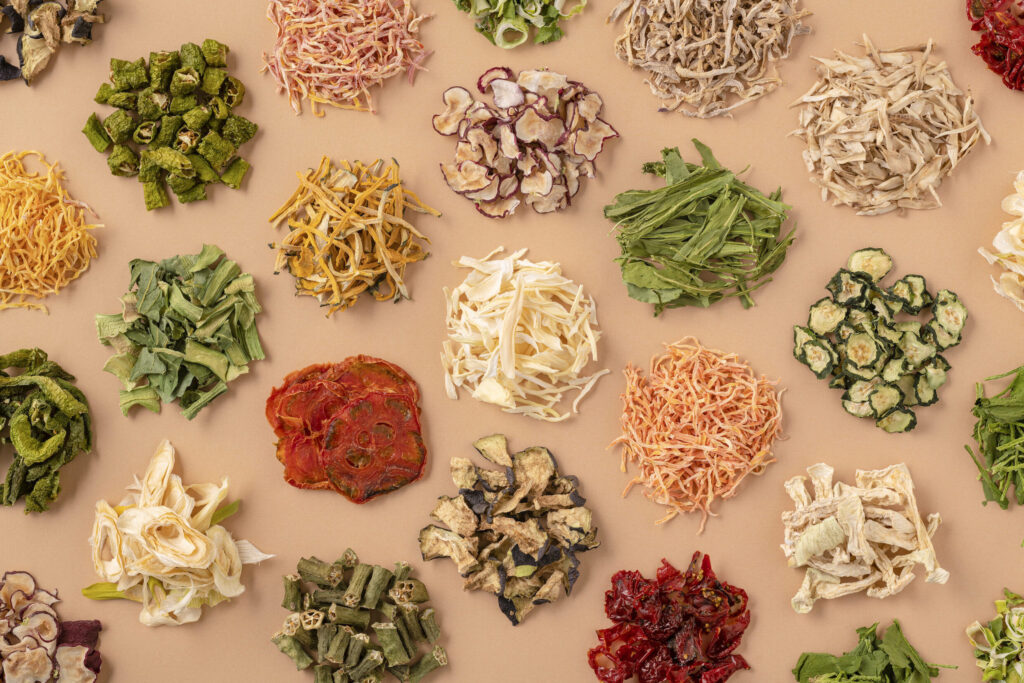
- Available for purchase in small lots from 1 kg
- We handle heirloom vegetables from across Japan
- Dried fruit and herbs also supported
The features and how to eat 7 representative Fukui heirloom vegetables
From among the 23 varieties, we selected 7 representatives based on recognition, distribution volume, and influence on food culture.
Yoshikawa eggplant — the first heirloom vegetable given GI registration
| Season | July–August |
| Growing region | Sabae City (former Yoshikawa Village) |
| Well-suited dishes | Dengaku, grilled eggplant, agebitashi, simmered dishes |
Yoshikawa eggplant is a round eggplant long cultivated in the former Yoshikawa Village of Sabae City, an heirloom variety with lore holding it to be the root of Kyoto's Kamo eggplant. Oval to slightly purse-shaped (about 10cm in diameter), it's distinctive for its glossy, blackish-purple sheen and heft. On July 12, 2016, it was registered as the Ministry of Agriculture, Forestry and Fisheries' Geographical Indication (GI) No. 14, becoming the first-ever GI-registered heirloom vegetable.
The flesh is dense and tender, and because it pairs well with oil, it shows its true worth in dengaku and agebitashi. Grilled, the skin crisps while the inside turns silky and yielding, and locally it's cherished as a summer standard. In 2009, the last farm growing it passed away and cultivation nearly ceased, but a revival project by volunteer farmers who inherited the seeds and by Sabae City restored the growing region.
Yamauchi kabura — Wakasa's conical GI-registered turnip
| Season | October–November |
| Growing region | Yamauchi district, Wakasa Town (former Kaminaka Town) |
| Well-suited dishes | Vinegar pickles, salt pickles, narezushi, simmered dishes |
Yamauchi kabura is a conical turnip 8cm or more in diameter grown in the Yamauchi district of Wakasa Town, registered as GI No. 16 on September 7, 2016. Its flesh is dense with a good balance of pungency and sweetness, and it has long been used as an ingredient in Wakasa's local dish "narezushi" and in vinegar pickles.
Salt-pickled or vinegar-pickled, its crisp bite and distinctive aroma stand out, and it has formed Wakasa's own pickling culture amid food-culture exchange with Kyoto and Shiga. Because the growing region is limited to Wakasa Town's Yamauchi district, distribution volume is small, and it's mainly obtained at local farm stands or via producer-direct online sales.
Kamisho satoimo — a small, highly sticky taro of Okuetsu
| Season | November–December |
| Growing region | Kamisho district, Ono City |
| Well-suited dishes | Simmered dishes, dengaku, imoni, koromokatsugi |
Kamisho satoimo is a small taro grown in the Kamisho district of Ono City, registered as GI No. 43 on November 10, 2017 (introduced as "Okuetsu satoimo" on the Japan Heirloom Vegetable Promotion Association's list). The temperature swings and clay soil of the Okuetsu basin give it a distinctive texture—firm-bodied and resistant to falling apart when simmered.
Even simmered, it keeps its shape, and you can enjoy the balance of strong stickiness and a fluffy texture. Used in Ono City's local dish "imoni" and in autumn koromokatsugi, it's the leading autumn delicacy locally. It's popular as a hometown-tax return gift too, and shipments nationwide are expanding.
Yatabe negi — Obama's traditional negi bent like a fishhook
| Season | November to the following March |
| Growing region | Yatabe district, Obama City |
| Well-suited dishes | Grilled negi, hot pot, sukiyaki, soups |
Yatabe negi is a traditional negi of Obama City with a distinctive shape—the white stalk bent like a fishhook. The bent shape comes from the "bent-negi" cultivation method, where once-planted seedlings are pulled up, laid down, and replanted—a device for drawing out the tenderness and sweetness of the white-stalk portion. It was registered as GI No. 15 in September 2016, but the registration was withdrawn on August 4, 2022, and it now circulates without GI labeling.
When heated it develops a strong sweetness, so its qualities shine in grilled negi, hot pot, and sukiyaki. A limited number of producers in Obama City's Yatabe district carry on the labor-intensive cultivation method, and it appears at Wakasa-area farm stands only in winter.
Kawachi aka-kabura — a red turnip long passed down in the Miyama district
| Season | October to the following March |
| Growing region | Kawachi area, Miyama district, Fukui City |
| Well-suited dishes | Vinegar pickles, salt pickles, namasu, simmered dishes |
Kawachi aka-kabura is an heirloom red turnip passed down for generations in the Kawachi area of Fukui City's Miyama district. The cool climate and clear streams of the Miyama district have produced its vivid reddish-purple color and firm flesh. Locally, there's a culture of processing it into vinegar and salt pickles as a winter preserved food.
Vinegar-pickled, the cut surface develops a vivid pink, and it's prized for New Year's namasu and as a red-and-white color accent. Its long-inherited history gives it a strong presence even among Fukui's heirloom varieties—a variety in which the culture of preservation and succession still lives today.
Tateishi eggplant — a medium-long heirloom eggplant of Takahama Town
| Season | August to September |
| Growing region | Takahama Town |
| Well-suited dishes | Dengaku, agebitashi, simmered dishes, stir-fries |
Tateishi eggplant is an heirloom medium-long eggplant cultivated in Takahama Town of the Wakasa region, with blackish-purple skin and tender flesh that turns meltingly soft when heated. It's also certified as one of Fukui Prefecture's "Fukui Hyakusai Yasai."
With the genetic stability characteristic of a fixed variety, it draws out a deep flavor in dengaku and agebitashi. Distribution volume is limited due to a decline in growers, and production has been suspended at times, making it a rare variety you'll see only seasonally at local JA farm stands and roadside stations.
Echizen shirokuki gobo — an unusual burdock whose stalks are also eaten
| Season | Spring April–May, autumn November–December (in season twice a year) |
| Growing region | Harue Town, Sakai City |
| Well-suited dishes | Kinpira, simmered dishes, tempura, dressed stalk dishes |
Echizen shirokuki gobo is an unusual burdock grown in Harue Town of Sakai City whose white stalks can be eaten. Ordinary burdock uses only the root, but Echizen shirokuki gobo's stalks are also tender and edible, and it's distinctive for coming into season twice a year, in spring and autumn.
The root goes into kinpira, simmered dishes, and tempura, and the stalk into dressed dishes and ohitashi—an heirloom variety you can enjoy twice from a single plant. The tender texture and rich aroma produced by the sandy soil of the Sakai plain are put to use at local eateries.
How to buy Fukui heirloom vegetables and storage tips
The main routes for obtaining Fukui's heirloom vegetables are farm stands in the growing regions, JA farm stands, roadside stations, and hometown-tax gifts. Yoshikawa eggplant, Yamauchi kabura, and Kamisho satoimo have a nationwide distribution base as GI-registered brands, making them comparatively easy to obtain even in the metropolitan area.
In-prefecture direct-sales outlets / roadside stations
| Item | Main sources | Timing |
|---|---|---|
| Yoshikawa eggplant | Roadside Station Nishiyama Park, JA farm stands in Sabae City | July–August |
| Yamauchi kabura | Roadside Station Wakasa Kumagawa-juku, farm stands in Wakasa Town | October–November |
| Kamisho satoimo | Roadside Station Echizen Ono Arashima no Sato, JA farm stands in Ono City | November–December |
| Yatabe negi | Roadside Station Wakasa Obama, farm stands in Obama City | November to the following March |
| Kawachi aka-kabura | Farm stands in Fukui City's Miyama district | October to the following March |
| Tateishi eggplant | Farm stands in Takahama Town, Roadside Station Seaside Takahama | August–September (cultivation years only) |
| Echizen shirokuki gobo | JA farm stands in Harue Town, Sakai City | March–May, November–December |
Mail order / hometown tax to outside the prefecture
- Yoshikawa eggplant — Shipped nationwide, summer only, as a Sabae City hometown-tax return gift
- Yamauchi kabura — Autumn-only shipment via Wakasa Town's hometown-tax program and producer-direct online sales. Processed goods like kabura-zushi and vinegar pickles are available year-round
- Kamisho satoimo — Shipped nationwide in November–December as an Ono City hometown-tax return gift
- Processed products — Vinegar pickles of Kawachi aka-kabura, sweet-vinegar pickles of Sannenko rakkyo, and the like circulate year-round
Storage methods by item
| Item | Short-term storage | Long-term storage |
|---|---|---|
| Yoshikawa eggplant | Wrap in newspaper and keep 3–5 days in the vegetable compartment | As agebitashi, 3 days chilled, 1 month frozen |
| Yamauchi kabura | Wrap in newspaper and keep 1 week in the vegetable compartment | Over a month with vinegar or salt pickling |
| Kamisho satoimo | In newspaper in a cool, dark place for 2 weeks | Unwashed, with soil on, in a cool dark place for a month |
| Yatabe negi | Moisten and keep 5 days in the vegetable compartment | Chop and freeze (1 month) |
| Kawachi aka-kabura | Wrap in newspaper and keep 1 week in the vegetable compartment | 1 month or more when vinegar-pickled |
| Tateishi eggplant | Wrap in newspaper and keep 3–5 days in the vegetable compartment | As agebitashi, 3 days chilled, 1 month frozen |
| Echizen shirokuki gobo | In newspaper, 1 week in a cool, dark place | Shred and freeze (1 month) |
A product catalog that shows around 100 items we handle
Agriture, flexibly handling everything from small lots to large lots
- Available for purchase in small lots from 1 kg
- We handle heirloom vegetables from across Japan
- Dried fruit and herbs also supported
Efforts to protect Fukui's heirloom vegetables
To maintain the 23 heirloom varieties, coordinated activities among Fukui Prefecture, Sabae City, Wakasa Town, Ono City, and JA Fukui-ken are underway.
Efforts toward GI registration and branding
| Efforts | Details |
|---|---|
| Yoshikawa eggplant GI registration | Registered as GI No. 14 on July 12, 2016. The first-ever GI registration for a heirloom vegetable |
| Yamauchi kabura GI registration | Registered as GI No. 16 on September 7, 2016 |
| Kamisho satoimo GI registration | Registered as GI No. 43 on November 10, 2017 |
| Yatabe negi GI registration (withdrawn) | Registered September 2016, withdrawn by the production association on August 4, 2022 |
| Revival Projects | Seed preservation and cultivation-revival activities for heirloom varieties that nearly died out, in Sabae City, Wakasa Town, and elsewhere |
Fukui is one of the prefectures that has achieved GI registration for multiple heirloom-vegetable varieties. Yoshikawa eggplant's first-ever GI registration in the heirloom-vegetable category, and the subsequent branding of Yamauchi kabura and Kamisho satoimo, have led to the revival of growing regions and to higher producer incomes. The withdrawal of Yatabe negi's registration is a case where maintaining the cultivation and shipping framework became difficult, offering a useful reference for thinking about the sustainability of heirloom vegetables too.
The Yoshikawa eggplant revival story
| Timing | Event |
|---|---|
| From long ago (lore over a thousand years) | Said to have been passed down as an heirloom eggplant in the former Yoshikawa Village of Sabae City. Lore also holds it to be the root of Kyoto's Kamo eggplant |
| Late Showa to early Heisei | Production plummeted with the spread of F1 varieties. By around 2008, only 1 farm in the city was growing it |
| 2009 (Heisei 21) | The last grower passed away, and a volunteer farmer who received the seeds from the family continued cultivation |
| The 2010s | The growing region was restored through a revival project by Sabae City and volunteer producers |
| July 12, 2016 | Registered as the Ministry of Agriculture, Forestry and Fisheries' Geographical Indication (GI) No. 14. First-ever in the heirloom-vegetable category |
| Present | Through branding, it now circulates stably at metropolitan restaurants and via hometown-tax gifts |
Yoshikawa eggplant is a case where an heirloom variety on the brink of dying out was branded through volunteer seed-saving, municipal support, and GI registration. Coordination among the municipality, producers, distributors, and processors has reconnected a long-inherited heirloom variety to the modern market.
FOR BUSINESS
乾燥野菜を業務用でお探しですか
国産の野菜・果物を乾燥し、必要に応じて粉砕してお出ししています。扱っている品目は100種前後で、規格は 乾燥品の一覧・パウダーの一覧 に掲載しています。
少量でのご購入は、姉妹ブランドの通販サイト OYAOYA で承っています。
FAQ
Other regional specialty varieties
It's included on the Japan Heirloom Vegetable Promotion Association's list, but here we introduce separately, as a "local specialty variety," a variety that has no specific growing region and has been cultivated throughout the prefecture.
| Item | Category | Growing region | Characteristics and standing |
|---|---|---|---|
| Katauri | Melon (for narazuke) | Throughout Fukui Prefecture | A narazuke melon harvested in June–July. A traditional processing melon with no specific growing region, cultivated in various parts of the prefecture |
Summary
Fukui's 23 heirloom vegetables are a group of native varieties passed down amid a diverse landscape—the Wakasa Bay coast, the Echizen coast, the Sakai plain, the Ono basin, and the Okuetsu mountains. Led by the GI-registered Yoshikawa eggplant, Yamauchi kabura, and Kamisho satoimo, and joined by the long-inherited Kawachi aka-kabura and the fishhook-bent Yatabe negi, they're a lineup that combines history and individuality.
Summer brings Yoshikawa eggplant and Tateishi eggplant, autumn the turnips and Kamisho satoimo, and winter to spring Kawachi aka-kabura, Katsuyama mizuna, and Echizen shirokuki gobo—heirloom varieties line up through all four seasons. Using hometown-tax gifts and producer-direct online sales, you can casually enjoy the native varieties that support Fukui's food culture even from the metropolitan area.
References / information sources
- Japan Heirloom Vegetable Promotion Association, "Fukui Prefecture's Heirloom Vegetables" — A certification list of 23 varieties
- Ministry of Agriculture, Forestry and Fisheries GI-registered products list — Yoshikawa eggplant, Yamauchi kabura, Kamisho satoimo
- Sabae City, "Yoshikawa Eggplant" — Producing-area administrative information
- National Agriculture and Food Research Organization Genebank "Native Variety Database" — information on native varieties nationwide
Related articles
- Japan's Heirloom Vegetables: Precious Varieties Handed Down in Each Region
- Kyoto's traditional vegetables (including the Kamo eggplant)
- Toyama's heirloom vegetables (including the Nyuzen Jumbo Watermelon)
- Heirloom vegetables of Niigata
- Heirloom vegetables of Yamagata
- Heirloom vegetables of Naniwa
Download the product catalog
We will send the materials to your email address based on the information you provide.
- What are Toyama’s heirloom vegetables? Features, season, and ways to eat the 21 items explained
- What are Yamanashi’s heirloom vegetables? Features, season, and ways to eat the 13 items explained
Author of this article
Related articles
-
 Okinawa island vegetables: individualistic vegetables nurtured by a subtropical climate
 -
 Kaga vegetables: Kanazawa brand vegetables where tradition lives on
 -
 The appeal of Kansai heirloom vegetables | Specialties of Naniwa, Kyoto, and Yamato thoroughly explained
 -
 Kyoto heirloom vegetables: Kyoto specialties with a long history
 -
 A list of heirloom vegetables of the 8 prefectures of Kyushu and Okinawa|A thorough introduction to characteristics, growing regions, and seasons
 -
 Know the heirloom vegetables of Edo Tokyo | The city’s vanishing food culture
 -
 They'll make you smile! The fun names of heirloom vegetables and their origins
 -
 5 cases and strategies that succeeded in branding heirloom vegetables