
We Prototyped "Dried Wakegi and Wakegi Powder" Using Domestically Grown Wakegi

Agriture prototyped a "dried wakegi" made from domestically grown wakegi. Wakegi (a bunching-onion cross) is a cross between leek and onion, and its feature is a texture softer and flavor milder than ordinary leeks.
Even after drying, wakegi's characteristic gentle aroma remains, and with little pungency it finishes easy to use as a condiment. By cutting it into small rounds before drying, we've finished it in a form that can be used as is for toppings on soups or okonomiyaki.
Wakegi is a food material grown mainly in western Japan, with Hiroshima known as one of the country's leading producing areas. Familiar as a condiment and as an ingredient in okonomiyaki and soups, making it a dried product enables year-round use. It could also be used as a commercial dried condiment or an ingredient for instant miso soup.
Agriture offers OEM manufacturing of dried vegetables and powders and proposals as commercial raw materials. You can consult us about regionally distinctive vegetables like wakegi from the prototype stage too.
TOC
Features of dried wakegi and material insights
Wakegi is a leek-onion cross (a bunching-onion cross), and its feature is gently combining the flavors of both. With milder pungency than ordinary leeks and a good balance of sweetness and richness, it can be used widely—not just as a condiment but as an ingredient in soups and okonomiyaki. Drying concentrates this mild flavor, making it a handy commercial material you can use straight from rehydration. Wakegi product page, where you can check the details of the dried chip.
Comparing wakegi with other leeks and onions
There are several leeks and onions for condiments and ingredients, and wakegi sits in an intermediate position among them. Here's a comparison for when you're considering it as a dried material.
| Leeks and onions | Pungency | Turnip and daikon look similar, but there is a clear difference in their characteristics after drying. Please use this as a reference for material selection. | Main use |
|---|---|---|---|
| White negi (long negi) | Somewhat strong | Sweet when heated | Hotpot, stir-fries, condiment |
| Green negi (banno negi) | Moderate | Mild | Condiment, topping |
| wakegi, | Mild | Moderate sweetness and richness | Condiment, soups, okonomiyaki, su-miso dressing |
| Onion | Strong when raw | Very sweet when heated | Stews, sauces, salads |
Because wakegi combines the aroma of leek and the sweetness of onion, it suits blends that call for a "not too pungent, not too sweet" balance. For the powder form, see the wakegi powder product page.
You can check the details of turnip's powder form on the
Because wakegi is a leek × onion cross, it doesn't lean toward either flavor. Even after drying, the pungency stays mild and easy to use, fitting uses where "an overly pungent leek is a problem"—such as okonomiyaki ingredients or a miso-soup topping. It's a familiar material in Kyushu and the Chugoku-Shikoku region, but still uncommon in nationally distributed products, making it an angle for differentiation.
.
Dried wakegi can be blended into a wide range of food categories, drawing on its mild flavor. Here are ideas by application.
Instant foods, soup ingredients
Because dried wakegi restores its flavor and texture simply by rehydrating in hot water, it's ideal as an ingredient for miso soup, clear soup, and instant soup.
- Ingredient for cup miso soup and instant clear soup
- Blending material for freeze-dried soups
- Topping for ochazuke and rice porridge
Okonomiyaki, flour-based dishes
Wakegi is a classic combination as an okonomiyaki ingredient. A dried product has high shelf stability, and it can also be mixed into commercial okonomiyaki mix.
- Blending dried wakegi into okonomiyaki mix
- Dried ingredient for takoyaki and chijimi
- Commercial dried wakegi for negiyaki
Condiment, topping
With its mild pungency, wakegi also suits use as a condiment for ramen and udon. It has a flavor even those who dislike raw leek can eat.
- Dried condiment for ramen, udon, and soba
- Freeze-dried topping for chilled tofu and natto
- Blending material for furikake and instant ochazuke
Senmai-zuke-style dried turnip pickles
Wakegi powder can be used as a leek-flavor seasoning, as a raw material for dressings and seasoning salt. Vegetable powder list Please also consider combinations with other materials at
- Powder material for negi-shio dare and negi-miso
- Seasoning for potato chips and senbei
- Blending into furikake and rice condiments
FOR BUSINESS
乾燥ワケギを、原料としてお探しですか
国産のワケギを乾燥・粉砕してお出ししています。カット形状や粒度の指定、継続してのお取引もご相談ください。規格は Dried wakegi・Welsh onion powder に掲載しています。
ワケギの少量販売は姉妹ブランドの OYAOYA では取り扱いがありません。ほかの品目はカタログをご覧ください。
A base raw material for vegetable bouillon and dashi powder
Here are the representative specifications for commercial lots of dried wakegi.
A vegetable base powder for baby food
| Item | Agriture's manufacturing specs and OEM support |
|---|---|
| Raw materials | Domestic wakegi (leek × onion cross) |
| Manufacturing spec | Small-round-cut dried / powder |
| Processing plant | Our own processing plant within Kyoto Prefecture |
| Additives | Domestic turnip |
| Best-before date | About 6 months from the shipping date |
| Processing shape | From 1 kg of raw material |
| Main production lot | Slice / dice cut / powder |
| Not used | Minimum prototyping lot |
Customization support
- Form: small round cut (for condiment), minced (for ingredient), powder
- Blending: pre-blending available with other dried leeks/onions and seasonings
- Specification sheet, certificate of raw material origin, microbiological test report
- Shape: slice (for pickles), dice cut (for ingredients), powder
Blending: pre-blend support with other dried vegetables
Because wakegi's pungency can differ by growing region and harvest season, we recommend confirming the flavor in a prototype.
- dried vegetable / powder OEM inquiry form Label: besides unbranded delivery, PB filling under the OEM client's brand supported
- The flow for consulting about OEM prototyping
- Since turnip's sweetness intensity differs by variety and harvest time, we recommend confirming flavor through prototyping.
- Contact us with the prototyping content, desired shape, and assumed application via
- Share the requirements of the blending destination in a concept hearing (Zoom or email)
Tell us your application—"we want to put it in okonomiyaki mix," "we want to use it as a miso-soup ingredient," and so on—and we'll propose the optimal cut form.
Product catalog showing the items we handle
Flexible support from small lots to large lots
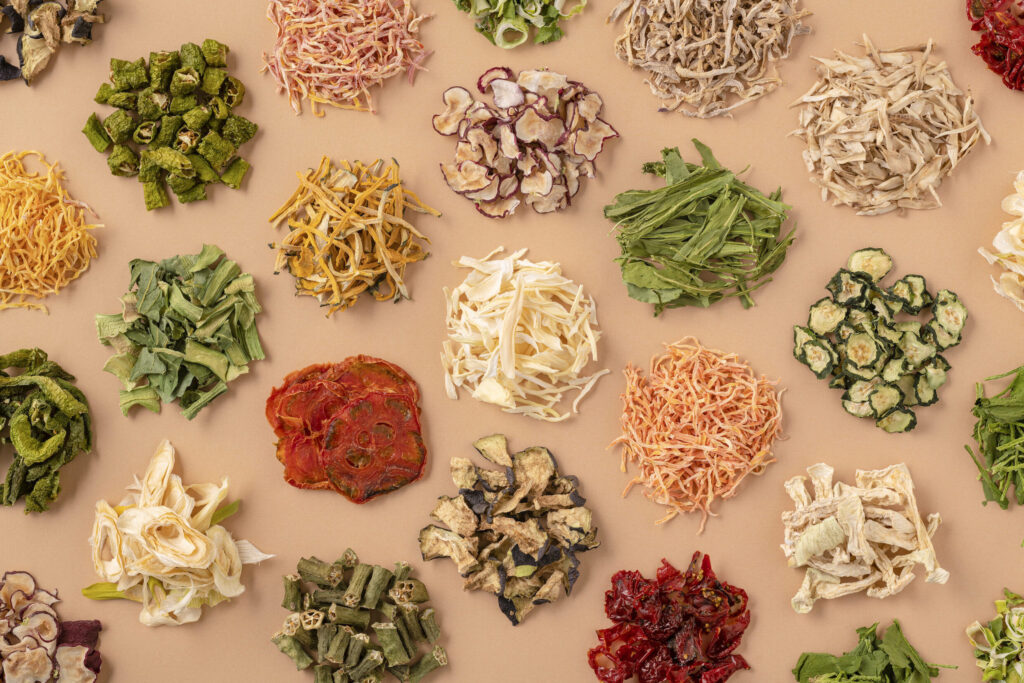
- Sold in small lots from 1 kg
- Handling heirloom vegetables from across Japan
- Dried fruits and herbs also supported
FOR BUSINESS
乾燥ワケギを、原料としてお探しですか
国産のワケギを乾燥・粉砕してお出ししています。カット形状や粒度の指定、継続してのお取引もご相談ください。規格は Dried wakegi・Welsh onion powder に掲載しています。
ワケギの少量販売は姉妹ブランドの OYAOYA では取り扱いがありません。ほかの品目はカタログをご覧ください。
Frequently asked questions
Q. What's the difference between wakegi and ordinary leek?
A. Wakegi is a leek-onion cross, with milder pungency and more sweetness and richness than ordinary leeks. Even eaten raw it isn't too pungent, and its feature is wide-ranging use from condiment to ingredient.
Q. Doesn't the flavor fade after drying?
A. Drying concentrates wakegi's characteristic mild flavor. Rehydrated in hot water, it restores an aroma and texture close to when it's fresh, so it works well as an instant-food ingredient too.
A. Turnip has less fiber than daikon and takes on a smooth, melting texture when rehydrated. Daikon keeps a crisp bite. Please use them differently according to the application.
Q. Can it be used in baby food? the wakegi powder product page, where you can check the details.
Q. Can you do powder processing too?
A. It can be combined with the 60-plus dried vegetables and herb powders Agriture handles. Vegetable powder list Please check the specifications on
Q. Can it be blended with other dried vegetables?
A. It can be combined with the 60-plus dried vegetables handled by Agriture. Please check the items handled on
Related pages and further reading
- Dried wakegi product page (domestic, commercial)
- the wakegi powder product page
- Agriture's dried vegetable and powder product list
- See the vegetable powder list page
- For consultations on dried vegetable and powder OEM here
Additional powder prototype: vivid green retained
In addition to the dried-wakegi prototype, this time we also ran an additional prototype through to powdering. Grinding the dried wakegi as is, we were able to finish it as a fine powder that retains a vivid green. Leeks and onions tend to shift toward brown as chlorophyll degrades, but by tuning the processing temperature control and grinding timing, we achieved a finish that curbs color loss from heating and grinding.
Powdered wakegi suits uses where you want to add color and flavor at once—kneading into confectionery dough, okonomiyaki flour, and noodles, or coloring dressings. The mild flavor unique to the fine leaves spreads evenly into liquids as well, giving it usability as a commercial material. For details, see the wakegi powder product page.
- Kneading into confectionery and bread dough (for bakery products drawing on the vivid green)
- Color-adding material for okonomiyaki flour, takoyaki flour, and mix flour
- Aromatic base for Japanese-style dressings and emulsified sauces
- Topping powder for instant noodles and instant soups
- Flavoring material for flavored salt and furikake
OEM consultations are possible in both dried-wakegi and powder specifications. dried vegetable / powder OEM inquiry form Tell us your application and desired specifications from
- We Prototyped "Dried Beet" Using Domestically Grown Beet
- We Began Full Production of Lotus Root Powder
Author of this article
Related articles
-
 We Prototyped "Chestnut Skin Powder" Using Domestically Grown Chestnut Skins
 -
 A Notice About the Rose Prototype
 -
 We produced a prototype of dried cactus made from domestic cactus (nopal)
 -
We Made a Prototype of Dried Blueberry Leaf Using Japanese-Grown Blueberry Leaves
-
 We Prototyped "Basil Powder" Using Domestically Grown Sweet Basil
 -
 We Prototyped "Purple Chili Powder" Using Domestically Grown Purple Chili
 -
 We Prototyped "Asparagus Powder" Using Domestically Grown Asparagus
 -
 We Prototyped "Green Papaya Powder" Using Domestically Grown Green Papaya