Dried lemon

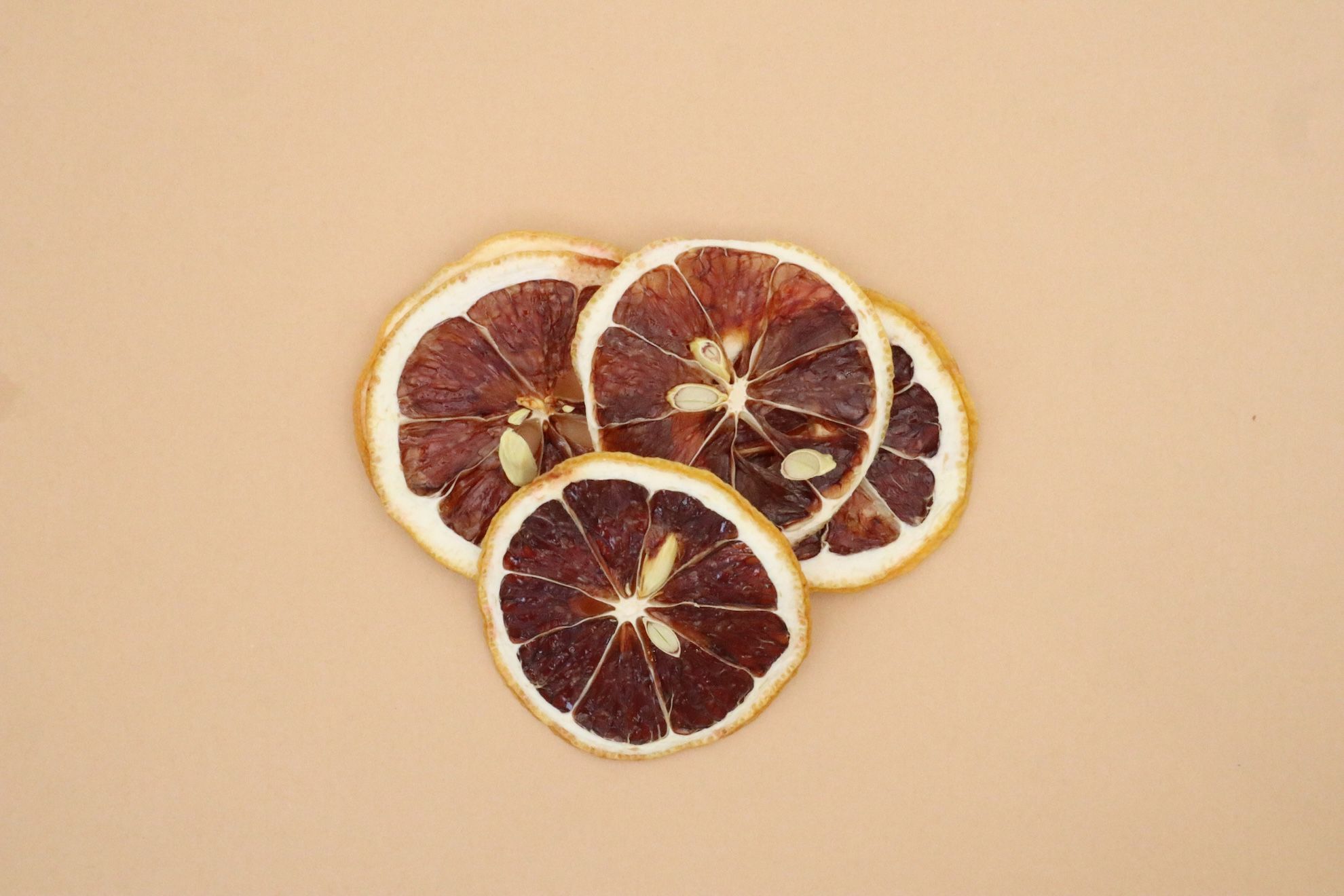
Product overview of dried lemon
A dried lemon made with domestically grown lemons (from Kyoto and Ehime Prefectures) that concentrates their refreshing tartness and aroma. Low-temperature drying preserves the vivid color while locking in the peel's fragrance and the pulp's tartness as they are. Easy to use as is in slice form, it's an excellent ingredient for toppings and processed foods too. Drying raises shelf stability, and its ability to reduce loss in commercial use is a further appeal.
It adds an accent to desserts, drinks, baked goods, and more, creating a touch of flair.
Three points of pride in dried lemon
01 Uses domestically grown lemons from Kyoto and Ehime Prefectures
Rather than the widely distributed imported lemons, we source exclusively from domestically grown lemons in Kyoto and Ehime Prefectures. To secure a quality usable peel and all, we insist on procurement from contract routes where the cultivation history can be confirmed.
02 Low-temperature drying that retains the peel's aroma
Because lemon's essential-oil components are weak to heat, removing moisture slowly at low temperature keeps the aromatic components in the peel from escaping. The refreshing aroma that spreads the moment you open the bag is proof of the finish.
03 Free of sugar, bleach, and flavorings
No sugars, sulfites, colorants, or flavorings—the only raw material is lemon. It's a raw-material design also suited to brands that promote natural materials and to product development that prioritizes clean labels.
Product catalog showing the items we handle
Flexible support from small lots to large lots
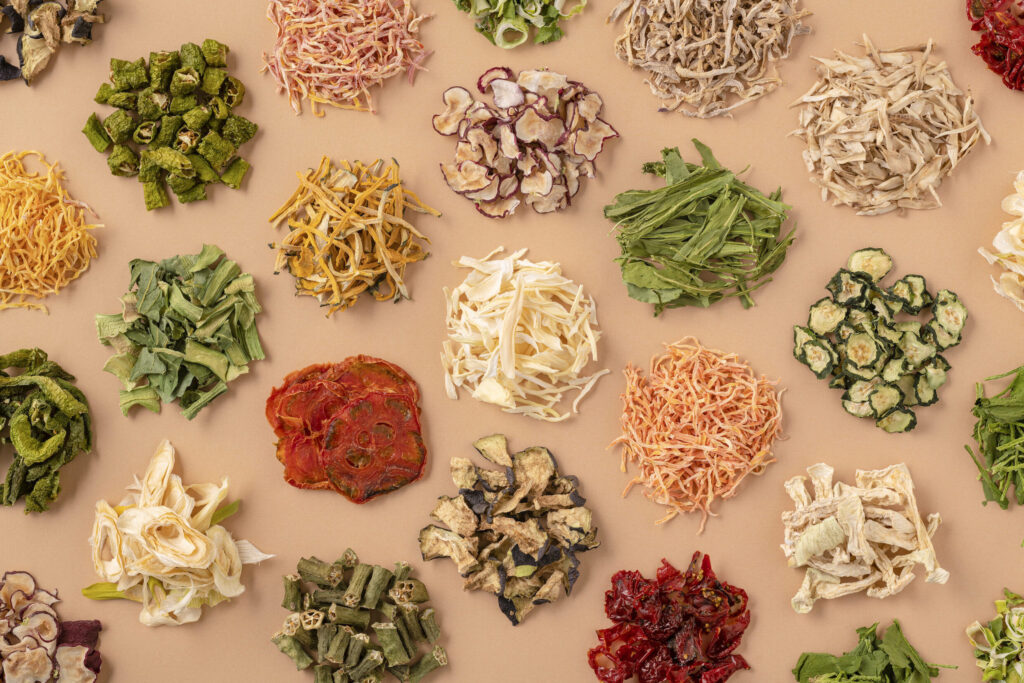
- Sold in small lots from 1 kg
- Handling heirloom vegetables from across Japan
- Dried fruits and herbs also supported
TOC
Features of commercial dried lemon
100% domestically grown lemons
Uses domestically grown lemons from Kyoto and Ehime Prefectures. A growing-region relay enables near-year-round supply, contributing to product development that promotes domestic ingredients without relying on imports.
Julienne spec
The julienne shape suits mixing into seasonings and blended teas, spreading the peel's flavor evenly. If you want it to stand out, a change to a round-slice spec is also negotiable.
Both tartness and aroma
A dried finish that lets you taste the juice's tartness and the peel's fresh aroma at once. It's designed as a material that boosts the aromatic lift of dishes and beverages.
6-month room-temperature storage
Unlike fresh lemons, the fact that it can be handled without refrigeration is an advantage as a commercial raw material. It suits operations where you reduce inventory loss and weigh out and use just the amount needed.
Small-lot 100g support
Available from a minimum lot of 10 bags, in 100g units. We also accommodate the testing phase for recipe development, small-scale production, craft-drink makers, and the like.
Powder-processing support
We also accept processing into lemon powder from the same raw material. It can be applied to flavoring baked goods, flavored salts, and developing fermented seasonings.
Product specifications of dried lemon
Item | Details |
|---|---|
Raw material growing region | Kyoto / Ehime Prefectures |
Specification | Fine-cut |
Storage method | Room temperature (store away from high heat and humidity) |
Best-before date | 6 months from the shipping date |
Minimum lot | From 10 bags / 100 g |
Powder | Available |
Manufacturing period | Autumn–winter |
Customization and OEM support
Commercial shiitake powder is here
OEM support: available
Manufacturing in large lots: available (advance consultation required three months before the manufacturing period)
POWDER
We also offer a dried-lemon powder product
We can also produce lemon powder finely ground from the same domestically grown lemons. Easy to use in flavored salts, dressings, and kneading into baked-goods dough, it's ideal for applications where you want to spread tartness and aroma evenly.
Commitments to variety, grower, and growing region
BRAND
Cultivar:We adopt domestically grown lemons with an excellent balance of tartness and aroma. Using a quality usable peel and all as the standard, we use Kyoto- and Ehime-grown lemons for different purposes according to the season.
PRODUCER
Producer:We work with partner farms in Kyoto and Ehime. Only fruit from producers whose cultivation history can be confirmed and who manage quality so it can be used peel and all is sent to processing.
REGION
Production area:We use Ehime Prefecture, one of Japan's leading lemon-growing regions, and Kyoto-grown lemons for different purposes according to the season. It's a two-base system for stably sourcing lemons, whose domestic production volume is low.
CULTIVATION
Cultivation method:To maintain a quality that can be eaten peel and all, we share cultivation histories with partner farms. The fruit goes through a sorting process that prioritizes the condition of the peel before being sent to drying.
*Reference: OYAOYA product page
Color and aroma retained through low-temperature drying
The essential oil in lemon is very weak to heat, and high-temperature drying advances the volatilization of the aroma. At Agriture, we adopt a method that removes moisture slowly at low temperature, preserving the lift of lemon's natural aroma that spreads the moment you open the bag. As for color too, we minimize the fading of the yellow peel portion, achieving both flavor and the visual look when added to blended teas and baked goods.
💡 TIPS | Drying-processing trivia
Because lemon has a structure with aroma components in the peel and tartness in the pulp, drying at a quality usable peel and all lets you make use of both aroma and tartness in your product design at once. After opening, store it in an airtight container and keep it apart from other strongly aromatic ingredients to avoid absorbing off-odors.
Scenes for using commercial dried lemon
Beverage and herbal-tea makers
As an ingredient for lemon tea, herb blends, infused water, and craft sparkling water. The yellow slices add color and raise the product's value through aroma as well.
Confectionery, bakery, and baked goods
Usable as a knead-in or topping material for lemon cake, muffins, pound cake, madeleines, scones, and more. The concentrated flavor unique to a dried product remains firmly even after baking.
Restaurants, cafés, and bars
As a garnish for cocktails and dessert plates, it offers a long-storage alternative to fresh lemon. It's also valued as an item that reduces prep loss when preparing in large batches.
Seasoning and fermented-food makers
As a raw material for processed goods that make use of lemon flavor—flavored salts, dressings, marinade liquids, fermented lemon sauces, and more. Combined with powder processing, an even more uniform flavor design is possible.
How to use commercial dried lemon, and related cases
Agriture's dried lemon can be used as a topping material as is, or ground in a mill into powder, or steeped into a seasoning base to transfer its aroma—used in ways to match the application. It's adopted in product plans that want to foreground the domestic origin of the raw material, such as craft teas and flavored salts.
Actual usage scenes, storage tips, the difference between domestic and imported lemons, home-oriented recipe examples, and more are introduced in detail in the related articles below.
Related cases
- A Thorough Test of Dried Lemon's Usability! Handy Use Scenes and Storage Methods
- The Difference Between Domestic and Imported Lemons: A Thorough Explanation from How to Choose to Uses
- A Complete Guide to Drying Lemon Rounds! A Foolproof Method and Tips
Product catalog showing the items we handle
Flexible support from small lots to large lots
- Sold in small lots from 1 kg
- Handling heirloom vegetables from across Japan
- Dried fruits and herbs also supported
Commercial dried lemon OEM consultation FAQ
From how large a minimum lot can you accommodate?
Available from a minimum of 10 bags, in 100g units. Please feel free to consult us flexibly from the pre-mass-production testing phase—recipe development and prototyping, small-batch production for craft-drink makers, and the like.
Do you publish prices?
Because it varies with growing region, lot, spec, and packaging spec, we don't publish a flat price. If you let us know the application and desired quantity, we'll provide a quote.
How long is the lead time?
The main production period is autumn–winter. When stock is available, we can ship in as little as 1–2 weeks, but for mass-production orders, please inquire by 3 months before the production season.
Can you issue a certificate of origin for the raw material?
We can share, as needed, place-of-origin labeling stating that it's grown in Kyoto and Ehime Prefectures, contract-producer information, and the like. It can also be used as attached documentation to a specification sheet.
Can you provide pesticide/analysis reports?
Partner farms' cultivation histories and any needed analysis results can be shared on a case-by-case basis. For product plans that require a peel-and-all usable spec, please let us know your requirements in advance.
Are HACCP and export support possible?
We produce with HACCP-compliant processing steps and also accommodate raw-material supply for export-oriented product plans. Necessary documents are handled individually per project.
Please tell me how to proceed with an OEM consultation
Please let us know your desired application, quantity, and delivery date via the inquiry form. We'll propose everything in one stop—sample provision, spec adjustment, prototyping, and full production.
RETAIL
For those looking to purchase in small packs
If you first want to try a small bag for personal use or small-quantity prototyping, you can use the sister brand OYAOYA online shop. You can purchase retail packs using the same raw material.
Medicinal-food (yakuzen) benefits (in the case of fresh lemon)
What we introduce here is the yakuzen way of thinking, applied to fresh lemon before drying and processing. It does not guarantee the benefits of the dried product itself; please use it as reference information for understanding the character of the raw material.
Lemon is said to have a moistening effect on the body, helping to quench thirst and to restore a body worn down by heat or fatigue. As a fruit with both tartness and sweetness, it's an ingredient easy to use in a wide range of dishes—cold drinks, dressings, desserts, and more.
💡 TIPS | Yakuzen trivia
When using it peel and all, choosing a raw material with a known cultivation history and washing it well before use gives peace of mind. Tartness is said to help generate body fluids (shinye), and it's thought to pair well with hydration-oriented menus during hot seasons and dry periods.
"Dried lemon," which keeps well as a dried product, is an easy-to-handle form for those who want to incorporate a little at a time daily, and for commercial users who want to keep it as stock.
YAKUZEN
For those who want to know more about lemon from a yakuzen perspective
For those who want to know more about how to incorporate lemon from a yakuzen perspective, and recommended ways to eat it by season, please see the feature page on Yasai Yakuzen.

Recommended reading
- A Thorough Test of Dried Lemon's Usability! Handy Use Scenes and Storage Methods (Column)
- The Difference Between Domestic and Imported Lemons: A Thorough Explanation from How to Choose to Uses (Column)
- A Complete Guide to Drying Lemon Rounds! A Foolproof Method and Tips (Column)
Download the product catalog
We will send the materials to your email address based on the information you provide.