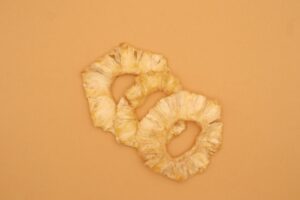
Dried papaya

Papaya is a tropical fruit characterized by a light sweetness and aroma, and drying concentrates its flavor and brings out a natural sweetness. Our dried papaya carefully dries Japanese-grown fresh fruit at low temperature, sealing in the fibrous feel of the flesh and its tropical aroma just as they are. It can be used broadly in confectionery, granola, drink toppings, health foods, and more.
TOC
Three Commitments Behind Agriture's Dried Papaya
01 Japanese-grown fresh fruit, low-temperature hot-air dried with the aroma intact
We source Japanese papaya from the pre-ripe to ripening stage and dry it slowly by low-temperature hot air, sealing in the easily volatile tropical aroma and the fibrous feel of the flesh. Unlike high-temperature sterilization or hot-air tunnel methods, it minimizes degradation of color and aroma.
02 Ingredient-first, with no glucose or additives
We do without the glucose coating and bleaching common in commercial dried tropical fruit, finishing it with only papaya's own natural sweetness. It is a material that pairs well with product designs where you want to keep ingredient declarations simple, such as health-conscious granola, additive-free sweets, and protein bars.
03 Flexibility to handle small-lot prototypes from 2 kg
Because Japanese papaya is itself a rare raw material with limited distribution, at Agriture we can handle small-lot prototypes from 2 kg. We can switch between chip, slice, and dice cuts to match the product concept, and it can also be used for test marketing before mass production or trial sales of limited products.
Product catalog showing the items we handle
Flexible support from small lots to large lots
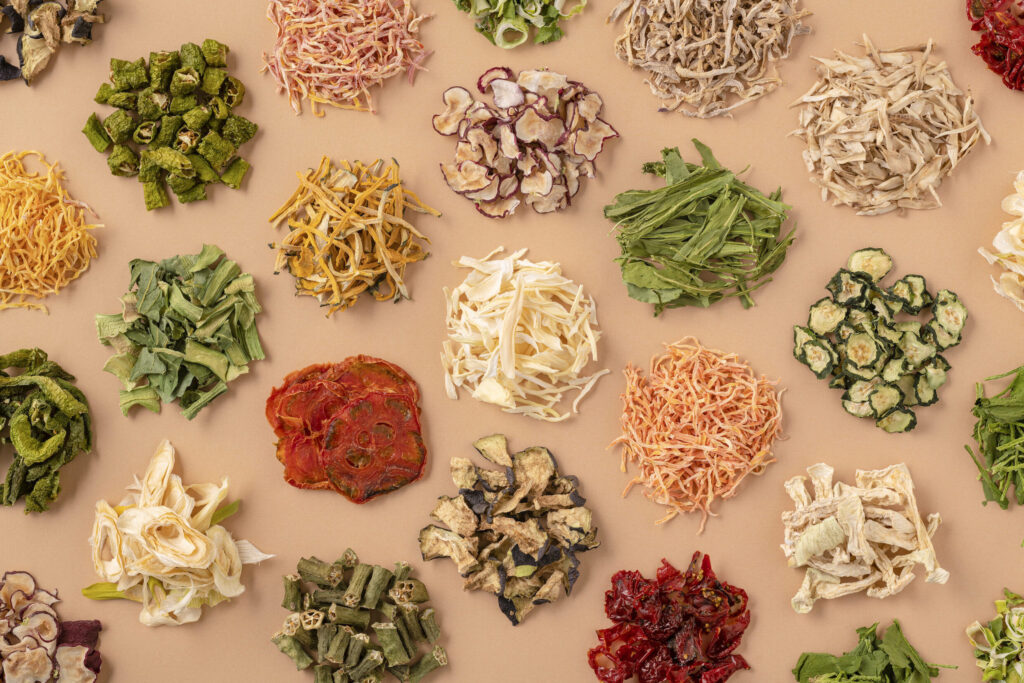
- Sold in small lots from 1 kg
- Handling heirloom vegetables from across Japan
- Dried fruits and herbs also supported
Features of Commercial Dried Papaya
Rare Japanese-grown material
We stably secure Japanese-grown papaya, whose domestic distribution volume is small, via a partner-farmer route. In a category where imports are the mainstream, it becomes a differentiating point that lets you promote a Japanese-grown material.
Tropical aroma retention
Low-temperature hot-air drying leaves a light stickiness on the flesh surface and seals in the sweet, gorgeous aroma unique to tropical fruit just as it is. It can also be used as a flavor material for confectionery.
Natural sweetness that spreads the more you chew
Though no sugars are added, moisture concentration through drying draws out a natural sweetness. Even mixed into granola or protein bars, the sugary feel is not too strong, making it a material easy to balance with the product's selling points.
Long-term room-temperature storage of 6 months
Because it is finished with lowered water activity, storage of about six months at room temperature is possible. Its inventory design, impossible in fresh distribution, and its resistance to seasonal fluctuation are major advantages for commercial use.
Versatile shape options
You can specify cut shapes to suit the product application, such as flesh chips, slices, and dice. It allows ingredient design matched to the finished image, such as a topping for sweets or a chunky feel in granola.
Blending compatible
We can also handle pre-blending with other dried fruit or dried vegetables. As a tropical mix or Japanese-Western fusion material, blend designs that differentiate from existing products can be discussed.
Product specifications (commercial)
Item | Details |
|---|---|
Raw material | Papaya (Japanese-grown) |
Net content | 100g (commercial unit) |
Production method | Low-temperature hot-air drying |
Best-before date | About 6 months from production |
Annual supply volume | Please contact us |
Processing plant | Factory in Kyoto Prefecture |
Shipping unit | 100g〜 |
Minimum-lot OEM | Prototype from 1kg / full production from 10kg |
Customization support
Item | Available | Details |
|---|---|---|
Size change | ◎ | Slicing available |
Powdering | × | Not possible |
Small-lot OEM prototyping | ◎ | Available from 2kg |
Mixed materials and blends | ◎ | Blending with other raw materials available |
Packaging changes | ◎ | Both commercial and individual packaging available |
POWDER
For those looking for a powder type or other dried-vegetable powders
Dried papaya itself centers on chip and slice formats, but we also carry many vegetable powders usable for blend design. Put them to use for base design of granola, smoothie mixes, and protein drinks.
Commitments to variety, grower, and growing region
The raw material used in our dried papaya is sourced directly from farmers who grow papaya domestically. Japanese-grown papaya, centered on the Nansei Islands including Okinawa, has limited distribution volume itself, so imports still dominate the market. As a party handling scarce domestic materials, Agriture achieves stable supply through ongoing partner-farmer cultivation with growers.
BRAND
Variety: Japanese-grown papaya. We mainly use varieties grown in the Nansei Islands and warm regions. By harvesting at the ideal ripeness for drying, we finish a commercial material that achieves both sweetness and a fibrous feel.
PRODUCER
Producer: Working with domestic partner farmers, we procure material from growers with papaya-cultivation know-how. By sharing information with growers from the prototyping stage, we can supply at the ripeness and size ideal for OEM products.
REGION
Growing region: We mainly use papaya grown in warm regions with abundant sunlight. Good soil conditions and climate directly affect sugar content and color, and a gorgeous finish even after drying is a strength unique to the Japanese-grown material.
CULTIVATION
Cultivation method: With open-field and greenhouse cultivation that keeps pesticide use low, we maintain a management system that can accommodate the raw-material origin certification food makers require. After harvest, we bring it into our own plant without dropping freshness, minimizing the lead time to processing.
Low-temperature drying technology and quality control
For processing dried papaya, we use a low-temperature hot-air method. The flesh's aroma compounds and sweetness are heat-sensitive, and a high-temperature, short-time finish causes browning and caramelized odors, but by finely controlling temperature and airflow, we can lower water activity while keeping the gorgeous flavor unique to tropical fruit intact.
Manufacturing is done at our own processing facility within Kyoto, integrally managing everything from raw-material receiving inspection to shipping. At an in-house processing facility that meets the hygiene management standards required of a food manufacturing site, we manage everything from raw-material receipt to packaging under an integrated system. In OEM projects we can also issue analysis tables and raw-material origin certificates, so we have a system that makes it easy to meet the quality requirements of food makers and mail-order makers.
💡 TIPS | Drying-processing trivia
For fleshy fruit like papaya, high sugar content makes the surface prone to stickiness under ordinary heat-pump drying, which is a drawback. At Agriture, we adjust the airflow and temperature curve specifically for fruit, using drying programs that keep natural sweetness while curbing stickiness.
Use cases and adoption examples
As an ingredient for granola and cereal
Dried papaya is used as an ingredient for granola and muesli, as a differentiating material in place of dried mango or raisins. There are many inquiries for developing premium granola promoting a Japanese-grown material, and chunky cuts can create presence.
As an ingredient for protein bars and health foods
Because it has natural sweetness even without added sugars, it can be used as a sub-ingredient for protein bars and energy bars. In additive-free-oriented brands that want to keep product-label ingredient names simple, it is valued for being able to handle both flavoring and texture at once.
As a bakery and baked-goods material
Used as a bake-in material for muffins, pound cakes, scones, and the like, the flesh feel remains even after heating, making it well suited to dried-fruit-bread-type products. It is a category with increasing OEM inquiries from Western confectionery shops and factory-production bakeries.
Drink and smoothie toppings
There are cases where flesh chips are adopted as a topping material for tapioca drinks and smoothies. It often starts with prototyping at restaurants and expands into product packaging, and a start from small-lot prototypes is possible.
OEM product ingredient and mix development
Blended with other dried fruit and dried vegetables, we propose it as a distinctive Japanese-Western fusion material. We also receive inquiries from retail brands that want to do product-making with a story, combined with packaging design.
Commercial usage and rehydration
Dried papaya basically requires no rehydration and can be kneaded into sweets or granola as chips. If you want to soften it, we recommend soaking it in room-temperature water for about 10–15 minutes to a half-rehydrated state, then using it as a sub-material for syrup soaks or confiture. Even when heat-cooking, adding it at the same time as other ingredients keeps flavor loss down.
After rehydration, to curb stickiness, lightly dust it with powdered sugar or flour before kneading into dough, and the flesh feel remains cleanly after baking. For commercial use, to keep sizes uniform, we recommend delivery in a specified cut size.
Related cases and articles
- We Prototyped "Green Papaya Powder" Using Domestically Grown Green Papaya (News)
- Buddy’s Farm (Adoption case)
Product catalog showing the items we handle
Flexible support from small lots to large lots
- Sold in small lots from 1 kg
- Handling heirloom vegetables from across Japan
- Dried fruits and herbs also supported
Frequently asked questions
Q. What is the minimum lot and prototype handling?
A. Prototyping from 2 kg and full production from 10 kg are the guides for ordering. It is also possible to prototype multiple versions with different cut shapes or blends at once, and we have a system to run alongside you from the product-development stage. If you send a concept sheet at the consultation stage, we will propose the shortest route to sample shipping.
Q. What is the price range?
A. Because Japanese-grown papaya is a rare material with limited distribution volume, the unit price is higher than imported dried papaya. Because it varies with cut specification, packaging format, and lot count, please contact us via the inquiry form for an accurate quote. We will present a unit price to suit your quantity and specification.
Q. What is the lead time?
A. For stocked items, we can ship within 1–2 weeks of order. For newly customized specifications, please plan on prototyping of 1–2 weeks and full production of 3–4 weeks as a guide. If it overlaps with the harvest season, an accelerated response is also possible, so please feel free to consult us about delivery timing.
Q. Can you issue a raw-material origin certificate?
A. We can issue a raw-material origin certificate certifying that it is Japanese-grown papaya. Because we can accommodate origin labeling based on the Food Labeling Act, it can also be used for cases where you label "made with Japanese-grown material" on product packaging. Please request required documents at the time of contracting.
Q. Can you submit pesticide residue results or analysis tables?
A. In response to a client's request, we can submit quality reports such as microbiological inspection results. We conduct inspections regularly by lot, and at the mass-production stage we can also accommodate lot-by-lot report issuance. If you have requests for finer items, please consult us in advance.
Q. Can you handle HACCP and export?
A. Our own processing facility operates in compliance with food-hygiene management standards, and in OEM projects we can also handle HACCP-compliant document submission. Export projects are discussed case by case, but there are examples of developing Japanese-produced papaya for overseas Japanese-cuisine and Asian markets.
Q. Please tell me the OEM consultation flow
A. We proceed in the flow of consultation via the inquiry form → concept hearing → free sample shipping → paid prototype → specification finalization → full production. At the development stage, we provide hands-on support so you can try multiple patterns of cut, blend, and packaging combinations.
Recommended reading
- We Prototyped "Green Papaya Powder" Using Domestically Grown Green Papaya (News)
- Buddy’s Farm (Adoption case)
Download the product catalog
We will send the materials to your email address based on the information you provide.