Circular Economy

TOC
What is the circular economy?
The circular economy refers to "an economic model that reuses waste as a resource and minimizes environmental burden." In place of the conventional linear economy of "mass production, mass consumption, mass disposal," it draws attention as a structure for realizing a sustainable society.
In the food industry, food-loss reduction, upcycled products, and recyclable packaging are representative examples of such efforts.
The features and background of the circular economy
Definition: an economic system that regards waste as a resource and circulates it
Background: the European Commission (EU) announced an action plan in 2015, and it spread internationally
Feature: diverse approaches such as reuse, reduce, recycle, and remake
Benefits: improved resource efficiency, reduced environmental burden, reconciling economic growth and sustainability
Trend: Japan too formulated a "Circular Economy Vision" in 2020, and adoption by companies and local governments is advancing
Examples of Agriture's use of the circular economy
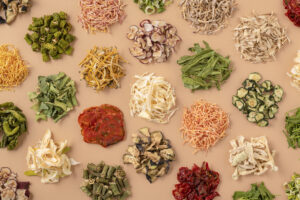
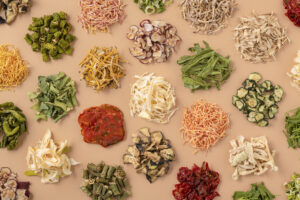
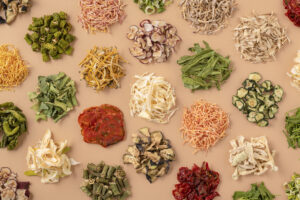
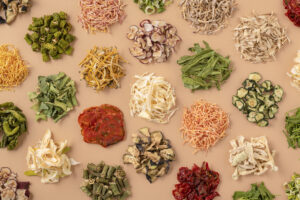
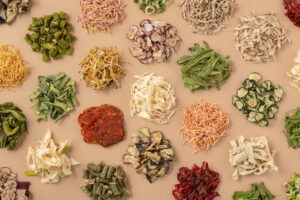
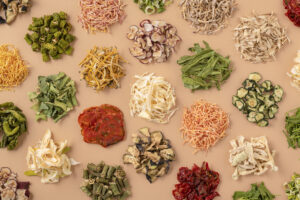
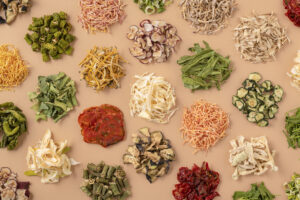
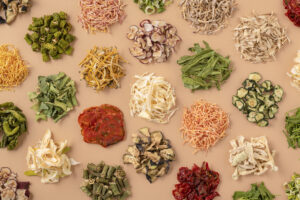
Drying and powdering non-standard vegetables to redistribute them as food OEM products
Upcycling proposals that convert manufacturing byproducts into new food ingredients
Using long-keeping dried vegetables as rolling stock and disaster-preparedness stores
Partnering with local farmers to build a system that circulates unused resources
Related keywords
Circular society
Related articles
The relationship between non-standard vegetables and food loss | Solutions and case studies
Notable upcycle food brands | A sustainable choice
The potential of new businesses using unused resources, and 5 secrets to success
FOR BUSINESS
乾燥野菜を業務用でお探しですか
国産の野菜・果物を乾燥し、必要に応じて粉砕してお出ししています。扱っている品目は100種前後で、規格は 乾燥品の一覧・パウダーの一覧 に掲載しています。
少量でのご購入は、姉妹ブランドの通販サイト OYAOYA で承っています。
FAQ
Q1. What is the difference between the circular economy and recycling?
A. Recycling is one method of reusing waste as a resource, while the circular economy is an economic model that grasps resource circulation comprehensively.
Q2. What are representative examples in the food industry?
A. Examples include making use of non-standard vegetables, upcycling food byproducts, and reusable packaging.