How to Eat and Choose Dried Mango: Using It with Yogurt and Storage Tips

Summary of this article
We explain how to eat, arrange, and choose dried mango. We introduce the difference between sweetened and additive-free, storage, and the appeal of domestic, additive-free mango.
Dried mango, popular for its rich sweetness and tropical aroma. It’s delicious on its own, but knowing how to eat it—rehydrating it in yogurt, mixing it into sweets and drinks—greatly broadens the fun. At the same time, you may find it “too sweet” or “hard,” and this changes a lot with the type you choose.
This article organizes and introduces dried mango’s types, ways to eat it, popular arrangement recipes, and how to choose without failure. From the perspective of Agriture, which dries and processes domestic fruit, we also explain the difference between the sweetened and additive-free types in an easy-to-understand way.
TOC
Knowing the Types of Dried Mango
Even within “dried mango,” there’s a range of textures and sweetness. To choose one that suits your way of eating and your taste, first let’s go over the types.
The Difference in Texture (Soft and Hard)
The soft type, with more moisture kept in, is moist and tender with a juicy texture close to the fruit. The hard type, dried thoroughly, has a good chew and keeps longer. For softness, go with soft; if you want to nibble small amounts as a snack, hard suits you.
The Difference Between the Sweetened and Sugar-Free Types
Most commercial dried mango is the sweetened type, with sugar added for extra sweetness. It finishes reliably sweet, but the mango’s own flavor becomes harder to sense. The additive-free type, which uses no sugar, lets you enjoy the fruit’s own sweetness and acidity, and suits people who want to keep the ingredients simple.
The difference between domestic and imported
There’s a large distribution of imports from the Philippines, Thailand, and elsewhere, and the price is reasonable too. Domestic ones are limited in distribution, but their appeal is the rich sweetness from fully ripe fruit and the story of the growing region. Choose to suit your use and budget.
FOR BUSINESS
乾燥マンゴーを、原料としてお探しですか
国産のマンゴーを乾燥・粉砕してお出ししています。カット形状や粒度の指定、継続してのお取引もご相談ください。規格は 乾燥マンゴー に掲載しています。
マンゴーの少量販売は姉妹ブランドの OYAOYA では取り扱いがありません。ほかの品目はカタログをご覧ください。
Ways to Eat Dried Mango Beyond Plain
It's usually eaten straight from the bag, but a little extra work changes the texture and flavor. Here are some easy ways to enjoy it.
Rehydrate in yogurt
The most popular way is to soak it in yogurt to rehydrate. Sink dried mango into yogurt the night before, and by morning the mango has absorbed the moisture and turned soft and luscious, while the yogurt takes on a natural sweetness. You get a texture close to fresh mango with almost no effort.
Freeze or chop
Freeze it as is for a cool, chewy bite that's perfect as a summer snack. Chop it finely and it works as a topping for cereal or ice cream, or as an accent in cooking.
How to soften hard pieces
Hard-type dried mango, or pieces that have hardened over time, become far easier to eat once rehydrated. Choose a method to suit your use: soak in warm water for 5 to 10 minutes, steep overnight in yogurt or milk, or wrap in plastic and warm in the microwave for a few dozen seconds. Rehydrated mango can also be chopped and used in place of a sauce or jam.
Popular dried mango recipes
With just a little tweaking, dried mango works across the board, from snacks to desserts. Here are some popular recipes that are easy to make.
Mango yogurt with chia seeds
Add chia seeds to rehydrated dried mango for a satisfying dessert. The sweet-tart mix of yogurt and mango gains a pleasant popping texture, making it a great choice for breakfast too. It comes out sweet enough to enjoy without adding any sugar.
Mix into baked goods and bread
Fold chopped dried mango into pound cake, scones, or bread dough for a sweet tropical aroma and a textural accent. Baking brings out the mango's sweetness and gives the result a lively look. It also pairs beautifully with cream cheese.
In smoothies and drinks
Blend it with milk or soy milk for a rich mango smoothie. Since it's dried, you can make it without frozen mango, and it adds natural body and sweetness. Some people drop a little into black tea for a fruity flavored tea.
As an Accent in Salads and Appetizers
The depth of dried mango is that it works not only in sweets but in savory cooking too. Chop it finely and pair it with prosciutto and cheese for an appetizer with a contrast of sweet and salty. Scatter it over a salad to add color and a sweet-tart note, or serve it with nuts as an accompaniment to wine. The mango's sweetness ties the whole dish together.
How to choose dried mango without regret
To avoid "sweeter than expected" or "too hard to eat," how you choose matters. Here are the points worth checking.
| What to prioritize | Who it suits | Checkpoint |
|---|---|---|
| Sweetness | Want to taste the fruit itself | Additive-free type with only "mango" as the ingredient |
| Texture | Prioritize softness | Labeled semi-dried or soft |
| Growing region | Prioritize richness and peace of mind | Labeled domestically grown and made from fully ripe fruit |
| Use | For baking and recipes | Easy-to-chop thickness, unbleached |
The first step is to read the ingredient list and check whether sugar or bleaching agents are added. If you want the fruit's natural taste, choose one with mango as the only ingredient. For how to choose dried fruit in general, see How to choose a dried-fruit assortment is also a helpful reference.
How to store dried mango and how long it keeps
Stored properly, dried mango keeps well for a long time. After opening, move it to an airtight container with a desiccant and keep it away from direct sunlight, heat, and humidity. Soft types spoil more easily, so refrigerate them. Portion out any you can't finish and freeze it to preserve the flavor.
When it has hardened, soaking it in warm water or yogurt makes it easier to eat. For detailed storage tips by type, see A complete guide to storing dried fruit.
Overeating and managing sugar intake
Because the moisture is removed and the sweetness concentrated, dried mango tastes sweet in smaller amounts than fresh mango. If you're enjoying it as a snack, savor it slowly, one bite at a time. For balancing the amount, see The Right Way to Eat Dried Fruit and Points to watch on the sugar in dried fruit.
Domestically grown, additive-free dried mango as an option
For anyone who wants "mango as it is, with no added sugar," domestically grown, additive-free dried mango is a good choice. Precisely because mango is hard to make at home, how you choose changes how satisfied you'll be.
Fully ripe domestic mango from Miyazaki and Okinawa
Agriture's Dried mango uses mainly fully ripe mango from Miyazaki and Okinawa. Made with no added sugars or bleaching agents and finished by low-temperature drying with restrained heat and airflow, it achieves natural sweetness without added sugar and keeps its vivid orange color and ripe aroma. You get the fruit's true flavor, different from the sweetened, bleached types sold in stores.
The background of specializing in domestically grown dried fruit is A specialist manufacturer of domestically grown dried fruit also introduced on the page.
If you want to use it commercially or for OEM
If you want to use it as an ingredient for a cafe menu or your own brand of sweets or granola, orders start from a small lot of 100g. Beyond using it in slices, you can chop it finely to fold into other ingredients, and the high processing flexibility is one advantage of domestic raw material. For inquiries about ingredient supply or product development, see How to proceed with dried fruit OEM.
FOR BUSINESS
乾燥マンゴーを、原料としてお探しですか
国産のマンゴーを乾燥・粉砕してお出ししています。カット形状や粒度の指定、継続してのお取引もご相談ください。規格は 乾燥マンゴー に掲載しています。
マンゴーの少量販売は姉妹ブランドの OYAOYA では取り扱いがありません。ほかの品目はカタログをご覧ください。
FAQ
Here are answers to common questions about how to eat and choose dried mango.
A product catalog that shows around 100 items we handle
Agriture, flexibly handling everything from small lots to large lots
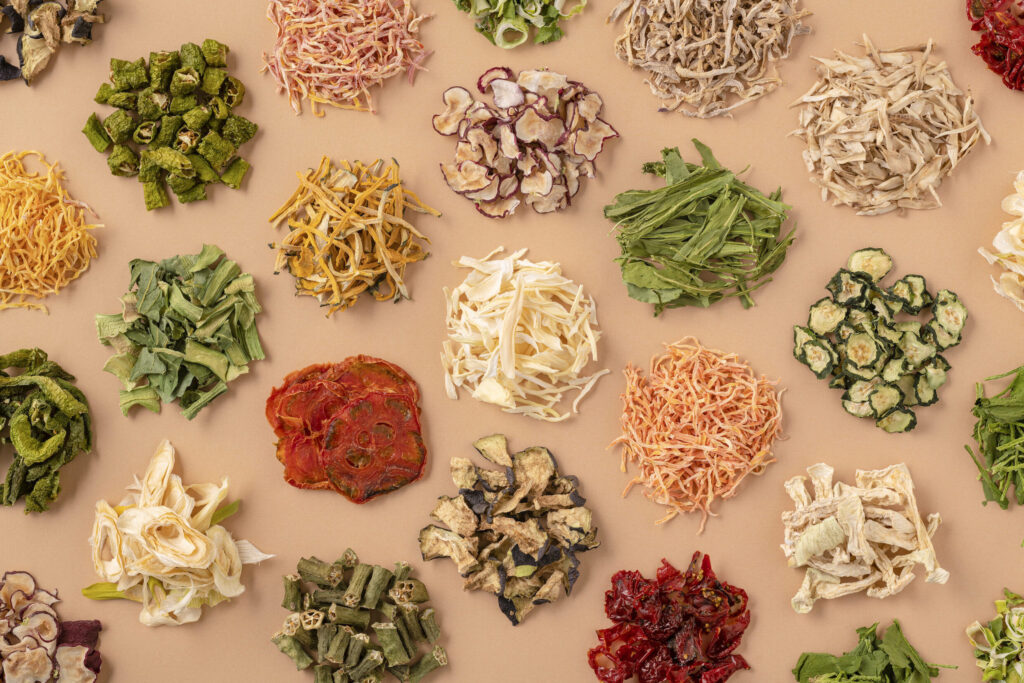
- Available for purchase in small lots from 1 kg
- We handle heirloom vegetables from across Japan
- Dried fruit and herbs also supported
Summary
Dried mango can be enjoyed in many ways: eaten as is, rehydrated in yogurt, or worked into sweets and smoothies. When the sweetness or texture concerns you, choosing along axes such as sweetened versus additive-free, soft versus hard, and domestic versus imported will help you find the bag that suits you.
If you want to taste the fruit itself, the domestically grown, additive-free type with no added sugar is the top pick. Master how to eat it and how to choose it, and bring dried mango into your diet even more deliciously.