
What are Yamaguchi’s heirloom vegetables? Features, season, and ways to eat the 37 varieties organized by the association (Iwakuni lotus root, Hagi tamage eggplant, Iwakuni red daikon) explained

Yamaguchi's heirloom vegetables are varieties grown amid diverse terrain — the mild climate of the Seto Inland Sea coast, Hagi and Nagato on the Sea of Japan side, the mountainous areas of the Chugoku Mountains, and the Nishiki River basin in Iwakuni. The Japan Traditional Vegetable Promotion Association organizes 27 Yamaguchi heirloom vegetables and 9 heirloom fruit trees. This article covers 23 major items in the vegetable section in the main text, while the 9 heirloom fruit trees and the processing-material and spice items (konjac, Aio sesame, ayu-tade, wasabi) are organized in the "Other local specialty varieties" section at the end.
Iwakuni renkon (a nationwide lotus-root-producing area), the 1-kg-class Hagi tamage Eggplant, Iwakuni aka-daikon, Mito gobo, Yamaguchi kodaka tamanegi, Niho kyuri, Tokusa uri, and more — we introduce items that support Yamaguchi's food culture.
TOC
The definition of "heirloom vegetable" and the scope of this article
| Certifying body | Main criteria |
|---|---|
| Kyoto Prefecture "Kyoto Heirloom Vegetables" | Cultivation history predating the Meiji era, covering the entire prefecture |
| Osaka Prefecture "Naniwa Heirloom Vegetables" | Cultivated within Osaka Prefecture from roughly 100 or more years ago |
| Nagano Prefecture "Shinshu Heirloom Vegetable Certification System" | Cultivation, food culture, and varietal traits from before the 1955–1964 period |
| Yamaguchi Prefecture | No prefecture-specific heirloom-vegetable certification system. JA and municipalities support regional branding |
Yamaguchi Prefecture has no official criteria or certification system that fixes heirloom vegetables, and the Japan Heirloom Vegetable Promotion Association also notes that they are "difficult to group as heirloom vegetables." This article introduces, of the 27 heirloom vegetables and 9 heirloom fruit trees the association organizes, 23 major items from the vegetable section in the main text, while treating the 9 heirloom fruit trees and the processing-material and spice items (konjac, Aio sesame, ayu-tade, wasabi) separately in the "Other local specialty varieties" section at the end.
What are Yamaguchi's heirloom vegetables? The food culture of Suo and Nagato
| Area | Representative items | Regional characteristics |
|---|---|---|
| Suo (Iwakuni, Shunan, and others) | Iwakuni renkon, Iwakuni aka-daikon, Sasagawa kintai hakusai, jibai kyuri, tokkuri daikon | The Nishiki River basin and the Seto Inland Sea coast |
| Around Yamaguchi city and Ube | Niho kyuri, Tokusa uri (present main producing area: Higashikiwa, Ube city), Yamaguchi kodaka tamanegi, Aio sesame, tsukune-imo, sasage beans, Kakutaro yuzu | The Yamaguchi Basin and the mountainous areas of Ato and Tokuji |
| Nagato (Hagi, Nagato city, and others) | Hagi tamage nasu, Hagi wakegi, Hagi ninniku, Hagi gobo, Hagi koroge kabura, shiro-okra (Nagato) | The Sea of Japan coast and the Hagi castle town |
| Shimonoseki (Kanmon) | Takehisa kabura, Hikoshima harusai, Hikoshima natsumaki kanran, kakichisha, oba shungiku, ayu-tade | The Kanmon Strait and the Hikoshima and Utsui districts |
| Mine and Shunan | Mito gobo (Akago gobo), tokkuri daikon, wasabi (konjac in Iwakuni city) | Around the Akiyoshidai karst and the Chugoku Mountains |
Historical background: Iwakuni renkon and the food culture of Choshu
- Iwakuni renkon — A lotus root grown in the Nishiki River basin of Iwakuni city. Carried on by regionally selecting the "shirobana" lineage introduced from China in 1917. Notable for thick flesh that draws long threads when broken, it is one of Yamaguchi Prefecture's representative products
- Hagi tamage nasu (Taya nasu) — A giant eggplant grown in Taya, Senzaki, Nagato city, and Kiriguchi, Hagi city, with some individuals reaching 1 kg
- Yamaguchi kodaka tamanegi — A small onion grown in Aiofutajima, Yamaguchi city. An early-maturing lineage bred around 1920 from Hokkaido's "Sapporo-ki"
- Mito gobo (Akago gobo) — A burdock grown in Mitocho, Mine city. Its strong points are a balance of softness, bite, and aroma
FOR BUSINESS
乾燥野菜を業務用でお探しですか
国産の野菜・果物を乾燥し、必要に応じて粉砕してお出ししています。扱っている品目は100種前後で、規格は 乾燥品の一覧・パウダーの一覧 に掲載しています。
少量でのご購入は、姉妹ブランドの通販サイト OYAOYA で承っています。
Yamaguchi's heirloom vegetables: list of 23 major items
Root and tuber vegetables
| Item | Features | Growing region | Season |
|---|---|---|---|
| Mito gobo / Akago gobo | Soft, with rich bite and aroma | Mitocho, Mine city | October–December |
| Iwakuni aka-daikon | A round daikon with vivid-red skin and a pure-white cut face | Nishimi, Iwakuni city | December to February |
| Tokkuri daikon | A small tokkuri (sake-flask)-shaped daikon | Shunan city | Early to mid-December |
| Takehisa kabura | Small, pure white, dense-fleshed, sweet | Takehisa, Shimonoseki city | Late November to early December |
| Hagi koroge kabura | Grown leaves fall sideways | Hagi city | Late October–December |
| Hagi gobo | A short burdock; both leafstalk and root edible | Hagi city | November–December |
| Tsukune-imo / butsushou-imo | Palm-shaped, very sticky and glossy | Tokuji, Yamaguchi city, and Ato town | November–December |
| Iwakuni renkon | Thick-fleshed; draws long threads when broken | Iwakuni city | August–January |
Leaf-and-stem vegetables
| Item | Features | Growing region | Season |
|---|---|---|---|
| Azamina | Cold-hardy; harvested even in the depths of winter | Iwakuni, Yamaguchi, Hagi, and others | Early October–March |
| Kakichisha | An Oshima heirloom; slightly bitter with a bite | Shimonoseki city | October–June |
| Hikoshima harusai | Deep-green, crinkled, semi-heading | Hikoshima and Utsui, Shimonoseki city | Early to mid-December |
| Hikoshima natsumaki kanran | A cabbage with soft, sweet leaves | Hikoshima, Shimonoseki city | Late November–January |
| Oba shungiku | Low in acridity, soft | Shimonoseki city | October–late February |
| Hagi wakegi | Mild, with good flavor | Oshima, Hagi city | November–March |
| Hagi ninniku | Many cloves, pale-purple outer skin | Oshima, Hagi city | Late May–mid-June |
| Sasagawa kintai hakusai | A Chinese cabbage without fuzz, sweet | Nishimi, Iwakuni city | December |
Fruit-vegetables, beans, onion, and others
| Item | Features | Growing region | Season |
|---|---|---|---|
| Jibai kyuri | A large cucumber grown on the ground | Nishikimachi, Iwakuni city, and others | Summer |
| Niho kyuri | 30 cm long, good aroma and bite | Niho, Yamaguchi city | July–August |
| Tokusa uri | White uri, barrel-shaped, for sake-lees pickling. Now grown in Higashikiwa, Ube city | Ato-Tokusa, Yamaguchi city (present main producing area: Higashikiwa, Ube city) | June–August |
| Hagi tamage nasu / Taya nasu | A giant eggplant of up to the 1-kg class | Taya, Senzaki, Nagato city, and Kiriguchi, Hagi city | Late May–mid-July |
| Sasage beans | Small broad beans; clean, light flavor | Former Aiocho, Yamaguchi city | Early May–early June |
| Shiro-okra | Pale green, very sticky, suited to raw eating | Nagato city (Misumi, Yuya, Heki, and others) | Early July–October |
| Yamaguchi kodaka tamanegi | A small-bulb, high-storability early lineage | Aiofutajima, Yamaguchi city | January–February |
A product catalog that shows around 100 items we handle
Agriture, flexibly handling everything from small lots to large lots
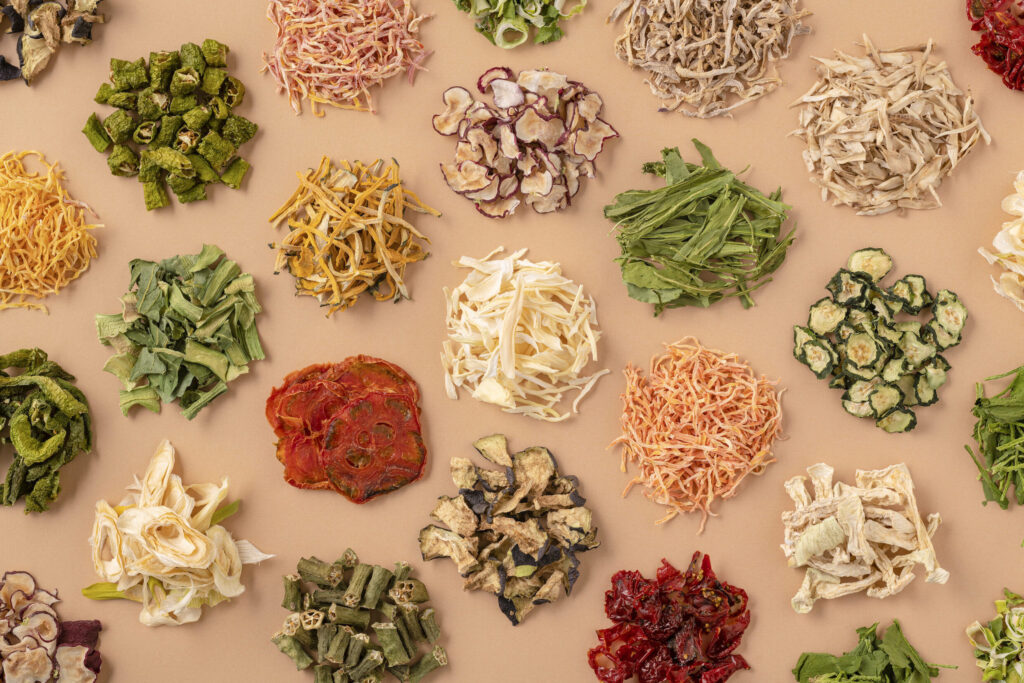
- Available for purchase in small lots from 1 kg
- We handle heirloom vegetables from across Japan
- Dried fruit and herbs also supported
Seven representative Yamaguchi heirloom vegetables: characteristics and how to eat them
Iwakuni renkon — the thick, thread-drawing Nishiki River lotus root
| Season | August–January |
| Growing region | Iwakuni city (Nishiki River basin) |
| Well-suited dishes | Simmered dishes, renkon-zushi, renkon dango, tempura |
Iwakuni renkon is a lotus root carried on by regionally selecting the "shirobana" lineage introduced from China in 1917 in the Nishiki River basin of Iwakuni, and its greatest feature is a thick flesh and a stickiness that draws long threads when broken. It has been tied to the local food culture as the ingredient for Iwakuni-zushi (renkon-zushi).
Besides simmered dishes, renkon dango, and tempura, its texture comes alive in Japanese cuisine featuring lotus root in general. It is in season from August to January, and it is shipped outside the prefecture too via JA farm stands, hometown-tax gifts, and mail order in Iwakuni city.
Hagi tamage nasu (Taya nasu) — the giant eggplant of the 1-kg class
| Season | Late May–mid-July |
| Growing region | Taya, Senzaki, Nagato city, and Kiriguchi, Hagi city |
| Well-suited dishes | Dengaku, grilled eggplant, simmered dishes, agebitashi |
Hagi tamage nasu (also called Taya nasu) is a large eggplant grown in Taya, Senzaki, Nagato city, and Kiriguchi, Hagi city, with some individuals reaching 1 kg each. The name is said to come from "tamageta" (astonished), and its striking appearance has made it a distributed regional specialty. Its flesh is soft, and when cooked it takes on a melting texture.
In dengaku, grilled eggplant, and agebitashi it makes a dish that shows off the large fruit. It ships at farm stands in Nagato and Hagi during its season of late May to mid-July.
Iwakuni aka-daikon — the round daikon with vivid-red skin
| Season | December to February |
| Growing region | Nishimi district, Iwakuni city |
| Well-suited dishes | Vinegar pickles, salad, light pickles, namasu |
Iwakuni aka-daikon is a round daikon grown in the Nishimi district of Iwakuni city, with vivid-red skin and a pure-white cut face. The red-and-white contrast is beautiful, and made into vinegar pickles or namasu it adds color to the table. It is distributed within Iwakuni city in winter.
In salad and light pickles you can enjoy its raw bite, and it is also used in New Year's red-and-white dishes.
Mito gobo (Akago gobo) — the aromatic burdock around Akiyoshidai
| Season | October–December |
| Growing region | Mitocho, Mine city |
| Well-suited dishes | Kinpira, simmered dishes, tempura, gobo soup |
Mito gobo is an heirloom burdock grown in Mitocho, Mine city, whose strong points are a balance of softness, bite, flavor, and aroma. Grown around the Akiyoshidai karst plateau, its well-draining soil suits burdock cultivation.
In kinpira, simmered dishes, and tempura its aroma stands out, and its flavor comes alive in gobo soup too. It ships at JA farm stands in Mine city from October to December.
Yamaguchi kodaka tamanegi — the small onion of Aio bred from Sapporo-ki
| Season | January–February |
| Growing region | Aiofutajima, Yamaguchi city |
| Well-suited dishes | Onion salad, soup, simmered dishes, stir-fries |
Yamaguchi kodaka tamanegi is an onion grown in Aiofutajima, Yamaguchi city, an early-maturing lineage bred around 1920 from Hokkaido's "Sapporo-ki" (the heirloom variety no longer exists; per the Japan Heirloom Vegetable Promotion Association and JA Yamaguchi official sources). Notable for high storability, the sandy loam facing the Seto Inland Sea and the mild climate suit its cultivation.
Small-bulbed and strongly sweet, its flavor stands out in onion salad and soup. It ships at JA farm stands in Yamaguchi city during the May–June harvest period.
Niho kyuri — the 30-cm cucumber of Niho, Yamaguchi city
| Season | July–August |
| Growing region | Niho district, Yamaguchi city |
| Well-suited dishes | Salad, light pickles, vinegared dishes, miso soup |
Niho kyuri is an heirloom cucumber about 30 cm long grown in the Niho district of Yamaguchi city, whose strong points are good aroma and a good bite. A variety carried on in the hilly-and-mountainous area of the Yamaguchi Basin, it is beloved as a local summer vegetable.
In salad and light pickles its texture and aroma stand out, and as a miso-soup ingredient its high moisture content comes alive too.
Tokusa uri — the white uri of Ato-Tokusa for sake-lees pickling
| Season | June–August |
| Growing region | Ato-Tokusa, Yamaguchi city |
| Well-suited dishes | Sake-lees pickles, Nara-zuke-style pickles, light pickles, simmered dishes |
Tokusa uri is a barrel-shaped white uri originally grown in Ato-Tokusa, Yamaguchi city, and now grown in Higashikiwa, Ube city (per the Japan Heirloom Vegetable Promotion Association's organization). It is a white uri carried on as a raw material for sake-lees pickles.
Sake-lees pickles and Nara-zuke-style pickles are beloved in the region, and it can also be used in light pickles and simmered dishes. It can be obtained from June to August at farm stands in Higashikiwa, Ube city.
How to buy Yamaguchi's heirloom vegetables and tips for storing them
| Item | Main sources | Timing |
|---|---|---|
| Iwakuni renkon | JA farm stands in Iwakuni city, hometown-tax gifts, nationwide mail order | August–January |
| Hagi tamage nasu | JA farm stands in Nagato and Hagi | Late May–mid-July |
| Iwakuni aka-daikon | JA farm stands in Iwakuni city | December to February |
| Mito gobo | JA farm stands in Mine city | October–December |
| Yamaguchi kodaka tamanegi | JA farm stands in Aio, Yamaguchi city | January–February |
| Niho kyuri | Farm stands in the Niho district, Yamaguchi city | July–August |
| Tokusa uri | Farm stands in Higashikiwa, Ube city | June–August |
Mail order / hometown tax to outside the prefecture
- Iwakuni renkon — Shipped autumn-winter to the following January as a hometown-tax gift from Iwakuni city
- Mito gobo — Shipped autumn to winter as a hometown-tax gift from Mine city
- Processed products — Tokusa uri sake-lees pickles, Iwakuni konjac, Hagi gobo processed goods, and the like are distributed
A product catalog that shows around 100 items we handle
Agriture, flexibly handling everything from small lots to large lots
- Available for purchase in small lots from 1 kg
- We handle heirloom vegetables from across Japan
- Dried fruit and herbs also supported
Efforts to protect Yamaguchi's heirloom vegetables
| Efforts | Details |
|---|---|
| JA Yamaguchi's brand development | Spreading Iwakuni renkon, Mito gobo, Hagi tamage nasu, and others as regional brands |
| Heirloom-variety succession by each municipality | Yamaguchi city (Aio, Niho, Ato), Shimonoseki city (Hikoshima, Takehisa), Iwakuni city, and Hagi city maintain their own local varieties |
| Cultural-property designation of heirloom fruit trees | Yamaguchi city's Kakutaro yuzu is a Yamaguchi city cultural property. The wild natsumikan tree on Omijima island, Nagato city, is a natural monument |
FOR BUSINESS
乾燥野菜を業務用でお探しですか
国産の野菜・果物を乾燥し、必要に応じて粉砕してお出ししています。扱っている品目は100種前後で、規格は 乾燥品の一覧・パウダーの一覧 に掲載しています。
少量でのご購入は、姉妹ブランドの通販サイト OYAOYA で承っています。
FAQ
Other regional specialty varieties
We introduce separately the 9 heirloom fruit trees included in the Japan Heirloom Vegetable Promotion Association's list, along with processing-material and spice items that don't fit within the vegetable category.
9 heirloom fruit trees
| Item | Growing region | Features |
|---|---|---|
| Iyokan | Suo-Oshima town | Grown on Suo-Oshima. The premium "Shima sodachi" has a sugar content of 12 degrees or higher |
| Kakutaro yuzu | Yamaguchi city | A seedless yuzu. A Yamaguchi city cultural property |
| Ganne kuri | Kawahira and Ganne, Miwacho, Iwakuni city | Large chestnuts of 30 g or more |
| Kokko | Iwaishima, Kaminoseki town | A relative of the shima-sarunashi. A phantom fruit tree |
| Saijo kaki | Hagi city and Mine city | An astringent persimmon suited to dried persimmons |
| Sudai | Otsushima, Shunan city | Turns orange in winter and returns to green in spring |
| Natsumikan / natsu-daidai | Nagato city | A natural monument. The wild tree was found on Omijima island |
| Yokono kaki | Yasuoka-Yokono, Shimonoseki city | Larger than the Fuyu persimmon, with a sugar content around 20 degrees |
| Yoshiura ponkan | Iwakuni city | The parent of Yamaguchi Prefecture's original citrus varieties |
Processing materials and spices
| Item | Growing region | Features |
|---|---|---|
| Konjac | Iwakuni city | An heirloom konjac processed with the clean water of the Nishiki River |
| Aio sesame | Aiofutajima, Yamaguchi city | An Aio heirloom sesame. Sold November–February |
| Ayu-tade | Shimonoseki city | A condiment used in ayu (sweetfish) dishes as the base for tade vinegar |
| Wasabi | Nishikimachi, Iwakuni city, and Kano, Shunan city | A good balance of sweetness, pungency, and aroma |
Summary
Yamaguchi's heirloom vegetables — centered on Iwakuni renkon, Hagi tamage nasu, Iwakuni aka-daikon, Mito gobo, Yamaguchi kodaka tamanegi, Niho kyuri, and Tokusa uri — total 36 items: the 27 items carried on across the diverse areas of Suo and Nagato, plus 9 heirloom fruit trees. From the Seto Inland Sea coast to the Chugoku Mountains and to Hagi and Nagato on the Sea of Japan side, the items divide by terrain.
Hagi tamage nasu, Hagi ninniku, and Yamaguchi kodaka tamanegi from spring to early summer; Niho kyuri, Tokusa uri, and shiro-okra in summer; Mito gobo and Iwakuni renkon in autumn; Iwakuni aka-daikon, Takehisa kabura, and Sasagawa kintai hakusai in winter — the timing and producing area differ by item, so note too that distribution is often centered on farm stands. Through hometown-tax gifts and farm stands, you can enjoy Yamaguchi's local ingredients on the family table.
References / information sources
- Japan Heirloom Vegetable Promotion Association, "Yamaguchi Prefecture"
- National Agriculture and Food Research Organization Genebank "Native Variety Database"
Related articles
- Heirloom vegetables of Japan
- Heirloom vegetables of Hiroshima
- Heirloom vegetables of Okayama
- Heirloom vegetables of Shimane
- Heirloom vegetables of Tottori
- Heirloom vegetables of Hyogo
Download the product catalog
We will send the materials to your email address based on the information you provide.
- What are Hiroshima’s heirloom vegetables? Features, season, and ways to eat the 21 regional varieties (Hiroshima-na, Kannon green onion, ao kuwai) explained
- What are Tokushima’s heirloom vegetables? Features, season, and ways to eat the 13 items organized by the association (Naruto lotus root, hisui eggplant, sudachi) explained
Author of this article
Related articles
-
 Okinawa island vegetables: individualistic vegetables nurtured by a subtropical climate
 -
 Kaga vegetables: Kanazawa brand vegetables where tradition lives on
 -
 The appeal of Kansai heirloom vegetables | Specialties of Naniwa, Kyoto, and Yamato thoroughly explained
 -
 Kyoto heirloom vegetables: Kyoto specialties with a long history
 -
 A list of heirloom vegetables of the 8 prefectures of Kyushu and Okinawa|A thorough introduction to characteristics, growing regions, and seasons
 -
 Know the heirloom vegetables of Edo Tokyo | The city’s vanishing food culture
 -
 They'll make you smile! The fun names of heirloom vegetables and their origins
 -
 5 cases and strategies that succeeded in branding heirloom vegetables