
5 cases and strategies that succeeded in branding heirloom vegetables

Summary of this article
Branding heirloom vegetables is an effort that designs a region's distinctive variety history, cultivation method, and market development as a unified whole, bringing new value to regional agriculture and food culture. This article introduces success stories from across Japan — Kyoto's "Kyoto vegetables," Oita's "Seki aji and Seki saba," and Amagasaki's "Muko/Tomatsu issun broad bean" — and summarizes five common strategies: setting quality standards, connecting to history and culture, cooperation between producers and distribution, and the use of scientific evidence.
In an age of mass production and mass consumption, a movement to find value in "authentic taste" and "regional character" is spreading. Drawing attention within it is the branding of varieties rooted in the land — heirloom vegetables. Rather than mere naming, designing history, culture, cultivation method, and market development as a unified whole brings new value to regional agriculture and food culture.
This article explains concrete branding strategies and hints through five carefully chosen success stories from across Japan.
TOC
What is heirloom-vegetable branding? Its value and possibilities
Heirloom vegetables refer to unique varieties grown for many years in a given land. They are notable for adapting to the region's climate and having a distinctive flavor and nutritional value. Efforts to brand such heirloom vegetables are spreading across the country.
Branding heirloom vegetables is not simply about attaching a name. It means clarifying the vegetable's history and cultural background, its distinctive taste and nutritional value, and differentiating it from other vegetables. If successful, it holds the potential to not only raise farmers' income but also to revitalize the region.
Why is the branding of heirloom vegetables drawing attention now?
Because compared with the uniform produce of mass production, the distinctive flavor, nutritional value, and cultural worth of heirloom vegetables are being re-evaluated. As consumer interest in food rises, the branding of heirloom vegetables is advancing in a way that answers the call for "authentic taste" and "regional character."
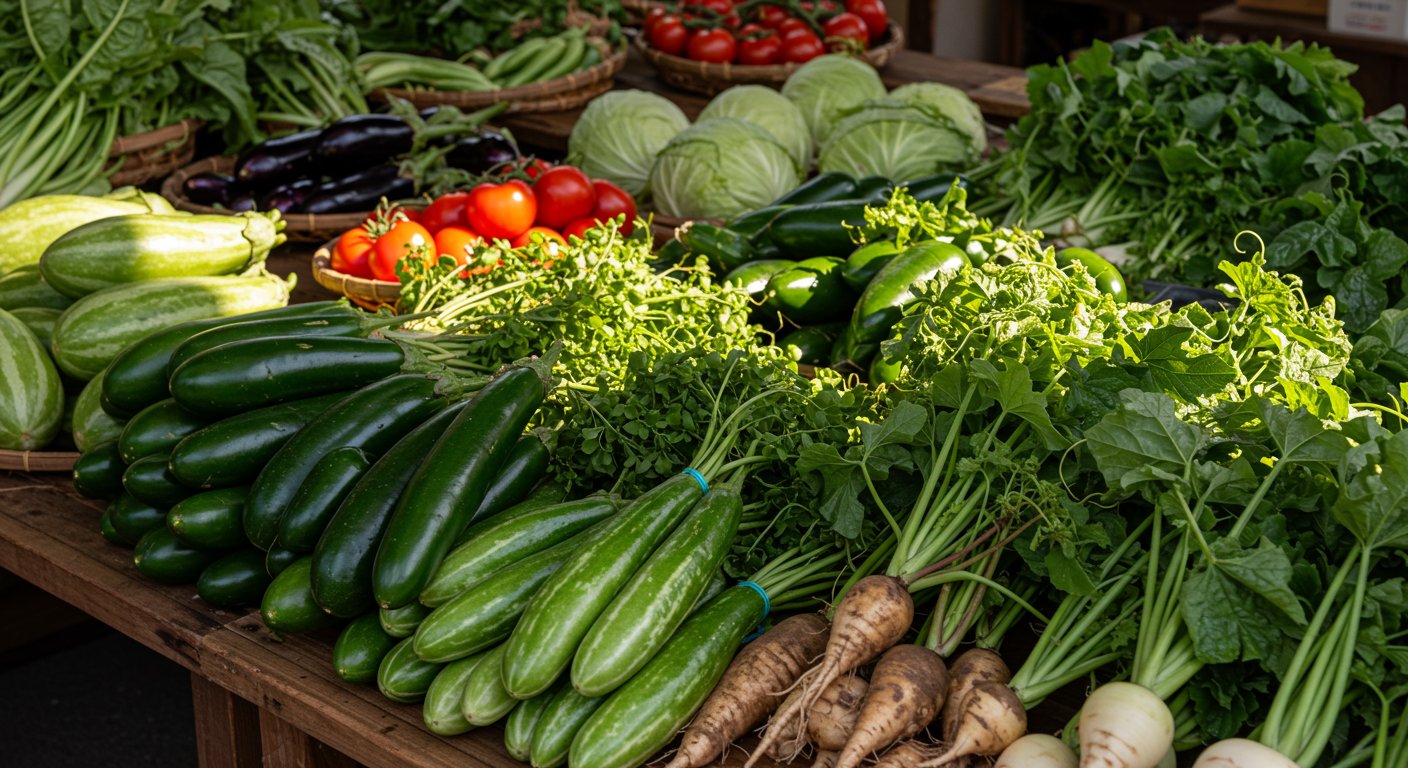
Success story 1: Kyoto's "Kyoto vegetables" branding strategy
The flagship of heirloom-vegetable branding is surely "Kyoto vegetables." The Kyoto vegetables brand promoted by the Kyoto Prefecture Department of Agriculture, Forestry and Fisheries has 31 registered items, including "Kujo negi," "Kamo nasu," and "Mibu-na." There is a background of vegetables suited to the land being improved over a long history.
The key to Kyoto vegetables' success lies in the local government taking the lead to set clear standards and adopt a unified design. Furthermore, by connecting to the historic regional name of Kyoto, it established an image of tradition and prestige. The very name "Kyoto vegetables" became a brand, gaining nationwide recognition.
Especially noteworthy is that Kyoto vegetables are positioned not as mere produce but as an important element supporting Kyoto's food culture. Through cooperation with high-end restaurants and Japanese-cuisine establishments, they established value as premium ingredients, achieving sales at premium prices.
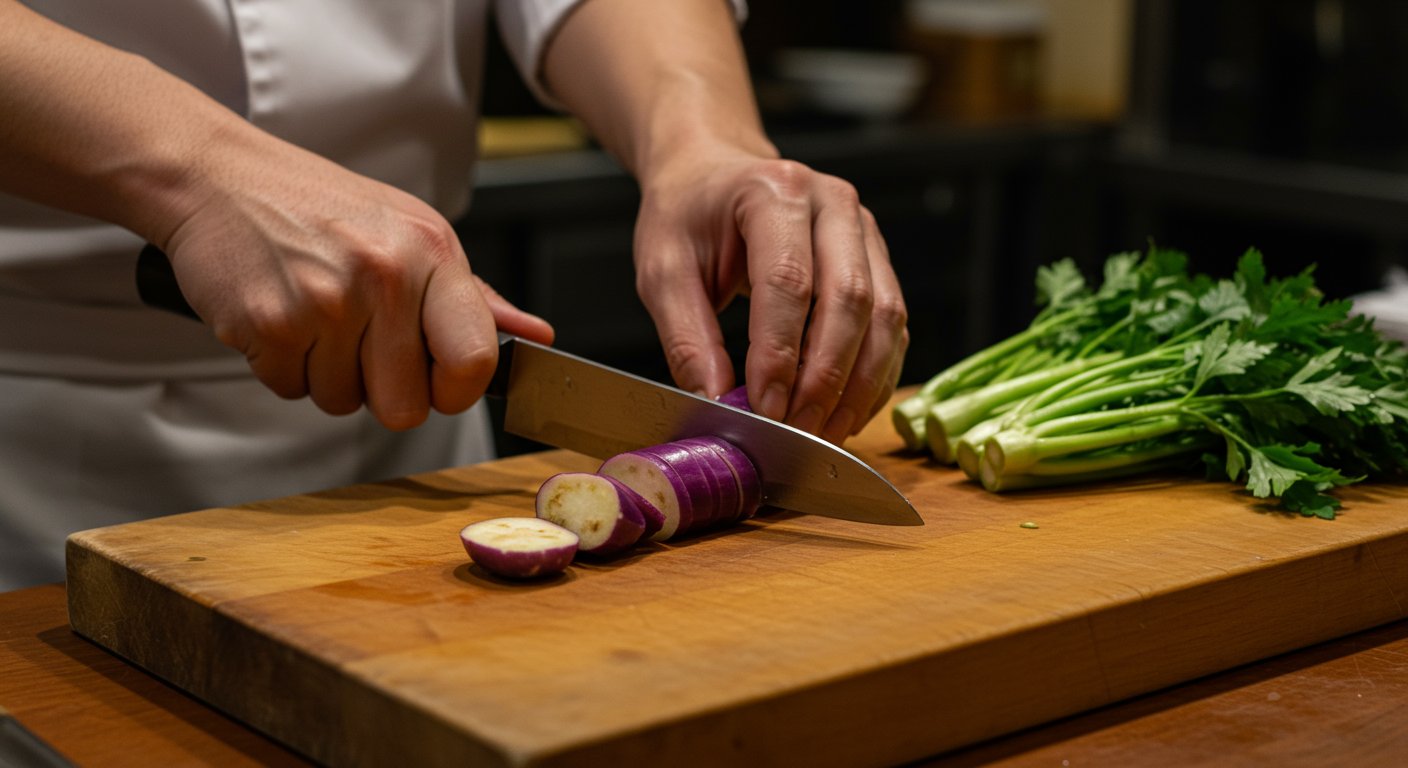
Concrete strategies for branding Kyoto vegetables
For the Kyoto vegetables brand, the public-interest incorporated association Kyoto Furusato Sanpin Kyokai established a certification system, permitting use of the brand name only for vegetables meeting quality standards. This strict quality control is a major factor in gaining consumer trust.
It also regularly holds events and cooking classes to convey the appeal of Kyoto vegetables, devising ways to increase points of contact with consumers. By having people learn the characteristics and cooking methods of heirloom vegetables, it grows fans and creates stable demand.
Success story 2: The branding strategy of "Seki aji and Seki saba"
Though not vegetables, "Seki aji and Seki saba" are an important case of successful produce branding. This brand, which began from Oita Prefecture's one-village-one-product movement, achieved trademark registration by combining a regional name with a product name and pairing it with a distinctive mark.
The success point of Seki aji and Seki saba lies in setting clear quality standards and a thorough management system. They built a mechanism whereby strict standards were set for size and freshness, and only fish that met them could bear the brand name. This consistency of quality led to high praise from consumers.
Furthermore, establishing a cooperative structure in which local fishermen and distributors work together was also a success factor. The stance of all parties facing the same direction to protect the brand has brought long-term success.
Success story 3: The scarcity-value strategy of "Muko issun broad bean / Tomatsu issun broad bean (alternate name)"
Amagasaki's "Muko issun broad bean / Tomatsu issun broad bean (alternate name)" is an heirloom vegetable with over 1,200 years of history. It is said to have begun when the monk Gyoki had farmers in Muko village try growing the "obun-mame" transmitted by an Indian monk. From 1955 (Showa 30) onward, farmland decreased due to urbanization and it disappeared from the market, but in 1997 (Heisei 9) the "Tomatsu-mame Preservation Research Group" was formed and it was revived.
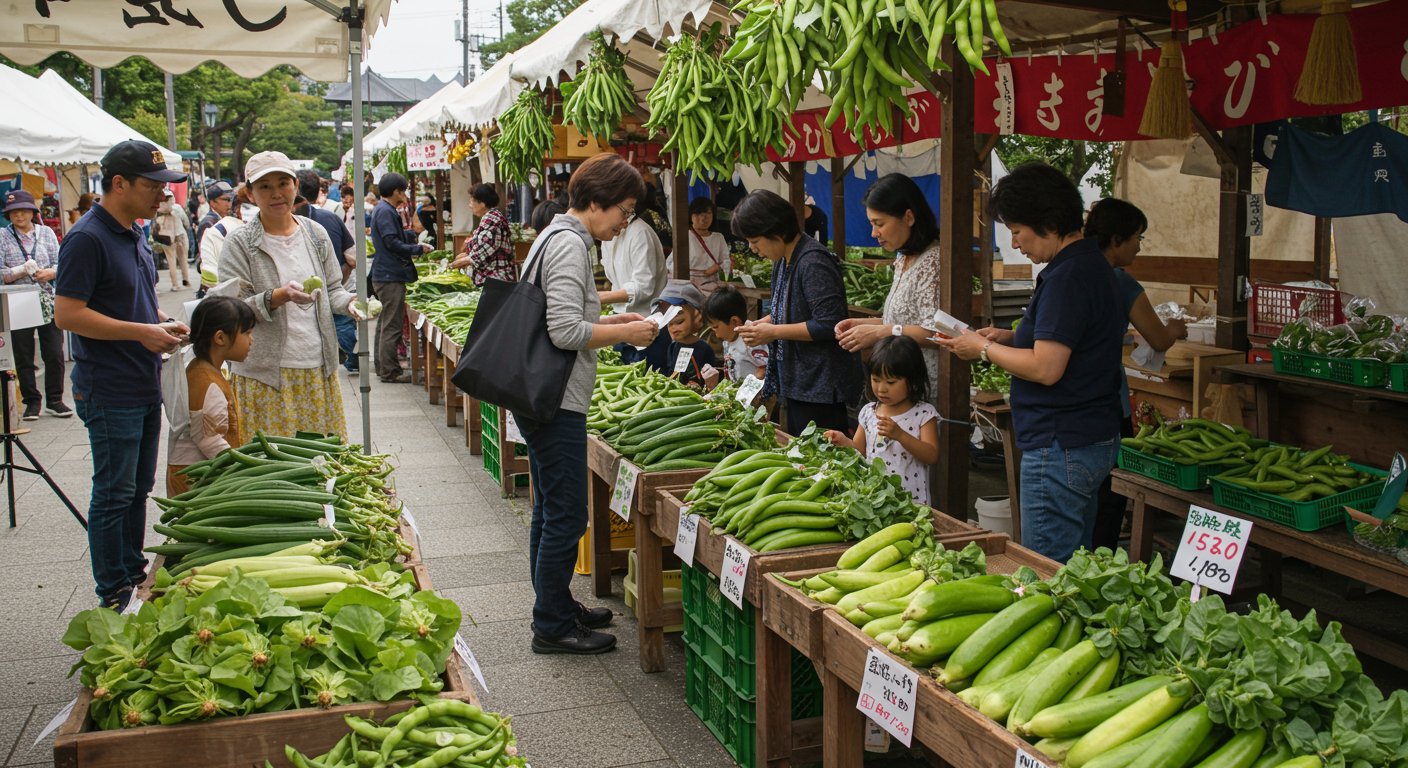
Every early May, the "Tomatsu Issun-mame Festival" is held at Tomatsu Shrine, established as a regional cultural event. In this way, being positioned not as mere produce but as an existence tied to the region's history and culture raises its brand value.
Making use of scarcity and cultural value
The success of the issun broad bean lies in a marketing strategy that makes the fullest use of the scarcity that earns it the nickname "phantom bean." By raising its value as a special ingredient available only in a limited period, it produces a sense of premium.
Also, by connecting it to the cultural element of a shrine festival, it is given meaning beyond a mere ingredient. It can be called a good example showing the importance of using such cultural background and storytelling in heirloom-vegetable branding.
Five common strategies for successful heirloom-vegetable branding
From the success stories so far, common strategies for succeeding at branding heirloom vegetables come into view. Here we introduce five points worth keeping in mind.
1. Setting and managing clear quality standards
Successful heirloom-vegetable brands always have clear quality standards. Set concrete criteria for size, shape, taste, cultivation method, and so on, and build a mechanism whereby only vegetables that meet them can bear the brand name. Consistency of quality becomes the key to gaining consumer trust.
2. Connecting to regional history and culture
The value of heirloom vegetables lies not only in their taste and nutrition but also in their connection to regional history and culture. Unearthing the stories and traditions surrounding a vegetable and conveying them to consumers as part of the brand can create value beyond mere produce.
3. A cooperative structure among producers, distributors, and sellers
To make branding succeed, a cooperative structure among not just producers but distributors and sellers is essential. In the case of Noguchi Farm's "Ajiyoshi," coordination was carried out between producers wanting to maintain high quality and distributors wanting early shipping, and the brand was built in a form both sides could accept.
4. Differentiation based on scientific evidence
Scientifically analyzing the characteristics and nutritional value of heirloom vegetables and conveying the results to consumers is also effective. As in the case of Hachinohe strawberries, using nutritional-component analysis results can appeal to health-conscious consumers.
5. Creating points of contact with consumers
Making use of events, cooking classes, social media, and the like to increase points of contact with consumers is also essential. Setting up opportunities to directly convey the appeal and cooking methods of heirloom vegetables grows fans and creates stable demand.
Branding heirloom vegetables is not simply about attaching a name; it is a process of conveying their value from many angles and building a relationship of trust with consumers. Referring to these strategies, let's grow your region's heirloom vegetables, too, into an appealing brand.
Across Japan, many wonderful, still-unknown heirloom vegetables lie dormant. Rediscovering their value and branding them will open new possibilities for regional agriculture and food culture.

Recommended reading
Heirloom vegetables from across Japan / Commercial dried vegetables / Sustainable initiatives / Japan's Heirloom Vegetables: Precious Varieties Handed Down in Each Region / What are the Naniwa heirloom vegetables? An explanation of the features and season of the 25 items Osaka is proud of
Comparison of heirloom-vegetable branding success stories
| Brand name | Region | Number of items | Certification start | Success factors |
|---|---|---|---|---|
| Kyoto Heirloom Vegetables | Kyoto Prefecture | 40 items | 1987 | Integration with Kyoto cuisine, early certification by the prefecture |
| Kaga vegetables | Ishikawa Prefecture | 15 items | 1997 | Linkage with Kanazawa tourism, restaurant culture |
| Heirloom vegetables of Naniwa | Osaka Prefecture | 25 items | 2005 | The historical story of "the nation's kitchen" |
| Edo Tokyo vegetables | Tokyo | 50 items | 2011 | The scarcity of urban agriculture, use of events |
| Island vegetables | Okinawa Prefecture | 28 items | – | Tourism × food experience, high distinctiveness |
What the successful branding cases share are three things: "tying to food culture," "a government certification system," and "linkage with tourism and dining."Kaga vegetables and Okinawa's island vegetables See the individual articles for details on
Frequently asked questions (FAQ)
We have materials available to help you understand dried processing OEM
Agriture OEM, flexibly handling everything from small lots to large lots
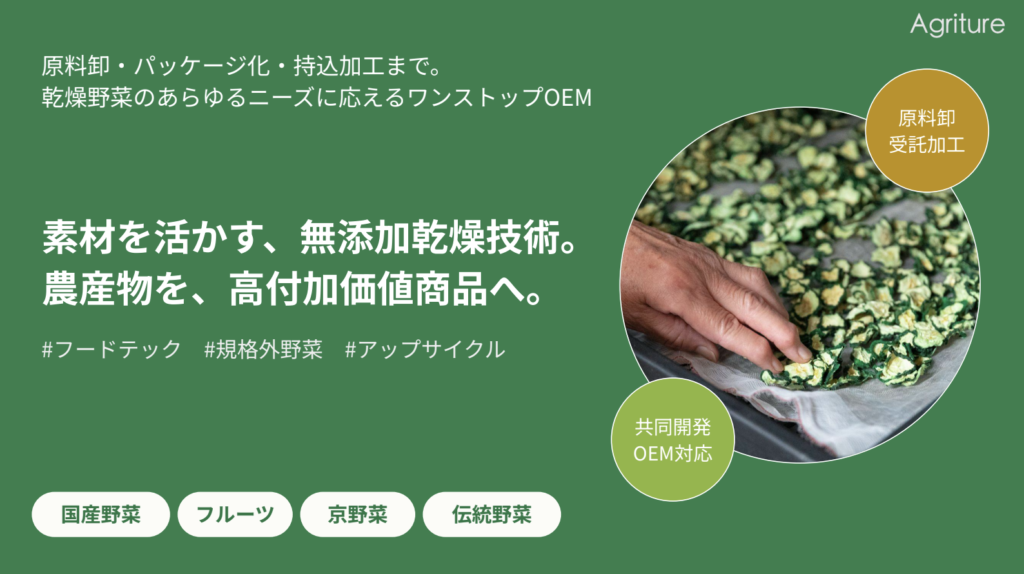
- OEM available from small lots of 10 kg
- Drying of brought-in raw materials also possible
- Support from processing to filling in one place
Download the OEM contract processing materials
We will send the materials to your email address based on the information you provide.
- They'll make you smile! The fun names of heirloom vegetables and their origins
- What is the regional character of heirloom vegetables? The tastes and stories handed down across the land
Author of this article
Related articles
-
 Okinawa island vegetables: individualistic vegetables nurtured by a subtropical climate
 -
 Kaga vegetables: Kanazawa brand vegetables where tradition lives on
 -
 The appeal of Kansai heirloom vegetables | Specialties of Naniwa, Kyoto, and Yamato thoroughly explained
 -
 Kyoto heirloom vegetables: Kyoto specialties with a long history
 -
 A list of heirloom vegetables of the 8 prefectures of Kyushu and Okinawa|A thorough introduction to characteristics, growing regions, and seasons
 -
 Know the heirloom vegetables of Edo Tokyo | The city’s vanishing food culture
 -
 They'll make you smile! The fun names of heirloom vegetables and their origins
 -
 What is the regional character of heirloom vegetables? The tastes and stories handed down across the land