
How to Make Hibiscus Tea That Makes the Most of Its Tartness and Ruby Color

Summary of this article
How to make hibiscus tea, from basic brewing and tips for softening the tartness to variations that show off its ruby color and blend design. Includes tips for using Japanese dried hibiscus and pointers for product development.
Hibiscus tea is loved for its vivid ruby-red color and crisp tartness. Brewing it is simple, yet people sometimes stumble with "too sour to drink," "the color turned dull" or "the aroma is weaker than expected." What makes the difference is water temperature, steeping, and how you handle the tartness.
This article covers the basics of making hibiscus tea, sweeteners and blends that soften the tartness, iced and two-layer drinks that show off the red color, and how to make a syrup. Drawing on our experience drying vegetables and botanicals in Kyoto, we also share tips for choosing ingredients that preserve color and aroma. If you want to turn an original blended tea into a product, see tea OEM and product development.
- The difference between roselle and ornamental hibiscus
- Basic brewing and tips for softening the tartness
- Iced, two-layer and sparkling drinks that show off the red color
- Blend design with rose hips and fruit
TOC
What is hibiscus tea? Its raw material is roselle
The hibiscus used in tea is different from the ornamental hibiscus you see in gardens. Understanding this difference first makes choosing ingredients easier.
The difference between roselle and ornamental hibiscus
The raw material for hibiscus tea is the calyx (the part that encloses the flower) of a plant called roselle. It belongs to the same family as ornamental hibiscus but is a different species, and roselle is the one used for tea. What is sold as dried hibiscus is dried roselle calyces.
If you can get roselle fruit (calyces) in autumn, you can make it from fresh as well. Remove the seeds inside fresh calyces before use, and you can enjoy a juicier tartness than with dried. However, the season is short and they don't keep, so dried hibiscus is convenient for enjoying it easily year-round. Fresh calyces can also be simmered with sugar into jam or syrup.
| Item | Roselle (for tea) | Ornamental hibiscus |
|---|---|---|
| Part used | Red calyx | Mainly the flowers, for viewing |
| Flavor | Strong acidity | Not used for tea |
| Color when brewed | Vivid ruby | — |
Flavor and color
Hibiscus tea is characterized by a distinct tartness and a clear ruby color. It contains no caffeine, so you can enjoy it at any time of day. Since it is fairly tart, it can be enjoyed in many ways to suit your taste, either as is or softened with sweeteners or blends.
- Flavor: centered on a crisp tartness, with a clean finish
- Color: a translucent red that stands out in iced and two-layer drinks
- Caffeine: none, so it suits evenings and before bed
Basic way to make hibiscus tea
The basics are simply putting dried hibiscus in a pot, pouring in boiling water and steeping. Steeping a little longer until the calyces fully open and release their color and tartness is the key to a beautiful red.
How to brew it hot
- Warm the pot and cups with hot water
- Use 2-3 pieces of dried hibiscus (about 2-3g) per cup (about 180ml)
- Pour in freshly boiled water, cover and steep for 5-6 minutes
- Once the color has fully developed, pour and add sweetener to taste
Tips for a beautiful red color
To bring out a vivid color without dullness, use freshly boiled water and allow enough steeping time. The color becomes cloudy if left too long after brewing, so we recommend brewing just before drinking. A little lemon makes the red look brighter and clearer.
Steeping time also changes the result. A short steep of about 3 minutes keeps the color and tartness restrained and light, while a full 5-6 minutes deepens the color and makes the tartness more pronounced. Try 5 minutes first, then adjust up or down to find your preferred strength.
If it tastes too tart
If the tartness of hibiscus feels too strong, you can make it easier to drink by adding sweetener, diluting with more water, or shortening the steeping time. Honey softens the sharp edge of the tartness for a mellow mouthfeel.
| Adjustment | How to | Finish |
|---|---|---|
| Add sweetness | 1 teaspoon or more of honey or sugar | Tartness becomes mellow |
| Dilute | Add more water or steep for less time | Clean and light |
| Blend | Combine with rose hips or fruit | Easier to drink with added sweetness and aroma |
Cold-brew hibiscus tea
It takes time, but cold brewing brings out a softer tartness and a clean flavor. This method suits making it ahead or drinking it iced. The color also develops slowly and beautifully.
- Put dried hibiscus (a handful, about 5g per 500ml) and water in a bottle
- Leave in the refrigerator for a few hours to overnight, until the color develops
- Check the strength before drinking and add sweetener to taste
Brewing it hot, iced or cold
Even with the same dried hibiscus, the brewing method changes how the tartness comes out and the mouthfeel. Choose based on the impression you want.
| Method | Guideline | Flavor |
|---|---|---|
| Hot | Pour boiling water and steep for 5-6 minutes | Distinct tartness, aromatic |
| Iced | Brew strong and flash-chill with ice | Crisp tartness with a clean finish |
| Cold brew | Cold water for a few hours to overnight | Soft, mellow tartness |
Hot is the easiest place to start, making it simple to see how the tartness and color come out. If you don't like tartness, starting with cold brew, which is gentler, is also a good option.
Checkpoints when it doesn't turn out well
Problems like "dull color" or "too sour" usually have clear causes. Use the fixes below as a guide.
| Problem | Main cause | Remedy |
|---|---|---|
| Dull color | Water not hot enough, or too much time has passed since brewing | Use freshly boiled water and brew just before drinking |
| Too sour | Too much hibiscus, steeped too long | Use less, add sweetener, or dilute with hot water |
| Weak aroma or color | Ingredient has absorbed moisture, not steeped long enough | Switch to a vividly colored ingredient and steep longer |
| Cloudy | Simmered too long, left standing too long | Keep simmering short and strain before storing |
Iced drinks and variations that show off the ruby color
The biggest appeal of hibiscus is its clear red color. Chilling it or layering it with other drinks lets you enjoy that color even more. Because it looks so striking, it is also well suited to entertaining.
Iced hibiscus tea
Brew it stronger than for hot tea and pour it into a glass of ice for a clear red iced tea. Since the ice dilutes it, the trick is to use a little more dried hibiscus. Garnishing with lemon or mint gives it a refreshing look and taste.
Two-layer separated drink
Gently pouring chilled hibiscus tea into a glass containing a dairy-based drink or juice creates two neat layers. The key is to pour slowly down the ice so the layers don't mix. Stir when you drink it to enjoy the color change.
- Dairy-based drink x hibiscus: gentle sweetness with a pink gradient
- Orange or pineapple juice x hibiscus: tropical-style layers
- Pour slowly and gently down the ice
Sparkling and cocktail variations
Topping strong-brewed hibiscus tea with unsweetened sparkling water makes a refreshing soda with a striking red color. Using the syrup described below lets you make sparkling drinks quickly. For adults, a small amount added to sparkling wine also shows off its color and tartness.
Hibiscus blend design
Hibiscus has a distinct tartness and color, so it can be the star of a blend or used to add color. The ingredients you pair it with can soften the tartness or add depth to the aroma. Refer to the chart below. You can also check each product page from the ingredient names.
| Ingredient to pair | Pairing / aim | Finish |
|---|---|---|
| Dried rose (edible) | Layers on a vibrant floral aroma | Fragrant and elegant |
| Dried Lemongrass | Adds citrusy coolness | Clean finish |
| Dried strawberry | Layers sweet-tartness | Adds sweetness and makes it easier to drink |
| Dried lemon | Aligns the direction of the tartness | Clear color, refreshing |
| Rooibos | Wraps the tartness in gentle sweetness | Caffeine-free and mellow |
As a guide to ratios, use 2 parts hibiscus to 1 part partner if hibiscus is the star, or 1 part hibiscus to 3-4 parts base if you're using it for color or aroma. If in doubt, start with equal parts rose hip for reliable results.
Recommended blends you can copy
If you can't decide on a combination, try one of the three below. All use easy-to-find ingredients, and each clearly changes how the tartness comes through.
Classic: hibiscus x rose hip
Hibiscus and rose hip pair well, deepening the color and rounding out the tartness. Simply combine equal parts and pour in hot water for a well-balanced cup. A little honey makes it even easier to drink.
Refreshing: hibiscus x lemongrass x mint
Pairing hibiscus with dried lemongrass and finishing with mint makes a refreshing blend with a light finish. Iced, it feels even cooler, making it a good choice for summer or entertaining.
Fruity: hibiscus x dried strawberry
Adding dried strawberry to hibiscus layers sweet-tartness and makes the color even more vivid. The tartness softens and sweetness comes through, so it's also recommended for people who don't like sour flavors. Served iced with floating ice cubes, it looks striking too.
Tips for blends that don't fail
Hibiscus is assertive, so too much lets its tartness and color dominate. Decide its role first, more as the star, a small amount for color or aroma, and blends rarely fail. Adding one sweet fruit makes it easier to balance the tartness.
- As the star: more hibiscus + one sweet fruit
- For color: a small amount of hibiscus + a base of herbs or black tea
- For aroma: a pinch of rose or lemongrass
We have materials available to help you understand dried processing OEM
Agriture OEM, flexibly handling everything from small lots to large lots
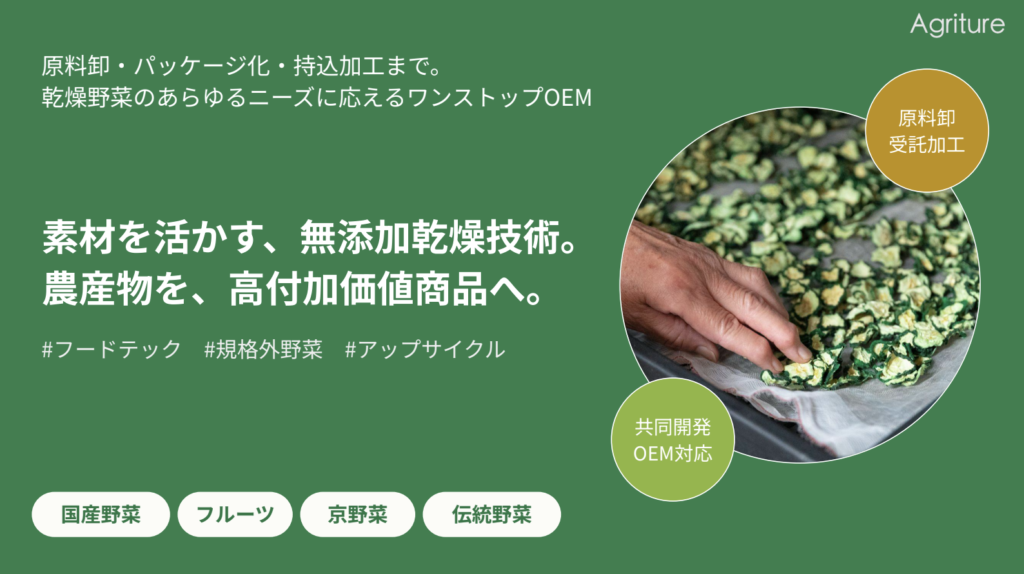
- OEM available from small lots of 10 kg
- Drying of brought-in raw materials also possible
- Support from processing to filling in one place
Making hibiscus syrup ahead
Keeping syrup on hand lets you make a cup anytime just by adding hot water or sparkling water. Make a batch and refrigerate it, and you can easily turn it into iced drinks or sodas.
- Put water and dried hibiscus in a small pot and simmer until the color comes out
- Strain, add sugar or honey, and warm until dissolved
- Add lemon to taste, pour into a clean jar and refrigerate
- Use it with hot water or sparkling water, or on shaved ice and yogurt
Choosing Japanese dried hibiscus
The result of hibiscus tea changes with the condition of the dried hibiscus you use. The color and tartness in particular vary depending on how it was dried.
Drying methods that preserve color and aroma
When botanicals are dried quickly at high temperatures, their color dulls and their aroma tends to escape. Drying carefully at low temperatures preserves vivid color and aroma, so they tint the water beautifully when rehydrated. In Agriture's experience as well, the more an ingredient relies on its color and aroma, the more the finished result changed with the design of the drying temperature. For hibiscus tea, choosing vividly colored Dried Hibiscus that hasn't absorbed moisture raises the quality of the cup.
Storage and handling
- After opening, store in an airtight container or zip bag away from direct sunlight, heat and humidity
- Absorbed moisture reduces color and aroma, so adding a desiccant is a good idea
- Store in separate bags so it doesn't mix with other ingredients
Making hibiscus tea for a cafe or as a product
The following is for those who want to turn a homemade cup into a product. Once people are making good hibiscus tea and blends at home, some move on to wanting to "serve it at a cafe" or "make it a product for their own brand." Turning the enjoyment of drinking it into a product requires a different design from home brewing.
Homemade vs. commercial production (OEM)
At home you can change the tartness and sweetness depending on your mood, but as a product you need a fixed recipe that gives the same flavor and color no matter who brews it, a stable supply of raw materials, and compliance with best-before date and labeling rules. This is where a system that can dry and blend hibiscus, fruits and herbs at consistent quality makes a difference. Our strength in drying domestic ingredients in-house is also described in detail in OEM for edible black tea and fruit tea.
| Aspect | Enjoying at home | Making a product (OEM) |
|---|---|---|
| Recipe | Change freely depending on your mood | Fixed so it has the same flavor and color no matter who makes it |
| Raw materials | Made with ingredients on hand | Requires stable sourcing and consistent quality |
| Labeling / shelf life | Drink without worrying about it | Must comply with best-before dates and ingredient labeling |
| Quantity | One cup at a time | Planned with prototyping through mass production in mind |
Because hibiscus shows its color and tartness so clearly, what sets a product apart is whether it can keep color variation and the strength of tartness consistent. A drying and blending system that can stabilize these makes it easier to bring a homemade flavor closer to a product.
Choosing to start with a small-lot prototype
Rather than jumping straight into mass production, you can start with a small-lot prototype to check the flavor, color and response. Agriture handles everything from raw material selection, drying and blending to small-pouch filling as a single contract, starting from small lots of as little as 100g. We can also build original blends combining hibiscus with fruits and herbs based on the characteristics of each ingredient. Our range of services is summarized in OEM for creating original teas. For making teas starring fruit or ginger, see also How to make fruit tea and How to make ginger tea as well.
We have materials available to help you understand dried processing OEM
Agriture OEM, flexibly handling everything from small lots to large lots
- OEM available from small lots of 10 kg
- Drying of brought-in raw materials also possible
- Support from processing to filling in one place
FAQ
Here are answers to common questions about making hibiscus tea.
Summary
The basic way to make hibiscus tea is to pour boiling water over dried hibiscus and steep it well. What determines the result is water temperature, steeping, and how you handle the tartness. Softening its strong tartness with sweeteners or blends makes it much easier to drink.
Its clear ruby color stands out in iced tea, two-layer drinks and sparkling mixes. If you want to turn a blend you love at home into a cafe menu item or your own product, you can make use of a system that handles everything from drying onward. Feel free to contact us about creating your original hibiscus blend.
Recommended reading
- How to Make Fruit Tea: Types and Blending Tips with Dried Fruit
- How to Make Ginger Tea and Shogayu That Bring Out Heat and Aroma
- OEM for Tea with Your Own Original Flavor
Download the OEM contract processing materials
We will send the materials to your email address based on the information you provide.
- How to Make Ginger Tea and Shogayu That Bring Out Heat and Aroma
- How to Make Lemongrass Tea: Brewing for Aroma, Blends and Other Uses
Author of this article
Related articles
-
 How to Make and Use Yuzu Kosho: Ingredients, the Difference Between Green and Red, and Matching Dishes
 -
7 ways for vegetable-averse adults to overcome it without strain
-
 A Complete Guide to Using Moringa Powder: Effective Ways to Take It and Recipes
 -
 What is eating vegetables first? Eating order and how to practice it
 -
 What are the benefits of hot-air drying lemon? Explaining the difference from other drying methods
 -
A Guide to Rehydrating and Eating Dried Kikurage: Heating Tips to Prevent Food Poisoning and Recipes
-
 7 Innovative Cases of Overseas Fair Trade Companies Changing the World
 -
 A Thorough Guide to Drying Apples! 3 Steps and Tips You Can Do Easily at Home