
Know the heirloom vegetables of Edo Tokyo | The city’s vanishing food culture

Summary of this article
Edo Tokyo vegetables are Tokyo's heirloom vegetables handed down since the Edo period, and under the definition set by the JA Tokyo Central Association, 52 kinds were registered as of October 2024. This article introduces the characteristics and stories of representative items such as Nerima daikon, Kameido daikon, Shinagawa kabu, Kanamachi kokabu, Yanaka ginger, and Mikawashima-na, along with their historical background since the Edo period. It also explains efforts to revive heirloom vegetables that were disappearing due to urbanization, and how to obtain them at JA stores and restaurants.
Even in the streets of Tokyo lined with high-rise buildings, rich farmland once spread out, and vegetables of each season were grown locally. "Edo Tokyo vegetables" whose names survive today—such as komatsuna, Takinogawa burdock, and Naito togarashi—are urban heirloom vegetables handed down since the Edo period.
However, swallowed up by the wave of urbanization, and with aging farmers and shrinking farmland, these vegetables are disappearing. This article aims to rediscover the food culture rooted in the city by explaining what Edo Tokyo vegetables are, how they were nurtured, and today's efforts to carry them on.
TOC
What are Edo Tokyo vegetables? A treasure of a vanishing food culture
Have you heard the term Edo Tokyo vegetables?
In the Tokyo where we live, there are heirloom vegetables handed down continuously since the Edo period. Their number is a remarkable 52 kinds (as of October 2024). These are not just vegetables but "treasures of food culture" that have survived a long history from Edo to the mid-Showa era.
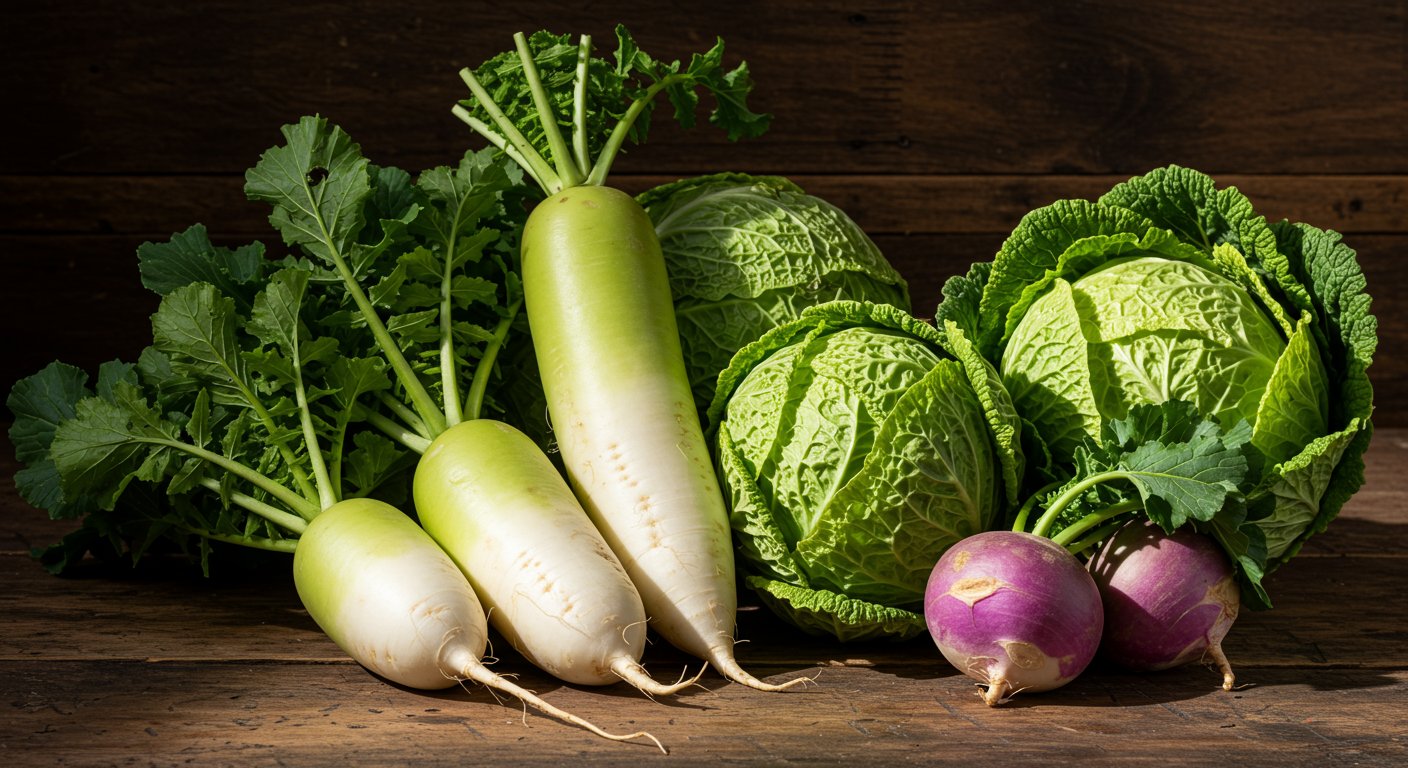
Edo Tokyo vegetables are defined by the JA Tokyo Central Association as follows.
"Vegetables that carry on the vegetable culture of Tokyo beginning in the Edo period and that derive from so-called native varieties, or native cultivation methods, of the period up to the mid-Showa era, when most seeds and seedlings were self-supplied or secured through nearby seed merchants."
However, with the decline of farmland due to urbanization and the spread of efficiency-focused hybrid varieties, these heirloom vegetables are gradually disappearing from our tables. To protect the vanishing food culture of the city, the value of Edo Tokyo vegetables is now being reassessed.
The history and origins of Edo Tokyo vegetables
The beginnings of Edo Tokyo vegetables trace back to the early Edo period.
The Edo of that time faced a shortage of fresh vegetables amid a rapid population increase. So the shogunate established fields in the surrounding countryside and had farmers brought in from the Kansai region grow vegetables. Regional daimyo who gathered in Edo for the alternate attendance system also began cultivation with vegetable seeds brought from their home domains. In this way vegetable seeds from all over the country gathered in Edo, and only the vegetables suited to this land's climate and soil settled in as fixed varieties.
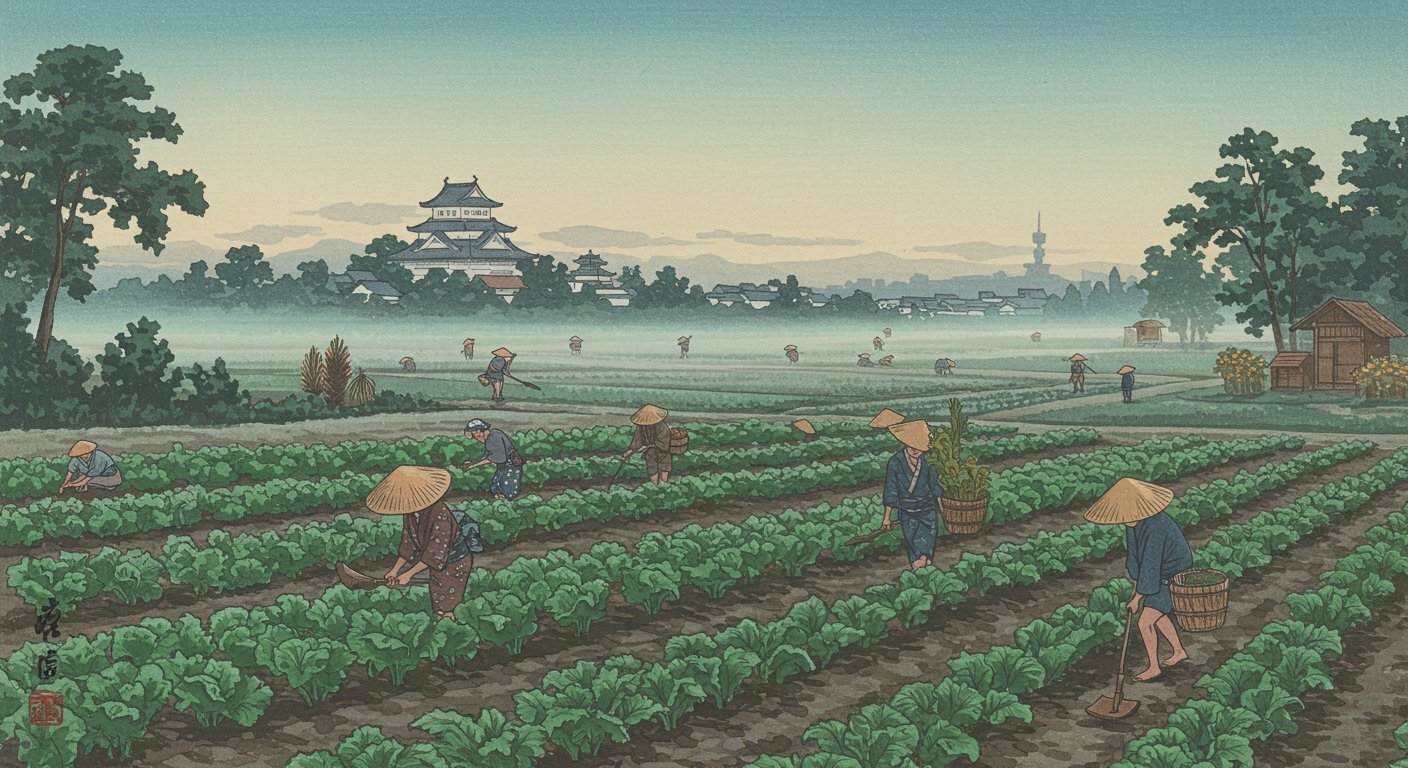
Today's Tokyo Metropolis is larger than the area once called Edo. This is because the Santama region was transferred from Kanagawa Prefecture to Tokyo Prefecture in Meiji 26 (1893). For this reason, the name "Edo Tokyo vegetables" was established by the JA Tokyo Central Association in Heisei 23 (2011). This made it possible to provide the citizens of Tokyo with heirloom vegetables produced widely across the metropolis.
FOR BUSINESS
乾燥野菜を業務用でお探しですか
国産の野菜・果物を乾燥し、必要に応じて粉砕してお出ししています。扱っている品目は100種前後で、規格は 乾燥品の一覧・パウダーの一覧 に掲載しています。
少量でのご購入は、姉妹ブランドの通販サイト OYAOYA で承っています。
Representative Edo Tokyo vegetables and their characteristics
Each Edo Tokyo vegetable has its own distinctive characteristics and story.
Nerima daikon and Kameido daikon
Among the daikon once widely cultivated in fields on the city's outskirts, varieties reaching a length of one meter were rare, and one of them is the Nerima daikon. Suited to soft, deep soil, it is distinguished by its slender, upright form and a pungent flavor. Because that pungency softens and turns to umami when simmered, it has long been widely used in pickles and simmered dishes.
The Kameido daikon, by contrast, is small and tender, with an especially striking white, beautiful stalk. That whiteness was prized, and it drew people's attention as a "stylish daikon." As a presence that colored the early-spring table before spring vegetables appeared, it is still cherished locally today.
These daikon are not mere ingredients but "urban heirloom vegetables" that reflect the land's climate and people's lives, still quietly handed down today.
Shinagawa kabu and Kanamachi kokabu
The Shinagawa kabu, cultivated around the Shinagawa area in the Edo period, is a long turnip that looks like a daikon. It once went extinct, but was revived through a survey begun in 2004, a first harvest festival in 2008, and a first competitive show in 2012. Afterward, a greengrocer in Kita-Shinagawa introduced it for town revitalization, and today the whole community works together to spread it.
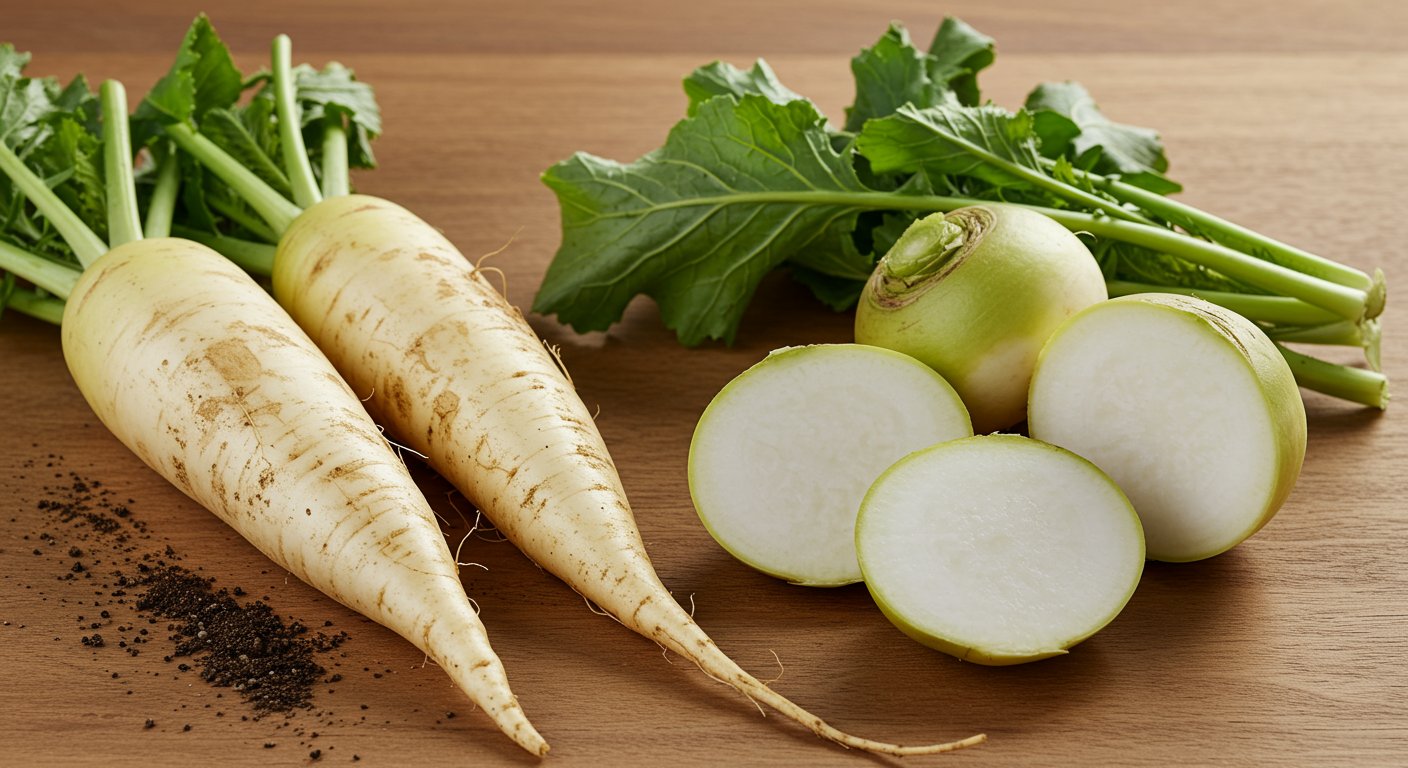
At the competitive show held every December at Shinagawa Shrine, Shinagawa kabu is added to "Shinagawa-jiru" (a soup of ground tofu), a local dish handed down in Kawauchi-machi, Aomori Prefecture, and served to visitors. This "Shinagawa-jiru" carries a heartwarming story: when sailors from Kawauchi were shipwrecked off Edo in the Edo period, Shinagawa fishermen rescued them, and the warm soup served at that time was named "Shinagawa-jiru" to express their gratitude.
Efforts to protect vanishing heirloom vegetables
The heirloom vegetables that once supported Tokyo's diet.
However, amid shrinking farmland and efficiency-focused modern agriculture, these vegetables were for a time disappearing from the table—because yields are small and cultivation takes effort. Even so, out of a wish that "the life handed down to today must not be allowed to die out," activities to protect and spread heirloom vegetables are expanding.
In Arakawa Ward, for example, efforts are under way to revive heirloom vegetables once cultivated there, such as "Yanaka ginger," "Mikawashima-na," and "Shioiri daikon." Yanaka ginger, once grown in the Arakawa area, was stringless and fragrant and was even used as a gift. After the Great Kanto Earthquake, farmland shrank due to population inflow from the city center, and it ceased to be cultivated before the war, but its name still survives as "Yanaka ginger."
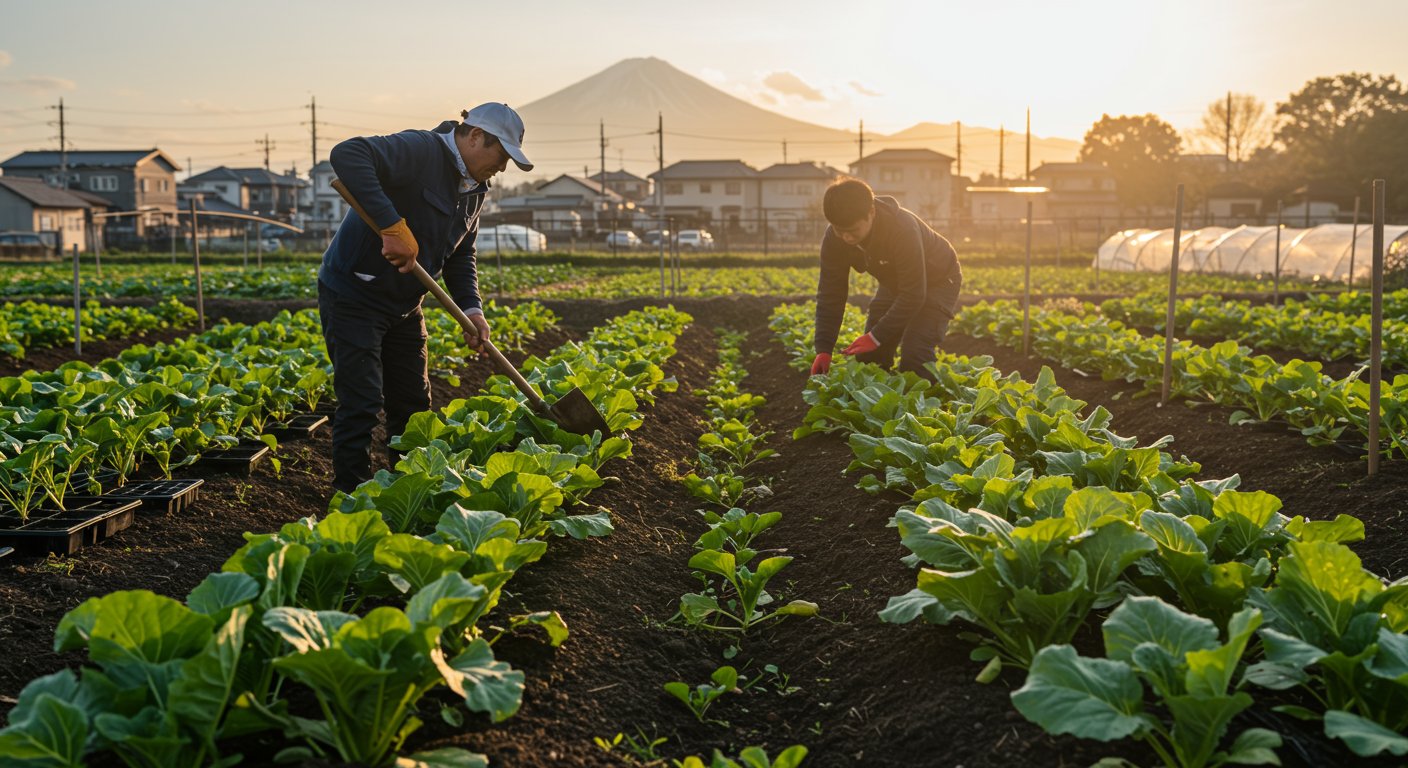
Mikawashima-na, meanwhile, was a representative pickling green of Edo, and records remain of it being presented to shoguns who visited for falconry. It ceased to be cultivated after napa cabbage was introduced to Japan, but through the efforts of the Edo Tokyo Heirloom Vegetable Study Group, it was revived as "aoguki Mikawashima-na" from the lineage of "Sendai bashona," a descendant variety of this Mikawashima-na.
Why not take an interest in your local heirloom vegetables?
Heirloom vegetables are not mere ingredients but a precious heritage that conveys the history and culture of the land. By consciously choosing and eating them, we can carry this valuable food culture into the future.
Tasting Edo Tokyo vegetables
The appeal of Edo Tokyo vegetables lies above all in their distinctive flavor.
"Vegetables naturally grow differently depending on climate and soil, so it is only ”natural” that they do not all grow the same way. And these days, hybrid vegetables bred to remove bitterness and smell have left us unable to even recognize the true taste of vegetables," says Mr. Otake. Fixed-variety vegetables show individual differences in size and shape and do not grow to spec—which is a drawback, but that is precisely their natural form and their appeal.
Today, Edo Tokyo vegetables can be bought at JA stores, and the number of restaurants that use them as ingredients is increasing. Though seasonal, they let you enjoy flavors unique to the land. Cooking methods unique to Edo Tokyo vegetables are being revived as well—such as pickles that make use of the Nerima daikon's pungency, and dishes that make use of the Kameido daikon's beautiful white stalk.
In Hachioji City, three Edo Tokyo vegetables remain: 'Kawaguchi endo,' 'Takakura daikon,' and 'Hachioji ginger.' Hidefumi Fukushima of the Tama-Hachioji Edo Tokyo Vegetable Study Group says, "Having heirloom vegetables in Hachioji is an asset. I want to keep the seeds passed on in a relay for 100 or 200 years to come."
Summary: Carrying a vanishing food culture into the future
Edo Tokyo vegetables are not mere vegetables but a story of food culture that continues from the Edo period to today.
Pushed by the waves of urbanization and efficiency, these heirloom vegetables were once on the verge of disappearing. Yet through the passion of people who reassess, protect, and pass on their value, they are now returning to our tables.
Each Edo Tokyo vegetable has its own story of history and development, and they are full of appeal, rich in individuality in taste and shape. To know and taste these vegetables is also to touch the wisdom and ingenuity of our predecessors.
If you have the chance, do look for Edo Tokyo vegetables. Along with their distinctive flavor, you should be able to touch a part of the city's vanishing food culture.
Reference:
JA Tokyo Central Association "About Edo Tokyo vegetables" (accessed: 2025/08/04) https://www.tokyo-ja.or.jp/farm/edo/
SHUN GATE "The 'stories' that vegetables connect: Edo Tokyo vegetables" (accessed: 2025/08/04) https://shun-gate.com/roots/roots_56/
Japanese Food Terminology Dictionary "Shinagawa-jiru" (accessed: 2025/08/04) https://japan-word.com/shinagawajiru
Arakawa Ward official site "Revived! Edo Tokyo heirloom vegetables" (accessed: 2025/08/04) https://www.city.arakawa.tokyo.jp/a022/kankoleisure/tokusanhin/dentoyasai.html

Recommended reading
Heirloom vegetables from across Japan / Commercial dried vegetables / Sustainable initiatives / They'll make you smile! The fun names of heirloom vegetables and their origins / Kyoto heirloom vegetables: Kyoto specialties with a long history
10 representative Edo Tokyo vegetable varieties
| Variety name | Category | Main growing region | Features | Season |
|---|---|---|---|---|
| Nerima daikon | Root vegetable | Nerima Ward | A large daikon over 1 m long. Ideal for takuan pickling | November–December |
| Kameido daikon | Root vegetable | Koto Ward | A small daikon about 30 cm long. Suited to light pickling | March–May |
| Shinagawa kabu | Root vegetable | Shinagawa Ward | A long turnip cultivated in the Shinagawa post town | October–December |
| Komatsuna | Leafy green | Edogawa Ward | Originated in Komatsugawa, Edogawa Ward. Still cultivated nationwide today | December–February |
| Yanaka ginger | Root vegetable | Taito Ward | A summer condiment staple. Mild in pungency | June–August |
| Tokyo udo | Stem vegetable | Tachikawa City | Blanched by cultivation in an underground chamber (muro) | December–April |
| Magome hanjiro kyuri | Fruit vegetable | Ota Ward | A distinctive appearance with a white upper half | June–August |
| Naito togarashi | Fruit vegetable | Shinjuku Ward | A chili pepper cultivated in Shinjuku and Naito Shinjuku | August–October |
| Terashima nasu | Fruit vegetable | Sumida Ward | A small eggplant with thin skin and firm flesh | June–September |
| Senju negi | Deep-planted leek | Adachi Ward | A representative variety of white leek. Spread nationwide | November–February |
Many Edo Tokyo vegetables have seen their cultivation area plummet due to urbanization, but a movement to work on revival cultivation through cooperation between local farmers and government is spreading. Efforts are also beginning to preserve these heirloom varieties in dried form dry processing so they can be enjoyed year-round.
FOR BUSINESS
乾燥野菜を業務用でお探しですか
国産の野菜・果物を乾燥し、必要に応じて粉砕してお出ししています。扱っている品目は100種前後で、規格は 乾燥品の一覧・パウダーの一覧 に掲載しています。
少量でのご購入は、姉妹ブランドの通販サイト OYAOYA で承っています。
Frequently asked questions (FAQ)
We have materials available to help you understand dried processing OEM
Agriture OEM, flexibly handling everything from small lots to large lots
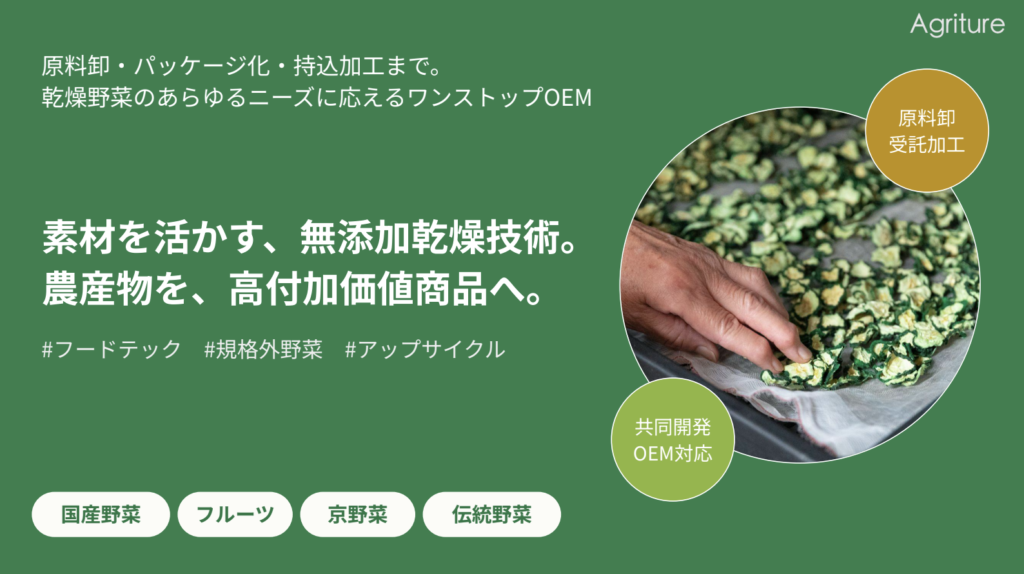
- OEM available from small lots of 10 kg
- Drying of brought-in raw materials also possible
- Support from processing to filling in one place
Download the OEM contract processing materials
We will send the materials to your email address based on the information you provide.
- A list of heirloom vegetables of the 8 prefectures of Kyushu and Okinawa|A thorough introduction to characteristics, growing regions, and seasons
- They'll make you smile! The fun names of heirloom vegetables and their origins
Author of this article
Related articles
-
 Okinawa island vegetables: individualistic vegetables nurtured by a subtropical climate
 -
 Kaga vegetables: Kanazawa brand vegetables where tradition lives on
 -
 The appeal of Kansai heirloom vegetables | Specialties of Naniwa, Kyoto, and Yamato thoroughly explained
 -
 Kyoto heirloom vegetables: Kyoto specialties with a long history
 -
 A list of heirloom vegetables of the 8 prefectures of Kyushu and Okinawa|A thorough introduction to characteristics, growing regions, and seasons
 -
 They'll make you smile! The fun names of heirloom vegetables and their origins
 -
 5 cases and strategies that succeeded in branding heirloom vegetables
 -
 What is the regional character of heirloom vegetables? The tastes and stories handed down across the land