3 Ways to Make Dried Banana: Foolproof Microwave, Oven, and Dehydrator Tips

Summary of this article
Dried banana can be made at home in a microwave, oven, or food dehydrator. We introduce tips to prevent discoloration and undercooking, recipe ideas, and how to choose additive-free dried banana.
Bananas ripening past their prime and going uneaten, or wanting an additive-free fruit snack for the kids—dried banana comes to the rescue at times like these. The appeal of making it at home is being able to concentrate the sweetness of ripe banana as is, with no sugar or oil. That said, you often hear of failures like “undercooked and sticky” or “turned brown.”
This article explains three methods—microwave, oven, and food dehydrator—along with tips to avoid failure. Agriture, which manufactures dried vegetables and dried fruit, shares insights on ripeness and texture gained on the prototyping floor.
TOC
What Is Dried Banana? The Difference from Banana Chips
Dried banana is a dried fruit made by drawing out the moisture from banana to concentrate its sweetness. Even as “dried banana,” it differs completely in both method and texture from banana chips, which are deep-fried in oil. First, let’s go over the difference and how to choose bananas suited to drying.
The Difference Between Dried Banana and Banana Chips
Most commercial banana chips are made by deep-frying thinly sliced banana in vegetable oil and coating it with sugar. They come out crisp and rich, but the added oil and sugar make them higher in calories.
Dried banana, by contrast, is simply dried without frying. Since no oil or sugar is added, the banana’s natural sweetness and a moist-to-chewy texture remain. If you want to make an additive-free snack at home, dried banana is the better fit.
The Difference in Texture Between Semi-Dried and Fully Dried
The finish also changes with the degree of drying. Deciding on the texture you’re after in advance makes it easier to adjust the heating time.
- Semi-dried keeps about half the moisture. It’s dense and soft with a rich, standout sweetness, but doesn’t keep as long.
- Fully dried is dried thoroughly. It develops a chewy bite, mixes easily into granola or trail mix, and keeps longer.
How to Choose Bananas Suited to Drying
Fully ripe bananas with brown spots (sugar spots) on the skin are strongly sweet and turn out richly flavored when dried. On the other hand, overripe ones that have gone mushy fall apart easily when slicing and take longer to dry. Bananas with taut skin that feel springy when lightly pressed—just before full ripeness—are an easy-to-handle guide.
On Agriture’s prototyping floor too, we dry bananas at 2–3 stages of ripeness and compare sweetness and texture before deciding on the finish (insight from our in-house prototyping). For sweetness, use well-ripened ones; for texture, use just-before-full-ripeness—choosing by purpose is recommended.
How to Make Dried Banana ① Easy in the Microwave
The easiest is the microwave method. Since you can dry small amounts in a short time, it’s good for testing when you want a snack.
Ingredients and Prep
The only ingredient is banana. You can make it with just a knife and parchment paper. Cut the banana into even 3–5 mm rounds and lightly blot the surface moisture with paper towels. If discoloration concerns you, dipping them briefly in diluted lemon juice keeps the color nice.
Heating Steps and Wattage Guide
Line a heatproof plate with parchment paper and arrange the banana so the pieces don’t overlap. Heat at 500 W for 1–2 minutes, then take them out once, swap in fresh paper, and flip them. Repeating this a few times while watching prevents undercooking. Banana is high in sugar and burns easily, so short, repeated heating is safest.
- Heat in 1–2 minute bursts each time, watching as you go for the total
- When moisture comes out, changing the paper frequently speeds up drying
- Done when it no longer feels sticky to the touch. It hardens a little as it cools
FOR BUSINESS
乾燥バナナを、原料としてお探しですか
国産のバナナを乾燥・粉砕してお出ししています。カット形状や粒度の指定、継続してのお取引もご相談ください。規格は 乾燥バナナ に掲載しています。
少量でのご購入は、姉妹ブランドの通販サイト OYAOYA で承っています。
Tips to Avoid Failure
The microwave heats unevenly, so keeping the thickness uniform is the biggest tip. Heating for a long stretch all at once burns it, so short, repeated heating is safest. Removing edge slices that look about to burn first lets you finish the whole batch nicely.
How to Make Dried Banana ② A Big Batch in the Oven
If you want to make a lot at once, the oven is handy. Drying slowly at a low temperature draws out the sweetness while finishing evenly.
Guide to temperature and time
Arrange the banana rounds on parchment paper on a baking tray and bake at around 100°C for about an hour. Take them out once, flip them, swap the paper, and bake another 30–60 minutes. Adjust the time to the texture you’re after—shorter for semi-dried, longer for fully dried.
Tips for Arranging and Flipping
The point is to space the slices out so they don’t stick together. Since the front and back of the oven heat differently, turning the tray partway through keeps the drying even. Cracking the oven door slightly to let the moisture escape speeds up drying.
How to Make Dried Banana ③ Food Dehydrator (Fruit Dryer)
The most stable, best-looking finish comes from a food dehydrator (fruit dryer). Since it can hold a low temperature for a long time, you can dry it while keeping the sweetness and color.
Temperature Setting and Time Required
Set it to 50–60°C and dry slowly over 6–12 hours. Keeping the thickness around 5 mm makes for an even finish. It takes time, but you can leave it alone, so it’s the least hands-on method.
Tips to Prevent Uneven Results
With a dehydrator, drying differs by tray level. Swapping the top and bottom trays partway through dries everything evenly. Raising the temperature too high hardens only the surface and leaves moisture inside, so keeping a low temperature is the tip to avoid failure.
Making the Most of the Sweetness Learned from Low-Temperature Drying
At Agriture too, we make our commercial dried banana by drying it slowly at a low temperature (insight from our in-house production floor). Drawing out moisture at a low temperature means the sweetness is less likely to be lost to heat, leaving banana’s characteristic dense, sticky sweetness. Even with a home dehydrator, keeping the temperature modest rather than greedy is the shortcut to a delicious finish.
Comparing the Three Methods
Each has its strengths and weaknesses. Choose based on how much you want to make and how much effort you’ll put in. Use the quick-reference table below as a guide.
| Preparation | Effort | Time guide | Finish | Suited to |
|---|---|---|---|---|
| Microwave | Requires constant attention | Around 10 minutes | Prone to uneven results | Testing a small amount quickly |
| Oven | Flip partway through | 1.5–2 hours | Can make a batch | Making a larger amount at once |
| Food dryer | Almost hands-off | 6–12 hours | Even and attractive | Finish-focused; keeping it stocked |
Start by testing a small amount in the microwave, and if you like it, make a batch in the oven or dehydrator—that’s the recommended flow. If you want to understand the mechanics of drying itself in detail, see The difference between freeze-drying and dried vegetables.
How to Store Dried Banana and Its Shelf Life
Even dried banana you’ve gone to the trouble of making can turn sticky or moldy if stored wrong. Change the storage method to match the degree of drying.
Storage Guide by Degree of Drying
Thoroughly dried, fully dried banana keeps relatively long even at room temperature if put in an airtight container with a desiccant. Semi-dried, which retains moisture, spoils easily, so keep it in the fridge. What you can’t eat right away keeps its flavor if portioned out and frozen.
Tips to Prevent Stickiness and Mold
The basic rule is to let it cool completely before transferring it to a container. Sealing it while warm causes water droplets inside and leads to mold. If you see stickiness, an off smell, or white mold on the surface, don’t eat it—throw it out. For the storage approach shared with other dried fruit, see A complete guide to storing dried fruit.
Recommended Ways to Use Dried Banana
Dried banana is delicious on its own, but a little extra step greatly broadens its range as a snack. Here are easy ways to work it in.
For Granola and Trail Mix
Fully dried dried banana is perfect as a natural source of sweetness for granola and cereal. Mix it with nuts and dried berries and you can make trail mix with milder sweetness than store-bought. Getting a satisfying sweetness without adding sugar is a benefit unique to additive-free. For how it pairs with nuts, see How to combine dried fruit and nuts is also a helpful reference.
For Yogurt and Smoothies
Mix it into yogurt the night before, and the dried banana absorbs moisture and turns moist and rehydrated, while a natural sweetness transfers to the yogurt. Add it to a smoothie for extra body and rich sweetness—easier than using a whole banana.
For Baked Goods and Tea
Chop it and fold it into pound-cake or muffin batter for an accent of sweetness and texture. Crush it into tea and it becomes a subtly sweet, fragrant flavored tea. For more serving variations, see The Right Way to Eat Dried Fruit.
Enjoying Commercial Additive-Free Dried Banana with Ease
If you “don’t have time to make it” or “want a stable quality to keep stocked,” choosing commercial additive-free dried banana is also an option. Use homemade and store-bought wisely, each in its place.
Additive-Free, Low-Temperature-Dried as an Option
Agriture's Dried banana is made by using rare Okinawa-grown island banana and stably year-round-supplied overseas banana as appropriate. Without sugar, bleach, or antioxidants, and dried slowly at a low temperature, it retains banana’s inherently rich sweetness. It comes in two formats—round slices and chip form—usable both as a snack to eat as is and as a topping for confectionery or granola.
The background of specializing in domestically grown dried fruit is A specialist manufacturer of domestically grown dried fruit also introduced on the page.
FOR BUSINESS
乾燥バナナを、原料としてお探しですか
国産のバナナを乾燥・粉砕してお出ししています。カット形状や粒度の指定、継続してのお取引もご相談ください。規格は 乾燥バナナ に掲載しています。
少量でのご購入は、姉妹ブランドの通販サイト OYAOYA で承っています。
If you want to use it commercially or for OEM
If you want to use it as a café topping or as a confectionery ingredient for your own brand, you can inquire from a small lot of 100 g. Since it can also be processed into banana powder, it works as a sweetener substitute for baked goods and smoothies. For inquiries about ingredient supply and product development, see How to proceed with dried fruit OEM.
FAQ
We’ve compiled the questions often asked about making dried banana.
A product catalog that shows around 100 items we handle
Agriture, flexibly handling everything from small lots to large lots
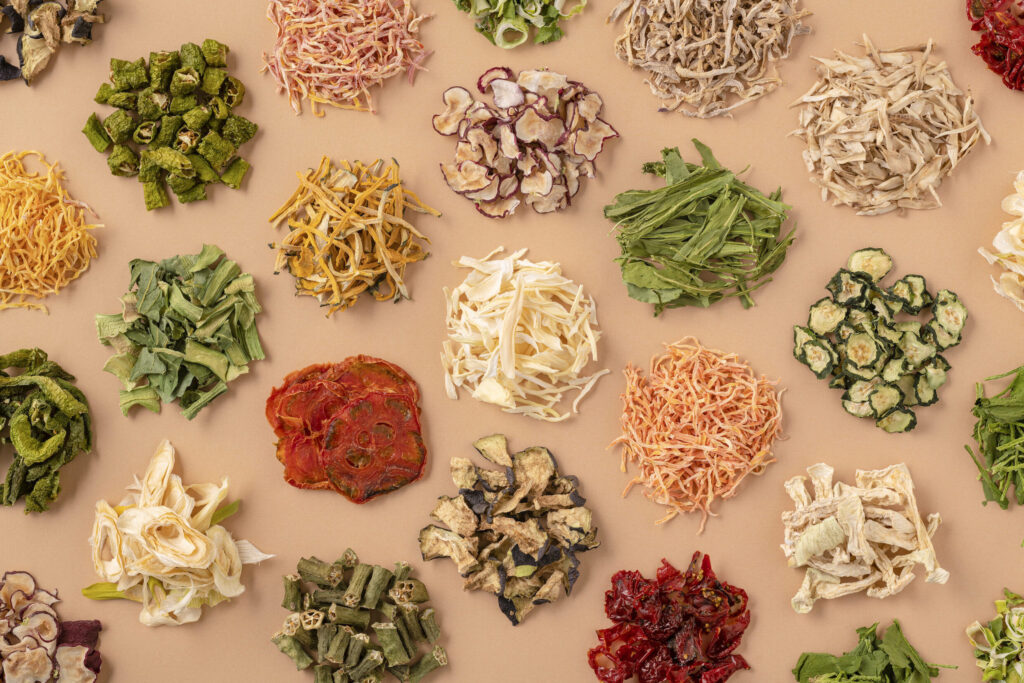
- Available for purchase in small lots from 1 kg
- We handle heirloom vegetables from across Japan
- Dried fruit and herbs also supported
Summary
Dried banana can be made in a microwave, oven, or food dehydrator. For testing a small amount, the microwave; for a batch, the oven; for a finish-focused result, the food dehydrator—choose by amount and effort. The three common points are keeping the thickness uniform, drying slowly at a low temperature, and letting it cool completely before storing.
Homemade dried banana that uses no sugar or oil is perfect as a snack for kids and as a topping for granola or yogurt. When you don’t have time to make it, work in additive-free store-bought products and enjoy it without strain.