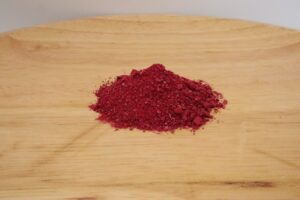
Lemon Powder

Lemon powder is a raw material made by drying lemon and then finely powdering it. In uses such as lemonade, drink mixes, baked goods, seasonings, and black-tea blends, it aims to spread lemon's refreshing tartness and aroma uniformly. Making use of aroma compounds such as limonene, abundant in the peel, it targets the "uniform blending into powders" that's hard to achieve with juice. At Agriture, Dried lemon and makes it into powder by adding a pulverizing process.
used for the same citrus scenting, Green Lemon Powder and Yuzu powder combining it lets you design the powder blending for drink mixes, baked goods, and seasonings all at once. The strength of the tartness and the direction of the aroma can be refined through the raw material's condition and the blend ratio, so spec confirmation is possible from small quantities.
TOC
Three points of pride in Agriture's lemon powder
1. A drying design that retains lemon-like tartness and aroma
Lemon is a material whose aroma components lean to the peel and tartness to the pulp. At Agriture, we tune the temperature range and operate under conditions where lemon's characteristic refreshing tartness and aroma come through. We also control the frictional heat during grinding, aiming for a finish where the aroma doesn't escape too much. Blend prototyping that spans application genres is possible.
Product catalog showing the items we handle
Flexible support from small lots to large lots

- Sold in small lots from 1 kg
- Handling heirloom vegetables from across Japan
- Dried fruits and herbs also supported
Features of commercial lemon powder
By finely powdering it, it can be developed into the application area of "uniform blending into powders and drinks" that juice or wedges can't reach. We organize lemon powder's distinctive strengths across four perspectives.
Refreshing tartness and aroma in powder form
It locks lemon's tartness and clean aroma into a powder. A small amount added lets you add a citrus direction to drink mixes, baked goods, and seasonings. That you can bring in aroma and tartness in powder form is a strength even in uses where adding juice would increase moisture.
Flavoring without adding moisture
Because it's a powder, you can design in tartness and aroma without adding moisture the way fresh lemon or juice does. It's a material suited to confectionery uses that dislike moisture, such as chocolate and butter dough, and to dry blends for powdered seasonings and seasonings.
Compatible with citrus and herb blends
By pre-blending it with citrus and aromatic powders such as green lemon, yuzu, and ginger, you can design drink mixes, baked goods, and seasonings from a single ingredient supplier. Uses beyond the direction of aroma are possible.
Use together with the ingredient-shape version
For uses where you want to retain the peel's texture and appearance, Dried lemon (slices); for uses where you want to spread tartness and aroma uniformly, the powder—you can use them for different purposes. Topping and base flavor can be achieved together in the same recipe.
Product specifications (commercial)
The basic specifications at the prototype stage are as follows. Procurement lots, delivery dates, and packaging forms for mass production and OEM are settled through individual consultation.
| Item | Details |
|---|---|
| Product name | Lemon Powder |
| Raw material | Lemon (domestically grown) |
| Shape | Fine powder (peel and pulp dried and ground) |
| Appearance | A pale yellow to cream-colored fine powder |
| Aroma | The refreshing citrus aroma characteristic of lemon |
| Net content | Individual quote according to use and lot |
| Best-before date | About 6 months from the shipping date |
| Storage method | Avoid high temperature, high humidity, and direct sunlight; after opening, seal and store in a cool, dark place |
| Minimum prototype lot | 10kg〜 |
Customization support
The raw material's condition and the direction of the finish can be adjusted to match the application. Points that can't be fully controlled on the raw-material side—such as the degree of juice pressing and the variety's own amount of tartness—we convey as they are, and then propose the optimal spec within what's possible.
| Item | Available | Details |
|---|---|---|
| Part specification | Specify from peel / pulp / whole | The peel has strong aroma; the pulp brings out tartness |
| Blend design | Pre-mixing citrus and aromatic powders | Mixing at a specified ratio with green lemon, yuzu, and ginger |
| Packaging form | From commercial bulk to small bags | Light-blocking aluminum bags, sticks and small bags, individual wrapping, and the like |
| OEM productization | End-to-end handling through the final product | Drink mixes, lemon tea, baked-goods mixes, seasonings, etc. |
| Raw material supply | Own raw materials + contract processing | We also handle contract drying and grinding at a specified growing region |
For those who want to make use of texture and appearance (ingredient-form version)
For drink toppings, decorations on baked goods, and the like, uses where you retain the texture and appearance of the lemon peel suit dried lemon (slices). The presence of the peel, which powder can't provide, comes alive in the recipe.
Commitments to variety, grower, and growing region
Lemon is an evergreen tree of the genus Citrus in the Rutaceae family (citrus), classified as an aromatic-tart citrus enjoyed for tartness and aroma. In Japan, lineages such as Lisbon, Eureka, and Rinokaori are cultivated, and the peel thickness, tartness strength, and aroma direction differ by variety lineage. For powder raw material, we select by looking at the balance of peel and pulp and how the aroma rises.
BRAND
At Agriture, we manage everything consistently from drying to grinding and packaging, using domestically grown lemons as raw material. A finish that retains lemon-like tartness and aroma is our basic policy.
PRODUCER
We partner with contract growing regions and accept raw material after sharing guidelines on variety, harvest timing, and peel condition. We record raw-material lots and use them to reproduce aroma and tartness at mass production.
REGION
The main growing regions for domestic lemons are Hiroshima, Ehime, and Wakayama. Growing regions cluster in warm, sunny areas, and we source raw material intensively during the peak season from winter to spring. With a growing-region relay, we can also handle stable supply of raw material.
CULTIVATION
Cultivation is mainly open-field. For powder raw material that uses the whole peel, we accept it while checking peel condition and ensure reproducibility in the grinding step.
Powdering technology and quality control
Aroma retention and particle-size control
Lemon is a material whose peel aroma components escape easily with heat and time. We tune the temperature range and operate under conditions that remove moisture while retaining the refreshing aroma. During grinding, we suppress frictional heat, aiming for a finish where the powder doesn't hold too much heat. Particle size can be consulted for adjustment to match solubility for drink uses and dispersibility for confectionery uses.
Moisture-absorption measures and packaging
Because lemon powder readily absorbs moisture due to its tartness, we adopt moisture-conscious packaging. For commercial bulk we use light-blocking aluminum bags, and for small bags and sticks we use moisture-proof, light-blocking film, proposing specs that assume storage in stores and warehouses.
TIPS: Formulation guidelines for making the most of lemon powder
For lemonade and drink mixes, allocating lemon powder to 5–10% of the whole powder is a range where the citrus tartness and aroma come together well. In baked-goods dough, blending 2–4% relative to the powder adds a refreshing aftertaste. In lemon-tea blends, adjusting a few percent at a time relative to the black-tea powder makes it easier to balance aroma and tartness. In seasonings, targeting 3–5% of the whole in the blend with salt and sugar makes the citrus outline stand out.
Use cases
Because powder disperses uniformly in liquids and powders, its uses extend to those that juice or wedges can't reach. We organize the applications we get many inquiries about.
Drink and beverage mixes
As a mix for lemonade, soda, and cold-brew drinks, just dissolving in hot water or water adds citrus tartness and aroma. Unlike juice, it can be blended in powder form without adding moisture, so it suits the design of instant beverages.
Black-tea and herbal-tea blends
Adding a small amount to black-tea or herbal-tea powder can give lemon-tea-style refreshing scenting. Through a dry blend with tea leaves, it can also be developed into stick and small-bag product designs.
Confectionery / bread-making
It can be used for the dough of cookies, pound cake, and muffins, and for flavoring icings and creams. Because you can add tartness and aroma without adding moisture, it's a material easy to pair even with chocolate and butter dough that dislike moisture.
Seasonings and powdered seasonings
Blended with salt, sugar, and spices, it can be developed into finishing seasonings for karaage, fried foods, and fries, or as a dressing base. The citrus tartness lets you create a light, refreshing direction.
A blend base for citrus and aromatic types
Pre-blended with green lemon, yuzu, ginger, and the like, you can design the foundation for drink mixes, baked-goods mixes, and seasonings all at once. We handle everything consistently, from mixing at a specified ratio to bagging.
OEM productization
Drink mixes, lemon tea, baked-goods mixes, seasonings, and more—you can consult us on consistent commercialization all the way to the final product. From formulation design to packaging form, we refine it to match the application.
Commercial usage and blending tips
Basics of use
- For drinks, dissolve a small amount and adjust while tasting
- For confectionery, mix it into the powder side in advance to disperse it
- For seasonings, dry-blend it with salt and sugar before use
How to store
- Before opening, store it in a cool, dark place away from high heat, high humidity, and direct sunlight
- After opening, transfer it to an airtight container to prevent moisture absorption
- Take the best-before date as roughly six months from the shipping date
Related articles and raw materials
- Guide to using lemon powder: a summary article on usage
- Dried lemon: raw material that retains the slice shape
- Green Lemon Powder: the aroma of green lemon
- Yuzu powder: the aroma of a Japanese citrus
Product catalog showing the items we handle
Flexible support from small lots to large lots
- Sold in small lots from 1 kg
- Handling heirloom vegetables from across Japan
- Dried fruits and herbs also supported
Frequently asked questions
How do you use dried lemon (with shape) and powder for different purposes?
Dried lemon is a type that retains the slice shape, suited to uses that make the most of the peel's texture and appearance, such as drink toppings and decorations on baked goods. Powder, being a fine powder, suits uses where you want to spread tartness and aroma uniformly, such as drink mixes, baked-goods dough, and seasonings. Using both, you can achieve topping and base flavor together.
What happens to color and aroma?
The appearance is a pale yellow to cream-colored fine powder with the refreshing citrus aroma characteristic of lemon. Powder that includes the peel has aroma that rises easily, and including more pulp brings out tartness. Because the aroma changes easily with heat and time, we recommend sealing it after opening and using it soon. You can consult us on specifying the portion—peel-centric, whole, and so on—according to the application.
Can it be pre-blended with other powders?
Yes. We accommodate pre-blending with citrus and aromatic-type powders that pair well, such as green lemon, yuzu, and ginger. If you share the formulation you're aiming for in the final product—drink mixes, lemon tea, seasonings, and the like—we'll mix and bag it at that ratio.
What is the minimum prototype lot?
We accept prototypes from 10kg. For mass production and OEM, we'll propose an individual quote and lead time. You can consult us on consistent commercialization all the way to the final product—drink mixes, lemon tea, baked-goods mixes, seasonings, and more.
Please tell me the best-before date and how to store it.
The best-before date is roughly 6 months from the shipping date. Because lemon powder readily absorbs moisture, before opening store it in a cool, dark place at room temperature, away from high heat, high humidity, and direct sunlight. After opening, transfer it to an airtight container and use it up soon, before the aroma changes.
Recommended reading
- Dried lemon – slice-shaped raw material
- Green lemon powder – the aroma of green lemon
- Yuzu powder – the aroma of a Japanese citrus
- Onion powder – richness for seasonings
Download the product catalog
We will send the materials to your email address based on the information you provide.