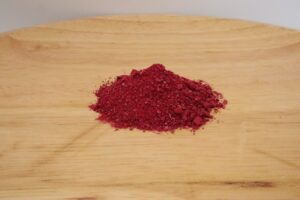
Island Chili Powder

Shima togarashi powder is a raw material made by finely pulverizing, after drying, the small-grained shima togarashi cherished in Okinawa. For uses such as spicy seasonings, hot sauces, and snack coatings, it aims to spread the sharp spiciness and aroma of shima togarashi uniformly in small amounts. Shima togarashi has the standard Japanese name kidachi-togarashi (scientific name Capsicum frutescens), an intensely spicy variety also called “koregusu” in Okinawa, and its pungent component is capsaicin. At Agriture, Dried island chili pepper and makes it into powder by adding a pulverizing process.
Compared with common taka-no-tsume-type chili powder, shima togarashi, though small-grained, is characterized by a sharp rise of spiciness accompanied by a distinctive aroma. Making use of this individuality, it can be deployed in final products such as intensely spicy seasonings, hot sauce bases, snack-confectionery seasonings, and flavoring for chili oil and spicy oils. Nailing down the specifications is possible from small amounts.
TOC
Three points of commitment for Agriture’s shima togarashi powder
1. Drying design that retains shima-togarashi-like spiciness and aroma
Shima togarashi is small-grained and easily loses moisture, but the rise of spiciness and aroma changes with the drying conditions. At Agriture, we regulate the temperature range and operate under conditions that retain the sharp spiciness and clean aroma characteristic of shima togarashi. The color tightens to a reddish brown through drying and pulverizing, finished in a shade that blends naturally into spicy seasonings, hot sauces, and snack seasonings. Blend prototyping spanning use genres is possible.
2. A grain size that spreads uniformly through fine pulverizing
We regulate the pulverizing process and finish it into a fine powder that mixes without the spiciness being uneven. In snack seasonings, popcorn coatings, and the compounding of spicy salt and spice mixes, the more uniform the grain size, the more uniform the spiciness of each grain. Matching the texture and appearance of the final product you’re aiming for, the direction of grain size can be designed while consulting.
3. The selection axis for Okinawa-grown shima togarashi
The raw material is basically Okinawa-grown shima togarashi, accepted after sharing guides for harvest period and ripeness. Because the quality of spiciness and aroma differ between ones harvested while green and ones ripened red, we select the direction of the raw material to match the product image aimed for. We record the lot and use it to reproduce the spiciness and aroma at mass production.
Product catalog showing the items we handle
Flexible support from small lots to large lots
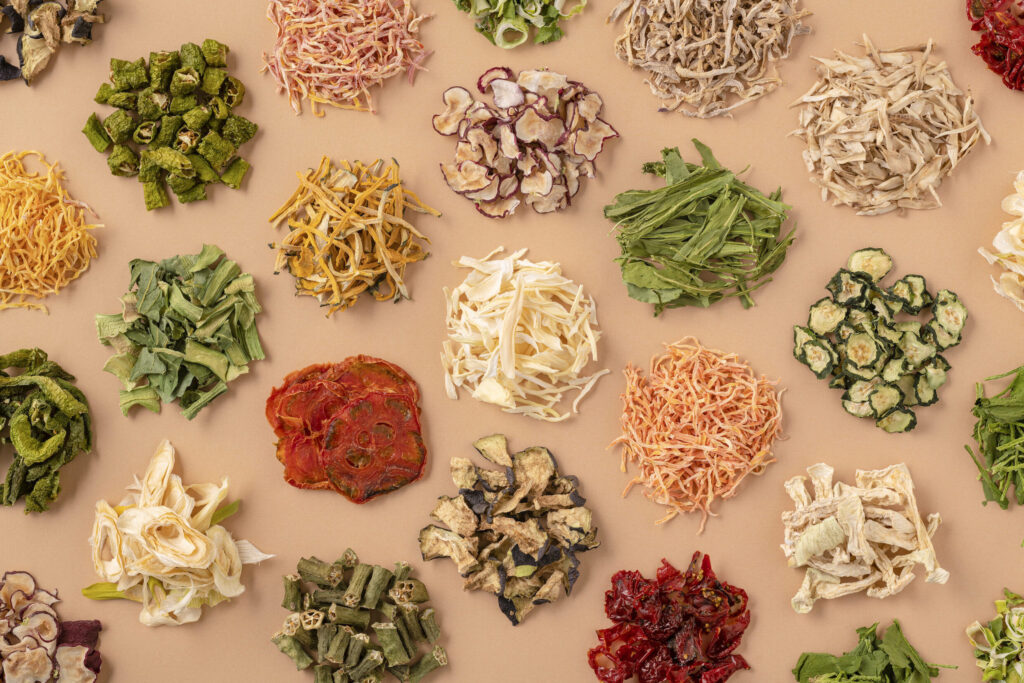
- Sold in small lots from 1 kg
- Handling heirloom vegetables from across Japan
- Dried fruits and herbs also supported
Characteristics of commercial shima togarashi powder
By fine pulverizing, it can be deployed in the use area of “uniform compounding into seasonings, sauces, and snacks” that chopped and dried grains can’t reach. We organize the strengths unique to shima togarashi powder from six perspectives.
Concentrating sharp spiciness
Shima togarashi’s pungent component is capsaicin, and though small-grained, it is characterized by a sharp rise of spiciness. By making it a fine powder, you can give a firm core of spiciness to spicy seasonings, hot sauces, and intensely spicy snacks even with a small amount of compounding. It is a material suited as the base of products that make spiciness the star.
A grain size that spreads uniformly
Because it is a fine powder with uniform grain size, the spiciness is less prone to unevenness even in the seasoning of snacks and popcorn and the compounding of spicy salt and spice mixes. Aiming for a finish where spiciness sits uniformly on each grain is an advantage unique to powder.
Easy to dissolve into liquids too
Even in liquid and semi-liquid products such as hot sauces, chili oil, and spicy dressings, fine powder is easy to disperse, letting the spiciness and aroma reach throughout the base. It is a shape easy to use for the compounding design of tube and bottled spicy seasonings too.
Easy to blend with other flavor powders
Garlic powder and Onion powder By pre-blending with these, you can design a seasoning base that combines spiciness and flavor from a single raw-material supplier. It is a material easy to deploy in the design of chili mixes and spice salts.
Okinawa-like individuality
Shima togarashi is a spicy ingredient representative of Okinawa, long cherished as koregusu. Making use of the story of the Okinawa growing region, it can be put forward as the star material of local seasonings, souvenir snacks, and spicy products with regional color.
Use together with the ingredient-shape version
For uses where you want to retain the texture and appearance of grains or chopped pieces, Dried island chili pepper and for uses where you want to spread spiciness uniformly, powder—you can use them differently. You can combine an ingredient feel and base spiciness in the same recipe.
Product specifications (commercial)
The basic specifications at the prototype stage are as follows. Procurement lots, delivery dates, and packaging forms for mass production and OEM are settled through individual consultation.
| Item | Details |
|---|---|
| Product name | Island Chili Powder |
| Raw material | Shima togarashi (Okinawa-grown) |
| Shape | Fine powder (dried and ground) |
| Appearance | Reddish-brown fine powder |
| Aroma | The sharp spiciness and clean aroma characteristic of shima togarashi |
| Net content | Individual quote according to use and lot |
| Best-before date | About 6 months from the shipping date |
| Storage method | Avoid high temperature, high humidity, and direct sunlight; after opening, seal and store in a cool, dark place |
| Minimum prototype lot | 100g〜 |
| Main production lot | On consultation |
Customization support
Matching the final product you’re aiming for, we can nail it down while consulting on grain size and compounding design. It is designed on the premise that spiciness is adjusted by the compounding amount.
| Item | Available | Details |
|---|---|---|
| Particle-size adjustment | Powder fineness matched to the use | Consult on the direction, from fine grain size for coatings to coarser sizes that retain texture |
| Compounding design | Spiciness-balance design for the whole product | Design the spiciness strength by the powder’s compounding amount. Adjust the proportion to match the spiciness aimed for |
| Blend design | Pre-mixing of flavor powders | Design chili mixes and spice salts by mixing with garlic, onion, and the like at a specified ratio |
| Packaging form | From commercial bulk to small bags | Light-blocking aluminum bags, sticks and small bags, individual wrapping, and the like |
| OEM productization | End-to-end handling through the final product | Spicy seasonings, hot sauces, snack seasonings, spicy oils, etc. |
For those who want to make use of texture and shape (ingredient-shape version)
For uses such as awamori pickling (koregusu) and ingredients for spicy stir-fries, for uses where you want to retain the appearance of grains or chopped pieces of shima togarashi,dried shima togarashi is suitable. The presence of shima togarashi that powder can’t provide comes alive in the recipe.
Commitments to variety, grower, and growing region
Shima togarashi is classified as kidachi-togarashi (Capsicum frutescens) of the nightshade family, capsicum genus. It is a different lineage from common annual chili (Capsicum annuum), characterized by small-grained fruit and strong spiciness. Cultivated in Okinawa since ancient times, both the green chili harvested while green and the red chili ripened red have been used. As a powder raw material, we select the ripeness by looking at the quality of spiciness and aroma.
BRAND
At Agriture, using Okinawa-grown shima togarashi as the raw material, we manage everything from drying through pulverizing and packaging in an integrated way. Our basic policy is a finish that retains the sharp spiciness and aroma characteristic of shima togarashi.
PRODUCER
Partnering with the growing region, we accept the raw material after sharing guides for variety, harvest period, and ripeness. We record the raw-material lot and use it to reproduce the spiciness and aroma at mass production.
REGION
The main growing region is Okinawa Prefecture. Shima togarashi, grown under a subtropical climate, has a small-grained, sharply spicy individuality different from mainland chili. As a spicy ingredient unique to Okinawa, it suits product-making with regional color.
CULTIVATION
Because we can handle raw material at either the green-chili or red-chili stage, you can select the ripeness to match the spiciness and aroma aimed for. We accept it using harvest period and ripeness as a guide, and ensure reproducibility in the powdering process.
Powdering technology and quality control
Retaining spiciness and aroma
Shima togarashi is small-grained and easily dried, but on the other hand its spiciness and aroma easily change with the heat during pulverizing. We regulate the temperature range and operate under conditions that remove moisture while retaining the sharp spiciness and clean aroma characteristic of shima togarashi. We also control the frictional heat during pulverizing, aiming for a finish where the powder does not take on too much heat.
Managing grain size and packaging
Because for coating uses the uniformity of grain size directly connects to the uniformity of spiciness, we adjust the direction of powder fineness to match the intended use. For commercial bulk we adopt light-blocking aluminum bags, and for small pouches and sticks moisture-proof, light-blocking film, proposing specifications that assume storage at the storefront and warehouse. Because pungent components are easily affected by humidity, we make moisture-resistance-focused packaging the basic principle.
TIPS: A guide to compounding that makes use of shima togarashi powder
When using it in snack seasoning, starting from a small amount of the whole seasoning and raising the proportion to match the spiciness aimed for makes it easier to design. In spicy salt and spice salt, create the core of spiciness by compounding with salt, and combining garlic and onion powder gives depth to the flavor. In hot sauces and chili oil, combining other chilis with shima togarashi to balance the strength of spiciness and the individuality of aroma is an easy-to-use range. In all cases, design the strength of spiciness by the compounding amount.
Use cases
Because powder disperses uniformly into liquids and powders, it broadens into uses that chopped and dried grains can’t reach. We organize the uses we are often consulted about.
Spicy seasonings and spices
As the base of seasonings that make spiciness the star—spicy salt, spice salt, chili mix, and the like. You can design the strength of spiciness by the compounding amount.
Hot sauces and spicy dressings
For bottled and tube spicy seasonings and dipping sauces. Easy to disperse into liquids, letting the spiciness and aroma reach throughout the base.
Snacks and seasonings
For coating seasonings of potato chips, popcorn, rice crackers, and the like. Making the grain size uniform lets you put spiciness on each grain uniformly.
Spicy oils and chili oil
For flavoring chili oil and spicy oils. Fine powder is easy to disperse into oil, a shape that easily transfers spiciness and aroma.
Okinawa souvenirs and local products
Making shima togarashi—long cherished as koregusu—the star, for souvenir snacks and spicy seasonings with regional color. You can put forward the story of it being Okinawa-grown.
Spicy flavoring for noodle and cup products
As a material for the spicy dried topping (kayaku) and spicy seasoning oil of cup noodles and instant noodles. It blends into both powders and oil, letting you apply spiciness uniformly.
Commercial usage and blending points
Basics of use
- Try from a small amount, and raise the compounding amount to match the spiciness aimed for
- For seasonings, combine with salt, sugar, and flavor powders to create the core of spiciness
- For hot sauces and oils, combine with other chilis to balance the aroma
A guide to compounding
- For spice salt, design the strength of spiciness by compounding with salt
- For snack coating, make the grain size uniform to adhere it evenly
- For spicy oil, extract at a temperature range that doesn’t overheat and retains the aroma
How to store
- While unopened, store in a cool, dark place at room temperature, away from high heat, humidity, and direct sunlight
- After opening, transfer to an airtight container and use it up early, being conscious of moisture-proofing
- For commercial bulk, secure moisture-proofing and light-blocking with light-blocking aluminum bags
Related articles and raw materials
- Dried island chili pepper: raw material retaining the grain or chopped shape
- Garlic powder: the flavor base of chili mix
- Onion powder: adding richness to spice salt
- Consultations for commercial and OEM use: consultation desk for raw-material supply and OEM projects
Product catalog showing the items we handle
Flexible support from small lots to large lots
- Sold in small lots from 1 kg
- Handling heirloom vegetables from across Japan
- Dried fruits and herbs also supported
Frequently asked questions
How should dried shima togarashi (with shape) and powder be used differently?
Dried shima togarashi is a type that retains the shape of grains or chopped pieces, suited to uses where you want to make use of its appearance and presence as a spicy ingredient, such as awamori pickling or stir-fry ingredients. Powder, being a fine powder, suits uses where you want to spread spiciness uniformly—spicy seasonings, hot sauces, snack seasonings, and the like. Using both together lets you combine an ingredient feel and base spiciness.
How should I decide the strength of the spiciness?
Shima togarashi is a small-grained but sharply spicy variety, and its pungent component is capsaicin. Build the final product’s spiciness on the premise of designing it by the powder’s compounding amount. For snacks and spice salts, trying from a small amount and adjusting the proportion to match the spiciness aimed for is the basic principle. You can also combine it with other chilis or flavor powders to balance spiciness and flavor.
Can it be pre-blended with other flavor powders?
Yes. We support pre-blending with flavor powders that go well in spicy seasonings and spice mixes, such as garlic and onion. If you share the compounding you aim for in the final product—chili mix, spice salt, snack seasoning, and the like—we will mix and bag it at that ratio.
What is the minimum prototype lot?
We accept prototyping from 100 g. For mass production and OEM, we propose an individual quote and lead time. You can consult with us in an integrated way through to final products such as spicy seasonings, hot sauces, snack seasonings, and spicy oils.
Where is the growing region?
We use Okinawa-grown shima togarashi as the basic raw material. Shima togarashi is a spicy ingredient long cherished in Okinawa as koregusu, a small-grained, sharply spicy variety grown under a subtropical climate. It suits product-making that makes use of the story of the Okinawa growing region.
Please tell me the best-before date and how to store it.
The best-before date is roughly 6 months from the shipping date. Because shima togarashi powder readily absorbs moisture, while unopened, store it in a cool, dark place at room temperature, away from high heat, humidity, and direct sunlight. After opening, we recommend transferring it to an airtight container and using it up early, being conscious of moisture-proofing.
Recommended reading
- Dried shima togarashi – raw material in grain and chopped shape
- Garlic powder – the flavor of chili mix
- Onion powder – the richness of spice salt
- Vegetable powder list – see the raw materials we handle
Download the product catalog
We will send the materials to your email address based on the information you provide.