Functional vegetables

TOC
What Are Functional Vegetables?
Functional vegetables are vegetables rich in functional components such as polyphenols and GABA, which are expected to help maintain health. Compared with ordinary vegetables, they have been bred and cultivated to be higher in specific functional components, and are also drawing attention as ingredients for "nutrient-function foods" and "foods with function claims."
In the agriculture and food industries, "phytorich vegetables" and "high-GABA tomatoes" are representative examples, and demand is expanding across a wide range of scenes—school lunches, foodservice, health-conscious households, and more.
Characteristics and Background of Functional Vegetables
The development of functional vegetables has advanced against the backdrop of rising health consciousness since the 2000s. In particular, the following elements draw attention:
Component strengthening at the cultivation stage: Raising functional components such as GABA, lycopene, and anthocyanin through breeding and cultivation techniques (shading, low-temperature management, and the like).
Affinity with the "medicine and food share the same source" idea: consistent with the idea of supporting physical well-being through food.
Relation to systems: In Japan, they readily become ingredients subject to the "foods with function claims" system (since 2015), and businesses can display claims through notification.
Matching trends:Wellness: Appeals matched to modern people's concerns are possible—low-carb, beauty, sleep improvement, and more.
Today, thanks to their colorful appearance and talkability, product development is accelerating as a category that readily leads to social media and media exposure.
Examples of Functional Vegetable Use at Agriture
At Agriture, we handle Takii's Phytorich series and other functional vegetables as raw material, we carry out dry processing・Powder processing and provide ingredients that allow functional appeal.
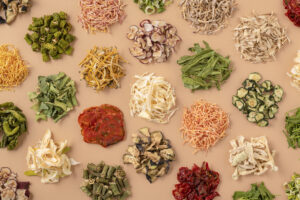
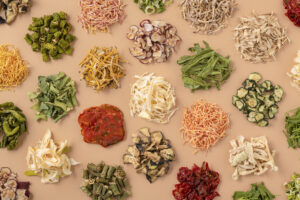
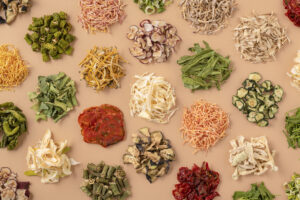
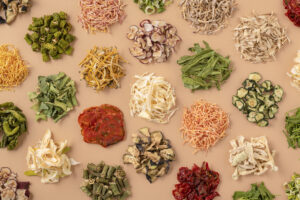
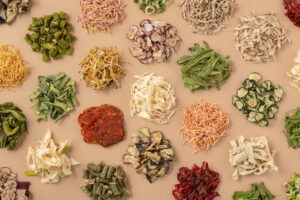
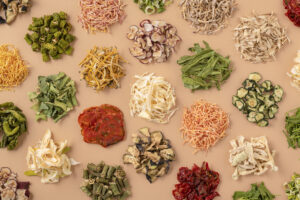
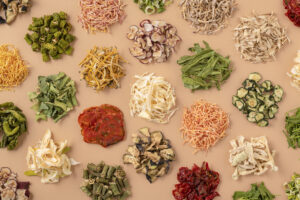
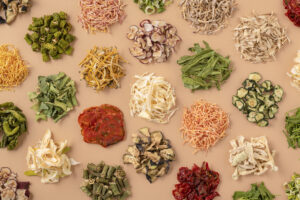
「Benihoshi mizuna" and "Kyo-kurenai carrot" and other vegetables rich in anthocyanin and lycopene—we roll out dried products
A track record of developing OEM ingredients using GABA-enriched tomatoes
For pet and elder-oriented products, functional vegetable powder use proposals
By achieving both vivid appearance and functionality, they are a group of ingredients that also become a point of differentiation in OEM products.
Related keywords
High-GABA tomato
Anthocyanin
Foods with function claims
Health-conscious vegetables
Related articles
A Ranking of Health-Food OEM Keywords to Watch in 2025
What Is Health-Food OEM? The Flow and Features Explained
FAQ
Q1. Are functional vegetables more expensive than ordinary vegetables?
A. Generally, because component strengthening and special cultivation methods are needed, prices tend to be set higher than ordinary vegetables, but thanks to their high added value, market appraisal is rising.
Q2. What should I do if I want to use functional vegetables via OEM?
A. At Agriture, we also accommodate OEM using functional vegetables as raw material. First, if you tell us the desired function, we will propose a suitable ingredient and processing form.