Complete guide to using mugwort powder | Recipes for kusa mochi, bread, and lattes, plus amounts and selection
Tea
Sustainability
Raw materials & ingredients
Powder
Vegetable powder
Health & nutrition
Mugwort
Recipes & uses

Summary of this article
We introduce how to use yomogi powder (yomogi flour) — from basic amounts and mixing to popular recipes such as kusa mochi, dango, bread, baked goods, and lattes, choosing by particle size, and storage methods. We explain tips for making the most of domestic yomogi powder you can use without rehydrating.
Yomogi powder (yomogi flour), which you can use in kusa mochi, Mugwort tea, and yomogi bread. Made by drying and powdering the leaves, yomogi powder's appeal is that you can mix it straight into dough or drinks with no rehydrating. Still, many people wonder "how much do I add?" "what uses are there?"
In this article, Agriture, which handles dried-vegetable processing in Kyoto, explains yomogi powder — from basic uses and amount guides, to popular recipes such as kusa mochi, dango, bread, baked goods, and drinks, choosing by particle size, and storage methods and cautions when using it.
TOC
What is yomogi powder (yomogi flour)? Its traits and appeal
Yomogi powder is an ingredient made by drying and finely powdering yomogi leaves picked in spring. Characterized by a vivid green and a fresh, young-grass-like aroma, it has long been used to color and flavor Japanese sweets. It's also called "yomogi flour."
This vivid green comes from the chlorophyll in yomogi. Since you can produce a natural green without using chemical colorants, it's valued when making kusa mochi, yomogi bread, and the like by hand.
Why yomogi powder is easy to use
Yomogi powder's biggest advantage is that it needs no rehydrating. Leaf-type dried yomogi has to be rehydrated with water and chopped, but with powder you just mix it straight into dough or drinks. The color also comes out evenly and it's less prone to clumping, making it well suited to confectionery and drinks.
Also, drying and powdering makes it keep well, and being able to use short-season yomogi year-round is an appeal. Even in seasons when fresh yomogi isn't available, having yomogi powder lets you enjoy yomogi flavor regardless of season.
Using it versus the leaf type
Even the same dried yomogi suits different uses in leaf (cut) type versus powder type. For yomogi tea and yomogi-mushi, which draw out aroma by simmering, the leaf type is convenient; for sweets, bread, and lattes where you mix it into dough or drinks, the powder type is convenient. Having both and using them by situation lets you make use of yomogi without waste. For how to use the leaf type, How to Use Dried Mugwort.
Basic uses of yomogi powder
Once you learn how to use it, yomogi powder can be used across a wide range of dishes, Japanese and Western. First, cover the basic mixing and amount guides.
Mix into the batter
When using it in bread, sweets, or mochi dough, just add yomogi powder to the flour and mix. Mixing it well with the flour in advance gives an even color with no streaks. Since even a small amount colors firmly, not overdoing it is the trick to a clean finish.
Dissolve it in drinks
For a yomogi latte or a drink you dissolve, dissolving it first in a little warm water (about 5 times the powder) before adding makes it less prone to clumping. Dissolved in hot water, milk, or soy milk, it makes an easy yomogi drink or latte. Note that for an authentic yomogi tea that draws out aroma by simmering, the leaf type suits better than powder.
Guideline amount
Amount guides by use are as follows. There's personal preference in color depth and aroma strength, so adding from a small amount and adjusting avoids mistakes.
- Kusa mochi, dango, bread: 1–2 teaspoons per 100 g of flour
- Baked goods such as cookies and muffins: about 1 teaspoon per 100 g of flour
- Yomogi latte or drink: 1/2–1 teaspoon per cup
Since yomogi powder brings out both color and aroma in a small amount, using it modestly at first is the basis. Adding a lot makes a deep green, but overdoing it can bring out yomogi's characteristic bitterness strongly, so adding a little at a time while tasting is a good idea. In our processing experience at Agriture too, fine powder tends not to clump even dissolved into a latte, while medium-to-coarse powder tends to keep its aroma and texture when used in dango.
Popular recipes made with yomogi powder
Rehydration-free yomogi powder can be used widely, from Japanese sweets to Western sweets and drinks. Here we introduce popular uses by category.
Japanese sweets (kusa mochi, dango, shiratama)
The go-to for yomogi powder is, of course, Japanese sweets. Add sugar and yomogi powder to shiratama flour or joshinko, add water little by little and knead, then steam or boil, and you get vivid green kusa mochi or shiratama dango. Enjoy them wrapping tsubu-an or coating them in kinako. With powder there's no rehydrating and the color comes out evenly, so you can make spring-like Japanese sweets easily. Wrap an filling for yomogi daifuku or ohagi; skewer them and top with mitarashi or kuromitsu for yomogi dango — variations are free. Being easier than making them from mochi rice, another advantage of powder is that you can make them right away when the mood strikes. For the detailed way to make yomogi mochi, How to Make Mugwort Mochi with Dried Mugwort.
Bread and baked goods (cookies, muffins, pound cake)
Yomogi powder keeps its aroma well even after baking, suiting bread and baked goods. Kneaded into bread dough, it makes a yomogi bread with a faint green and young-grass aroma. Added to cookie, muffin, or pound-cake dough, it makes baked goods with a Japanese taste. When making pound cake, bringing the eggs and butter to room temperature first mixes the ingredients evenly. Combined with anko or white chocolate, the yomogi aroma stands out. For an easy approach, mixing yomogi powder into pancake mix for yomogi steamed bread or yomogi pancakes is recommended too. Added to scones, it makes a snack with a Japanese aroma. Going easy on the sugar makes yomogi's own flavor stand out.
Drinks (yomogi tea, latte, smoothie)
Yomogi powder is active in drinks too. Dissolved in hot water it makes an easy yomogi drink; dissolved in milk or soy milk with a little sweetness it makes a yomogi latte. A yomogi tea you simmer suits the leaf type, but powder's appeal is the ease of drinking it "just by dissolving." Blended with banana or komatsuna it makes a colorful smoothie. Mixed into yogurt or combined with amazake or soy milk, it's enjoyable too. Made into ice cream, it becomes a summery treat. Being caffeine-free, it's easy to work in for a time you want to take a breath. For how to brew yomogi tea, How to Make Mugwort Tea.
Tips for using yomogi powder cleanly
Even the same yomogi powder brings out color and aroma differently with a few tricks. These are points worth covering when you want to make a difference in the finish.
Tips for bringing out clean color
When you want a vivid green, the trick is to mix the flour and yomogi powder well first, then add the liquid. Mixing it with liquid first causes clumping and streaky color. Overheating the dough can dull the green, so keeping to the steaming and baking times matters too.
Balancing aroma and bitterness
Yomogi powder lifts its aroma in a small amount, but overdoing it makes the bitterness come forward. Add it modestly at first and adjust while tasting. In sweet Japanese sweets or lattes, combining it with sugar or honey softens the yomogi aroma and finishes it easy to drink.
A way of mixing that prevents clumping
When dissolving it in drinks, dissolving it in a little warm water into a paste first before adding makes it less prone to clumping. Straining it through a tea strainer as you add it finishes it smoother. When using it in dough, sifting it before mixing spreads it evenly.
Particle size by use and how to choose
Yomogi powder suits different uses by particle size (fineness of the powder). Choosing to match what you want to make improves the finish.
| Particle size | Suited use | Features |
|---|---|---|
| Fine (very fine powder) | Drinks, lattes, smoothies, baked goods | Dissolves easily and colors evenly |
| Medium to coarse | Kusa mochi, dango, bread | Texture and aroma remain |
A fine powder suits drinks and baked goods you want to finish smooth, while medium to coarse suits Japanese sweets where you want to keep texture and aroma. When choosing yomogi powder, checking that it has a vivid green with the aroma firmly retained, is domestic of clear origin, and uses no additives gives peace of mind. For how to choose, How to choose dried yomogi.
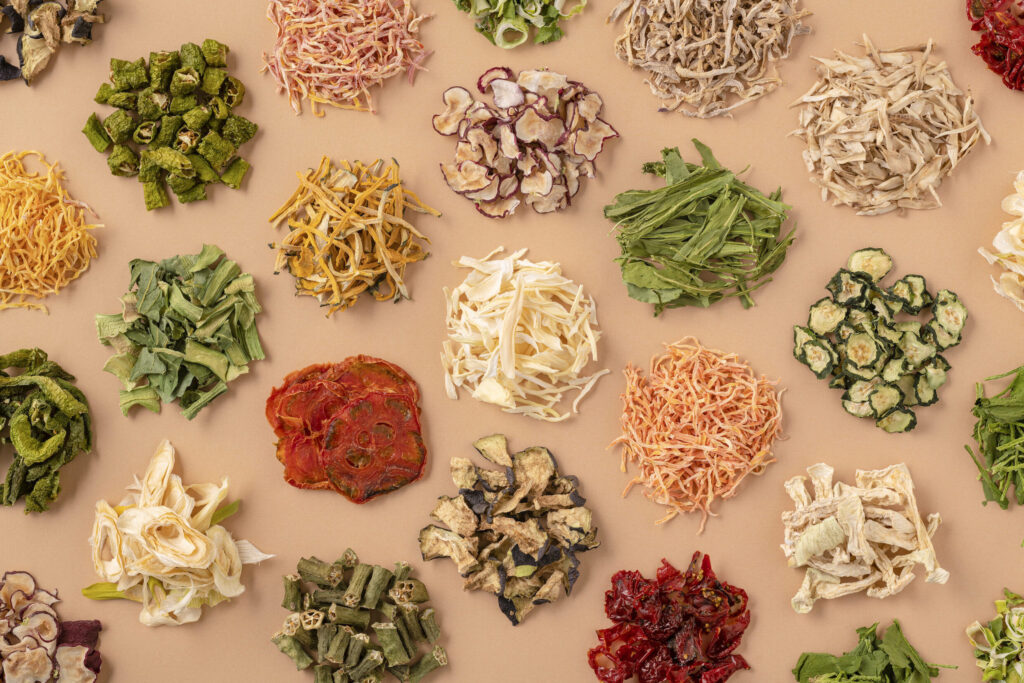
A product catalog that shows around 100 items we handle
Agriture, flexibly handling everything from small lots to large lots
- Available for purchase in small lots from 1 kg
- We handle heirloom vegetables from across Japan
- Dried fruit and herbs also supported
How to store yomogi powder and cautions when using it
Yomogi powder's life is its aroma and color. Let's check the storage method and points worth knowing when using it.
Storage method
Because yomogi powder absorbs moisture easily, put it in a sealable container or storage bag and store it in a cool dark place away from direct sunlight. If you won't use it for a long while, freezing is possible too. After opening, using it up promptly before the aroma fades is recommended.
Cautions when using it
Yomogi is a plant of the Asteraceae family. Those who have had allergy from Asteraceae plants like ragweed should, just in case, test from a small amount or consult a doctor. Those pregnant or breastfeeding should consult their regular doctor before drinking it or taking a large amount for peace of mind. For details, Does yomogi have side effects? Cautions for safe use.
Summary: master yomogi powder
Yomogi powder is a handy ingredient you can mix into dough or drinks with no rehydrating. With 1–2 teaspoons per 100 g of flour as a guide, it can be used widely — from Japanese sweets like kusa mochi and dango, to baked goods like cookies and muffins, to yomogi tea and lattes. Choose the particle size to match the use, and pick one with a vivid green and retained aroma. Store it sealed in a cool dark place and use it up before the aroma fades. With domestic dried yomogi and yomogi powder, enjoy a table with yomogi.
Frequently asked questions
Recommended reading
- Complete guide to using dried mugwort | From rehydrating to popular recipes and storage tips
- How to Make Mugwort Mochi with Dried Mugwort
- How to Make Mugwort Tea
- Dried mugwort (product page)
Download the product catalog
We will send the materials to your email address based on the information you provide.