How to tell apart assorted dried fruit for gifts and corporate novelties

Summary of this article
This article organizes how to evaluate assorted dried fruit from both the gift and corporate novelty perspectives. Even among 6-variety sets, some contain fruits with high raw material costs while others gain bulk with cheap items. The way to tell them apart is the order of the ingredient list. It covers how only 7 to 10% of the fresh fruit remains after drying, meaning more than 1kg of fresh fruit goes into a 100g bag; how citrus loses even more as seeds fall out; how vivid color and quality are separate matters; why high-sugar varieties are deliberately not chosen; how domestic additive-free products have a best-before period of about 6 months; how to choose according to season; checkpoints by recipient; how to read reviews and evaluate sellers; 4 conditions for distributing in bulk as a company; and how to decide between collecting retail products and creating an original assortment.
You cannot judge the contents of an assorted dried fruit set from the package photo alone. Even among sets labeled "6 varieties," some contain fruits with high raw material costs, while others gain bulk with inexpensive items.
The clues for telling them apart are on the back. By looking at the order of the ingredient list and the net content, you can see what plays the lead role and what makes up the volume.
This article covers how to see through the contents of an assortment, what to change depending on the recipient, and practical matters that are easily overlooked when giving gifts. It is written from the perspective of a dried fruit producer, so it offers a different viewpoint from ranking articles.
TOC
The contents of an assortment are determined by the composition ratio
Set products do not contain the same amount of every item. Price and satisfaction both change depending on how many grams are allocated to each fruit.
Some fruits are expensive and some are cheap
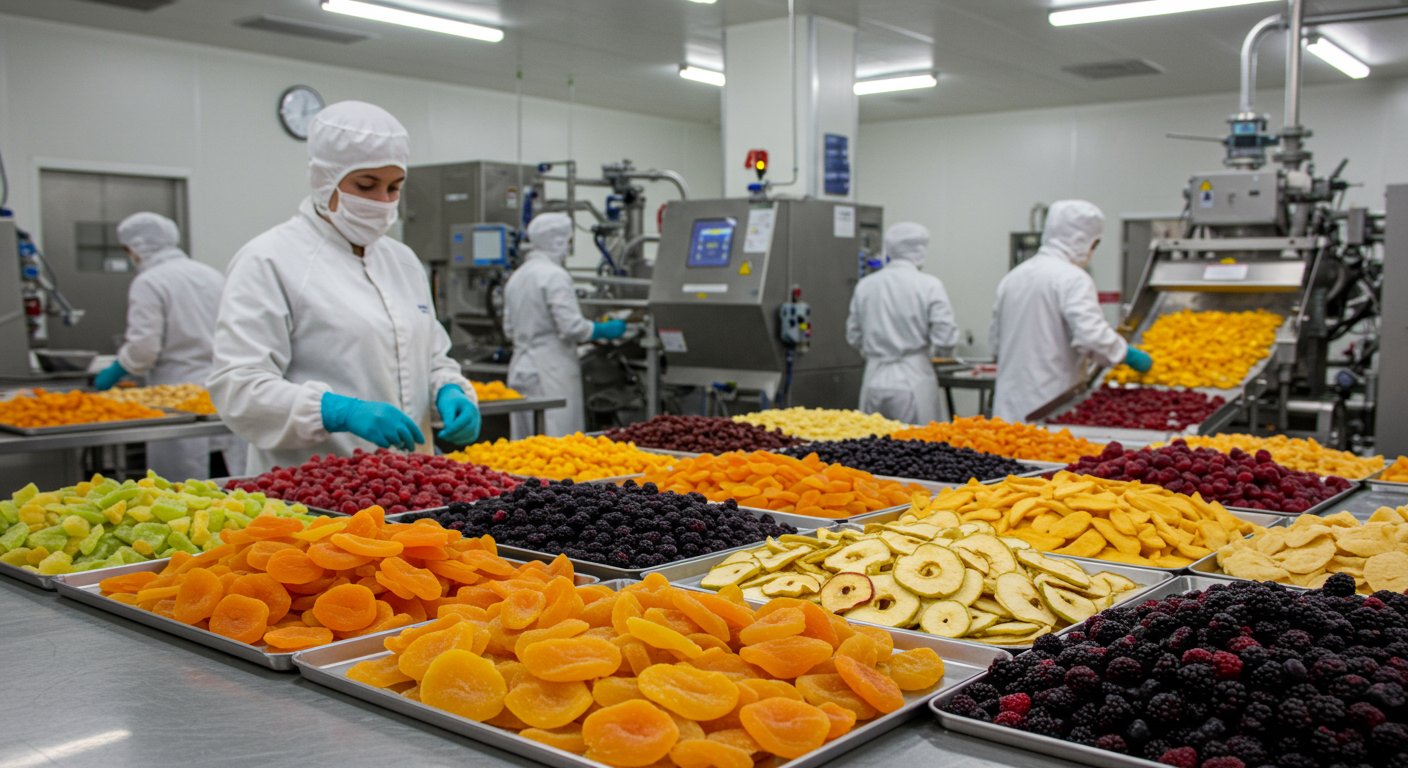
The cost of dried fruit is determined by how much fresh fruit is needed. Drying removes water, and the skin, core and seeds are also removed, so very little remains.
| Fresh fruit | Finished amount | |
|---|---|---|
| Per 100g of product | About 1 to 1.4kg | 100g |
| Per bag of product (60g) | About 600 to 850g | 60g |
About 7 to 10% remains after drying. That means more than 1kg of fresh fruit goes into a single 100g bag. This one point is the whole reason domestic sets are expensive.
With citrus, seeds fall out during drying, so even less remains. This is why yuzu and sudachi sets are relatively expensive.
On the other hand, imported sweetened products such as pineapple, papaya and raisins have low unit prices, so adding a lot of them does not affect the price. The cheaper the set, the higher the proportion of these fruits.
See through it with the order of the ingredient list
Ingredients must be listed in descending order of weight. By checking this, you can tell whether the fruit written large on the front of the package really plays the lead role.
- If the fruit in the product name appears near the end of the list, the actual amount is small
- If pineapple or papaya comes first, that is where the volume is coming from
- For sets with individual packs, the weight of each bag is often written on the back of the box
- A set that lists only the total net content does not disclose its breakdown
A set without a breakdown is not necessarily bad. But if you are giving it as a gift, a product where you can explain what is inside and how much is more reassuring.
Visual appeal and quality are separate matters
In stores and ranking articles, "vivid color and good appearance" is sometimes given as a reason for recommendation. However, the color of dried fruit also needs to be viewed the other way around.
Fruit darkens when dried
Apples, pears and bananas turn brown when left after cutting. The same happens during drying, so when made without additives, the color becomes more subdued.
| Appearance | Possible background | What to check |
|---|---|---|
| Vivid color close to fresh fruit | Color may be maintained with antioxidants or coloring agents | Whether sulfites or coloring agents appear in the ingredient list |
| Translucent and glossy | Possibly oil-coated or candied in sugar | Whether vegetable oil or sugar is listed |
| Subdued brown color | This happens naturally when finished without additives | Whether the ingredients are fruit only |
| White powder on the surface | A phenomenon where sugar from the fruit comes to the surface. Not a defect | Whether it is mentioned in the product description |
White powder is sometimes mistaken for mold, but it is sugar that has come to the surface, a phenomenon that can occur in dried fruit. A product that includes an explanation suggests the maker understands the product's condition.
No added sugar and additive-free are not the same
| Label | What it means | What may be included |
|---|---|---|
| No added sugar | No sugar has been added | Vegetable oil and antioxidants may be included |
| Additive-free | Which additives are excluded depends on the product | Cannot be judged without checking the label |
| Ingredients: fruit only | Nothing other than fruit is used | None |
The most reliable way is to check whether the ingredient list ends with only the name of the fruit. For the difference from sweetened types, see Differences between candied dried fruit and no-added-sugar types, which covers this in detail.
A product catalog that shows around 100 items we handle
Agriture, flexibly handling everything from small lots to large lots
- Available for purchase in small lots from 1 kg
- We handle heirloom vegetables from across Japan
- Dried fruit and herbs also supported
FOR BUSINESS
乾燥野菜を業務用でお探しですか
国産の野菜・果物を乾燥し、必要に応じて粉砕してお出ししています。扱っている品目は100種前後で、規格は 乾燥品の一覧・パウダーの一覧 に掲載しています。
少量でのご購入は、姉妹ブランドの通販サイト OYAOYA で承っています。
Why domestic sets are expensive
Even at the same volume, domestic sets can cost several times as much as imported ones. Knowing what lies behind the price difference helps you choose with confidence.
Differences in raw materials and labor add up
| Element | Domestically grown | Imported mass-market products |
|---|---|---|
| Price of fresh fruit | High. Specifying the variety raises it further | Sourced in bulk from low-cost growing regions |
| Added sugar | Often none, so sweetness depends on the fruit | Sugar is added to stabilize flavor and shelf life |
| Drying method | Choosing a method that preserves color and aroma raises costs | Uses methods suited to large-volume processing |
| Lot | Limited to the harvest season, and volumes are small | Large quantities can be secured year-round |
Products that are domestic with a specified variety can only be made during the harvest season. A single annual production run has to cover the whole year, so the corresponding inventory cost is also included in the price.
For the background to why there are so few domestic dried fruit options, see Why there are so few high-priced Japanese-grown dried fruits for an explanation. For a guide to market prices, see Dried fruit market prices for a summary.
Choose by season and nutrition
Dried products can be bought year-round, but the fruit they are made from has a harvest season. The shorter the time since processing, the more clearly the aroma remains.
Change the lead fruit with the season
| Timing | Fruit in season | Gift occasion |
|---|---|---|
| Spring | strawberry | New-life greetings, Mother's Day |
| Summer | Peach | Summer gifts (ochugen), summer greetings |
| Autumn | Apple, pear | Respect for the Aged Day, seasonal greetings |
| Winter | Satsuma mandarin, yuzu | Year-end gifts (oseibo), New Year greetings |
Giving a satsuma mandarin or yuzu set in winter ties the gift to the season and makes it memorable. Choosing with the season in mind is one way to give a gift meaning beyond its price.
What to look at in terms of nutrition
Drying fruit removes its water, so compared by the same weight, the sweetness tastes stronger than in fresh fruit. Because it is easy to eat, it is also a food where you tend to eat more than you intend.
- Sweetened products have sugar added to the sweetness of the fruit. Tell them apart by the label
- If the recipient is cutting back on sweets, no-added-sugar citrus is an easy choice
- Individual packs make it easy to decide how much to eat at a time, which is considerate to the recipient
- Sets that include nuts add oil. Check the recipient's preferences first
Some products use health-focused wording, but claims that assert specific benefits are an area that requires evidence. Checking the label for what the product is made of is more reliable.
Change how you choose depending on the recipient
Assortments are more often chosen as gifts than for personal use. The elements best avoided change depending on who you are giving them to.
Points to consider for each recipient
| Recipient | Selection criteria | What to avoid |
|---|---|---|
| People who are not fond of sweets | Citrus with some tartness. No added sugar | Sweetened types, sweet tropical fruits |
| Older people | Soft semi-dried fruit. Bite-sized | Hard crunchy types, large round slices |
| Families with small children | Individual packs that make portions easy to adjust | Sets with nuts. Products with unclear allergen labeling |
| People from overseas | Domestic products with a story about origin and variety | Generic products available anywhere |
| Workplace and business partners | Individually packed and shelf-stable at room temperature. Enough shelf life to spare | Products requiring refrigeration or that must be eaten soon after opening |
Sets that include nuts limit who you can give them to because of allergies. It is also reassuring to check whether the labeling can be read from outside the box.
It also depends on how it will be used
- For everyday use, prioritize a volume you can finish over a large variety
- For gifts, the appearance of the box and individual packs shapes the impression
- For cooking or baking, buying several single-fruit products is easier to use than an assortment
- For stockpiling, choose crunchy types with a long best-before date
When baking with a set, you may not have enough of the fruit you need while other fruits are left over. If the amount used is fixed, as with pound cake or granola, choosing single-fruit products avoids waste.
Practical points often overlooked when giving gifts
Checking the conditions from delivery until the fruit is eaten, before taste or appearance, reduces trouble. These are often not written on e-commerce product pages.
Best-before date and delivery conditions
| What to check | Why it matters |
|---|---|
| Remaining shelf life | About 6 months for domestic additive-free products. Even shorter for high-sugar or semi-dried types |
| Whether it ships at room temperature | If refrigeration is required, the recipient cannot receive it when away |
| Shelf life after opening | Gifts are not eaten all at once. Can you tell the recipient how to handle it after opening? |
| Availability of noshi and gift wrapping | The inscription changes with the season and occasion. Check availability in advance |
| Allergy Labeling | Whether nuts are included, and whether this can be read from the outer box |
Semi-dried fruit retains moisture, so its best-before date is shorter. Its softness is appealing, but if the gift will be given later, crunchy types are safer.
Domestic products without sugar last about 6 months. High-sugar fruits last even less. Imported products last over a year because they are candied in sugar to hold the moisture. In other words, additive-free products are at a disadvantage in shelf life. In some cases less than half the shelf life remains at the time of purchase, so check the date before choosing a gift.
Storage after delivery
- Avoid direct sunlight. Placing it by a window causes the color to fade
- After opening, close the zipper to keep moisture out
- Do not open immediately after taking it out of the refrigerator. Let it return to room temperature first
- With individually packed sets, finish opened bags first
Shelf life is determined by the amount of moisture. The softer the fruit, the shorter it keeps; the harder, the longer. For storage details, see How to store dried fruit for a summary. Recipients appreciate being told this information.
A product catalog that shows around 100 items we handle
Agriture, flexibly handling everything from small lots to large lots
- Available for purchase in small lots from 1 kg
- We handle heirloom vegetables from across Japan
- Dried fruit and herbs also supported
Where you buy changes satisfaction
Even with similar products, the sense of reassurance depends on whether the seller can explain the contents. For gifts in particular, choosing a product you can explain to the recipient makes things easier later.
How to read reviews
| Review content | How to interpret it |
|---|---|
| Hard, difficult to chew | A crunchy type. A matter of preference, not a defect |
| There was white powder on it | A phenomenon where sugar comes to the surface. Different from mold |
| The color was duller than expected | The natural state for additive-free products. If anything, a useful indicator |
| It was damp when I opened the bag | A storage or packaging issue. Avoid if it appears repeatedly |
| The amount differs from the photo | Check the stated net content. The composition ratio may not be disclosed |
Not all low ratings indicate a problem. Comments about texture and color come with products made without additives. Look at whether the same defect is mentioned repeatedly.
Evaluating the seller
- Whether the product page lists the ingredients and a breakdown of the net content
- Whether the growing region and variety are stated, rather than stopping at just "domestic"
- Whether white powder and color changes are explained in advance
- Whether the remaining days until the best-before date are stated
- Whether contact information is clear
Shops where the maker sells directly can often explain even the processing conditions, and their answers to questions are specific.
Subscriptions and seasonal clubs are also an option
Once you find a product you like, you can also choose to have it delivered on a subscription. With a seasonal club where the contents change with the harvest, you can try different fruits each season.
For gifts as well, delivering in several shipments is sometimes more appreciated than giving one large set at once. It reduces the burden of storage, and the recipient is reminded of you each time a delivery arrives.
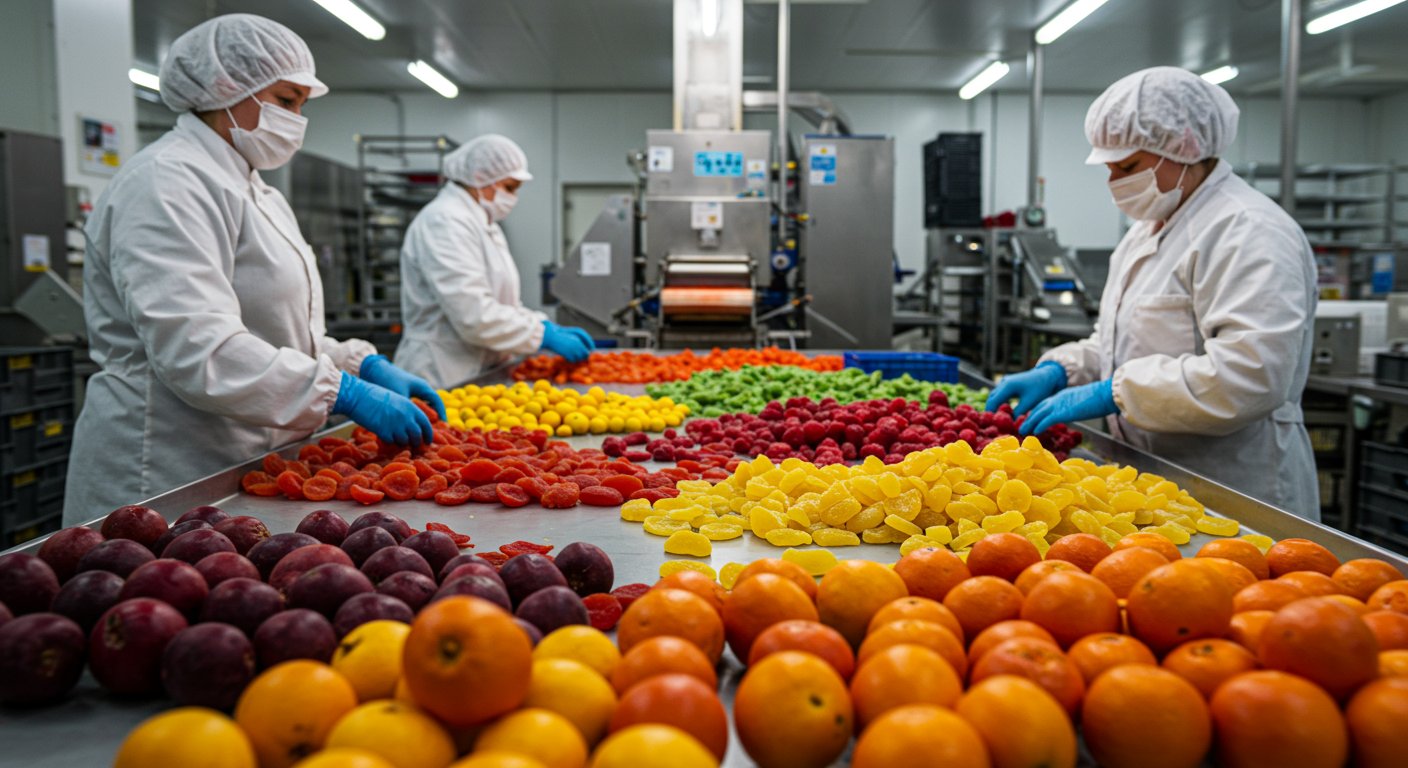
Main fruits available as domestic products
Unlike imports, domestic dried fruit comes in a limited range of items. Knowing what is available makes it easier to evaluate the contents of a set.
Characteristics of each fruit
| Fruit | Flavor and texture | Suitable occasions |
|---|---|---|
| apples | Balanced sweetness and tartness. Easy for anyone to eat | Everyday use, for children |
| pear | Delicate, refined sweetness. Retains a crisp texture | Gifts, for people who are not fond of sweets |
| mikan | Pronounced tartness. Slicing into rounds with the peel gives a strong aroma | A palate cleanser, added to black tea |
| Yuzu and sudachi | The aroma is the star. A small amount makes a strong impression | Added to dishes and drinks |
| strawberry | Sweet-tart and vibrant. Attractive in appearance | Gifts, confectionery |
| Peach | Rich sweetness and aroma | Gifts, eating as is |
With citrus, the impression changes depending on whether the peel is used. Leaving the peel brings out a stronger aroma, but also bitterness. For eating as is, flesh-centered pieces are better; for cooking and drinks, pieces with peel are better.
Sweet varieties are not always tastier
It may seem surprising, but drying high-sugar fruit can concentrate the sweetness too much and leave an unpleasant aftertaste. To avoid this, makers deliberately choose varieties that are not overly sweet.
High-sugar fruit also tends to change color during storage. If a product page lists even the variety name, the fruit may have been chosen with this in mind. Whether the variety, not just the growing region, is listed is one useful indicator.
Citrus dried without sugar also retains its fresh aroma well. In sweetened products, the sweetness of the sugar comes to the fore, so if you want to enjoy the aroma, choosing products whose only ingredient is fruit lets you notice the difference.
Choose rare fruits for their scarcity
Mango and pineapple are common in stores, but dried domestic pear and yuzu are not widely distributed. The heavy yield loss is reflected directly in the unit price, so domestic products do not circulate much in the market. For gifts, this rarity becomes a source of value.
For what Agriture does, see our company introduction page. Within the group, dried pears made from Nijisseiki pears grown in Kyotango, Kyoto Prefecture, are sold under the brand A Letter from the Pear. It is a product made without sugar or additives, using a specified variety. For a list of the domestic dried fruit we handle, see this page.
When preparing corporate gifts or novelties in bulk
The criteria for choosing change between giving one gift personally and distributing hundreds as a company. Before taste or appearance, the question is whether the product is in a form that can be handed out.
4 essential conditions for items to distribute
| Condition | Why it matters | What to check |
|---|---|---|
| Individually packed | Large bags can't be handed out, and anything that leaves hands sticky is best avoided | Portion size per unit and packaging format |
| Can be distributed at room temperature | If it needs refrigeration, storage and distribution become unmanageable | Storage instructions on the label |
| A comfortable best-before date | You need enough remaining shelf life counting back from the distribution date | Domestic, additive-free products last about 6 months. Higher sugar content shortens this further |
| Allergen labeling that is easy to read | You don't know who will receive it. Take particular care with products containing nuts | Whether the label is visible from the outer packaging |
The best-before date is the point most often overlooked. Dried fruit can be kept at room temperature, but domestic products made without sugar only last about 6 months. For events where several months pass between ordering and distribution, less than half the shelf life may remain by the time the goods arrive.
Buy retail products or build your own original set?
| Buying retail products | Building an original set | |
|---|---|---|
| Quantity | Limited to available stock. You may not get enough in one place | Can be produced to the quantity you need |
| Contents | No choice. The mix ratio is fixed | You can specify the items and the blend |
| Labeling | Varies by maker. Cannot be standardized | Can be standardized under your company name |
| Best-before date | Only whatever shelf life remains when you buy | Secured from the date of manufacture |
| Unit price | Easy for small quantities | Goes down as the quantity increases |
Once you reach several hundred units, producing your own is easier to manage than buying retail products. Being able to set the labeling and best-before date yourself makes a real difference. The relationship between quantity and unit price is laid out in Food novelty items that can be made from a small lot of 500 units.
Domestic products get a different reaction when handed out
Dried fruit gets a good reaction as a giveaway. The difference from imported products is easy to see, and being able to talk about the growing region and variety helps. Products made from off-spec fruit can also convey the values of the company handing them out.
Beyond the fruit itself, turning it into secondary products that make use of its sweetness widens the range of ideas, such as coffee made with apples or ice cream made with mandarin chips. Because the fruit's own sweetness comes through without added sugar, you can extend into sweets and drinks while staying additive-free.
For details on how to choose, see How to choose dried fruit for corporate novelty items; when combining with nuts, see How to use nuts for corporate novelty items; and for the practicalities of labeling and best-before dates, see Best-before dates and food labeling for food novelty items for more.
If you're putting together your own assortment
Instead of a ready-made set, you can buy individual items and put them together yourself. You can tailor it to the recipient and explain what's inside.
- Narrow it down to 3 to 5 kinds. Too many and each gets too small a share to be memorable
- Pick one star item. Choose an unusual fruit or one whose growing region you can talk about
- Spread the colors. Adding orange, red or yellow pulls the whole set together
- Don't make all the sweetness too similar. Include one with some tartness
- If adding nuts, package them separately. Moisture migrates and the texture suffers
For detailed precautions when combining with nuts, see How to combine dried fruit and nuts for more.
For larger quantities, see the previous chapter. Our work on novelty items; if you want to commission manufacturing, see Dried fruit OEM and OEM and wholesale services.
FOR BUSINESS
乾燥野菜を業務用でお探しですか
国産の野菜・果物を乾燥し、必要に応じて粉砕してお出ししています。扱っている品目は100種前後で、規格は 乾燥品の一覧・パウダーの一覧 に掲載しています。
少量でのご購入は、姉妹ブランドの通販サイト OYAOYA で承っています。
Summary
When choosing an assortment, look at the back of the package rather than the photo. Ingredients are listed in descending order of weight, so if the fruit in the product name appears near the end, there isn't much of it.
Bright color is no proof of quality. Fruit naturally darkens as it dries. The most reliable clue is whether the ingredient list consists only of fruit names.
If you're giving it as a gift, first check three things: the remaining shelf life, whether it can be shipped at room temperature, and the allergen labeling. Semi-dried fruit in particular has a short shelf life, so choose by counting back from when you plan to give it.
Related article: How to combine dried fruit and nuts・How to store dried fruit・Dried fruit market prices。
Download the product catalog
We will send the materials to your email address based on the information you provide.
- A Complete Guide to Storing Dried Fruit: 10 Tips to Make It Last
- 10 Ways to Enjoy Dried Apple: Variations That Make the Most of Its Nutrition