
What are Hiroshima’s heirloom vegetables? Features, season, and ways to eat the 21 regional varieties (Hiroshima-na, Kannon green onion, ao kuwai) explained

The heirloom vegetables of Hiroshima Prefecture are varieties passed down in the central part of Hiroshima City in the lower Ota River, the Bingo region of Fukuyama and Onomichi, and the southern foot of the Chugoku Mountains such as Akiota Town. Hiroshima Prefecture selected native varieties as “Hiroshima Treasure Vegetables” in 2009 to 2011 (prefecture official). Currently, the Hiroshima Agricultural Gene Bank and local JA and growers handle the preservation of native varieties. The Japan Traditional Vegetable Promotion Association organizes 22 of Hiroshima Prefecture's regional varieties, and this article explains the 14 main items in detail in the main text.
We introduce native varieties that support Hiroshima's food culture, including “Hiroshima-na,” one of Japan's three great pickling greens alongside takana and nozawana; “Kannon negi” of the Kannon district; Fukuyama's vivid blue-purple “ao-kuwai”; Hiroshima beni-tade; Gion parsley; and Hiro kanran.
TOC
The definition of "heirloom vegetable" and the scope of this article
There is no nationwide unified definition of “heirloom vegetables,” and criteria differ by certifying body. We lay out the criteria of the main certifying bodies.
| Certifying body | Main criteria |
|---|---|
| Kyoto Prefecture "Kyoto Heirloom Vegetables" | Cultivation history predating the Meiji era, covering the entire prefecture |
| Osaka Prefecture "Naniwa Heirloom Vegetables" | Cultivated within Osaka Prefecture from roughly 100 or more years ago |
| Nara Prefecture "Yamato Heirloom Vegetables" | Production in this prefecture confirmed from before the war |
| Nagano Prefecture "Shinshu Heirloom Vegetable Certification System" | Provenance, food culture, and varietal traits (cultivation before the 1955–1964 period) |
| Hiroshima Prefecture | In 2009 to 2011, native varieties were selected as “Hiroshima Treasure Vegetables” (prefecture official). Currently, the Hiroshima Agricultural Gene Bank, JA, and growers handle preservation |
In this article, of the 22 Hiroshima Prefecture varieties organized by the Japan Heirloom Vegetable Promotion Association, the main text covers the 14 main items (7 leafy greens, 5 root and tuber vegetables, 2 pungent condiments), and varieties with limited distribution and closely related items are introduced in the “Other local specialty varieties” section at the end.
What are Hiroshima's heirloom vegetables? The food culture of Aki and Bingo
| Area | Representative items | Regional characteristics |
|---|---|---|
| Hiroshima City (Aki) | Hiroshima-na, Kannon negi, Otafuku shungiku, Yaga chisha, ha-gobo, uguro daikon, Sasaki sangatsuko daikon, Fukaimo wase-imo, Gion parsley, Hiroshima beni-tade, Ogawara okra, Yaga uri, Kawauchi spinach, Nukushina spinach | The urban outskirts of the lower Ota River and the northern mountains |
| Bingo (Fukuyama, Onomichi) | Kinusaya snow peas (Innoshima), aodai cucumber (Fukuyama), ao-kuwai (Fukuyama), Tajiri squash (Tajiri, Fukuyama), wakegi (Mukaishima, Onomichi) | The Bingo Plain, the Numakuma Peninsula, and the islands of the Seto Inland Sea |
| Kure, Higashihiroshima | Hiro kanran (Kure), Higashihiroshima ao-nasu | The Seto Inland Sea coast and the Saijo Basin |
| Akiota | Ota kabu | The southern foot of the Chugoku Mountains |
Items concentrate in the central part of Hiroshima City and in Asaminami and Asakita wards, and distinctive items also line up in the Bingo region of Fukuyama and Onomichi. Kannon negi, Hiroshima-na, and Gion parsley bear place names within Hiroshima City—an item makeup tied to the food culture of each region.
Historical background — Hiroshima-na and Japan's three great pickling greens
- Hiroshima-na — There are several theories about its origin (note by the Ministry of Agriculture, Forestry and Fisheries). According to JA materials, between the Edo and Meiji periods Saiji Kihara of Kawauchi Village obtained seeds of Kannonji hakusai near Kannonji in Kyoto, brought them home, and improved them by crossing with local Chinese cabbage. In 1933 (Showa 8) it was named and exhibited as Hiroshimana at the Hiroshima Prefectural Industrial Promotion Hall, and Hiroshimana-zuke became established as one of Japan's three great pickled greens alongside takana and nozawana
- Kannon negi — a tender leaf onion with much white part, cultivated in the Kannon district of Nishi Ward, Hiroshima City
- Ao-kuwai — a vivid blue-purple native arrowhead cultivated in Fukuyama
- Hiro kanran — a cabbage-type native variety cultivated in Hiro Town and Gohara Town, Kure, characterized by tender leaves and sweetness
FOR BUSINESS
乾燥野菜を業務用でお探しですか
国産の野菜・果物を乾燥し、必要に応じて粉砕してお出ししています。扱っている品目は100種前後で、規格は 乾燥品の一覧・パウダーの一覧 に掲載しています。
少量でのご購入は、姉妹ブランドの通販サイト OYAOYA で承っています。
A list of Hiroshima's 14 main heirloom vegetables and a seasonal calendar
Leafy greens
| Item | Features | Growing region | Season |
|---|---|---|---|
| Hiroshima-na | One of Japan's three great pickling greens; a type of hakusai | Asaminami Ward, Kawauchi, Hiroshima City | November to January |
| Kannon negi | A tender leaf onion with much white part | Kannon, Nishi Ward, Hiroshima City | October to February (peak in winter) |
| Otafuku shungiku | A large-leaf, thick-fleshed type with round leaves | Asaminami and Asakita wards, Hiroshima City | October to March |
| Yaga chisha | A kaki-chisha-type native variety with red leaf tips and fine curling | Yaga, Higashi Ward, Hiroshima City | Spring (April to June), autumn (September to November) |
| Ha-gobo | Aroma and a crisp texture | Asakita and Asaminami wards, Hiroshima City | Late January to early April |
| Hiro kanran | Tender leaves, sweetness | Hiro Town and Gohara Town, Kure | Winter |
| Nukushina spinach | Thick-stemmed and pale green | Nukushina, Higashi Ward and Iimuro, Asakita Ward, Hiroshima City | November to early January |
Root and tuber vegetables
| Item | Features | Growing region | Season |
|---|---|---|---|
| Uguro daikon | The same thickness from base to tip, and short | Hiroshima City | October–December |
| Sasaki sangatsuko daikon | Round, sweet, and low in moisture | Choraku-ji, Asaminami Ward, Hiroshima City | February to March |
| Ota kabu | Plant of 2 to 3 kg; leaves large and broad | Akiota Town, Yamagata District | Early to mid-March |
| Ao-kuwai | Spherical; outer skin a vivid blue-purple | Fukuyama | November–December |
| Fukaimo wase-imo | Small taro with fine-textured flesh | Fukawa, Asakita Ward, Hiroshima City | Late August to late September |
Pungent condiments
| Item | Features | Growing region | Season |
|---|---|---|---|
| Gion parsley | Finely serrated, vividly colored, and thick-fleshed | Gion, Asaminami Ward, Hiroshima City | Year-round (season October to March) |
| Hiroshima beni-tade | Vivid crimson; aroma and pungency | Asaminami Ward, Hiroshima City | Year-round |
A product catalog that shows around 100 items we handle
Agriture, flexibly handling everything from small lots to large lots
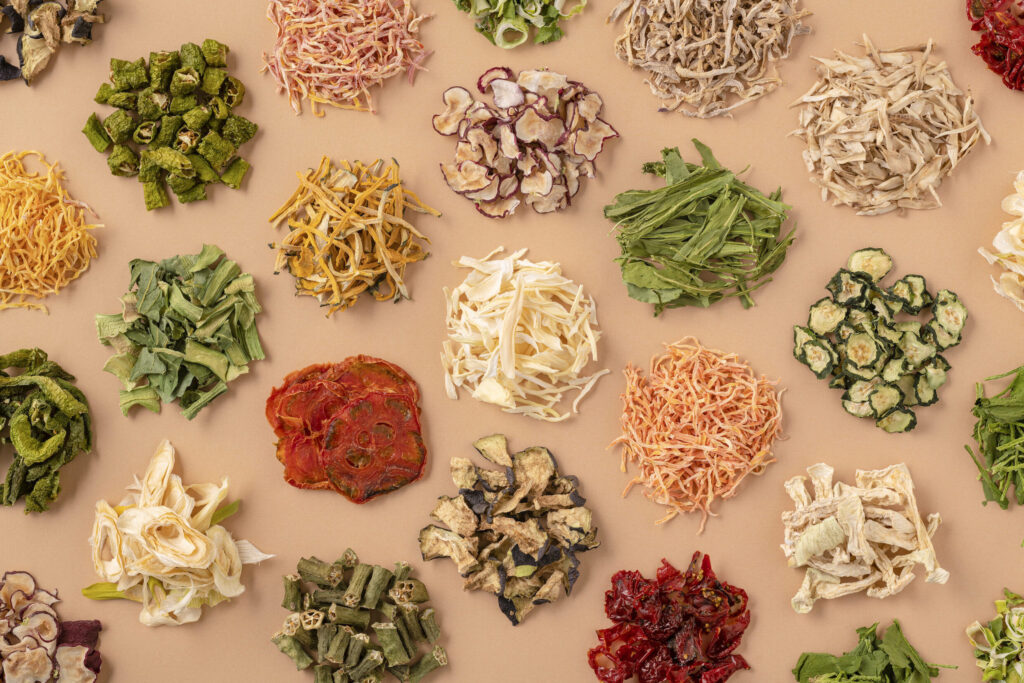
- Available for purchase in small lots from 1 kg
- We handle heirloom vegetables from across Japan
- Dried fruit and herbs also supported
Characteristics and preparation of 7 representative Hiroshima heirloom vegetables
Hiroshima-na — one of Japan's three great pickling greens
| Season | November to January |
| Growing region | Asaminami Ward and Kawauchi area, Hiroshima City |
| Well-suited dishes | Hiroshima-na pickles, pickles, rice balls, stir-fries |
Hiroshimana is a leafy vegetable of the Brassicaceae family related to Chinese cabbage, known as one of Japan's three great pickled greens alongside takana and nozawana. There are several theories about its origin (note in the Ministry of Agriculture, Forestry and Fisheries' Uchi no Kyodo Ryori). According to JA materials, between the Edo and Meiji periods a young man named Saiji Kihara from Kawauchi Village (now Asaminami Ward, Hiroshima City), on his way home from a pilgrimage to Honganji in Kyoto, obtained seeds of Kannonji hakusai near Kannonji (Kita Ward, Kyoto City), brought them home and created a new variety by crossing them with local Chinese cabbage. The name Hiroshimana took hold after it was named and exhibited at the Hiroshima Prefectural Industrial Promotion Hall in 1933 (Showa 8).
During the high-growth period of the 1960s, the agricultural cooperative began selling Kawauchi-grown Hiroshima-na pickles as a gift item, and they took hold as a specialty representing Hiroshima's winter. Hiroshima-na pickles are also listed in the Ministry of Agriculture, Forestry and Fisheries' “Our Local Cuisine” as a rice-ball filling (Hiroshima-na musubi).
Kannon negi — the tender leaf onion of the Kannon district, Hiroshima City
| Season | October to February (peak in winter) |
| Growing region | Kannon district, Nishi Ward, Hiroshima City |
| Well-suited dishes | Condiment, okonomiyaki, soups, hot pot |
Kannon negi is a native leaf onion cultivated in the Kannon district of Nishi Ward, Hiroshima City, with a somewhat greater white part and a very tender leaf. It has taken root in the local food culture as an essential condiment for Hiroshima's specialty “okonomiyaki.”
In addition to being a condiment, it is used as an ingredient in soups, hot pots, and stir-fries. Its season is October to February, with the peak in winter. It is distributed at JA farm stands and supermarkets within Hiroshima City (Hiroshima City official).
Ao-kuwai — Fukuyama's vivid blue-purple arrowhead
| Season | November–December |
| Growing region | Fukuyama |
| Well-suited dishes | Osechi cuisine, simmered dishes, deep-frying, fukumeni |
Ao-kuwai is a spherical arrowhead cultivated in Fukuyama, characterized by an outer skin that turns a vivid blue-purple. Used as an auspicious item in New Year's osechi cuisine and simmered dishes, Fukuyama is known nationally as one of the main growing regions for arrowhead.
In simmered dishes and fukumeni, the contrast of the blue-purple skin and white flesh stands out, and deep-frying brings out its texture and slight bitterness. In its season of November to December, it is distributed at JA farm stands and department stores within Fukuyama.
Sasaki sangatsuko daikon — a round, sweet native spring daikon
| Season | February to March |
| Growing region | Choraku-ji, Asaminami Ward, Hiroshima City |
| Well-suited dishes | Simmered dishes, grated daikon, pickles, salads |
Sasaki sangatsuko daikon is a native round daikon cultivated in the Choraku-ji district of Asaminami Ward, Hiroshima City, characterized by sweet, low-moisture flesh. A rare spring daikon shipped over the short early-spring window of February to March, it resists falling apart even when simmered and also suits grated daikon and pickles.
Locally enjoyed as a native spring daikon, it is distributed at farm stands in Asaminami Ward, Hiroshima City, during a limited period.
Hiro kanran — the tender native cabbage of Hiro Town, Kure
| Season | Winter |
| Growing region | Hiro Town and Gohara Town, Kure |
| Well-suited dishes | Salads, okonomiyaki, asazuke, cabbage rolls |
Hiro kanran is a cabbage-type native variety cultivated in Hiro Town and Gohara Town, Kure, characterized by tender, sweet leaves. “Kanran” is the Japanese name for cabbage, and because it has been passed down in the Hiro district, it was given the name “Hiro kanran.”
Its raw tenderness comes alive in salads and asazuke, and it is a variety easy to handle in okonomiyaki and cabbage rolls as well. It is distributed at farm stands within Kure.
Gion parsley — the thick-fleshed parsley of the Gion district, Hiroshima
| Season | Year-round (peak October to March) |
| Growing region | Gion district, Asaminami Ward, Hiroshima City |
| Well-suited dishes | Garnish for dishes, soup, stir-fries, pasta |
Gion parsley is a native parsley cultivated in the Gion district of Asaminami Ward, Hiroshima City, characterized by fine serration, vivid color, and thick leaves. It can be shipped year-round, but its season peaks from October to March. In addition to being used to add color to dishes at restaurants and traditional Japanese restaurants within Hiroshima City, it is also distributed for home use at JA farm stands.
Beyond chopping it and sprinkling it over dishes, you can enjoy its thick texture even added to pasta or soup.
Hiroshima beni-tade — a vivid crimson condiment
| Season | Year-round |
| Growing region | Asaminami Ward, Hiroshima City |
| Well-suited dishes | Garnish for sashimi, sushi condiment, adding color to dishes |
Hiroshima beni-tade is a native tade cultivated in Asaminami Ward, Hiroshima City, characterized by a vivid crimson color, strong aroma, and a sharp pungency. A traditional condiment vegetable long used in Japanese cuisine as a garnish for sashimi and a sushi condiment, Hiroshima's beni-tade is known for its vivid coloring.
It plays the role of raising the class of a dish as a garnish for sashimi, and it is used year-round at traditional Japanese restaurants and sushi shops. At home, small packs are available at supermarkets within Hiroshima City.
How to buy Hiroshima's heirloom vegetables and tips for storage
| Item | Main sources | Timing |
|---|---|---|
| Hiroshima-na | JA farm stands within Hiroshima City; Hiroshima-na pickles via nationwide mail order and department stores | November to January (pickles year-round) |
| Kannon negi | JA farm stands and supermarkets in Kannon, Nishi Ward, Hiroshima City | October to February (peak in winter) |
| Ao-kuwai | JA farm stands and department stores within Fukuyama | November–December |
| Sasaki sangatsuko daikon | Farm stands in Asaminami Ward, Hiroshima City | February to March |
| Hiro kanran | JA farm stands within Kure | Winter |
| Gion parsley | Farm stands in the Gion district, Asaminami Ward, Hiroshima City | Year-round (peak October to March) |
| Hiroshima beni-tade | Wholesale to supermarkets and traditional Japanese restaurants within Hiroshima City | Year-round |
Mail order / hometown tax to outside the prefecture
- Hiroshima-na pickles — distributed year-round as a Hiroshima City hometown tax donation gift. Also available by mail order from long-established pickle shops such as Yamatoyo Co., Ltd.
- Ao-kuwai — shipped in winter as a Fukuyama hometown tax donation gift
- Kannon negi — shipped during the shipping season as a Hiroshima City hometown tax donation gift
- Processed products — Hiroshima-na pickles, processed products of Hiroshima beni-tade, frozen Gion parsley, and the like are distributed year-round
A product catalog that shows around 100 items we handle
Agriture, flexibly handling everything from small lots to large lots
- Available for purchase in small lots from 1 kg
- We handle heirloom vegetables from across Japan
- Dried fruit and herbs also supported
Efforts to protect Hiroshima's heirloom vegetables
| Efforts | Details |
|---|---|
| Hiroshima Agricultural Gene Bank | Handles seed preservation and information dissemination of native varieties within Hiroshima Prefecture |
| Preserving the Hiroshima-na growing region | The Kawauchi area of Asaminami Ward, Hiroshima City, cooperates with JA and pickle makers |
| Promotion of Fukuyama's ao-kuwai | The city, JA, and growers promote it as a winter-limited brand |
| Passing on the food culture of Hiroshima-na pickles | Listed in MAFF's “Our Local Cuisine.” Distributed nationwide as rice balls and pickles |
FOR BUSINESS
乾燥野菜を業務用でお探しですか
国産の野菜・果物を乾燥し、必要に応じて粉砕してお出ししています。扱っている品目は100種前後で、規格は 乾燥品の一覧・パウダーの一覧 に掲載しています。
少量でのご購入は、姉妹ブランドの通販サイト OYAOYA で承っています。
FAQ
Other regional specialty varieties
Of the regional varieties organized by the Japan Heirloom Vegetable Promotion Association, we introduce as local specialties the varieties not covered in the main text (because the association's list is updated from time to time, the number of items varies slightly by the time of compilation).
| Item | Growing region | Features |
|---|---|---|
| Kinusaya snow peas (Innoshima) | Innoshima, Onomichi | The shipping season is late October to early May. Snow peas with a crisp texture |
| Yaga uri | Yaga, Naka Ward, Hiroshima City | Late July to early August. Tender flesh, green with yellow vertical stripes |
| Aodai cucumber | Fukuyama | June to October. A large white-spine cucumber about 30 cm long and just under 1 kg |
| Tajiri squash | Tajiri Town, Fukuyama | Around December. A flat, large native squash with strong crepe-like wrinkles |
| Higashihiroshima ao-nasu | Higashihiroshima | July. A green eggplant with a beautiful green skin and fine-textured flesh |
| Ogawara okra | Ogawara Town, Asakita Ward, Hiroshima City | Early July to early September. A native okra of 8-to-9-sided shape with few hairs |
| Wakegi (Kihara wase, banse No. 1) | Mukaishima Town, Onomichi | October to December. Strongly cold-hardy, with tender flesh and a mild aroma |
| Kawauchi spinach | Kawauchi, Asaminami Ward, Hiroshima City | A native spinach passed down in the same Kawauchi district as Hiroshima-na |
Summary
Hiroshima's heirloom vegetables are 22 varieties spanning Hiroshima City, Fukuyama, Kure, Higashihiroshima, Akiota, and Onomichi, centered on Hiroshima-na (one of Japan's three great pickling greens), Kannon negi, ao-kuwai, Sasaki sangatsuko daikon, Hiro kanran, Gion parsley, and Hiroshima beni-tade. Items that reflect Hiroshima's food culture line up, including Hiroshima-na, improved from a Kyoto origin in the Meiji period; Kannon negi, tied to okonomiyaki culture; and ao-kuwai, established as an auspicious New Year's item.
Hiroshima's native varieties are distributed by season—Yaga uri, aodai cucumber, and Ogawara okra in summer; Hiroshima-na, Kannon negi, ao-kuwai, and Hiro kanran in autumn and winter; and Sasaki sangatsuko daikon, Ota kabu, and ha-gobo in early spring. Through hometown tax donations and farm stands, you can bring the ingredients of Aki and Bingo to your family table.
References / information sources
- Japan Heirloom Vegetable Promotion Association, “Hiroshima Prefecture”
- Ministry of Agriculture, Forestry and Fisheries, “Our Local Cuisine: Hiroshima-na pickle rice balls / Hiroshima-na musubi”
- Yamatoyo Co., Ltd., “Hiroshima-na pickles”
- National Agriculture and Food Research Organization Genebank "Native Variety Database"
Related articles
- Heirloom vegetables of Japan
- Kyoto Heirloom Vegetables
- Heirloom vegetables of Okayama
- Heirloom vegetables of Shimane
- Heirloom vegetables of Tottori
- Heirloom vegetables of Hyogo
Download the product catalog
We will send the materials to your email address based on the information you provide.
- What are Okayama’s heirloom vegetables? Features, season, and ways to eat the 12 varieties (including GI Tsurajima burdock and Bizen black-skin kabocha) explained
- What are Yamaguchi’s heirloom vegetables? Features, season, and ways to eat the 37 varieties organized by the association (Iwakuni lotus root, Hagi tamage eggplant, Iwakuni red daikon) explained
Author of this article
Related articles
-
 Okinawa island vegetables: individualistic vegetables nurtured by a subtropical climate
 -
 Kaga vegetables: Kanazawa brand vegetables where tradition lives on
 -
 The appeal of Kansai heirloom vegetables | Specialties of Naniwa, Kyoto, and Yamato thoroughly explained
 -
 Kyoto heirloom vegetables: Kyoto specialties with a long history
 -
 A list of heirloom vegetables of the 8 prefectures of Kyushu and Okinawa|A thorough introduction to characteristics, growing regions, and seasons
 -
 Know the heirloom vegetables of Edo Tokyo | The city’s vanishing food culture
 -
 They'll make you smile! The fun names of heirloom vegetables and their origins
 -
 5 cases and strategies that succeeded in branding heirloom vegetables