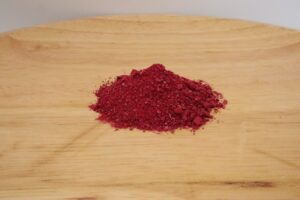
Onion powder

Onion powder is a versatile base ingredient made by drying and fine-milling onion, spreading sweetness and umami evenly into soup powders, seasonings, processed meats, and dressings. The onion-derived sweetness and glutamate-family umami are finished to a size that disperses easily into liquids and powders. At Agriture, Dried onion, we powder it by adding a fine-powdering step.
while raw-material-form onion suits "soups and simmered ingredients where you want to keep texture and the sense of the ingredient," onion powder suits uses where you want to "spread it evenly as a sweetness and umami base." In soup powders, seasonings, and processed-meat products such as hamburg steak and sausage, onion powder has long been adopted as a standard base ingredient.
TOC
Three points of care in Agriture's onion powder
Because onion powder is used often as a base ingredient, a clean finish free of scorched or pungent notes decides its quality. At Agriture, we manage everything from pretreatment through milling and packaging at our own processing facility, aiming for a finish with little lot-to-lot variation.
1. Low-temperature drying that produces no scorched notes
Onion is high in sugars, and if the temperature is too high the Maillard reaction advances, producing scorched notes and bitterness. Our top priority is to draw out the moisture slowly at low temperature and preserve the onion's natural sweetness. The benchmark is a state where, the moment you taste the powder, you sense an honest sweetness rather than a scorched note.
2. A finish with controlled pungent components
The way the allyl-sulfide-family pungent components in raw onion remain changes with the drying conditions. We can adjust to the use: a sharp finish that keeps the pungency for seasonings and processed meats, and a mild finish with subdued pungency for soups and dressings. It is a versatile base ingredient that works as the foundation for soup powders, sauces, and seasonings.
A standard ingredient in processed meats
In hamburg steak, sausage, and ham, onion powder is a standard ingredient long in use. It makes moisture control easier than using raw onion and suits mass-production lines.
Dispersibility in liquids and powders
Even dissolved in soups or sauces, the graininess is hard to notice, and it disperses evenly in powder mixes. It can be used as is, with no reconstitution needed.
Pungency can be adjusted up or down
You can choose from a sharp type (for seasonings and processed meats) or a mild type (for soups and dressings). We adjust the drying conditions to the use.
Pre-blending supported
Premixes combining it with salt, pepper, spices, and other vegetable powders are possible. It suits one-stop OEM for seasonings and soup powders.
Use together with the ingredient-shape version
Using it together with dried onion lets you have both sweetness and umami (powder) and the sense of the ingredient (raw-material form).
Product specifications (commercial)
Basic specifications at the prototype stage are as follows. Purchase lot, lead time, and packaging format are worked out through individual consultation.
| Item | Details |
|---|---|
| Product name | Onion powder |
| Raw material | Onion (domestic) |
| Shape | Fine powder (milled dried onion) |
| Appearance | Pale cream to beige fine powder |
| Aroma | An aroma with the sweetness distinctive of onion; choose sharp to mild by use |
| Net content | Individual quote according to use and lot |
| Best-before date | About 6 months from the shipping date |
| Storage method | Avoid high temperature, high humidity, and direct sunlight; after opening, seal and store in a cool, dark place |
| Processing plant | Our own processing plant within Kyoto Prefecture |
| Minimum prototype lot | From 1 kg of raw material |
Customization support
| Item | What we support |
|---|---|
| Aroma type | Sharp type (for seasonings and processed meats) / mild type (for soups and dressings) |
| Pre-blending | Premix with salt, pepper, spices, and other vegetable powders supported |
| Blend design | Composite recipes with vegetables and dashi such as cabbage, celery, and carrot powder |
| Packaging form | Commercial bulk, large bags (for processed-meat factories), small pouches and sticks, canisters |
| OEM productization | Rollout to soup powders, seasonings, dressings, processed meats, and sauces |
For uses where you want to keep texture and a sense of ingredient presence, the raw-material form is recommended
For uses where you want to keep the onion's texture, such as ingredients in soups, curries, and simmered dishes, uses where you want to keep the onion's texture are suited to dried onion (raw-material form). Its strength is that it can be rehydrated and used directly as an ingredient.
Commitments to variety, grower, and growing region
Onion is a representative vegetable of the lily family (Amaryllidaceae), grown year-round across the country. As a powder raw material, you can select varieties to match the use, such as sweetness-forward Hokkaido autumn-winter onions, early-harvest onions with strong pungency, and yellow onions with excellent storability.
Main growing region
| Growing region | Features |
|---|---|
| Hokkaido | Top onion producer nationwide. Strong sweetness, suited to heated uses |
| Saga Prefecture | Main production area for new onions. Mild pungency, early-harvest varieties |
| Hyogo Prefecture (Awaji Island) | A brand production area for high-sugar onions. The sweetness stands out even in powder |
| Aichi Prefecture | Main production area for storage onions. Stable year-round supply is possible |
Using varieties and lineages differently
Hokkaido autumn-winter onions (Super Kitamomiji, etc.) grow sweeter when heated and are ideal for soups and sauces. Awaji Island brand onions have high sugar content and suit the base of premium products. Pungent varieties are used for seasonings and processed meats with a finish that keeps the pungency.
Powdering technology and quality control
Onion powder is high in sugars, and the way scorched notes appear changes greatly with the drying conditions. At Agriture, we manage everything from prep through packaging consistently, holding down lot-to-lot variation.
Suppressing scorched notes with low-temperature drying
As the temperature rises, sugars and amino acids react to produce scorched notes and bitterness. Drawing out the moisture slowly at low temperature keeps the onion's natural, clean sweetness in the powder.
Adjusting pungent components
The residual amount of allyl-sulfide-family pungent components changes with the drying conditions. We set the conditions by use: keep them for processed-meat and seasoning uses, and suppress them for soup and dressing uses.
Moisture-resistant packaging
Because onion powder is high in sugars and absorbs moisture easily, the finished powder is moved promptly into moisture-proof packaging. Commercial bulk uses moisture-proof bags, and large bags for processed-meat factories use an oxygen absorber alongside to preserve quality.
TIP: Formulation design in processed meats
In hamburg-steak mixtures, kneading in 1 to 2% onion powder relative to the ground meat sets up a sweetness and umami base even if you skip the step of sauteing raw onion. In sausage and ham, 0.5 to 1% gives an onion-derived richness; in chicken meatballs and paste products, 1 to 3% gives a solid onion presence. Moisture control is easier than with raw onion, and the stable yield on mass-production lines is valued on the vendor side.
Use cases and adoption examples
Onion powder has long been adopted as a versatile base for processed foods. We organize the uses we're often consulted about into five categories.
1. Soup powders and instant foods
- Umami base for onion soup and consomme
- Instant miso soup and Japanese-style soup
- Cup ramen and ramen soup
- Blends for freeze-dried foods
2. Seasonings and spices
- All-purpose seasoning blended with salt, pepper, and garlic
- A flavor for popcorn and nuts
- Yakiniku sauce and dry rubs
- Spice mixes for BBQ
3. Processed meats and paste products
- Base for hamburg steak and meatballs
- Flavoring for sausage, ham, and bacon
- Filling for gyoza and shumai
- Kneading into tsukune and satsumaage
4. Dressings and sauces
- Onion dressing and Caesar dressing
- Steak sauce and hamburg-steak sauce
- BBQ sauce and tomato ketchup
- An accent in mayonnaise and tartar sauce
5. Seasonings and base ingredients
- Vegetable base for curry roux and stew roux
- Dashi packs and all-purpose seasonings
- Adding richness to retort foods
- Umami reinforcement for reduced-salt seasonings
For composite vegetable-base design, we can also propose combinations with Cabbage powder・Celery powder. For a composite dashi with mushrooms, Enoki powder・Maitake powder please also refer to.
How to use the powder and design blends
The raw-material form requires a reconstitution step, but the powder's advantage is that it can be formulated directly into powdered goods. We organize the operational points specific to powders.
Basics of use
- Soup: dissolve 1 to 3 g per 200 ml
- Processed meat: knead in 1 to 2 g per 100 g of ground meat
- Dressing: add 1 to 2 g per 100 g of oil plus vinegar
- Seasoning: blend with salt and pepper at 1:1 to 3:1
- Curry roux: blend in 3 to 5 g per 100 g of roux
Example blend formulas
- Onion soup mix: onion 40% + powder 15% + skim milk 25% + salt and dextrin 20%
- All-purpose seasoning: onion 30% + salt 25% + pepper 15% + garlic 10% + herbs 20%
- Processed-meat mix: onion 40% + celery 20% + carrot 15% + spices and salt 25%
- Dressing base: onion 30% + vinegar powder 20% + sugar 25% + salt, pepper, and fats 25%
How to store
- Before opening: store in a cool, dark place at room temperature, away from heat, humidity, and direct sunlight
- After opening: because it readily absorbs moisture, transfer it to a resealable bag or airtight container; refrigerated storage is also fine
- The best-before date is roughly 6 months from the shipping date. After opening, use it up within 1–2 months as a guide
- If lumps form, sift through a tea strainer before use to disperse it evenly
Related articles and other vegetable raw materials
These are the vegetable powders and related ingredients handled at Agriture. Make use of them when designing soup powders, seasonings, and processed meats.
- Dried onion: raw-material form for soups and simmered ingredients
- Cabbage powder: for okonomiyaki flour and soup powders
- Celery powder: for Western-style soups and processed meats
- Enoki powder: mushroom dashi and reduced-salt design
- Maitake powder: functional mushrooms and composite dashi
Product catalog showing the items we handle
Flexible support from small lots to large lots
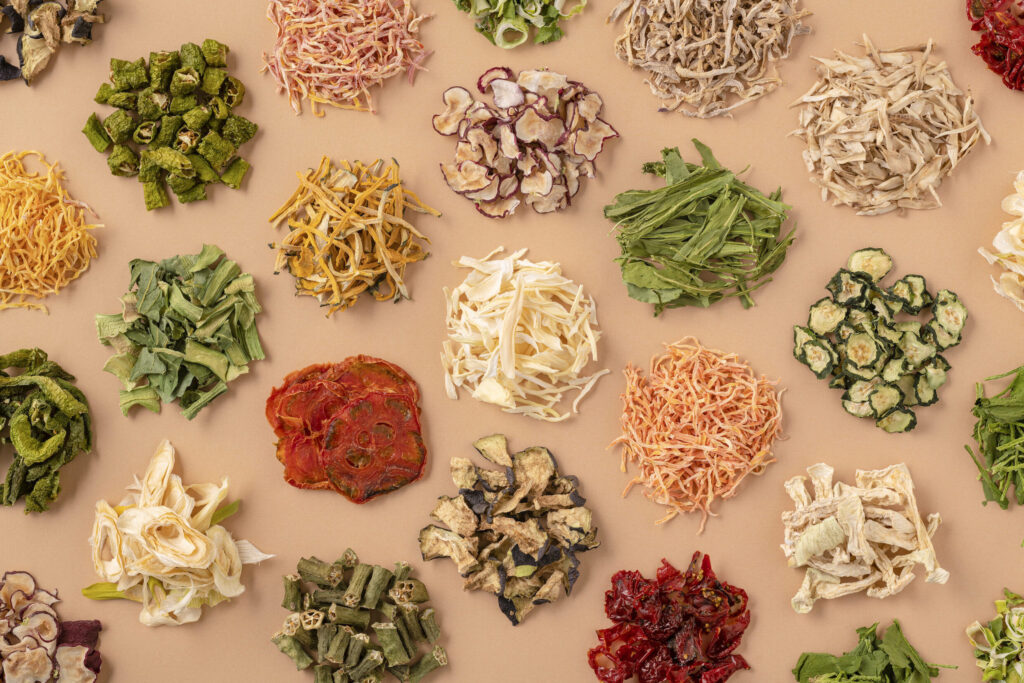
- Sold in small lots from 1 kg
- Handling heirloom vegetables from across Japan
- Dried fruits and herbs also supported
Frequently asked questions
How do I use dried onion (raw-material form) and onion powder differently?
The raw-material form suits uses where you want to keep texture and the sense of the ingredient -- as an ingredient in soups, curries, simmered dishes, and stir-fries. The powder suits uses where you want to spread a sweetness and umami base evenly -- soup powders, seasonings, processed meats, and dressings. In some cases both are used together in the same recipe to have both depth of sweetness and the sense of the ingredient.
Which type is good for processed meats?
Is a finish without scorched notes possible?
Yes. By finishing with low-temperature drying, we can produce a powder with a clean sweetness free of scorched notes and bitterness. Raising the temperature to shorten drying time tends to produce scorched notes, so we design for a slow finish that prioritizes quality. Aroma can be checked at the prototype stage. After hearing the specifications, formulation, lot, and schedule of the intended finished product, we propose a quote and lead time on an individual basis. You can consult us end to end, through to finished products such as soup powders, seasonings, processed meats, and dressings.
Please tell me the best-before date and how to store it.
The best-before period is about six months from the shipping date. Before opening, store at room temperature in a cool, dark place away from high heat, humidity, and direct sunlight. Because onion powder is high in sugars and absorbs moisture easily, after opening transfer it to a zip bag or airtight container and use it up within one to two months as a guide. Using an oxygen absorber alongside is also effective.
Can you handle premixes (pre-blending)?
Yes. You can also consult us about an operation where we blend salt, pepper, spices, other vegetable powders, and dashi powder to your specified formulation and deliver a powder close to the finished product. In seasoning, all-spice, and soup-powder OEM, delivery as a premix simplifies the user's production line.