
What are Aichi’s heirloom vegetables? Features, season, and ways to eat the 37 items explained

Aichi's heirloom vegetables are a group of native varieties handed down amid the terrain diversity of the Nobi Plain, the Chita Peninsula, the Atsumi Peninsula, and the Mikawa mountain area, within the warm climate of Owari and Mikawa. Under the “Aichi Heirloom Vegetables” system that Aichi Prefecture independently designates (four conditions: cultivated since around 1955 / originating in Aichi Prefecture / seeds or seedlings still exist / seeds or produce are obtainable), 37 varieties were certified as of March 2023, including Miyashige daikon, Horyo daikon, Moriguchi daikon, Hekinan gosun carrot, Koshizu negi, and Yanamaru satoimo — native varieties that are the roots of today's mainstream varieties.
This article organizes 36 of the 37 varieties (the vegetables) by category and explains 7 representative ones in detail. We cover native varieties handed down in Aichi — “Miyashige daikon,” the root of the aokubi daikon; “Moriguchi daikon,” the raw material for moriguchi-zuke; “Hekinan gosun carrot,” red to the core; and “Aichi wase fuki,” a representative of Japan-native butterbur.
TOC
The definition of "heirloom vegetable" and the scope of this article
There is no nationwide unified definition of “heirloom vegetables,” and criteria differ by certifying body. We lay out the criteria of the main certifying bodies.
| Certifying body | Main criteria |
|---|---|
| Kyoto Prefecture "Kyoto Heirloom Vegetables" | Cultivated in Kyoto since before the Meiji era; unique to Kyoto |
| Osaka Prefecture "Naniwa Heirloom Vegetables" | Cultivated within Osaka Prefecture from roughly 100 or more years ago |
| Akita Prefecture "Akita Heirloom Vegetables" | Cultivated within the prefecture from before the Showa 30s |
| Yamagata Prefecture "Yamagata Heirloom Vegetables" | Cultivated within the prefecture from before Showa 20 |
| Aichi Prefecture, “Aichi Heirloom Vegetables” | Cultivated since around 1955 / originating in Aichi Prefecture / seeds or seedlings still exist / seeds or produce are obtainable (four conditions) |
Aichi Prefecture independently designates varieties as “Aichi Heirloom Vegetables,” with 37 certified as of March 2023. In this article, the main text covers 36 of the 37 certified varieties (the vegetables), while “Atsumi Earl's melon,” which is strongly positioned as a fruit, and “mana,” treated independently by Nagakute City outside the prefectural certification, are introduced separately in the “Other Local Specialty Varieties” section at the end of the article.
What Are Aichi's Heirloom Vegetables? The Food Culture of Owari, Chita, and Mikawa
| Area | Representative items | Regional characteristics |
|---|---|---|
| Owari (Nagoya, Kiyosu, Ama, Ichinomiya, Inazawa, Konan, Tsushima, Fuso, Oguchi, Nagakute) | Miyashige daikon, Horyo daikon, Moriguchi daikon, Tokushige daikon, Yagoto gosun carrot, Aichi honnaga nasu, aodai kyuri, Aichi chirimen kabocha, Ochiuri makuwa uri, Kindawara makuwa uri, karimori, wase karimori, Nozaki No. 2 hakusai, Nozaki nakate cabbage, Aichi taibansei cabbage, mochina/shogatsuna, Odaka na, matsuna, Jiromaru spinach, Koshizu negi, jurokusasage, hime sasage, shirobana sengoku fujimame, Tsuchida kabocha | The fertile alluvial land of the Nobi Plain. The most varieties |
| Chita (Tokai, Obu, Minamichita, Chita) | Kinoyama gosun carrot, Aichi shirowase onion, Chita No. 3 onion, Yabu wase onion, Aichi wase fuki | The warm climate and sandy soil of the Chita Peninsula |
| Mikawa (Okazaki, Toyohashi, Tahara, Atsumi, Hekinan, Kariya, Shinshiro, Shitara, Toei, Toyone, Anjo) | Hekinan gosun carrot, tengu nasu, Yanamaru satoimo, First tomato, wase togan, Hosshoji negi, Atsumi shirobana kinusaya endo | The Mikawa Bay coast and the mountainous area of Oku-Mikawa |
The Owari region stands out by number of varieties, with native varieties of daikon, carrot, and the uri family especially concentrated. Chita leans toward onions and wase fuki, and Mikawa toward the eggplant and satoimo of the Mikawa mountain area and the horticultural vegetables of the Atsumi Peninsula — the mix of varieties splits by geography.
Historical Background — Aichi, Home to Many Roots of Today's Mainstream Varieties
- Miyashige daikon — Originating in the Miyashige district of Kiyosu City. The root of today's mainstream “aokubi daikon,” from which both spring and winter daikon derive
- Horyo daikon — Originating in the Horyo district of Ama City. A representative shirokubi-daikon lineage said to be the root of Nerima daikon and others
- Moriguchi daikon — A super-long-rooted daikon from Fuso Town (120–130 cm long, up to over 180 cm), the raw material for “moriguchi-zuke,” a pickle representing Aichi and Gifu
- Hekinan gosun carrot — A fixed-line gosun carrot bred in Hekinan City before the war. Red to the core and highly fragrant
- Aichi wase fuki — A Japan-native fuki (butterbur). A winter–spring specialty of Chita and Owari
FOR BUSINESS
乾燥野菜を業務用でお探しですか
国産の野菜・果物を乾燥し、必要に応じて粉砕してお出ししています。扱っている品目は100種前後で、規格は 乾燥品の一覧・パウダーの一覧 に掲載しています。
少量でのご購入は、姉妹ブランドの通販サイト OYAOYA で承っています。
Aichi's Heirloom Vegetables: A List of the Main 36 Varieties and Seasonal Calendar
Daikon, Carrot, Eggplant, Uri, Kabocha
| Item | Category | Growing region | Season |
|---|---|---|---|
| Miyashige daikon | Daikon (aokubi) | Kiyosu City | November–December |
| Horyo daikon | Daikon (shirokubi) | Ama City | Garden pea |
| Moriguchi daikon | Daikon (super-long-rooted) | Fuso Town | December to January |
| Tokushige daikon | Daikon (thick-short) | Midori Ward, Nagoya City | December to January |
| Yagoto gosun carrot | Carrot (gosun) | Yagoto, Nagoya City | December to March |
| Hekinan gosun carrot | Carrot (gosun, red) | Hekinan City | December to February |
| Kinoyama gosun carrot | Carrot (gosun) | Obu City | Garden pea |
| Aichi honnaga nasu | Eggplant (long type) | Ama City | July–August (prefecture official) |
| Tengu nasu | Eggplant (large, 400–700 g) | Shitara Town, Toei Town, Toyone Village | July–October |
| Aodai cucumber | Cucumber (thick) | Owari region | June–July |
| First tomato | Tomato | Toyohashi, Atsumi | January to March |
| Aichi chirimen kabocha | Kabocha (crinkled skin) | Oharu Town, Obu City | June–July |
| Tsuchida kabocha | Kabocha (large) | Tsuchida, Kiyosu City | July–October |
| Ochiuri makuwa uri | Makuwa melon | Konan City | July–August |
| Kindawara makuwa uri | Makuwa uri (golden) | Konan City, Anjo City | July–August |
| Karimori | Uri (for pickling) | Kiyosu City, Oguchi Town | July–August |
| Wase karimori | Uri (pale green) | Owari, Kariya, Hekinan | July–August |
| Wase togan | Togan (small) | Anjo City | July–August |
Hakusai, Cabbage, Leafy Vegetables
| Item | Category | Growing region | Season |
|---|---|---|---|
| Nozaki No. 2 hakusai | Hakusai (cylindrical) | Nagoya City, Owari | November–December |
| Nozaki nakate cabbage | Cabbage (pale green) | Owari, Mikawa | November–December, June–July |
| Aichi taibansei cabbage | Cabbage (large-head, storage) | Nagoya City | April (prefecture official) |
| Mochina / Shogatsuna | Leafy vegetable (komatsuna type) | Owari region | December to January |
| Odaka na | Leafy vegetable (90 cm tall) | Odaka, Midori Ward, Nagoya City | December to January |
| Matsuna | Leafy vegetable (pine-needle shape) | Jimokuji, Ama City | December to January |
| Jiromaru spinach | Spinach (Oriental type) | Inazawa City | November to February |
Negi, Onion, Beans, and Others
| Item | Category | Growing region | Season |
|---|---|---|---|
| Koshizu negi | Negi (both leaf and blanched) | Tsushima, Konan, Ichinomiya | October to March |
| Hosshoji negi | Negi | Hosshoji-cho, Okazaki City | November–March |
| Aichi shirowase onion | Onion (flat type) | Tokai City | February to April |
| Chita No. 3 onion | Onion (extra-large) | Obu, Minamichita | June–July |
| Yabu wase onion | Onion (flat type) | Tokai, Chita | February–March (prefecture official) |
| Yanamaru satoimo | Satoimo (round, chewy) | Shinshiro City | September–March |
| Aichi wase fuki | Fuki (Japan-native) | Chita, Inazawa | October–May |
| Atsumi shirobana kinusaya endo | Snow pea | Atsumi | April to June |
| Jurokusasage | Cowpea (long pod) | Aisai City, Inazawa City | July–August |
| Hime sasage | Cowpea (red-purple tip) | Owari region | July–August |
| Shirobana sengoku fujimame | Hyacinth bean | Jimokuji, Ama City | July–August |
A product catalog that shows around 100 items we handle
Agriture, flexibly handling everything from small lots to large lots
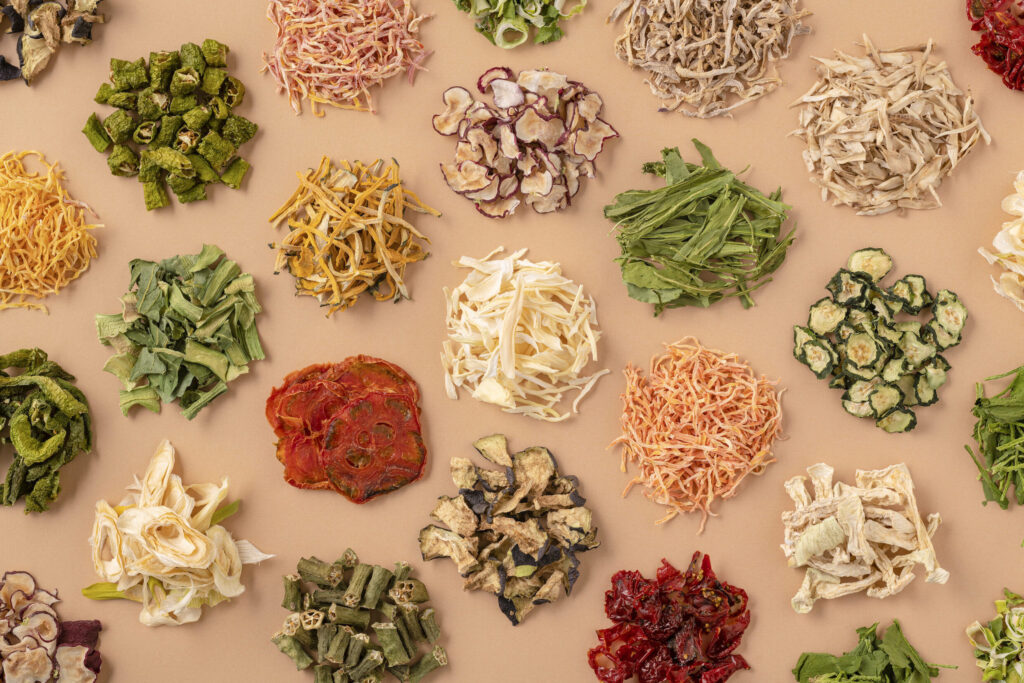
- Available for purchase in small lots from 1 kg
- We handle heirloom vegetables from across Japan
- Dried fruit and herbs also supported
The Characteristics and Ways to Eat 7 Representative Aichi Heirloom Vegetables
Miyashige Daikon — The Root of Today's Aokubi Daikon
| Season | November–December |
| Growing region | Miyashige district, Kiyosu City |
| Well-suited dishes | Simmered dishes, pickles, grated, salad |
Miyashige daikon is an aokubi-type daikon grown in the Miyashige district of Kiyosu City since the Edo period, and is a native variety said to be the root of today's mainstream “aokubi daikon.” Its strong points are a length of 40–45 cm, a shape with a green neck and a white tip, and a strong sweetness. It is a variety long handed down within Owari's food culture.
Simmered, its sweetness stands out; grated or in salad, it has a mild, low-pungency flavor that is easy to eat even raw. It ships from farm stands in Kiyosu City in November–December.
Moriguchi Daikon — The Super-Long-Rooted Pickling-Only Daikon
| Season | December to January |
| Growing region | Fuso Town, Niwa District |
| Well-suited dishes | Moriguchi-zuke (sake-lees pickle), lees pickle |
Moriguchi daikon is a super-long-rooted daikon about 120–130 cm long and 2–3 cm in diameter grown in Fuso Town (the long ones reach over 180 cm). Grown in the sandy loam of the Kiso River basin, it supports the pickle culture of Aichi and Gifu as the raw material for the sake-lees pickle “moriguchi-zuke.” It circulates nationwide as a Nagoya specialty.
Not suited to raw eating, the classic is a sake-lees pickle taking over a year to steep. It is generally distributed year-round as a processed product (moriguchi-zuke).
Hekinan Gosun Carrot — The Fixed-Line Gosun Carrot Red to the Core
| Season | December to February |
| Growing region | Hekinan City |
| Well-suited dishes | Simmered dishes, kinpira, juice, salad |
Hekinan gosun carrot (prefecture official name: Hekinan senko gosun carrot) is a fixed-line gosun carrot bred in Hekinan City before the war. It is distinguished by a vivid red color to the core, and a strength of fragrance and sweetness not found in ordinary orange carrots. The sandy loam along Kinuura Bay produces this coloring and texture.
In simmered dishes the red cut face shows beautifully, and in kinpira, juice, and salad its high fragrance comes alive. In season December–February, it circulates at farm stands in Hekinan City and supermarkets in Aichi and Gifu.
Koshizu Negi — The Aichi Native Negi Using Both Leaf and Blanched Parts
| Season | October to March |
| Growing region | Tsushima City, Konan City, Ichinomiya City |
| Well-suited dishes | Hot pot, sukiyaki, soups, condiment |
Koshizu negi is a native negi grown in Tsushima City, Konan City, and Ichinomiya City, with a character intermediate between the deep-rooted negi of Kanto and the leaf negi of Kansai. Both the green leaf part and the blanched part are tender and both can be eaten — that's its distinguishing feature. Heating brings out a strong sweetness.
In hot pot and sukiyaki its sweetness stands out, and it's an all-purpose negi that also works as a condiment. In season October–March, it circulates at JA farm stands in the Owari region.
Yanamaru Satoimo — Shinshiro City's Chewy Small Taro
| Season | September–March |
| Growing region | Shinshiro City |
| Well-suited dishes | Simmered dishes, imoni, dengaku, koromokatsugi |
Yanamaru satoimo is a small, round taro grown in the Yana district of Shinshiro City, distinguished above all by a chewy stickiness and tenderness. The clay soil of the Mikawa mountain area and the climate of its paddy-field zone have nurtured this texture.
Simmered, it holds its shape well, and in dengaku or kinukatsugi its texture stands out. Shipped over a long period from September through the following March, it is a variety used on Aichi's autumn–winter table.
First Tomato — The Thin-Skinned, Firm-Fleshed Tomato of the Atsumi Peninsula
| Season | January to March |
| Growing region | Toyohashi City, Atsumi region |
| Well-suited dishes | Salad, caprese, sandwiches |
First tomato is a traditional tomato variety grown in winter and spring on the Atsumi Peninsula. Thin-skinned with firm flesh, it has a well-balanced sweetness and acidity. The Atsumi Peninsula's warm climate and sandy soil support this flavor, giving it a texture different from today's mainstream Momotaro-type tomatoes.
In thin-sliced salads and caprese the flesh's texture comes alive, and used as a sandwich filling it releases little moisture, making it easy to handle. In season January–March, it can be spotted at farm stands in Toyohashi and Tahara and at some Tokyo supermarkets.
Aichi Wase Fuki — The Japan-Native Winter–Spring Fuki
| Season | October–the following May |
| Growing region | Chita region, Inazawa City |
| Well-suited dishes | Simmered dishes, tsukudani, kyarabuki, fuki miso |
Aichi wase fuki is a lineage of Japan-native fuki that can be shipped early. Grown in the Chita region and Inazawa City, its strong points are a vivid green color, strong fragrance, and tender stalks. Shipping over a long period from October through the following May is also one of Aichi's strengths.
With wide uses — simmered dishes, tsukudani, kyarabuki, fuki miso — it is indispensable to Aichi's spring table. Available at JA farm stands in Chita and Inazawa, it is also popular as a hometown-tax return gift.
How to Buy Aichi Heirloom Vegetables and Tips for Storing Them
| Item | Main sources | Timing |
|---|---|---|
| Miyashige daikon | JA farm stand in Kiyosu City | November–December |
| Moriguchi daikon | JA farm stand in Fuso Town (moriguchi-zuke year-round) | December to January |
| Hekinan gosun carrot | JA farm stand in Hekinan City | December to February |
| Koshizu negi | JA farm stands in Tsushima, Konan, Ichinomiya | October to March |
| Yanamaru satoimo | JA farm stand in Shinshiro City | September–March |
| First tomato | Farm stands in Toyohashi and Tahara | January to March |
| Aichi wase fuki | JA farm stands in Chita and Inazawa | October–May |
Mail order / hometown tax to outside the prefecture
- Moriguchi-zuke — Distributed year-round from long-established pickle shops in Aichi. Available nationwide as a Nagoya souvenir
- Yanamaru satoimo — Shipped in autumn–winter as a Shinshiro City hometown-tax return gift
- First tomato — Shipped in winter–spring as a Toyohashi/Tahara hometown-tax return gift
- Processed products — Karimori pickles, frozen Jiromaru spinach, tsukudani of Aichi wase fuki, and more, distributed year-round
A product catalog that shows around 100 items we handle
Agriture, flexibly handling everything from small lots to large lots
- Available for purchase in small lots from 1 kg
- We handle heirloom vegetables from across Japan
- Dried fruit and herbs also supported
Efforts to Protect Aichi Heirloom Vegetables
| Efforts | Details |
|---|---|
| The “Aichi Heirloom Vegetables” Prefectural Certification System | Operated independently by Aichi Prefecture. 37 varieties certified as of March 2023 |
| The Aichi Heirloom Vegetables Promotion Council | A collaborative body of the prefecture, JA, producer groups, restaurants, and processors |
| Revival Projects | Re-establishing production of varieties on the verge of disappearing, such as Miyashige daikon, Horyo daikon, and Yanamaru satoimo |
| Regional branding | JA actively promotes moriguchi-zuke, Hekinan gosun carrot, Koshizu negi, and others |
FOR BUSINESS
乾燥野菜を業務用でお探しですか
国産の野菜・果物を乾燥し、必要に応じて粉砕してお出ししています。扱っている品目は100種前後で、規格は 乾燥品の一覧・パウダーの一覧 に掲載しています。
少量でのご購入は、姉妹ブランドの通販サイト OYAOYA で承っています。
FAQ
Other regional specialty varieties
Among the “Aichi Heirloom Vegetables” certified items, Atsumi Earl's melon, strongly positioned as a fruit, and mana, which Nagakute City has independently positioned as a heirloom vegetable despite being outside the prefectural certification, are introduced here as local specialty varieties.
| Item | Category | Growing region | Features |
|---|---|---|---|
| Mana | Leafy vegetable (cut-leaf) | Nagakute City | Not certified under Aichi Prefecture's “Aichi Heirloom Vegetables.” A leafy vegetable that Nagakute City independently positions as a heirloom vegetable |
| Atsumi Earl's melon | Muskmelon (fruit) | Atsumi, Tahara City | A muskmelon with green skin and a fine net pattern. A gift-use melon grown in the warm climate of the Atsumi Peninsula |
Summary
The 37 Aichi heirloom vegetables are a group of native varieties handed down across the three regions of Owari, Chita, and Mikawa. Miyashige daikon (root of the aokubi daikon), Horyo daikon (root of the shirokubi daikon), Hekinan senko gosun carrot (a representative of the senko/deep-red line), and others — lineages that are the roots of today's mainstream varieties are all here.
Winter brings Miyashige daikon, Moriguchi daikon, Hekinan gosun carrot, and Koshizu negi; spring brings First tomato; summer brings Aichi honnaga nasu, aodai kyuri, and karimori; autumn brings Aichi wase fuki and Yanamaru satoimo — Aichi's native varieties can be enjoyed through the four seasons. Through hometown-tax and farm stands, you can bring the food culture of Owari and Mikawa to your home table.
References / information sources
- Japan Traditional Vegetables Promotion Association, “Aichi Prefecture” — Information on the 37 certified varieties
- Aichi Prefecture, “Aichi Heirloom Vegetables” — The prefecture's official certification-system page
- National Agriculture and Food Research Organization Genebank "Native Variety Database"
Related articles
- Heirloom vegetables of Japan
- Kyoto Heirloom Vegetables
- Hida-Mino Heirloom Vegetables (including Moriguchi daikon)
- Shizuoka's Heirloom Vegetables
- Shinshu's Heirloom Vegetables
- Heirloom vegetables of Naniwa
Download the product catalog
We will send the materials to your email address based on the information you provide.
- What are Shizuoka’s heirloom vegetables? Features, season, and ways to eat the roughly 45 items explained
- What are Mie’s heirloom vegetables? Features, season, and ways to eat the 6 + 2 selected items explained
Author of this article
Related articles
-
 Okinawa island vegetables: individualistic vegetables nurtured by a subtropical climate
 -
 Kaga vegetables: Kanazawa brand vegetables where tradition lives on
 -
 The appeal of Kansai heirloom vegetables | Specialties of Naniwa, Kyoto, and Yamato thoroughly explained
 -
 Kyoto heirloom vegetables: Kyoto specialties with a long history
 -
 A list of heirloom vegetables of the 8 prefectures of Kyushu and Okinawa|A thorough introduction to characteristics, growing regions, and seasons
 -
 Know the heirloom vegetables of Edo Tokyo | The city’s vanishing food culture
 -
 They'll make you smile! The fun names of heirloom vegetables and their origins
 -
 5 cases and strategies that succeeded in branding heirloom vegetables