
What are Shizuoka’s heirloom vegetables? Features, season, and ways to eat the roughly 45 items explained

Shizuoka's heirloom vegetables are a group of varieties handed down amid diverse terrain — Mt. Fuji, the Southern Alps, the Izu Peninsula, the Makinohara plateau, and the area around Lake Hamana — within the mild maritime climate of the Kuroshio. The Japan Traditional Vegetable Promotion Association recognizes about 44 items, including Shizuoka specialties such as Orido nasu, Mikatahara bareisho, Mishima bareisho (GI), wasabi, and Kuno ha-shoga.
This article sorts the 38 vegetable-type items among the roughly 44 by category and gives a detailed look at 7 representatives. It introduces Shizuoka's heirloom varieties — Orido nasu tied to Tokugawa Ieyasu, the Meikwin-type, GI-registered Mishima bareisho, wasabi with 400 years of history, and Kuno ha-shoga known for early shipping.
TOC
The definition of "heirloom vegetable" and the scope of this article
There is no nationwide unified definition of “heirloom vegetables,” and criteria differ by certifying body. We lay out the criteria of the main certifying bodies.
| Certifying body | Main criteria |
|---|---|
| Kyoto Prefecture "Kyoto Heirloom Vegetables" | Cultivated in Kyoto since before the Meiji era; unique to Kyoto |
| Osaka Prefecture "Naniwa Heirloom Vegetables" | Cultivated within Osaka Prefecture from roughly 100 or more years ago |
| Akita Prefecture "Akita Heirloom Vegetables" | Cultivated within the prefecture from before the Showa 30s |
| Yamagata Prefecture "Yamagata Heirloom Vegetables" | Regional systems for the Murayama, Mogami, and Okitama areas (cultivation since before 1945 is a common criterion) |
| Nagano Prefecture "Shinshu Heirloom Vegetable Certification System" | Generally over 50 years of production and use |
| The Japan Traditional Vegetable Promotion Association | Independent certification criteria (broader) |
This article uses the certification of the Japan Heirloom Vegetable Promotion Association as its main source. Shizuoka Prefecture has no official certification system of its own, and JA Shimizu and municipalities support the preservation and distribution of heirloom varieties as regional brands. Of the 44 items, the main text centers on 38 vegetables, while fruit (Yamato koji, Ikawa no ko-gaki), grain seed (Tamagawa shiro-goma, Nagatsumada morokoshi, midori azuki), konjac raw material, and beans of specific family lines are introduced separately in the "Other local specialty varieties" section at the end.
What are Shizuoka's heirloom vegetables? The food culture of Fuji, the Southern Alps, and Izu
| Area | Representative items | Regional characteristics |
|---|---|---|
| Shizuoka city (Aoi Ward Ikawa, Tamagawa, Umegashima, Shimizu Orido, Suruga Kuno) | Orido nasu, Kuno ha-shoga, Ikawa orando, Umegashima no ji-imo, Ikawa no ji-kabu, Ikawa onigiri, Umegashima-biru, Tamagawa onigiri, Ikawa nira, Okochi no ji-negi, Ikawa karashi-na, Umegashima o-nappa, Ikawa kyuri, Ikawa nasu, kuro-gara, shiro-gara, Akaishi-mame, Kinton-mame, Sujinashi-mame, Tamagawa ko-mame, ao-mame | The mountainous area at the southern end of the Southern Alps and the Suruga Bay coast. The most items |
| Fuji and Fujinomiya | Murayama ninjin, mizukake-na, Shiraito togarashi | Winter vegetables of the foot of Mt. Fuji and Fuji spring water |
| Izu (Shimoda, Mishima, Kannami) | Izu kinusaya endo, Izu taiyo no-buki, Mishima bareisho, wasabi | The Izu Peninsula and the western foot of Hakone. A mild maritime climate |
| East (Numazu) | Daichuji-imo | A taro-producing area along the Suruga Bay coast (around Numazu) |
| Central (Yaizu) | Sanemon-imo | A taro-producing area along the Suruga Bay coast (around Yaizu) |
| Central-west (Kakegawa, Iwata, Hamamatsu) | Ishikawa ko-imo, Mitsuke kabocha, Iwata shiro-negi, Misakubo jagata, Mikatahara bareisho | The Tenryu River basin and the Enshu-nada coast |
That over 20 items cluster in Aoi Ward, Shizuoka city (Ikawa, Tamagawa, Umegashima) alone is because the mountain settlements at the southern foot of the Southern Alps maintained an independent food culture. Meanwhile, Mikatahara and Mishima have nationwide recognition as the two major potato-producing areas.
Historical background: a Tokugawa offering, 400 years of wasabi, and GI registration
- Orido nasu — A round eggplant grown since the Edo period in Miho and Orido, Shimizu Ward, Shizuoka city. A variety with a recorded history of being offered to Tokugawa Ieyasu
- Wasabi — Heirloom wasabi of the Izu, Gotemba, Oi River, and Abe River areas. With over 400 years of cultivation history, "Traditional Wasabi Cultivation in Shizuoka" was recognized as a Japan Agricultural Heritage system in 2017
- Mishima bareisho — Established as a producing area after introducing the Meikwin variety from Assabu, Hokkaido, in 1970. Grown in the volcanic-ash soil at the western foot of Hakone, it was registered as GI No. 18 on October 12, 2016
- Mikatahara bareisho — A fluffy-textured potato grown in the red soil of the Mikatahara plateau in Hamamatsu. It has nationwide recognition
- Kuno ha-shoga — A ha-shoga (leaf ginger) early-shipped in Kuno, Suruga Ward, Shizuoka city. Notable for its crimson stalk and refreshing pungency
FOR BUSINESS
乾燥野菜を業務用でお探しですか
国産の野菜・果物を乾燥し、必要に応じて粉砕してお出ししています。扱っている品目は100種前後で、規格は 乾燥品の一覧・パウダーの一覧 に掲載しています。
少量でのご購入は、姉妹ブランドの通販サイト OYAOYA で承っています。
Shizuoka's heirloom vegetables: list of 38 major items and seasonal calendar
Vegetables, fruit-vegetables, and beans
| Item | Category | Main growing region | Season |
|---|---|---|---|
| Orido nasu | Eggplant (round) | Miho and Orido, Shimizu Ward, Shizuoka city | May–December |
| Ikawa nasu | Eggplant | Ikawa, Aoi Ward, Shizuoka city | July–August |
| Ikawa kyuri | Cucumber (thick) | Ikawa, Aoi Ward, Shizuoka city | July–August |
| Mitsuke kabocha | Squash | Iwata | Summer–autumn |
| Shiraito togarashi | Chili pepper | Fujinomiya | September to November |
| Izu kinusaya endo | Snow pea | Shimoda | September to the following May |
| Ao-mame | Oura district, Sosa City | Tamagawa, Aoi Ward, Shizuoka city | Autumn |
| Akaishi-mame | Peanut | Ikawa, Aoi Ward, Shizuoka city | Autumn |
| Kinton-mame | Common bean | Umegashima, Aoi Ward, Shizuoka city | Summer–autumn |
| Sujinashi-mame | Green bean (highland) | Umegashima, Aoi Ward, Shizuoka city | Summer |
| Tamagawa ko-mame | Bean type | Tamagawa, Aoi Ward, Shizuoka city | Autumn |
Taro and potato types
| Item | Category | Main growing region | Season |
|---|---|---|---|
| Mikatahara bareisho | Potato | Mikatahara, Hamamatsu | Mid-May–July |
| Mishima bareisho | Potato (GI) | Mishima city, Kannami town | July |
| Misakubo jagata | Potato (small) | Misakubo, Tenryu Ward, Hamamatsu | July |
| Ikawa orando | Potato (small) | Ikawa, Aoi Ward, Shizuoka city | Year-round |
| Ishikawa ko-imo | Taro (small) | Kakegawa | Early August–late February |
| Umegashima no ji-imo | Taro | Umegashima, Aoi Ward, Shizuoka city | Autumn |
| Sanemon-imo | Taro (paddy-grown) | Yaizu | August |
| Daichuji-imo | Taro (striped) | Numazu | October–December |
| Kuro-gara | Taro stem (zuiki) | Ikawa, Aoi Ward, Shizuoka city | Summer–autumn |
| Shiro-gara | Taro stem (zuiki) | Umegashima, Aoi Ward, Shizuoka city | Summer–autumn |
Root vegetables, leafy greens, onions, and garlic
| Item | Category | Main growing region | Season |
|---|---|---|---|
| Murayama ninjin | Carrot (long-root) | Murayama, Fujinomiya | Mid-January–end of March |
| Ikawa no ji-kabu | Turnip (mustard-green type) | Ikawa, Aoi Ward, Shizuoka city | Autumn to winter |
| Kakin no kabu | Turnip (heirloom) | Ikawa, Aoi Ward, Shizuoka city | Autumn to winter |
| Mizukake-na | Leafy green (Fuji spring water) | Around Mt. Fuji | Late January–March |
| Ikawa karashi-na | Leafy green (pungent) | Ikawa, Aoi Ward, Shizuoka city | Spring |
| Umegashima o-nappa | Leafy green | Umegashima, Aoi Ward, Shizuoka city | Spring |
| Izu taiyo no-buki | Akita fuki | Shimoda | March–May, October–December |
| Iwata shiro-negi | Onion (long) | Iwata | December–April |
| Okochi no ji-negi | Onion (small) | Ikawa, Aoi Ward, Shizuoka city | Autumn to winter |
| Ikawa o-biru | Garlic (small red bulbs) | Ikawa, Aoi Ward, Shizuoka city | June–July |
| Umegashima-biru | Garlic (small bulbs) | Umegashima, Aoi Ward, Shizuoka city | June–July |
| Tamagawa o-biru | Garlic (purple) | Tamagawa, Aoi Ward, Shizuoka city | June–July |
| Ikawa nira | Chinese chive (small, sweet) | Ikawa, Aoi Ward, Shizuoka city | March–September |
| Heirloom rakkyo | Rakkyo | Ikawa, Aoi Ward, Shizuoka city | June–July |
Spice and rhizome vegetables
| Item | Category | Main growing region | Season |
|---|---|---|---|
| Wasabi | Wasabi (clear-stream cultivation) | Izu, Gotemba, Oi River, Abe River | Year-round |
| Kuno ha-shoga | Leaf ginger | Kuno, Suruga Ward, Shizuoka city | March–July |
| Tamagawa's heirloom beans (multiple lineages) | Bean type | Tamagawa, Aoi Ward, Shizuoka city | Seasonal fluctuation |
A product catalog that shows around 100 items we handle
Agriture, flexibly handling everything from small lots to large lots
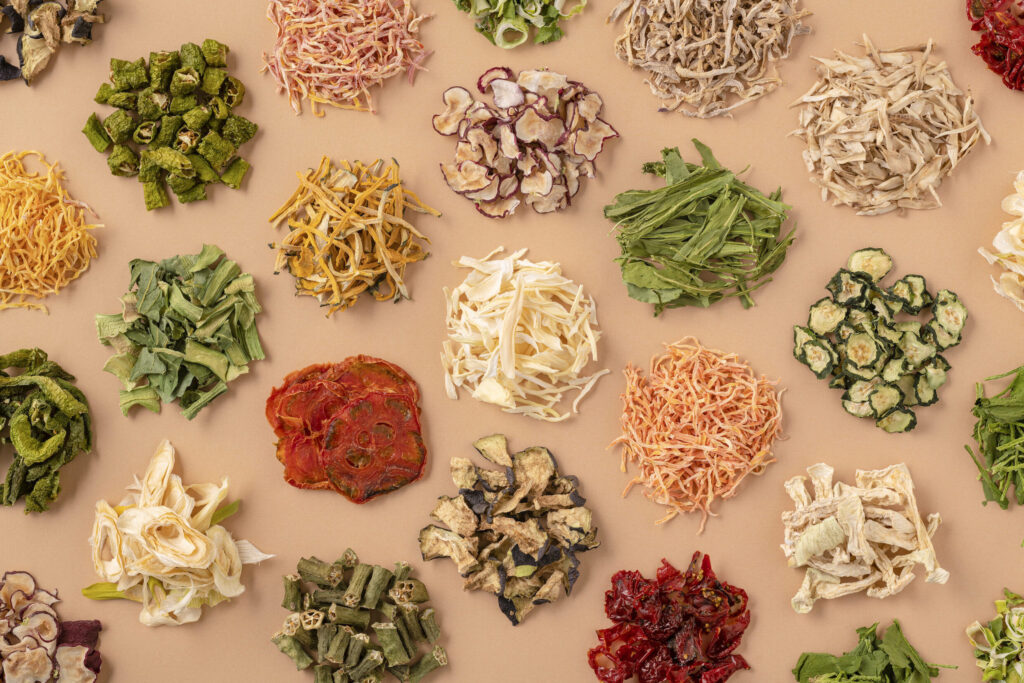
- Available for purchase in small lots from 1 kg
- We handle heirloom vegetables from across Japan
- Dried fruit and herbs also supported
Seven representative Shizuoka heirloom vegetables: characteristics and how to eat them
Orido nasu — the round eggplant offered to Tokugawa Ieyasu
| Season | May–December |
| Growing region | Miho and Orido, Shimizu Ward, Shizuoka city |
| Well-suited dishes | Dengaku, simmered dishes, pickles, agebitashi |
Orido nasu is a round eggplant grown since the Edo period in Miho and Orido, Shimizu Ward, Shizuoka city. It is said to have been offered to Tokugawa Ieyasu during the early-Edo Sunpu castle-town era, and at the time it was so prized that it was spoken of alongside "the first bonito of the season and Orido nasu." Its flesh is dense and resists falling apart when simmered, notable for a texture that holds its form even when cooked.
Cultivation once nearly died out, but a local revival project resumed production, and it is now handled at farm stands in Shimizu Ward and at restaurants in Shizuoka city. Dengaku and simmered dishes are the classics, making a hearty dish that takes advantage of its drawstring-purse-like size.
Mishima bareisho — the GI-registered Meikwin of the western foot of Hakone
| Season | July |
| Growing region | Mishima city, Kannami town, Tagata District |
| Well-suited dishes | Nikujaga, potato salad, curry, simmered dishes |
Mishima bareisho is a Meikwin-variety potato grown in Mishima city and Kannami town at the western foot of Hakone. Preparations for potato production advanced there from the late 1940s, and full-scale establishment of the producing area began with the introduction of Meikwin from Assabu, Hokkaido, in 1970. Thanks to volcanic-ash soil and moderate rainfall, it combines waxy, non-crumbling flesh with a distinctive sweetness, and it was registered as GI No. 18 by the Ministry of Agriculture, Forestry and Fisheries on October 12, 2016.
In nikujaga and potato salad its non-crumbling waxiness comes alive, while its sweetness also suits curry and simmered dishes. Because it is wind-dried and stored after harvest and then shipped in July–August, July — its season — is the peak distribution period.
Mikatahara bareisho — the fluffy potato grown in Hamamatsu's red soil
| Season | Mid-May–July |
| Growing region | Mikatahara, Hamamatsu |
| Well-suited dishes | Croquettes, potato salad, curry, potage |
Mikatahara bareisho is a potato grown in the volcanic-ash-derived red soil of the Mikatahara plateau in Hamamatsu. Notable for the fluffy, Danshaku-type texture, its mealiness stands out when cooked, and its strong point comes through in croquettes and potato salad. It has nationwide recognition as an early-summer taste of the Enshu region.
During the harvest period from mid-May to July, new potatoes line farm stands and supermarkets in Hamamatsu, and it is also popular as a hometown-tax gift.
Wasabi — Japan Agricultural Heritage wasabi with 400 years of history
| Season | Year-round |
| Growing region | The Izu, Gotemba, Oi River, and Abe River areas |
| Well-suited dishes | Sashimi condiment, sushi, wasabi-zuke, chazuke |
Shizuoka's wasabi is heirloom wasabi that makes use of the clear streams of Izu, Gotemba, the Oi River, and the Abe River. In Utogi, Aoi Ward, Shizuoka city — considered its birthplace — it has over 400 years of cultivation history dating to the Keicho era. In 2017 "Traditional Wasabi Cultivation in Shizuoka" was recognized as a Japan Agricultural Heritage system, and in March 2018 it was also recognized as a Globally Important Agricultural Heritage System (GIAHS). Distinctive cultivation methods such as the "tatami-ishi" (paving-stone) wasabi paddies are valued as cultural heritage.
Grated wasabi is used as a condiment for sashimi, sushi, and chazuke, while leaf wasabi and stem wasabi are processed into soy-sauce-cured or sake-lees-cured "wasabi-zuke." It can be obtained year-round at farm stands in Izu and central Shizuoka and at processed-goods counters in tourist areas.
Kuno ha-shoga — the crimson leaf ginger known for early shipping
| Season | March–July |
| Growing region | Kuno, Suruga Ward, Shizuoka city |
| Well-suited dishes | Sweet-vinegar pickles, sashimi garnish, tempura, condiment for grilled dishes |
Kuno ha-shoga is a leaf ginger grown in the Kuno district of Suruga Ward, Shizuoka city, known as an early-shipping producing area. The base of the stalk colors crimson, notable for its refreshing pungency and fruity aroma. The historic setting at the foot of Kuno-zan Toshogu and the sandy soil of the Suruga Bay coastal terraces support early shipping.
Sweet-vinegar pickling is the most common, and it adds a sense of season as a garnish for sushi and sashimi. It also suits use as a condiment for tempura and grilled dishes, an item used in Shizuoka's Japanese cuisine.
Mizukake-na — the winter leafy green grown with Fuji spring water
| Season | Late January–March |
| Growing region | Eastern foot of Mt. Fuji (Gotemba city, Oyama town) |
| Well-suited dishes | Ohitashi, miso soup, hot pot, pickles |
Mizukake-na is a winter vegetable of the foot of Mt. Fuji grown by channeling Mt. Fuji's spring water into the fields. Because the spring water's temperature stays steady even in winter, an environment arises where leafy greens can be grown even in the cold season. Pale green and soft, it has almost no harshness and a faint sweetness. It is a close lineage to the mizukake-na grown in eastern Yamanashi (Tsuru, Fujiyoshida, and elsewhere).
In ohitashi, miso soup, and hot pot you can enjoy its soft texture. It is basically available only in winter at farm stands at the foot of Mt. Fuji.
Iwata shiro-negi — the long onion with a 27 cm blanched portion
| Season | December–April |
| Growing region | Iwata |
| Well-suited dishes | Hot pot, sukiyaki, grilled negi, soups |
Iwata shiro-negi is a long onion grown in Iwata, notable for a long blanched (white) portion of about 27 cm, a pale color, and strong sweetness. The soil of the alluvial plain in the lower Tenryu River and the wind from the Enshu-nada draw out this length and sweetness.
Because a melting sweetness spreads when cooked, its strong point comes alive in hot pot, sukiyaki, and grilled onion. It is distributed in winter at JA farm stands in Iwata and at supermarkets in Hamamatsu and Shizuoka.
How to buy Shizuoka's heirloom vegetables and tips for storing them
In-prefecture direct-sales outlets / roadside stations
| Item | Main sources | Timing |
|---|---|---|
| Orido nasu | Farm stands in Shimizu Ward | May–December |
| Mishima bareisho | JA farm stands in Mishima city and Kannami town | July |
| Mikatahara bareisho | JA farm stands and supermarkets in Hamamatsu | Mid-May–July |
| Wasabi | Farm stands and tourist areas in Izu and central Shizuoka | Year-round |
| Kuno ha-shoga | Farm stands in Suruga Ward, Shizuoka city | March–July |
| Mizukake-na | Farm stands at the foot of Mt. Fuji | Late January–March |
| Iwata shiro-negi | JA farm stands in Iwata | December–April |
Mail order / hometown tax to outside the prefecture
- Mishima bareisho — Shipped nationwide, July only, as a hometown-tax gift from Mishima city
- Mikatahara bareisho — Shipped early-summer only as a hometown-tax gift from Hamamatsu
- Wasabi — Fresh wasabi and wasabi-zuke distributed year-round by mail order in Izu and Shizuoka
- Processed products — Orido nasu pickles, sweet-vinegar-pickled leaf ginger, mizukake-na ohitashi sets, and the like distributed year-round
A product catalog that shows around 100 items we handle
Agriture, flexibly handling everything from small lots to large lots
- Available for purchase in small lots from 1 kg
- We handle heirloom vegetables from across Japan
- Dried fruit and herbs also supported
Efforts to protect Shizuoka's heirloom vegetables
| Efforts | Details |
|---|---|
| GI registration of Mishima bareisho | Registered as GI No. 18 on October 12, 2016 |
| Japan Agricultural Heritage recognition of Traditional Wasabi Cultivation in Shizuoka | Recognized as a national Japan Agricultural Heritage system in 2017. In 2018 also recognized as a Globally Important Agricultural Heritage System (GIAHS) |
| The Orido nasu revival project | Growers in Shimizu Ward and local groups revived an heirloom variety that had nearly died out |
| The saved-seed culture of Aoi Ward's mountain settlements | Seed succession by residents continues in Ikawa, Tamagawa, Umegashima, and elsewhere |
FOR BUSINESS
乾燥野菜を業務用でお探しですか
国産の野菜・果物を乾燥し、必要に応じて粉砕してお出ししています。扱っている品目は100種前後で、規格は 乾燥品の一覧・パウダーの一覧 に掲載しています。
少量でのご購入は、姉妹ブランドの通販サイト OYAOYA で承っています。
FAQ
Other regional specialty varieties
Though included in the Japan Heirloom Vegetable Promotion Association's list, we introduce separately items that don't fit strictly within the "vegetable" category — fruit, grain seed, konjac raw material, and beans of specific family lines.
| Item | Category | Growing region | Features |
|---|---|---|---|
| Yamato koji | Citrus (fruit tree) | Tamagawa, Aoi Ward, Shizuoka city | An heirloom citrus with yellow skin, small fruit, and strong acidity |
| Ikawa no ko-gaki | Persimmon (fruit tree) | Ikawa, Aoi Ward, Shizuoka city | A tiny 1–2 cm heirloom persimmon |
| Tamagawa shiro-goma | Sesame (seed) | Tamagawa, Aoi Ward, Shizuoka city | A small, richly fragrant heirloom white sesame |
| Nagatsumada morokoshi | Sorghum (grain) | Tamagawa, Aoi Ward, Shizuoka city | An heirloom sorghum with hard, sweet grains |
| Midori azuki | Adzuki bean (grain) | Ikawa, Aoi Ward, Shizuoka city | A green adzuki bean. Turns black when made into anko |
| Odai konjac | Konnyaku-imo | Aoi Ward, Shizuoka city | An heirloom variety used as konjac raw material |
Summary
Shizuoka's roughly 44 heirloom vegetables are a group of varieties handed down amid the terrain diversity of Mt. Fuji, the southern foot of the Southern Alps, the Izu Peninsula, the Makinohara plateau, and the area around Lake Hamana, within the mild maritime climate of the Kuroshio. They include Orido nasu, Mikatahara bareisho, Mishima bareisho, wasabi, Kuno ha-shoga, mizukake-na, and Iwata shiro-negi — items valued at the national level, such as Mishima bareisho's GI No. 18 registration and the Japan Agricultural Heritage recognition (2017) and Globally Important Agricultural Heritage recognition (2018) of Traditional Wasabi Cultivation in Shizuoka.
Kuno ha-shoga and mizukake-na in spring; Orido nasu, Mishima bareisho, and Mikatahara bareisho in summer; Iwata shiro-negi and the various Ikawa items in autumn and winter — Shizuoka's heirloom varieties line up through all four seasons. Through hometown-tax gifts, roadside stations, and mail order, you can bring Shizuoka's food culture to the family table.
References / information sources
- Japan Heirloom Vegetable Promotion Association, "Shizuoka Prefecture" — Certification list
- Ministry of Agriculture, Forestry and Fisheries GI-registered products list — Mishima bareisho (No. 18)
- Ministry of Agriculture, Forestry and Fisheries Japan Agricultural Heritage — Traditional Wasabi Cultivation in Shizuoka
- National Agriculture and Food Research Organization Genebank "Native Variety Database"
Related articles
- Heirloom vegetables of Japan
- Kyoto Heirloom Vegetables
- Hida-Mino heirloom vegetables
- Shinshu's Heirloom Vegetables
- Heirloom vegetables of Yamanashi
- Heirloom vegetables of Kanagawa
- Heirloom vegetables of Naniwa
Download the product catalog
We will send the materials to your email address based on the information you provide.
- What are the Hida-Mino heirloom vegetables? Features, season, and ways to eat the 32 items explained
- What are Aichi’s heirloom vegetables? Features, season, and ways to eat the 37 items explained
Author of this article
Related articles
-
 Okinawa island vegetables: individualistic vegetables nurtured by a subtropical climate
 -
 Kaga vegetables: Kanazawa brand vegetables where tradition lives on
 -
 The appeal of Kansai heirloom vegetables | Specialties of Naniwa, Kyoto, and Yamato thoroughly explained
 -
 Kyoto heirloom vegetables: Kyoto specialties with a long history
 -
 A list of heirloom vegetables of the 8 prefectures of Kyushu and Okinawa|A thorough introduction to characteristics, growing regions, and seasons
 -
 Know the heirloom vegetables of Edo Tokyo | The city’s vanishing food culture
 -
 They'll make you smile! The fun names of heirloom vegetables and their origins
 -
 5 cases and strategies that succeeded in branding heirloom vegetables