
We Prototyped Lotus Root Powder

Summary of this article
Agriture has produced a prototype of "lotus root powder" using domestically grown lotus root. Fresh domestically grown lotus root is carefully dried and made into powder, additive-free and without coloring. Anticipating application across a variety of products — thickening soups and sauces, kneading into bread and confectionery dough, health-conscious food development, and more — we can provide integrated support from prototyping through mass production.
Agriture has, on this occasion, produced a prototype of "lotus root powder" using domestically grown Lotus root, making a prototype.

Lotus root is widely cultivated across Japan, a vegetable characterized by a crisp texture and gentle sweetness. Used in a wide range of dishes — simmered, stir-fried, deep-fried — it's also cherished as an ingredient containing dietary fiber and vitamin C. Turning it into powder makes it easy to incorporate into everyday cooking and processed foods.
For this prototype, we carefully dried fresh domestically grown lotus root and made it into powder, additive-free and without coloring. We anticipate application across a variety of products — thickening soups and sauces, kneading into bread and confectionery dough, health-conscious food development, and more.
At Agriture, we're putting effort into OEM development and the supply of commercial ingredients that make use of such vegetable powders. Powder that makes the most of domestically grown ingredients can be used across a wide range of fields — sweets, bakery, beverages, health foods, and more. We can provide integrated support from the prototype stage through commercialization and mass production.
We'll continue our efforts to draw out new value from domestically grown vegetables. If your company is considering developing original products or introducing differentiating ingredients, please get in touch with Agriture.
See more about vegetable powder here
Product ideas using vegetable powder
Features of lotus root powder and key points on its components
Lotus root (the rhizome of the genus Nelumbo in the Nelumbonaceae family) is rich in starch, and a major feature of turning it into powder is that it thickens when dissolved in water. Vitamin C, dietary fiber, and polyphenols (tannins) are the focal points on the component side, though the content varies by variety and growing region. Agriture has a track record of OEM processing in collaboration with the domestic agricultural corporation "Teikei Noka Co., Ltd.," turning lotus root grown using only organic fertilizer into powder. Our strength is a system that can handle everything from raw-material selection through drying, grinding, and fine milling.
Choosing between fresh lotus root, dried chips, and powder
Lotus root's applications and how thickening presents differ by form. For your choice at the development stage, use the following comparison table as a guide (figures vary by variety and growing environment).
| Item | Fresh lotus root | Dried chips | Lotus root powder |
|---|---|---|---|
| Main use | Simmered dishes, tempura, kinpira | Snacks, toppings | Rice porridge, baby food, nursing-care food, soup, confectionery |
| Storage period guide | About 1 week refrigerated | About 6 months at room temperature | About 6 months from the shipping date |
| Thickening ability | Only when grated | △ | ◎ (thickens when dissolved in water) |
| Dispersibility | Not suitable | Not suitable | ◎ (disperses evenly in liquid) |
| Ease of processing | Requires washing off mud and removing harshness | Moderate | ◎ (can be blended in as-is) |
Lotus root powder's property of "thickening when dissolved in water" is a functionality that ties directly to developing products that need thickening — baby food, nursing-care food, rice porridge, and the like. In our collaboration with the partner farm, we slice the lotus root and dry it at low temperature, turning it into powder while protecting lotus root's inherent flavor and color.
Baby food, weaning food
Because just dissolving lotus root powder in water or dashi produces a gentle thickening, it's an application we're frequently consulted about for prototypes as a thickening ingredient for baby food. Additive-free, domestically grown lotus root powder makes a design point that resonates with parents who care about quality. Since it can be used simply by mixing into rice porridge or paste, it's an ingredient easy to accommodate for both home and commercial use.
- Main ingredient for baby-food thickening powder
- Blending ingredient for baby food and toddler food
- Domestically grown lotus root powder product
Nursing-care food and dysphagia food
Lotus root powder's thickening can also be used for texture adjustment in nursing-care food and dysphagia food. Being able to produce a natural thickening without using chemical thickeners is valued by nature-oriented nursing-care food brands. The nutritional value and benefits of vegetable powder.
- Thickening-adjustment ingredient for nursing-care food and dysphagia food
- Blending ingredient for soups and rice porridge for the elderly
- Positioning as a naturally derived thickening ingredient
Soup, potage, miso soup
Adding lotus root powder to soup or potage brings a natural thickening and lotus root's flavor. It's an ingredient usable for thickening Japanese-style potage and miso soup too, with a prototype track record as an ingredient for freeze-dried soups and cup soups. Collaboration examples with the partner farm.
- Base ingredient for lotus root potage and Japanese-style potage
- Thickening ingredient for miso soup
- Blending ingredient for cup soups and freeze-dried soups
Confectionery and Japanese sweets
Prototypes are progressing that use lotus root powder as an ingredient for chewy dough and for dango- and warabi-mochi-style sweets. Lotus root's starch produces a springy texture, and it's also drawing attention as a gluten-free confectionery ingredient. Full lineup of dried vegetables and powders.
- Chewy-textured Japanese-sweets ingredient
- Substitute-flour ingredient for gluten-free confectionery
- Main ingredient for lotus root dango and lotus root warabi-mochi
A base raw material for vegetable bouillon and dashi powder
We've summarized representative specifications for Agriture's commercial lots of lotus root powder. Based on the expertise cultivated in collaboration with the partner farm, we use a low-temperature drying process that preserves lotus root's inherent flavor and color. Lotus root powder specification details please refer to together with.
A vegetable base powder for baby food
| Item | Agriture's manufacturing specs and OEM support |
|---|---|
| Raw materials | Domestically grown lotus root (sliced, contract-grown) |
| Processing step | Washing → slicing → low-temperature drying (emphasizing flavor retention) → grinding → filling |
| Additives | No colorants or antioxidants used |
| Storage period | A guide of about 6 months from the shipping date (varies by storage conditions) |
| Processing shape | From 1 kg of raw material |
| Main production lot | Slice / dice cut / powder |
| Not used | Minimum prototyping lot |
FOR BUSINESS
乾燥れんこんを、原料としてお探しですか
国産のれんこんを乾燥・粉砕してお出ししています。カット形状や粒度の指定、継続してのお取引もご相談ください。規格は Dried lotus root・れんこんパウダー に掲載しています。
少量でのご購入は、姉妹ブランドの通販サイト OYAOYA で承っています。
Customization support
- Blending: pre-blending with other vegetable powders and dashi ingredients supported
- Packaging: four types—500 g bag, 1 kg bag, 5 kg commercial bag
- Shape: slice (for pickles), dice cut (for ingredients), powder
- Origin: domestic growing regions (partner farms) and other domestic contract-cultivation routes prepared
Blending: pre-blend support with other dried vegetables
- dried vegetable / powder OEM inquiry form Contact us with the prototyping content, application, and desired specifications via
- In a concept interview (via Zoom or email), we share the intended product and the target thickening and texture
- Contact us with the prototyping content, desired shape, and assumed application via
- Main manufacturing (from 10 kg of raw material). Issuing necessary documents and lot-by-lot quality inspection supported
Product catalog showing the items we handle
Flexible support from small lots to large lots
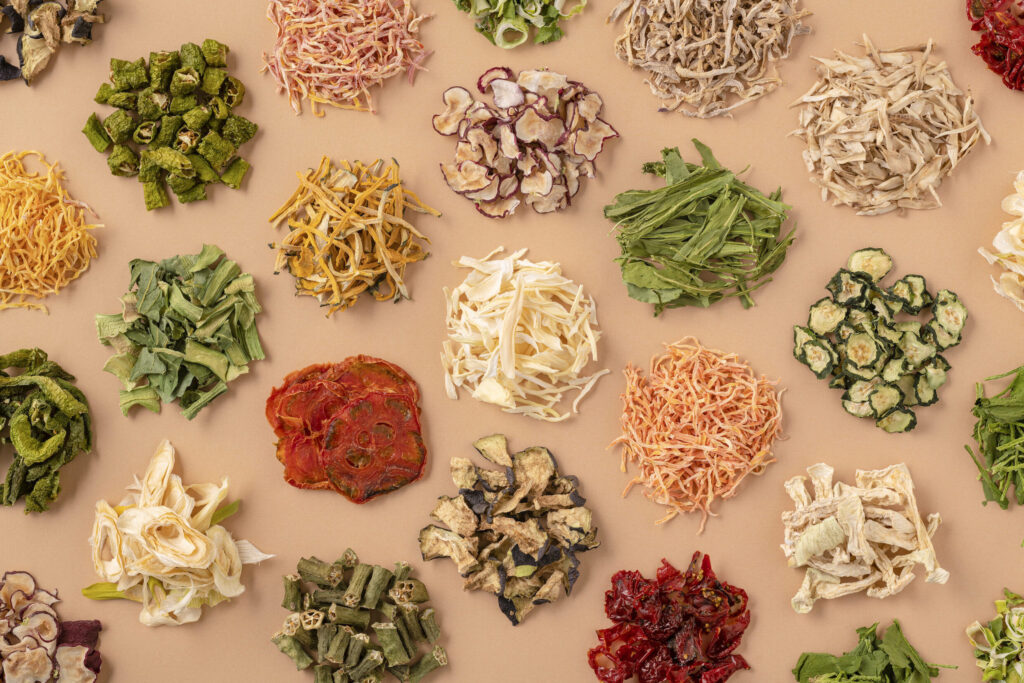
- Sold in small lots from 1 kg
- Handling heirloom vegetables from across Japan
- Dried fruits and herbs also supported
FOR BUSINESS
乾燥れんこんを、原料としてお探しですか
国産のれんこんを乾燥・粉砕してお出ししています。カット形状や粒度の指定、継続してのお取引もご相談ください。規格は Dried lotus root・れんこんパウダー に掲載しています。
少量でのご購入は、姉妹ブランドの通販サイト OYAOYA で承っています。
Frequently asked questions
Q. What kind of thickening does lotus root powder produce?
A. It's a gentle, starch-derived thickening, characterized by a milder texture different from potato starch or cornstarch. Because it produces a natural thickening close to grated lotus root, adding just a small amount to baby food or rice porridge yields an easy-to-eat finish.
Q. Do you handle lotus root?
A. We have a track record of turning lotus root grown using only organic fertilizer into powder, in collaboration with the domestic Teikei Noka Co., Ltd. If you'd like OEM processing of the raw material, please get in touch.
Q. Can it be blended with other vegetable powders?
A. Yes. We can design original blends combining it with the 60-plus vegetable, herb, and fruit powders Agriture processes. Vegetable powder list page Please check the items on
Q. Can you issue a certificate of raw material origin and an analysis table?
A. We can issue both a certificate of origin proving the raw material is domestically grown and a microbiological test report. We also meet the quality requirements of mass retailers and mail-order channels.
Q. Can it be blended with other dried vegetables?
Related pages and further reading
- Agriture was featured on the official site of Takii Seed's "Fight & Rich"
- Agriture's dried vegetables featured on Nippon TV's "Meguru Shokutaku"
Author of this article
Related articles
-
 We released a free news release posting service on our operated “Food OEM Directory”
 -
 We Prototyped "Chestnut Skin Powder" Using Domestically Grown Chestnut Skins
 -
 A Notice About the Rose Prototype
 -
 Products from OYAOYA, A Letter from a Pear, and Agriture featured on "Urelio"
 -
 Launched the employee-benefit service “Office Yaoya (OFFICE YAOYA)”
 -
 OYAOYA, a dried-vegetable brand using Kyoto vegetables, announces it will become a consolidated subsidiary of global cutlery maker Kai through M&A
 -
 We Published the Dried Vegetable Projects Page
 -
 Is There Demand for Dried Vegetables in Dubai?