How to eat vegetables during hay fever season

Warning: Undefined array key 4 in /home/c7647186/public_html/agriture.jp/wp-content/themes/swell/lib/gutenberg/render_hook/faq.php on line 70
Summary of this article
The reason a lack of vegetables worsens hay fever is that a lack of flavonoids weakens the power to regulate allergic reactions. In research by the Osaka Habikino Medical Center, strong inhibitory action has been reported for luteolin, fisetin, apigenin, and the like. We explain effective vegetables such as buckwheat sprouts, broccoli, onion, parsley, and kale, and their combination with omega-3 fatty acids.
When hay fever season comes, days plagued by sneezing, runny nose, and itchy eyes begin. Many people may feel, “The tough season has come again this year…”
In fact, it has been pointed out that your diet, especially your vegetable intake, may be affecting hay fever symptoms. The daily vegetable intake recommended by the Ministry of Health, Labour and Welfare is 350 g, but the average intake of Japanese people remains at about 280 g. There are age-group differences in vegetable intake, and rethinking one's diet is drawing attention.
Regarding the relationship between hay fever and a lack of vegetables, research by Dr. Toshiro Tanaka of the Osaka Habikino Medical Center includes research reports on the flavonoids contained in vegetables. The prevalence of allergic diseases among Japanese people is rapidly increasing, and one factor pointed to is the decline in vegetable consumption.
Which vegetables are good to include during hay fever season? We look at this from a dietary perspective.
This article is intended to provide general information and is not intended for medical diagnosis or treatment. If you have questions or concerns about your health, be sure to consult a doctor or specialist.
TOC
Hay fever season and diet
Hay fever occurs when the body's immune system reacts to pollen. Here we look at how diet relates to hay fever season.
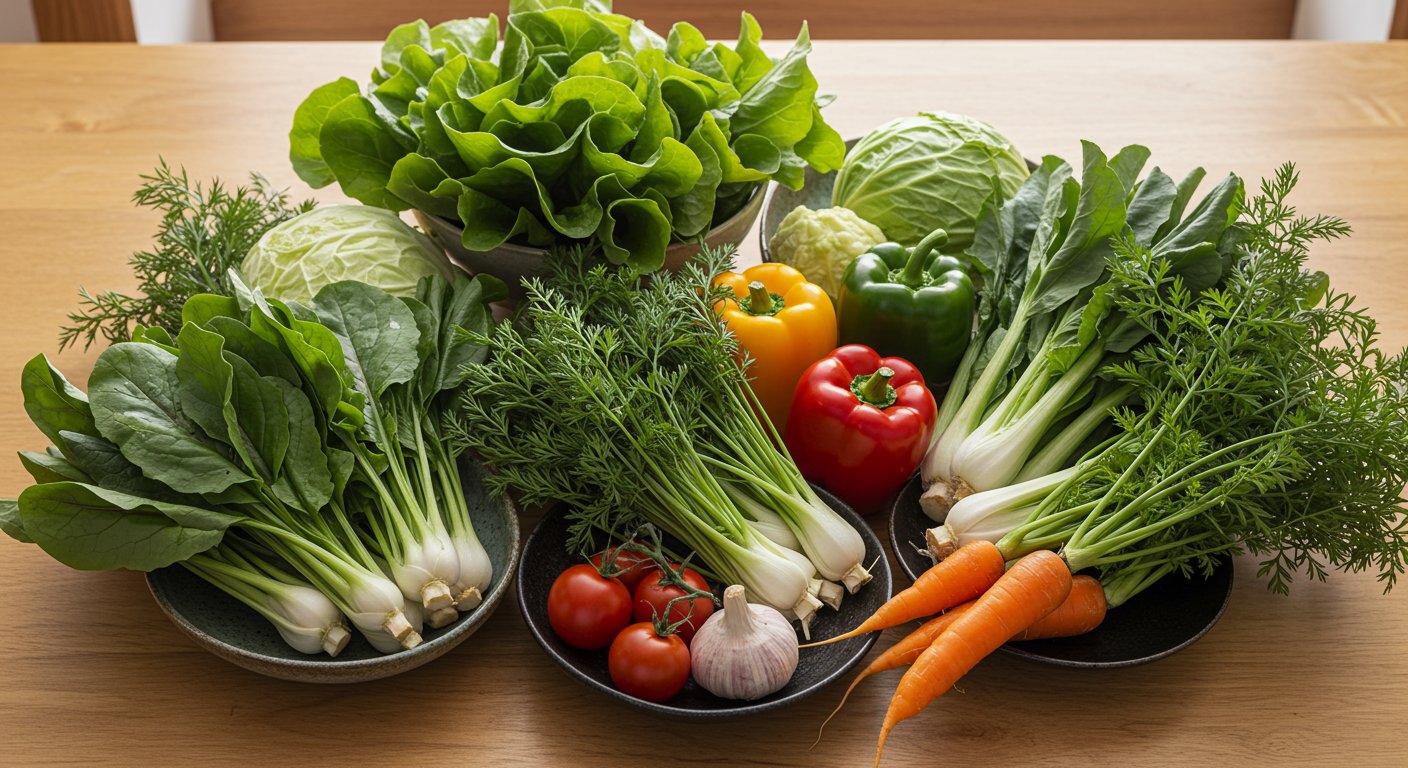
The key is flavonoids. Flavonoids are a type of polyphenol found in fruit, vegetables, tea and more, and are known as components of buckwheat sprouts, broccoli and onions.
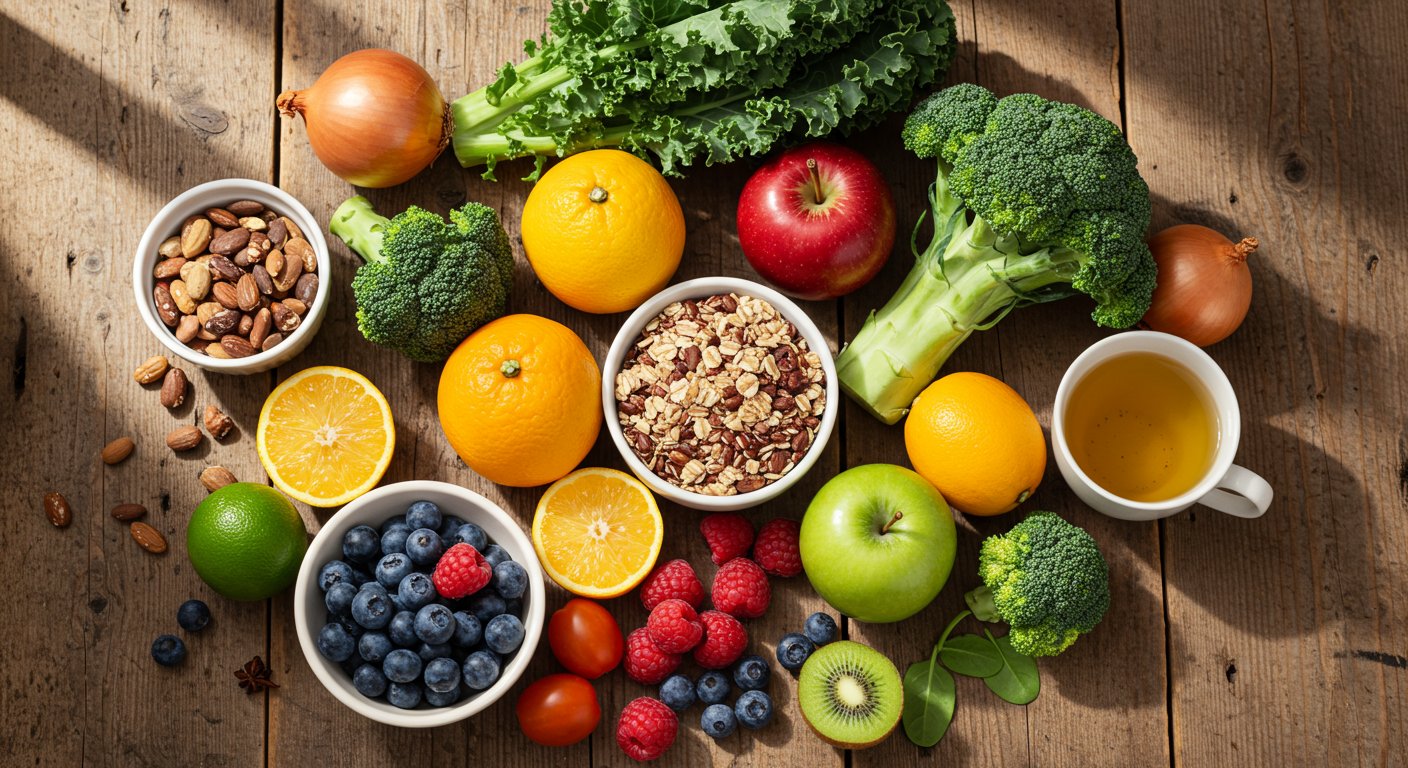
In other words, if you are not taking in enough flavonoids from vegetables and the like, the power to regulate allergic reactions weakens, and as a result, you may become prone to reacting hypersensitively to pollen.
Dietary fiber is also known as a component related to the gut environment. The link between the gut environment and physical condition is attracting attention in research as well.
Vegetables to be mindful of in hay fever season
As ingenuity easy to incorporate through meals, what vegetables are good to eat and how? We introduce methods based on scientific evidence.
Choose vegetables rich in flavonoids
The first priority is to take in plenty of vegetables containing flavonoids. We have summarized in a quick-reference table representative vegetables and flavonoids whose content is confirmed in the literature.
| Vegetables | Flavonoids said to be contained in large amounts |
|---|---|
| Buckwheat sprouts | Rutin |
| broccoli | Quercetin and kaempferol |
| Onion | Quercetin |
| Parsley | Apigenin |
| kale, | Luteolin and quercetin |
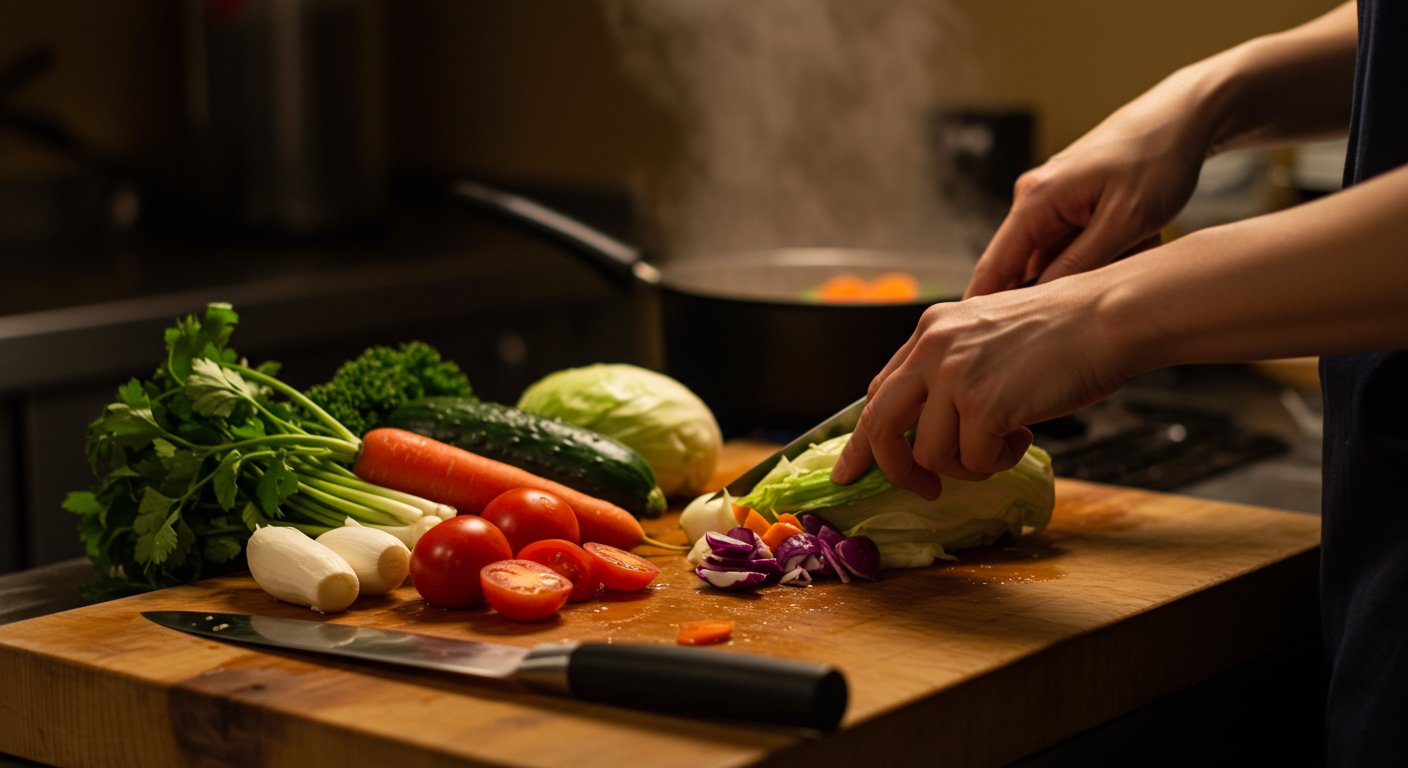
Eating these vegetables regularly leads to a diet that includes flavonoids. It has been suggested that heating may increase the absorption of quercetin in onions, but this depends on conditions and can't be stated as a general rule.
The combination with unsaturated fatty acids is key
During hay fever season, unsaturated fatty acids are also drawing attention, not just vegetables. Omega-3 fatty acids found in oily fish are especially well known, and diets that combine them with vegetables are presented from the standpoint of seasonal health management.
In this study, it was evaluated not by “how much was taken in” as diet but by concentration in the body, suggesting that omega-3 fatty acids may affect the immune inflammatory response. Incorporating omega-3-containing foods such as blue-backed fish, flaxseed oil, and chia seeds daily is thought to be a support for calming allergic reactions.
Omega-3 fatty acids are abundant in foods such as the following.
- Blue-backed fish (mackerel, sardine, saury, and the like)
- Salmon
- Walnuts
- Chia seeds
- Flaxseed oil
Diets that combine these foods with vegetables are well known. However, oily fish also contain a substance called histamine, so they may not suit everyone. Include them within reason.
Foods and habits to watch during hay fever season
While some foods are worth keeping in mind during hay fever season, there are also foods and habits to be careful with depending on your constitution. You may be doing things that put a strain on your body without realizing it.
Beware of foods that cause cross-reactions with pollen
People with hay fever may experience tingling in the mouth or discomfort in the throat with certain foods. This is called “oral allergy syndrome (PFAS),” a reaction that occurs because the proteins contained in pollen and the proteins contained in vegetables and fruits are very similar.
For example, tomato (family Solanaceae) has reported cross-reactions with grass pollens of the family Poaceae (orchard grass, timothy, and the like). Even people with cedar-pollen allergy sometimes experience itching in the mouth when eating raw tomato, but reactions vary from person to person. If you feel discomfort with it raw, heating it changes the protein structure and the reaction may become less likely to appear.
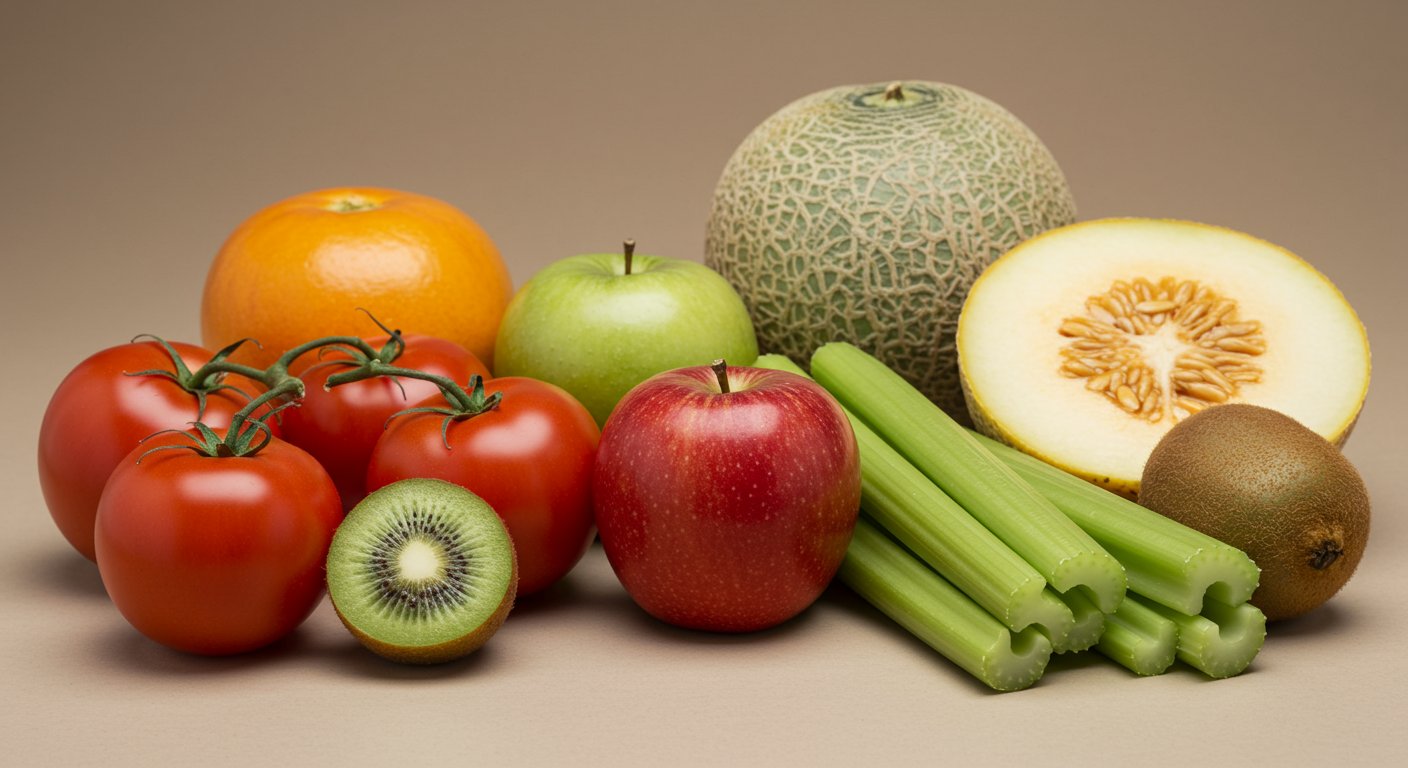
The foods prone to cause cross-reactions differ by pollen type. Understand it according to your own hay fever type.
| Pollen type | Main foods prone to cross-react |
|---|---|
| Birch and alder | Apple, peach, cherry |
| Ragweed | Melon, watermelon |
| Mugwort | Celery, parsley |
| Poaceae such as orchard grass | Tomato (family Solanaceae) |
| Latex (natural rubber) related | Banana, avocado, mango |
Eating habits and lifestyle habits to avoid
Eating and lifestyle habits prone to worsen hay fever symptoms include the following.
- Cold drinks and foods: they chill the body and become a cause of upsetting immune balance
- Carbonated drinks: they have an action that chills the body
- Excessive intake of raw vegetables: because they tend to chill the body, cooked vegetables are recommended
- Excessive animal fat: omega-6 fatty acids, abundant in beef, pork, and the like, strengthen inflammatory reactions
- Refined sugar: it may worsen inflammation and strengthen allergic symptoms
- Alcohol: keep cold, carbonated ones such as beer and chuhai in particular to a minimum
Also, stress is a factor that worsens hay fever symptoms. If the autonomic nervous system or immune balance is disrupted, you may react excessively even to a small amount of pollen. If you have habits that come to mind, try rethinking them where you can.
Tips for taking in vegetables that are easy to incorporate into daily life
“I know vegetables are important, but taking in 350 g every day is hard…” For those who feel this way, we introduce methods that make it easy to increase vegetable intake even in a busy daily life.
| How to incorporate | Features | Suitable situations |
|---|---|---|
| Fresh vegetables | Rich in nutrients, but prep and storage take effort | Days when you can take time to cook for yourself |
| Dried vegetables | Storable long-term, usable just by adding to soup or miso soup | Adding a dish at the office or on a busy day |
| Vegetable powder | Easily supplemented just by mixing into drinks or dishes | Morning smoothies and time-saving cooking |
Make use of dried vegetables
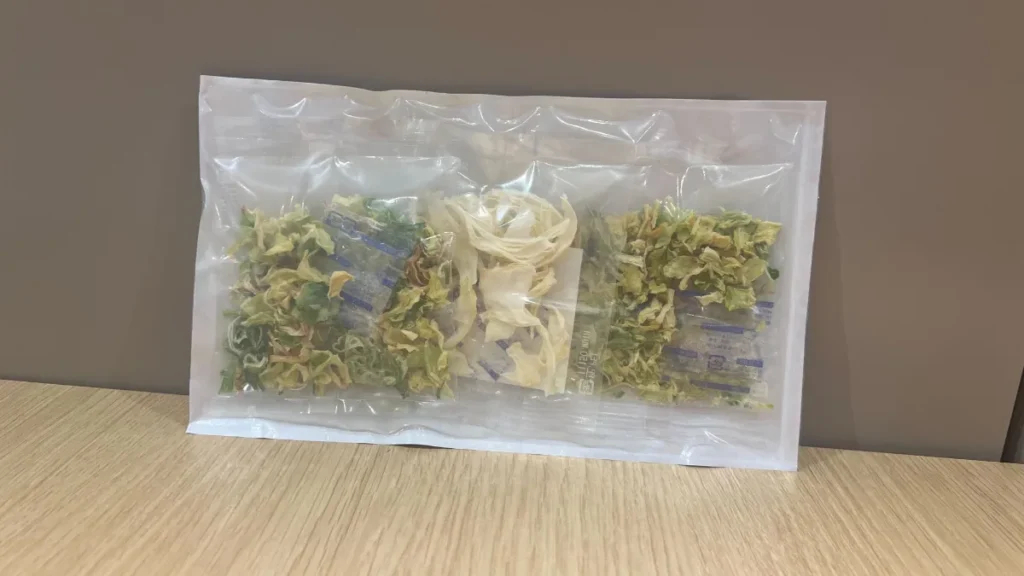
Dried vegetables can be stored long-term and take little cooking effort, making them an option that lets even busy businesspeople easily incorporate vegetables daily. Keeping them on hand at an office desk lets you easily add vegetables without being constrained by time or place.
Agriture's dried vegetables are domestically grown vegetables that do not fit specifications by shape and are hard to bring to market, dried at low temperature in cooperation with contract farmers and welfare facilities in northern Kyoto. It handles nearly 100 items including Kyoto vegetables, and its feature is drying the ingredients themselves without relying on sugar or additives. Because it makes use of off-grade vegetables, eating them also leads to reducing food loss. They can be used just by adding a small amount to soup, miso soup, or cup noodles, so they also suit a way of adding vegetables to office lunches that tend to be unbalanced in hay fever season. (Insight from our own manufacturing site.)
How to use vegetable powder
Vegetable powder is a convenient form easy to mix into everyday cooking. Just by mixing it into soup, smoothies, vegetable juice, yogurt, and the like, you can easily supplement vegetables. Green and yellow vegetable powder in particular contains flavonoids and dietary fiber, so it should be easy to incorporate for managing your condition in hay fever season.
Even on a busy morning, just adding one teaspoon of vegetable powder to a smoothie or vegetable juice makes it easier to supplement a lack of vegetables. Because it is easy, it is a method easy to keep up without strain.
Switch to a diet centered on cooked vegetables
As touched on earlier, because raw vegetables tend to chill the body, a diet centered on cooked vegetables is recommended in hay fever season. Actively incorporate steamed vegetables, warm vegetable salads, vegetable-rich soups, and the like. There is also the merit that heating reduces bulk, making it easier to eat a larger amount.
Also, the nutrients of vegetables are absorbed at a higher rate when taken together with oil. Cooking with good-quality oils such as olive oil or sesame oil makes it easier to take in nutrients efficiently.
Summary: Diet during hay fever season
For hay fever season, diets that focus on vegetables containing flavonoids and dietary fiber are often recommended. One approach is to include buckwheat sprouts, broccoli and onions, and combine them with foods containing omega-3 fatty acids.
Furthermore, because cold food and drink and excessive animal fat may worsen symptoms, start from ingenuity you can keep up without strain, such as a diet centered on cooked vegetables and the use of dried vegetables and vegetable powder.
Recommended reading
- Ways to resolve a lack of vegetables that even busy people can practice
- How to resolve a lack of vegetables even with convenience-store food
- Cost-performance comparison and how to choose vegetable powder
- The relationship between dried vegetables and dietary fiber
Toshiro Tanaka, Toru Hirano, Shinji Higa, Junsuke Arimitsu, Mari Kawai.
“Allergy and Flavonoids.”
Journal of the Japanese Society for Complementary and Alternative Medicine (JACM Journal).
2006.
https://www.jstage.jst.go.jp/article/jcam/3/1/3_1_1/_pdf
(Accessed: November 21, 2025)
Foundation for Promotion of Longevity Science. “Types, effects, and intake of flavonoids.” Health and Longevity Net. Updated: February 1, 2019. https://www.tyojyu.or.jp/net/kenkou-tyoju/shokuhin-seibun/flavonoid.html (Accessed: November 21, 2025)
Mari Kawai, Toru Hirano, Shinji Higa, Junsuke Arimitsu, Michiru Maruta, Yusuke Kuwahara, Tomoharu Ohkawara, Keisuke Hagihara, Tomoki Yamadori, Yoshihito Shima, Atsushi Ogata, Ichiro Kawase, Toshio Tanaka.
“Flavonoids and Related Compounds as Anti-Allergic Substances”.
Allergology International. 2007; 56(2):113–123.
https://www.jstage.jst.go.jp/article/allergolint/56/2/56_2_113/_pdf
(Accessed: November 21, 2025)
Ekström S., Sdona E., Klevebro S., Westman M., van Hage M., Georgelis A., Kull I., Melen E., Risérus U., Bergström A.
“Childhood PUFA levels in relation to allergic sensitization and rhinitis up to young adulthood”.
Pediatric Allergy and Immunology. 2024;35(11):e70001.
https://onlinelibrary.wiley.com/doi/10.1111/pai.70001
(Accessed: November 21, 2025)
Learn about Office Yaoya
We have prepared materials
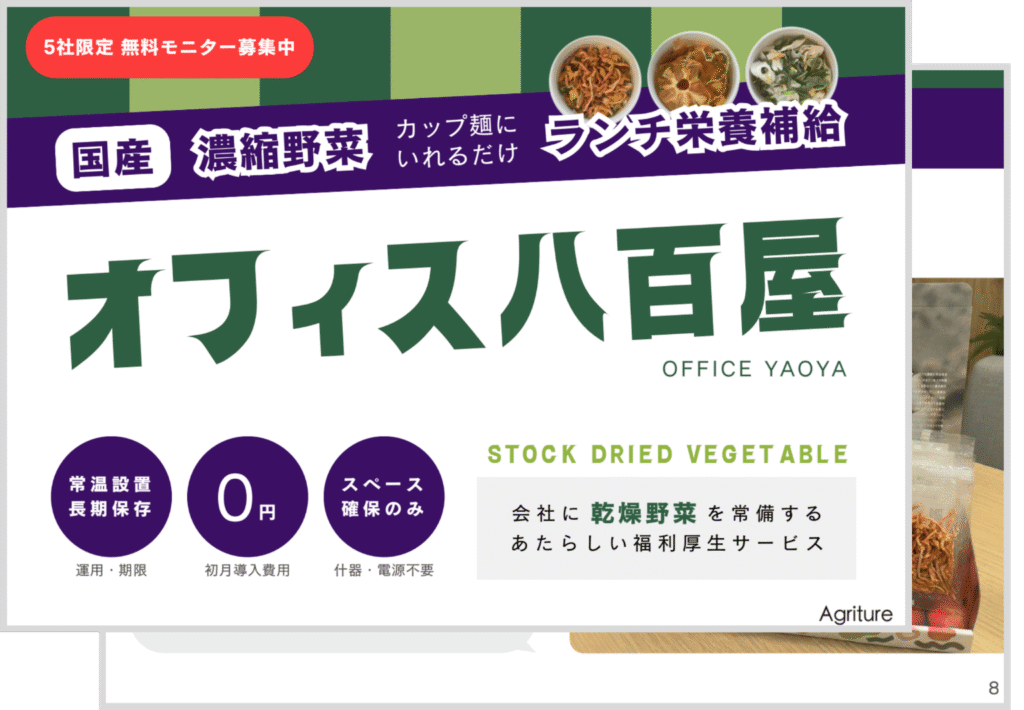
- Service details and vegetable lineup
- Pricing and plans
- How adoption and operation work
Sample sets are also available. Download the materials for details!
We offer sample sets so you can try Office Yaoya in small quantities. See the materials for details.
FAQ
We have compiled frequently asked questions about a lack of vegetables and hay fever.
- Are vegetables relevant during hay fever season?
- The flavonoids and dietary fiber in vegetables are components people pay attention to in their diet during hay fever season. A well-balanced diet is considered the foundation of seasonal health management.
- Which vegetables are recommended during hay fever season?
-
Vegetables containing flavonoids, such as buckwheat sprouts, broccoli, onion, parsley, and kale, can be cited. Taking them heated and together with oil makes the absorption rate more likely to increase.
- Are there foods it is better to avoid during hay fever?
-
Cold food and drink and carbonation that chill the body, excessive animal fat, refined sugar, and alcohol can strengthen symptoms. Choosing cooked vegetables over raw vegetables is recommended.
- My mouth itches when I eat vegetables or fruit. Why?
-
It may be “oral allergy syndrome,” which occurs with foods that have proteins similar to pollen. Heating may make the reaction less likely to appear, but if symptoms are strong, please consult a doctor.
- I'm busy and can't take in vegetables. Is there an easy way?
-
Dried vegetables and vegetable powder keep well and can be easily supplemented just by mixing them into soup, smoothies, or vegetable juice. Keeping them on hand at the office makes it easier to keep up.
Download the office dried vegetable materials
We will send the materials to your email address based on the information you provide.
- What is the 350 g-a-day vegetable guideline? Easy ways to achieve it
- 8 Effective Ways to Relieve Constipation Caused by Vegetable Shortage