
What Is Kyo-Mizuna | A Guide to Its Characteristics, Varieties, and How to Eat It

Summary of this article
The Kyoto vegetable indispensable to the winter table, "
TOC
Kyo mizuna is a leafy green of the Brassicaceae genus Brassica long grown in Kyoto, called simply "mizuna" in Kansai and "kyona" in Kanto. In season from winter to early spring, its hallmark is that the deeper the cold, the more sweetness it takes on and the rounder its flavor becomes. It's distributed year-round, but its aroma and texture are sharpest during the frosty season.
Crisp Texture and the Delicacy of White Stems
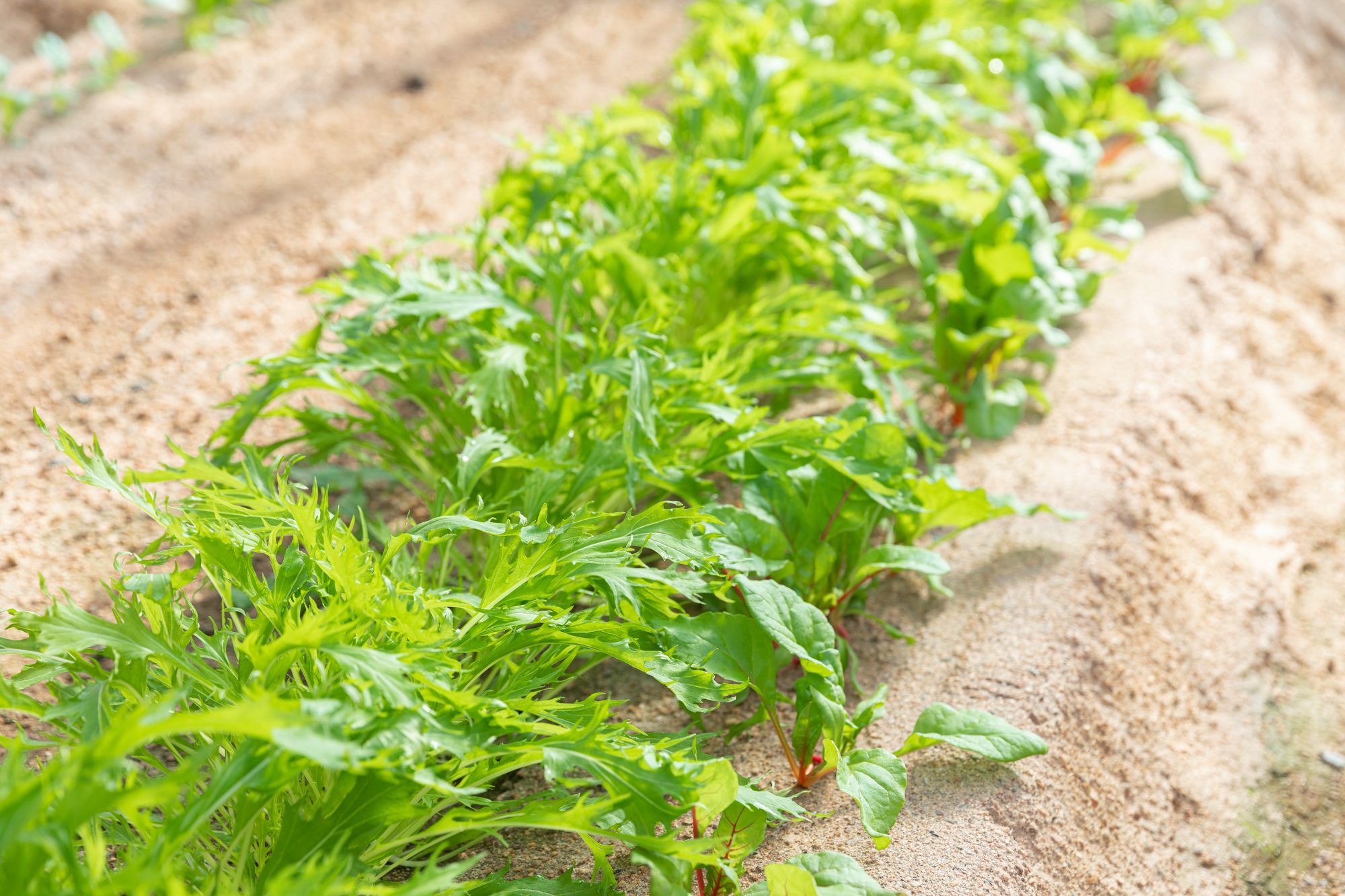
The charm of Kyo mizuna lies in the light bite that spreads the moment you chew. The contrast of its thin white stems and its deeply notched green leaves is beautiful, and from that delicate form it's also been called "senmuji (thousand-line) Kyo mizuna." With little astringency or off-taste, it doesn't get in the way of ingredients raw or cooked, blending into any seasoning—Japanese, Western, or Chinese.
Kyoto Prefecture designates Kyoto vegetables passed down from before the Meiji era as "Kyoto Heirloom Vegetables," and mizuna is counted among them. Furthermore, "Kyo mizuna" is also certified as a "Kyoto Brand Product" that meets quality and shipping standards—a Kyoto vegetable with backing in growing region and quality.
Other names like "hiiragi-na," "senmuji-na," and "itona" also come from visual features—leaf notches and thin stems.
A Winter Leafy Green Beloved in Kyoto
Kyoto's winters bring a piercing cold, and leafy greens tended to run short. Cold-hardy and storing sweetness in the field, Kyo mizuna supported the table as a precious green that filled that gap. Thrown into a hot pot it soaks up the dashi and shrinks in volume; left raw it builds the bulk of a salad—the versatility of a single bunch playing two or three roles is why it's been beloved for so long.
The History and Name Origin of Kyo Mizuna
FOR BUSINESS
乾燥水菜を、原料としてお探しですか
国産の水菜を乾燥・粉砕してお出ししています。カット形状や粒度の指定、継続してのお取引もご相談ください。規格は Dried mizuna・Mizuna powder に掲載しています。
少量でのご購入は、姉妹ブランドの通販サイト OYAOYA で承っています。
Kyo mizuna is a vegetable with an especially old provenance even among Kyoto vegetables. Tracing the records left in documents, you can see how it took root in the lives of Kyoto's people from the Heian period into the early modern era.
Records Left in Documents from the Heian to Edo Periods
The Heian-period dictionary Wamyo Ruijusho (around 935) already shows the name "mizuna." The Edo-period gazetteer Yoshufu Shi records that it was grown around Kyoto's Toji and Kujo, suggesting it took hold as a green raised in the urban outskirts. It's a vegetable that has walked alongside Kyoto's food culture.
The Origin of the Name "Mizuna"
The "mizu" (water) in the name is said to derive from growing it not by relying on special fertilizer but by drawing water into the furrows. It's the theory that a cultivation method of plumping the plants with abundant water became the name itself. That the humble growing method remains in the name is part of Kyo mizuna's deep flavor too.
The Main Varieties of Kyo Mizuna and How to Choose Them
Though lumped together as "mizuna," it divides into several types by plant size, earliness, and leaf color. Knowing the type that suits your use changes how the dish turns out. First, let's grasp the representative strains.
Plant size
| Type | Main texture and flavor | Senmuji Kyo mizuna (large plant) | Well-suited dishes |
|---|---|---|---|
| Spreads large | Thicker stems, presence even when simmered | Hot pots, pickles, simmered-and-steeped | Salad mizuna (small plant, early) |
| Small | Tender and light | Salads, dressed dishes | Red-purple mizuna (Benihoshi, etc.) |
| Red-purple stems, colorful | Small to medium | Salads, garnishes | Even within the same Kyo mizuna, the basic approach is to choose by use—a large plant for enjoying bulk in a hot pot, an early small-plant variety when the raw crispness is the star. When you want to add color, red-purple types tighten the impression of a plate. |
Senmuji Kyo Mizuna (Large-Plant Variety)
The original Kyo mizuna was a large-plant variety that grew so big a single plant overflowed both hands. Its stems have a firm bite, and even simmered soft in a hot pot, texture and flavor remain. Made into pickles, the umami of the stems stands out, so in Kyoto it's long been used as a winter pickling green alongside suguki-na and the like.
Salad Mizuna (Small-Plant, Early Variety)
Most of the small mizuna sold in bunches at supermarkets is an early type, densely planted and picked young. Both leaves and stems are tender, suited to raw eating. With little astringency, it needs no parboiling—just wash and tear it and it's the star of a salad. It's a strain that pairs well with home cooking when you want to make a dish quickly.
Red-Purple Mizuna "Benihoshi"
Mizuna whose stems dye red-purple is also distributed. At Agriture, we've handled "
Benihoshi," the red-purple mizuna in Takii Seed's functional-vegetable series "Phytorich." The red-purple stems set off against the green leaves make it handy for adding color to salads and platings. Colored leafy greens are advantageous in that they easily raise the look of the table. How to Spot Fresh Kyo Mizuna
When choosing, use as a guide leaves firm right to the tips with a deep, vivid green. Stems that are white and translucent with a snap-firm springiness are fresh. Ones with yellowed leaves or watery, limp stems have declined in freshness. Whether the cut at the base is fresh and moist is also a clue for judging.
The Difference Between Kyo Mizuna and Mibuna
Often spoken of alongside Kyo mizuna is mibuna, a Kyoto vegetable too. Though kin, they differ in looks, taste, and role. Precisely because they're easily confused, organizing the differences makes choosing easier. For details, see
The Features and History of Mibuna as a reference too. Deep notches (jagged)
| Item | ." With a refreshing flavor and crisp bite as its charm, it has the depth to enhance both hot pots and salads. It's easily confused with mibuna, another Kyoto vegetable, but the leaf shape and growth are quite different. This article explains, from the standpoint of one who has faced vegetables in the growing region, everything from Kyo mizuna's features and history to how to tell the varieties apart, its differences from mibuna, its season and growing regions, choosing and storing it, cooking with it, and the commercial and OEM use of dried Kyo mizuna. | mibuna, |
|---|---|---|
| Leaf shape | Rounded, slender leaves | Mild with little off-taste |
| Flavor | A faint heat and aroma | Provenance |
| Grown since older times | Said to have split off from mizuna | Dishes it excels in |
| Hot pots and salads in general | Pickles, dressed dishes | Differences in Leaf Shape and Heat |
The clearest difference is the leaf shape. Kyo mizuna has jagged, notched leaf edges, while mibuna's rounded leaves without notches grow in clusters. In taste, Kyo mizuna is mild with no off-taste, whereas mibuna has a light, sharp heat and aroma.
Using Them Differently in Cooking
With no off-taste, Kyo mizuna is a versatile type usable widely in hot pots and salads. Mibuna, on the other hand, brings out its best in light pickles and dressed dishes, harnessing its heat and aroma. When you want an accent of color or texture, consciously using the two differently adds depth to a menu.
The Season and Growing Regions of Kyo Mizuna
The Season and Growing Regions of Kyo Mizuna
To enjoy Kyo mizuna at its most delicious, knowing its season and growing regions makes it easier to choose. Let's grasp when it appears and its main growing regions.
Winter to Early Spring Is Prime
Open-field mizuna is in season from late autumn to early spring, roughly November to March. Exposed to cold, the plant takes on sweetness and its aroma deepens too. With greenhouse cultivation and year-round shipping now widespread, it's available all year, but the winter Kyo mizuna that appears in hot-pot season is a cut above in depth of flavor.
Kyoto and the Nation's Main Growing Regions
It originated in Kyoto, but it's now grown nationwide, with places like Ibaraki growing into major producers. Kyoto-grown ones are often handled in the heirloom-vegetable context as "Kyo mizuna," distributed for gifts and to restaurants. Choosing by region—a local small plant for home use, a Kyoto-grown large plant when the dish's star—is another good approach.
Recommended Ways to Eat Kyo Mizuna
Kyo mizuna has little off-taste and cooks quickly, a leafy green with a wide range of uses from raw to cooked. Keeping in mind how to preserve its crispness makes it far tastier. Here are the representative uses.
Harihari Nabe / Mizutaki
Say Kyo mizuna and you think of hot pot. "Harihari nabe," cooked with pork, whale, or duck, is a dish that, true to its name, is about enjoying mizuna's bite. The trick is not to overcook it—just dip it in briefly right before eating. You taste the crisp stems and the gentle sweetness of the leaves that have soaked up the dashi at once.
Salads and Light Pickles
Tender small plants are good raw. Wash and cut them to a bite size, dress with sesame oil or a Japanese-style dressing, and you have a hearty plate. Made into a salt-massaged light pickle, it's a refreshing palate-cleanser. It suits both an accompaniment to rice and a nibble with drinks.
Ohitashi, Stir-Fries, Pasta
Briefly boiled and squeezed into ohitashi, it lets you enjoy Kyo mizuna's inherent flavor with ponzu or soy sauce. It pairs well with oil too—stir-fried quickly with fried tofu or bacon, it becomes a side dish with texture intact. Added to pasta to finish, its crisp green lightens the impression of the plate. Short cooking is the iron rule.
How to Store Kyo Mizuna Well
Even among leafy greens, Kyo mizuna is weak against drying, and left as bought it wilts fast. A little effort changes how it keeps, so grasp the storage tips.
Tips for Making It Last Refrigerated
When refrigerating, wrap the base in a dampened paper towel, put it in a bag, and store it standing in the vegetable drawer. Standing it up rather than lying it down keeps the leaves from bruising and makes it last longer. Preventing drying matters most; do this and it keeps its crispness for a few days.
Long-Term Storage by Freezing or Drying
When you can't use it all, cut it to a bite size and freeze it raw. Frozen, the texture drops, but it's handy to use as-is in soups and stir-fries. Even easier is dried Kyo mizuna, which keeps long at room temperature—just add a pinch to miso soup or soup to top up your greens.
Uses for Dried Kyo Mizuna and Commercial / OEM Applications
Made into a dried vegetable, Kyo mizuna greatly gains in storability and ease of use. Of course a home staple, it's also an easy-to-handle material on the commercial and OEM front.
The Convenience Unique to Dried Vegetables
Dried Kyo mizuna is light and doesn't take up space, needing no weighing or washing. Just shake it into miso soup, soup, or instant noodles to add a green to the dish. It rehydrates quickly and stays clear even after absorbing broth, so it suits ramen toppings and coloring for catered bento where you don't want moisture released. Long-term storage that's hard with fresh goods, and reduced waste loss, are advantages unique to drying too.
Kyo Mizuna in Commercial and OEM Use
At Agriture, we slowly dry domestically grown vegetables including Kyoto's with low-temperature hot air, supplying them as commercial materials. They can be put to use in product development that wants to harness the flavor of Kyoto vegetables—soups, furikake, ingredients for prepared foods, and more. For small-lot prototyping and dried-vegetable OEM, wholesale and OEM of commercial dried vegetables the page.
A product catalog that shows around 100 items we handle
Agriture, flexibly handling everything from small lots to large lots
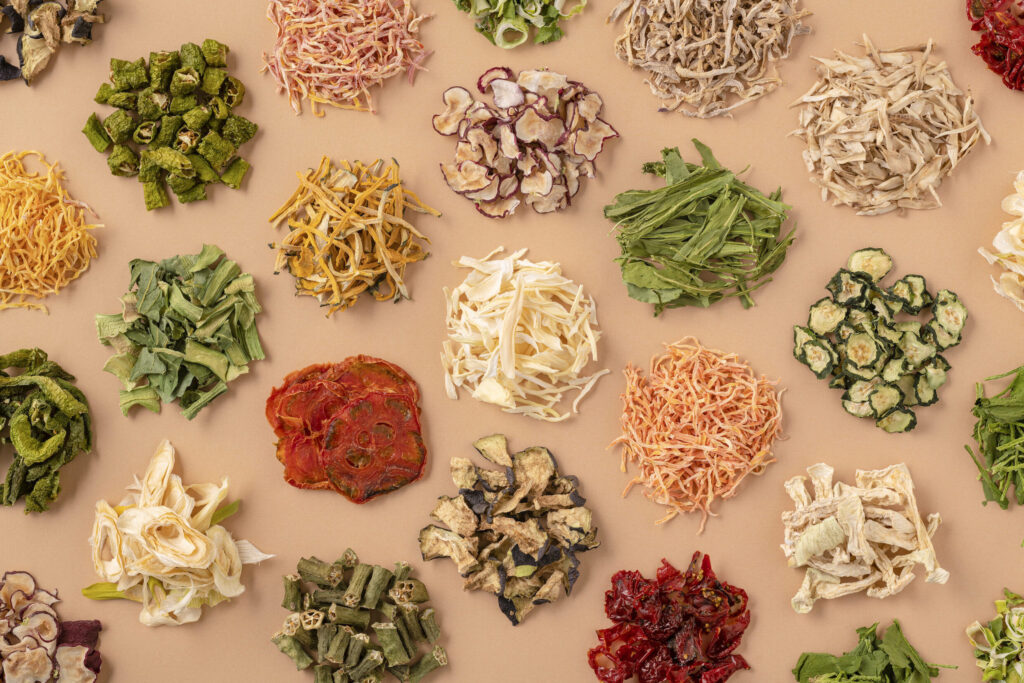
- Available for purchase in small lots from 1 kg
- We handle heirloom vegetables from across Japan
- Dried fruit and herbs also supported
FOR BUSINESS
乾燥水菜を、原料としてお探しですか
国産の水菜を乾燥・粉砕してお出ししています。カット形状や粒度の指定、継続してのお取引もご相談ください。規格は Dried mizuna・Mizuna powder に掲載しています。
少量でのご購入は、姉妹ブランドの通販サイト OYAOYA で承っています。
Frequently Asked Questions About Kyo Mizuna
Are Kyo mizuna and ordinary mizuna different things?
They're basically the same vegetable. Mizuna grown in Kyoto is called "Kyo mizuna" as an heirloom vegetable. In Kanto it's sometimes called "kyona." There are differences in growing region and variety, but as a plant they're the same kin.
How do you tell Kyo mizuna and mibuna apart?
You can tell them apart by leaf shape. Kyo mizuna has jagged notches at the leaf edges, while mibuna has rounded, slender leaves with no notches. Mibuna is said to have been born from mizuna, and in taste Kyo mizuna is mild while mibuna has a faint heat. Both are Kyoto heirloom vegetables.
Is it OK to eat raw?
Yes. With little astringency or off-taste, tender small plants can go into salads without parboiling. Wash well and cut to a bite size, and you can enjoy the crisp texture as-is.
When is Kyo mizuna in season?
Open-field mizuna is in season from winter to early spring, roughly November to March. Exposed to cold, its sweetness increases. It's distributed year-round, but it's richest and tastiest in winter.
Any tips for keeping the crispness?
Keeping cooking brief is the top tip. In hot pots and stir-fries, cook it through quickly right before eating. Overcooking spoils both texture and color, so adding it last is recommended.
How should I use dried Kyo mizuna?
Just add it straight to miso soup or soup to rehydrate. No prep needed—it's an easy way to add a green. Because it keeps long at room temperature, it's handy to keep on hand.
Summary
Kyo mizuna is a leafy green with history, supporting Kyoto's winters since the Heian period. With a crisp, pleasant bite and no off-taste, usable in hot pots and salads alike, you can choose by use among large plants, small plants, and red-purple types. Grasp its difference from mibuna, and in its winter season—with a little effort in storage—try enjoying its delicate deliciousness in a variety of dishes. Dried Kyo mizuna is a reliable option for both the home pantry and commercial materials.
Related articles
Download the product catalog
We will send the materials to your email address based on the information you provide.
- Kamo Eggplant: A Kyoto Vegetable Prized for Its Round Shape and Rich Flavor
- What Are Kyoto's Traditional Preserved Foods? Inherited Wisdom and How to Use It Today
Author of this article
Related articles
-
 京野菜は何品目あるのか、読み方の一覧と認定の枠組みから確かめる
 -
 Drying Is Another Kind of Cooking
 -
 The Technology to Lock In the Season. The Seasonal Story Dried Vegetables Connect.
 -
 The Cut Face of a Vegetable. The Difference the Cut Makes.
 -
 Tasting Kyoto Vegetables by Aroma. The Pleasure of Cooking That Begins at the Tip of the Nose
 -
 Vessels and Kyoto Vegetables. Creating the Scenery of Plating.
 -
 Vegetables and Heat Control. Between High and Low Flame
 -
 Kyoto Vegetables and Sake. The Happy Relationship of a Dish and a Cup.