
The Complete Guide to Choosing a Filling OEM | Points for Selecting a Contractor Without Regret

Summary of this article
We explain selection points for filling-and-processing OEM: confirming the production management system, the status of employee training, the fit between lot size and budget, compliance with laws such as the Food Sanitation Act, and track record and expertise—five points in all. We also cover the types of filling (liquid, powder, paste, small bag, tea bag), how to make effective use of matching sites, five steps from clarifying requirements to contract, and countermeasures for failure cases caused by prioritizing cost or inadequate communication of specs.
The food OEM market is now seeing unprecedented growth. Entrants from other industries—retail, foodservice, startups—keep coming, and there are voices saying, “We want to make our own private-brand product.” But failing at choosing a partner for filling-and-processing OEM leads to serious problems: quality trouble, delivery delays, budget overruns, and more. This article thoroughly explains the points for OEM selection that won’t fail.
From those considering OEM for the first time to those thinking about reviewing their current partner, we share practical selection criteria.
Recommended reading
What Is Filling-and-Processing OEM? Grasping the Basics
Filling-and-processing OEM is a manufacturing arrangement in which the filling and packaging steps of a product are outsourced. Short for Original Equipment Manufacturing, it lets you make your own brand’s products with another company’s facilities and technology.
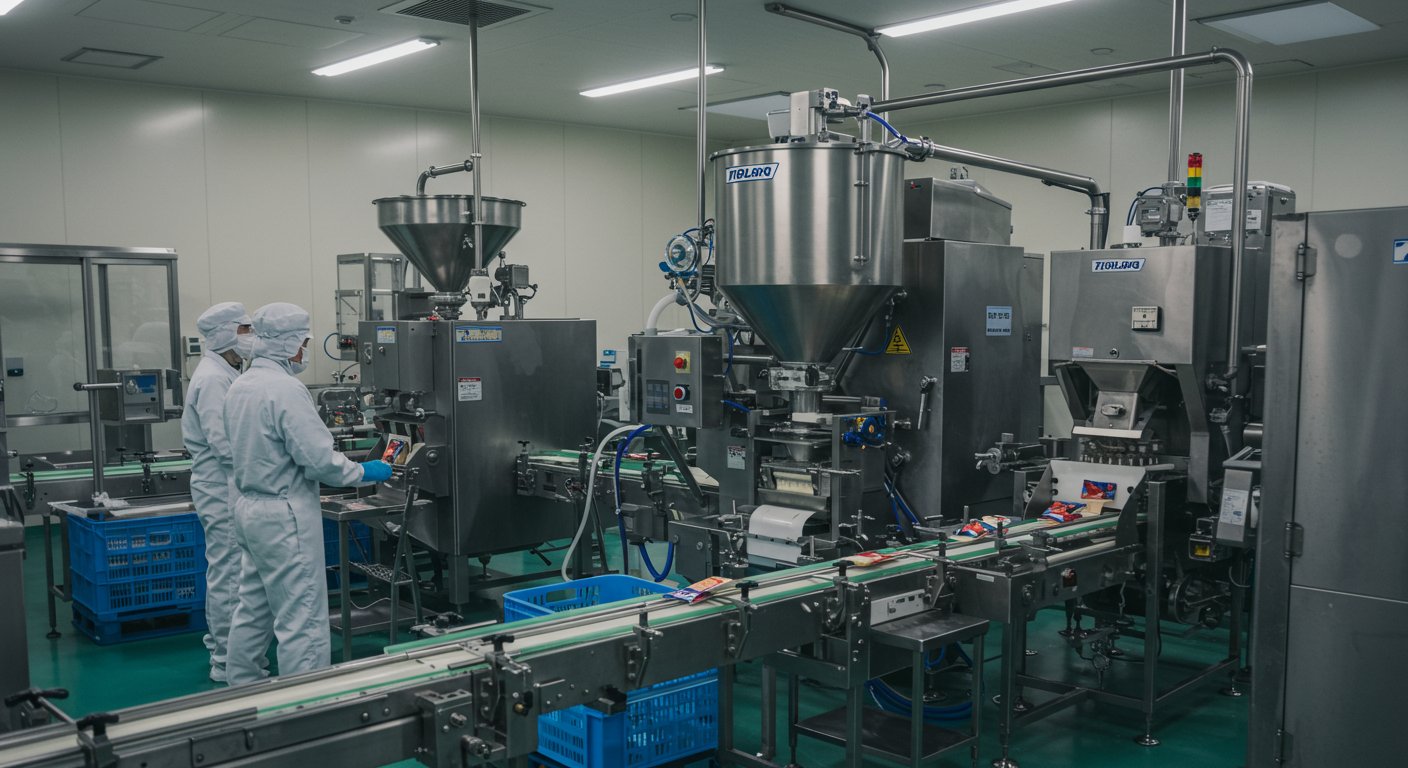
Representative examples are steps that fill containers with liquids or powders—beverages, seasonings, supplements, and the like. The greatest appeal is being able to realize high-quality products with professional technology even without owning production facilities yourself.
The Benefits of Using OEM
The first benefit is that you can greatly cut initial investment. Because investment in production facilities or a factory is unnecessary, even businesses with limited capital can take on new product development.
What’s more, commercialization is possible even without specialized manufacturing know-how. You can build a division of labor in which you concentrate your business resources on planning and marketing and leave production to the pros. The barrier to entering a new business drops dramatically.
The flexible adjustment of production volume can’t be overlooked either. You can increase or decrease production in response to demand fluctuations and minimize inventory risk. Staged business expansion—from test sales to full rollout—becomes possible.
The Main Types of Filling and Processing
Liquid filling is used for beverages, dressings, and sauces. Powder filling is ideal for supplements, powdered soups, and seasonings. Paste filling is used for seasonings, sauces, cosmetics, and more.
Small-bag filling is for individually packaged seasonings and supplements, and tea-bag filling is a technology specialized for tea products. Each requires specialized techniques suited to the product’s characteristics.
Five Key Points for OEM Selection That Won’t Fail
The most important thing in OEM selection is clarifying your own requirements. Vague criteria invite trouble later on.
1. Confirming the Production Management System
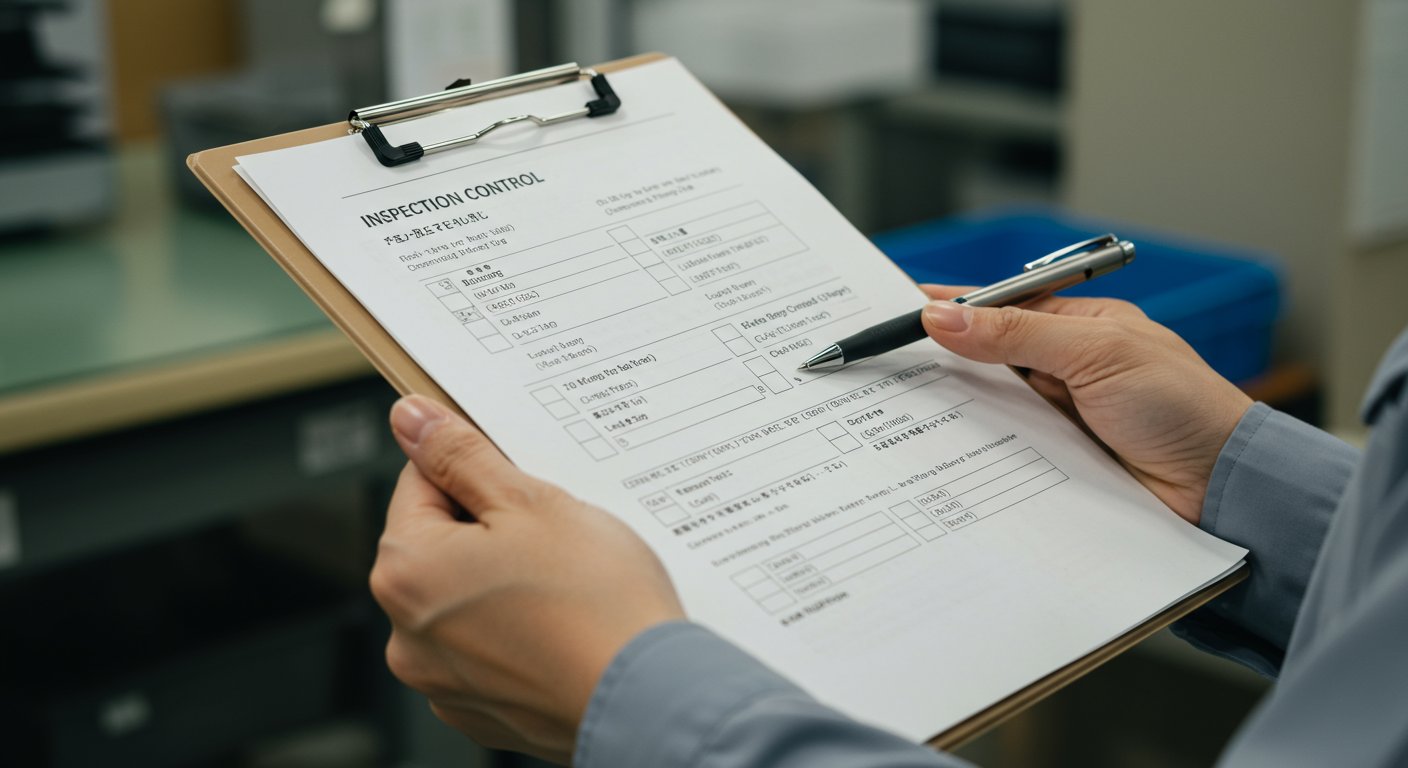
Check whether the method for receiving raw materials is documented and clear. Whether they perform per-production profit-and-loss checks and whether the work environment is set down in writing are essential too. Confirm their quality control track record concretely. Whether an inspection system and traceability mechanisms are in place will determine stable product supply.
2. The Status of Employee Training
You need to confirm whether education and training for employees is documented. Whether records of skill evaluations and comprehension assessments are created can’t be overlooked either. Companies with a well-developed training system tend to have high quality stability, because operators’ skill directly affects product quality.
3. The Fit Between Supported Lot Size and Budget
Confirm whether the minimum lot fits your business scale. A company that can handle small lots lets you start from test sales.
Whether they can respond flexibly to your budget is essential too. Weigh the balance of cost and quality, and choose a partner you can build a long-term partnership with.
4. Level of Understanding of Relevant Laws
Confirming whether they correctly understand relevant laws—the Food Sanitation Act, the Food Labeling Act, and the like—is a must. Legal violations destroy a company’s trust.
HACCP Certification and ISO certification status is also a basis for judgment. Third-party certification is objective proof of a quality control system.
5. Track Record and Expertise
Check whether they have a track record of making similar products. Companies with an ample track record tend to have strong trouble-handling ability too. Whether their strengths match your product is essential as well. The more specialized a company, the more detailed proposals and technical support you can expect.
We have prepared materials that explain small-pouch filling
Agriture, flexibly handling everything from small lots to large lots
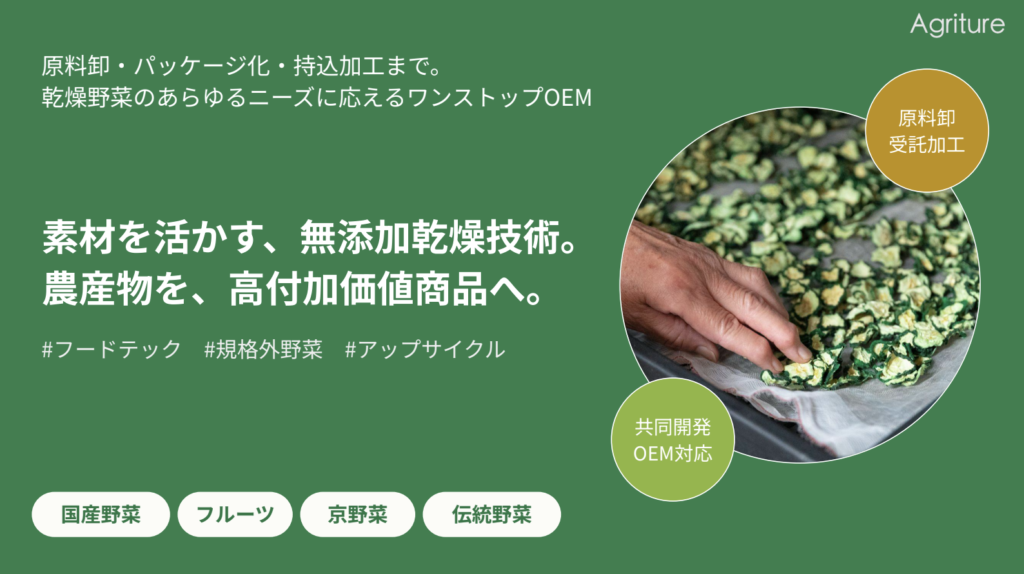
- Small-bag filling from 500 bags
- Tea and coffee also supported
- Sealing carried out in a single seamless flow
How to Search Efficiently Using Matching Sites
There are several ways to find an OEM partner, but matching sites are drawing attention.
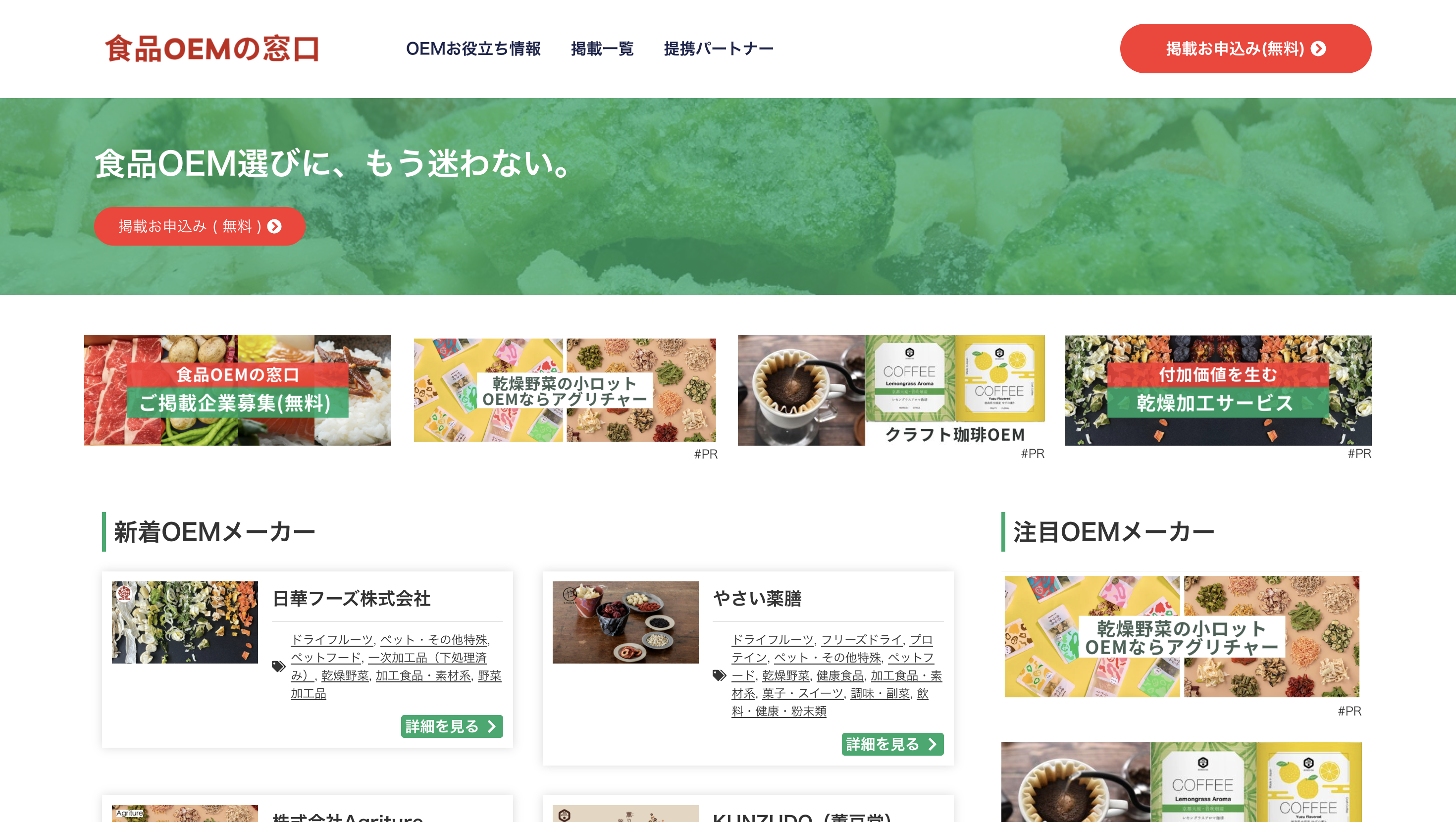
The Features and Benefits of Matching Sites
On a platform like Food OEM no Madoguchi, you can narrow down by specific search conditions. You can set detailed conditions such as small lot, powder processing, domestic-ingredient support, and tea-bag filling.

Information can be posted 24 hours a day, letting you acquire leads across regions and industries. Without the constraints of time and place that a trade show has, you can search candidate companies efficiently.
A feature is that the inquiries reaching listed companies are often high-confidence. Because you connect directly with prospects already considering an order, the close rate rises.
How to Use Them Effectively
Describing the processing you can handle concretely is important. Make technical details clear—drying, grinding, filling, and so on.
Clearly show lot size, delivery date, and use, too. Vague wording makes appropriate matching difficult. Adding photos and case examples is even more effective.
The speed of your initial response also sways the close rate. Respond to inquiries quickly and build trust early.

The Selection Process, Step by Step
Let’s look at the actual selection process in stages.
Step 1: Clarifying Requirements
Concretely define product specifications, production volume, budget, and delivery date. If requirements are vague, you won’t be able to find an appropriate partner.
Organize any required certifications and quality standards in advance too. Additional requirements coming up later can significantly delay the schedule.
Step 2: Listing Candidate Companies
Use multiple means together—internet searches, industry papers, trade shows, matching sites. Gathering information from many angles leads to finding the best partner.
Confirm detailed information on each company’s official site and narrow it down to about 5–10 companies.
Step 3: Detailed Evaluation and Comparison
Compare production capacity, quality control system, track record, cost, and delivery responsiveness. Creating a checklist and evaluating objectively is important.

Step 4: On-Site Visits and Interviews
If possible, conduct a factory tour. Confirming the actual production environment gives you information you can’t get from documents alone.
In an interview with the person in charge, confirm how easy communication is, too. A smooth exchange is essential for a long-term partnership.
Step 5: Final Decision and Contract
Decide on a partner based on the overall evaluation. Having a lawyer or specialist review the contract terms gives peace of mind.
Clearly document quality standards, delivery dates, cost, scope of responsibility, and the like. A vague contract becomes the cause of trouble later.
Common Failure Cases and Countermeasures
Learning from actual failure cases lets you avoid making the same mistakes.
Failure Case 1: Selecting on Cost Alone
There are cases where choosing the cheapest partner led to frequent quality trouble. Behind low prices can lurk deficiencies in the quality control system.
As a countermeasure, weigh the balance of cost and quality. A comprehensive value assessment is required.
Failure Case 2: Inadequate Communication
There are also cases where requirements were insufficiently conveyed and a product different from expectations was delivered.
The countermeasure is creating a detailed specification sheet and checking progress regularly. Finding and correcting gaps in understanding early is essential.
Failure Case 3: Misjudging Capacity
There are cases where ordering beyond the partner’s production capacity caused delivery delays.
As a countermeasure, confirm the partner’s production capacity in detail in advance. Evaluating their responsiveness during busy periods too is important.
We have prepared materials that explain small-pouch filling
Agriture, flexibly handling everything from small lots to large lots
- Small-bag filling from 500 bags
- Tea and coffee also supported
- Sealing carried out in a single seamless flow
Summary: For a Successful OEM Selection
Selecting a filling-and-processing OEM is an important decision that sways product quality and business success. Evaluate from many angles—production management system, employee training, level of legal understanding, track record, and more.
By using matching sites, you can efficiently find high-confidence candidate partners. Clarifying requirements and comparing multiple candidates is the key to success.
Judge comprehensively not just on cost, but on quality, communication, and the potential for a long-term partnership. Meeting the right partner guides your business to the next stage.
Use a matching site like Food OEM no Madoguchi and find the partner best suited to your business. With detailed listings and quick responses, the encounter with your ideal partner awaits.
Small-pouch filling and packaging OEM service here
TOC
Download the small-pouch filling materials
We will send the materials to your email address based on the information you provide.
If you are considering product development with off-spec or your own farm's vegetables:From planning to processing, materials, package printing and novelties, you can consult us through a single point of contact. → Learn more about one-stop product development
FOR BUSINESS
乾燥野菜のOEM・受託加工を承ります
国産の野菜・果物の乾燥、100メッシュ相当までの粉砕、10g以上の小袋充填までをお受けしています。小ロットの試作から量産までご相談ください。寄せられた相談の実例は OEM・卸のご相談 に掲載しています。
乾燥品の賞味期限は、出荷日から6ヶ月程度を目安にご案内しています。
- A Complete Guide to Making Original PB Foods: The Steps from Planning to Manufacturing and Sales
- What Are the Benefits of Contract Food Processing? | Comparison with In-House Manufacturing and Points for Use
Author of this article
Related articles
-
 Original coffee marketing strategy | Ways to grow sales
 -
 ベジタリアンとは?国の規格が分けている4つの区分と食べられないもの
 -
 長ねぎと白ねぎは同じもの?ねぎの種類と呼び名を国の資料で確かめる
 -
 柚子の種類は何種類あるのか、公の資料で名前が残る系統を数えた
 -
 ゆずの時期は年に二度、青ゆずは7月から黄ゆずは10月から
 -
 ゆずの産地は高知が半分を占め、二位は徳島から愛媛に変わった
 -
 Preventing Food OEM Failures: Common Failure Cases and Countermeasures for Success
 -
 How to find a food OEM | How to efficiently find the best manufacturing partner