
Shima rakkyo has many fans! How to eat it salt-pickled or as tempura, and its best season

Summary of this article
Shima rakkyo is one of Okinawa's representative "island vegetables," characterized by being smaller than ordinary rakkyo with a strong pungency and aroma. This article explains, in one place, the whole picture of island vegetables, how it differs from ordinary rakkyo and eshalot, the history of its main growing area of Iejima, its season, nutritional components, prep, recipes such as salt-pickling, tempura, and champuru, how to choose it, and the use of commercial dried shima rakkyo.
「Shima rakkyo is a popular vegetable rooted in Okinawa's food culture, to the point it's said "it has many fans." It differs from ordinary rakkyo in variety, size, and flavor, and its sharp bite and distinctive aroma enhance dishes. In Okinawa, salt-pickling, tempura, and champuru are the standard ways to eat it.
This article introduces, in one place, the basics of shima rakkyo, its positioning as one of Okinawa's Island vegetables, how it differs from ordinary rakkyo and eshalot, the history of its main growing area of Iejima, its season and best time, nutrition, prep, ways to eat it—salt-pickling, tempura, champuru—and how to choose it.
TOC
What is shima rakkyo? Okinawa's representative "island vegetable"
Shima rakkyo is a heirloom vegetable of the Liliaceae Allium genus long grown in Okinawa Prefecture, one of the "island vegetables"emblematic of Okinawa's food culture. Compared with the ordinary rakkyo distributed on the mainland, it is smaller and slenderer, with a stronger sharp bite and distinctive aroma.
In Okinawa it has long been enjoyed in home and local cooking. Preparations such as salt-pickling, tempura, and champuru are standard, and it is an indispensable presence on izakaya menus and at the household table. Among tourists, too, it has many fans as an Okinawa souvenir, and varieties you can only taste on-site are gaining popularity.
Basic information on shima rakkyo
- Family/genus: Liliaceae, Allium
- Origin: native to China and the Himalayan region. In Okinawa a native lineage has long taken root and been grown
- Size: small, slender shape (smaller than ordinary rakkyo)
- Flavor: strong pungency and aroma, a crisp bite
- Main ways to eat: salt-pickling / tempura / champuru / asazuke / chopped as a condiment
FOR BUSINESS
乾燥島らっきょを、原料としてお探しですか
国産の島らっきょを乾燥・粉砕してお出ししています。カット形状や粒度の指定、継続してのお取引もご相談ください。規格は Dried Shima Rakkyo に掲載しています。
少量でのご購入は、姉妹ブランドの通販サイト OYAOYA で承っています。
What are island vegetables? Okinawa's heirloom vegetables and the place of shima rakkyo
Island vegetables are the collective term for traditional agricultural products suited to Okinawa Prefecture's climate, eaten since before the war, and used in local cooking. Okinawa Prefecture organizes island vegetables around conditions such as "eaten since before the war," "used in local cooking," and "suited to Okinawa's climate," and 28 items are currently positioned as island vegetables. Okinawa Prefecture and the Okinawa Prefectural Agricultural Research Center also work on their protection and succession.
Representative island vegetables
- Shima rakkyo: a small rakkyo with strong pungency and aroma. Okinawa's representative island vegetable
- Goya (nigauri): a bitter summer vegetable. The star of champuru
- Naberaa (hechima): a summer vegetable in which the unripe fruit is eaten. Miso simmer is the standard
- Handama (kinjiso): a purple leafy green. Suits ae-mono and ohitashi
- Shimana (a type of mustard green): for pickles and stir-fries
- Papaya (green papaya): the unripe fruit is eaten as a vegetable
- Shima togarashi: a small, strongly pungent chili. The raw material for koregusu
These are items nurtured within Okinawa's food culture and climate, with distinctive flavors, nutrition, and cooking methods. Shima rakkyo is nationally well recognized even among island vegetables and is positioned as an ingredient representative of Okinawa.
How shima rakkyo differs from ordinary rakkyo and eshalot
Shima rakkyo, ordinary rakkyo, and eshalot look similar, but differ in variety, growing region, and how they're eaten.
| Item | Shima rakkyo | Ordinary rakkyo | Eshalot |
|---|---|---|---|
| Category | Liliaceae, Allium (native variety) | Liliaceae, Allium | Young-harvested rakkyo (same species) |
| Main growing region | Okinawa Prefecture (Iejima, etc.) | Tottori Prefecture, Kagoshima Prefecture, etc. | Shizuoka Prefecture, Ibaraki Prefecture, etc. |
| Size | Small, slender | Larger, round | Slender with green leaves attached |
| Pungency/aroma | Strong | Ordinary | Mild |
| Main ways to eat | Salt-pickling, tempura, champuru | Sweet-vinegar pickling, curry garnish | Eaten raw with miso or soy sauce |
Ordinary rakkyo's standard is "sweet-vinegar pickling," while shima rakkyo's mainstream is "salt-pickling or tempura." Eshalot is young-harvested and suited to fresh eating—each has different uses.
The main growing area and cultivation environment of shima rakkyo | Iejima
The best-known main growing area of shima rakkyo is Iejima, in the northern part of the Okinawa main island. Iejima is a major shima rakkyo producer, grown on well-draining soil spread across terraced terrain based on Ryukyu limestone, in a mineral environment carried by sea breezes. In 2013 it declared itself the "Home of Shima Rakkyo" and has promoted the brand nationwide as a specialty.
- Iejima: the representative main producer of shima rakkyo. Famous for both tourist souvenirs and shipping volume
- Northern and central Okinawa main island: grown in several villages, including Nakijin, Ginoza, and Onna
- Outer islands: also grown on Ishigakijima, Miyakojima, and Kumejima
Iejima-grown shima rakkyo has fans nationwide for its strong pungency, firm bite, and rich aroma. Within a way of life combining fishing and farming, shima rakkyo has been carried on as an important specialty supporting cash income.
A product catalog that shows around 100 items we handle
Agriture, flexibly handling everything from small lots to large lots
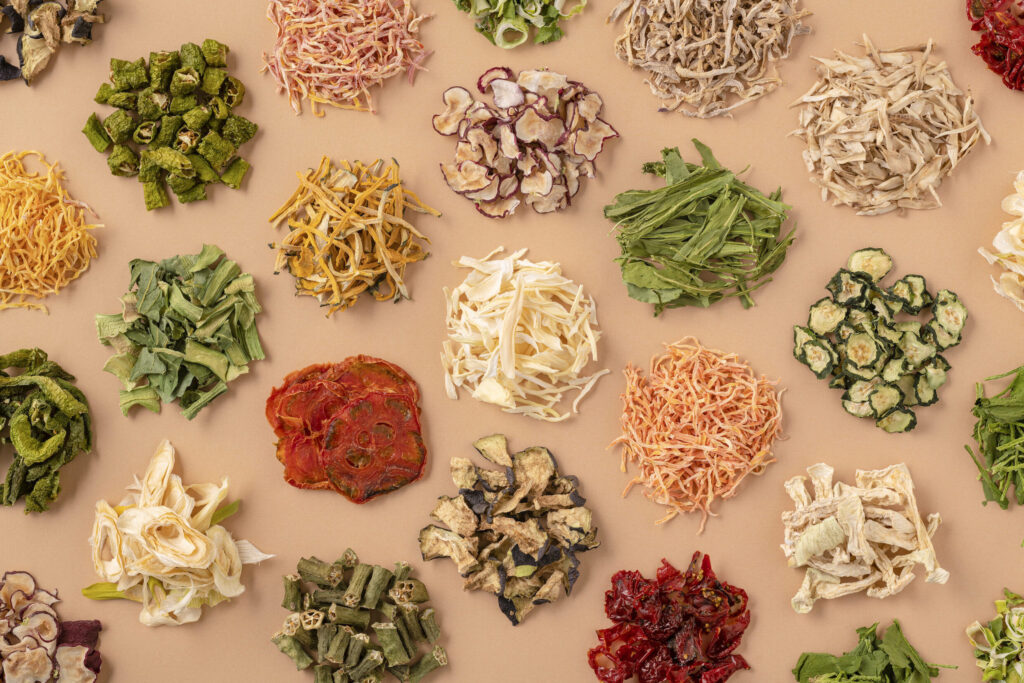
- Available for purchase in small lots from 1 kg
- We handle heirloom vegetables from across Japan
- Dried fruit and herbs also supported
The season and best time for shima rakkyo
Shima rakkyo is in season roughly from spring to early summer, March to June. During this period new-crop shima rakkyo circulates, and the balance of pungency, aroma, and texture reaches its best state. At Okinawa's markets and farm stands, it is often sold as "new shima rakkyo" during the season.
- March–April: early new crop. Juicy, with a gentle bite
- April–May: peak season. Pungency and aroma grow stronger
- May–June: mature ones circulate. Ideal for salt-pickling
- From summer on: circulated year-round as preserved and processed goods (salt-pickled, dried)
Early spring on an Okinawa trip is the perfect season to enjoy shima rakkyo. Tasting salt-pickled or tempura shima rakkyo at an izakaya or local restaurant makes for a food experience unique to Okinawa.
The nutritional components and health effects of shima rakkyo
Shima rakkyo's distinctive pungency and aroma contain components common to negi, garlic, and the rakkyo family, making it an ingredient to work into daily meals. We organize the representative components and their expected roles below.
- Allicin (allyl sulfide): an aroma and pungency component common to garlic and the negi family
- Dietary fiber (fructan): a water-soluble dietary fiber, as an ingredient for meals mindful of gut environment
- Vitamin C: a water-soluble vitamin worth taking in mindfully in daily meals
- Potassium: a mineral component found in vegetables and fruits
- Polyphenols: a plant-derived functional component
The role of each component and appropriate intake guidelines can be checked in the Ministry of Health, Labour and Welfare's e-Healthnet,, and the Ministry of Education, Culture, Sports, Science and Technology's Food Composition Database . This does not guarantee a medical treatment effect; the basic idea is to work it in within the overall balance of your diet.
The basics of prepping and cooking shima rakkyo
To eat shima rakkyo deliciously, prep is important. Once you master the basic steps of peeling, root-trimming, and washing, you can apply them to any cooking—salt-pickling, tempura, or champuru.
- 1. Wash under running water: remove the soil
- 2. Trim the roots: cut off the root base flat with a knife
- 3. Cut the leaves: use the green leaves as a condiment; if using only the white part for cooking, cut them apart
- 4. Peel the thin skin: rub with the back of the knife to remove the thin skin (peel one layer and it's shiny)
- 5. Soak in salt water or vinegar water: if you want to soften the pungency, for about 5–10 minutes
The leaf part can be chopped and used as a condiment, so don't throw it away—make use of it. Whether to leave the thin skin on can be adjusted by dish.
Recommended ways to eat shima rakkyo | Salt-pickling, tempura, champuru
We introduce three standard ways to eat shima rakkyo. These are cooking methods beloved in Okinawa's izakaya and home cooking, requiring no difficult technique.
Salt-pickled shima rakkyo (standard)
- Sprinkle salt over the prepped shima rakkyo and rub lightly
- Put in an airtight container or zipper bag and let rest in the refrigerator for half a day to a day
- Before eating, rinse and top with a little katsuobushi and soy sauce
Order "salt-pickled shima rakkyo" at an Okinawa izakaya and this simple dish comes out. The sharp bite and crisp texture go well with awamori and beer.
Shima rakkyo tempura
- Dust the prepped shima rakkyo with cake flour and coat with batter
- Fry crisp in 180°C oil (briefly)
- Eat it clean with salt, tentsuyu, or kabosu
Heating makes the pungency mild and changes the texture to a fluffy one. It is popular as a snack with beer and awamori too.
Shima rakkyo champuru
- Slice the shima rakkyo diagonally and stir-fry with pork, shima tofu, nira, canned pork, etc.
- Season with salt, soy sauce, and katsuobushi
- Swirl in beaten egg at the end to finish
Adding shima rakkyo to the Okinawan home dish "champuru (stir-fry)" makes its aroma and pungency an accent that whets the appetite.
Other recommended recipes
- Asazuke / vinegar pickles: a light flavor pickled with light salt, vinegar, and sugar
- Shima rakkyo in olive oil: a Western twist, as a condiment for pasta
- Miso pickling: a fermented flavor steeped in Okinawan miso
- Deep-fried plain: fried without batter, with simple salt
How to choose shima rakkyo and a buying guide
We sum up the points for choosing tasty shima rakkyo and where to get it.
How to choose shima rakkyo
- The white part is plump and round, and firm
- The leaf tips are green and taut
- Ones sold with soil still on are proof of freshness
- A slender, straight shape
- Free of discoloration, wilting, or mold
Where to buy
- Within Okinawa Prefecture: Naha City Public Market, roadside stations, JA farm stands, the Okinawa-ingredient corner of supermarkets
- Okinawa product fairs on the mainland: available at department stores and product fairs during the season
- Online: Okinawa direct-from-producer EC sites, Rakuten Ichiba, Amazon
- Izakaya and local restaurants: enjoy it in processed form as salt-pickled or tempura
Commercial use of shima rakkyo | The strengths of dried shima rakkyo
When restaurants, izakaya chains, and food makers handle shima rakkyo for commercial use, the challenges of fresh produce include "seasonal concentration, seasonal price fluctuation, waste loss, prep labor, and refrigerated storage." The option that solves these is dried shima rakkyo, contained in burdock and cocoa.
- Long-term room-temperature storage: doesn't crowd refrigerator space; use the amount you need when you need it
- Stable purchase price: stockpile dried during the season, curbing the impact of seasonal price fluctuation
- Reduced waste loss: small-pack and single-use packs minimize leftovers
- Zero prep: no chopping or peeling steps, shortening cooking time
- Okinawa-grown appeal: put the brand story of "Okinawa's island vegetable" and "uses shima rakkyo" to work on the menu
At Agriture, we handle dried vegetables including Okinawa-grown shima rakkyo for commercial use. From OEM and small-lot sample production to regular supply, wholesale and OEM of commercial dried vegetables and Drying OEM .
Summary: Shima rakkyo is Okinawa's island vegetable, a taste of the region
Shima rakkyo is one of Okinawa's representative island vegetables, differing greatly from ordinary rakkyo in variety, size, and flavor. It is a heirloom vegetable carried on by Okinawa's growers centered on Iejima, long loved in preparations such as salt-pickling, tempura, and champuru.
At home, we recommend enjoying new shima rakkyo in the March–June season as salt-pickled or tempura. Be sure to taste it on an Okinawa trip or at a product fair. If you want a stable commercial supply of shima rakkyo, please check the dedicated OEM/wholesale section.
FOR BUSINESS
乾燥島らっきょを、原料としてお探しですか
国産の島らっきょを乾燥・粉砕してお出ししています。カット形状や粒度の指定、継続してのお取引もご相談ください。規格は Dried Shima Rakkyo に掲載しています。
少量でのご購入は、姉妹ブランドの通販サイト OYAOYA で承っています。
FAQ
Download the product catalog
We will send the materials to your email address based on the information you provide.
Author of this article
Related articles
-
 Okinawa island vegetables: individualistic vegetables nurtured by a subtropical climate
 -
 Kaga vegetables: Kanazawa brand vegetables where tradition lives on
 -
 The appeal of Kansai heirloom vegetables | Specialties of Naniwa, Kyoto, and Yamato thoroughly explained
 -
 Kyoto heirloom vegetables: Kyoto specialties with a long history
 -
 A list of heirloom vegetables of the 8 prefectures of Kyushu and Okinawa|A thorough introduction to characteristics, growing regions, and seasons
 -
 Know the heirloom vegetables of Edo Tokyo | The city’s vanishing food culture
 -
 They'll make you smile! The fun names of heirloom vegetables and their origins
 -
 5 cases and strategies that succeeded in branding heirloom vegetables