Dried vegetables

TOC
What are dried vegetables?
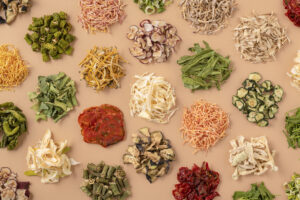
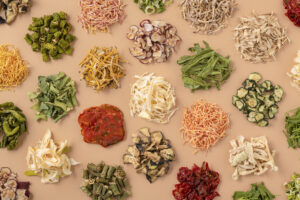
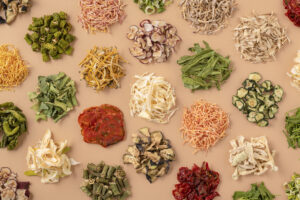
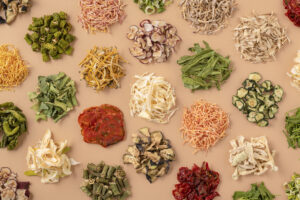
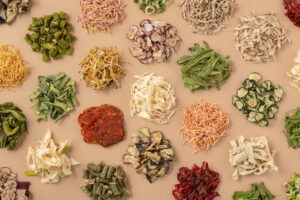
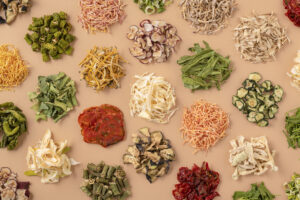
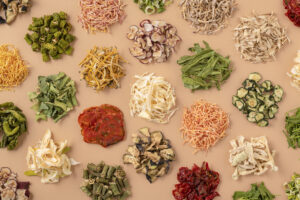
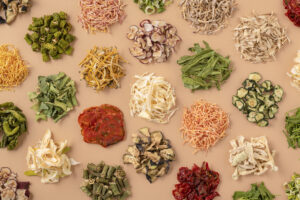
Dried vegetables are processed foods made by removing the moisture from fresh vegetables to raise their shelf life. Sun-drying and Hot-air drying (spray drying)、Vacuum freeze-drying (freeze-drying) and other methods are used to make them, characterized by long-term storage, reduced weight, and concentrated umami.
In the fields of agriculture and food processing, they draw attention as a means of using seasonal vegetables without waste, and demand is growing for commercial-use disaster stores and products for overseas export.
English notation: dried vegetables
Reading: kansou yasai
The features and background of dried vegetables
The history of dried vegetables is long; once, they were made throughout Japan as a preserved food to prepare for winter. Today, demand is rising for both household and commercial use, thanks to the convenience of room-temperature storage and their saving the effort of heat cooking.
- Shelf life: removing the moisture curbs microbial growth, enabling long-term storage at room temperature
- Convenience: no prep or cutting needed; you can put them straight into simmered dishes, soups, and takikomi rice
- Transportability: lightweight and compact, easy to handle as commercial stores and products for overseas export
Also, food loss reduction They also draw attention from the standpoint of SDGs and Food Tech, and a role is expected of them as a destination for making effective use of non-standard vegetables and surplus produce. In the context of
, reappraisal is advancing, and they're coming to be recognized as a next-generation "convenient and sustainable vegetable."
Examples of Agriture's use of dried vegetables
- At Agriture, we manufacture high-quality dried vegetables using domestic vegetables, centered on Kyoto. Skilled at dry processing that makes the most of the character of Kyoto vegetables and heirloom vegetables, we roll them out for OEM and commercial raw materials too.
- Raw material: 100% domestic vegetables. Buying non-standard vegetables at fair prices and upcycling them
- Method: low-temperature drying that retains the ingredient's flavor, color, and texture
- Design: no sugar or glucose used, so it doesn't hinder the recipe design of the OEM client
Uses: accommodates diverse products — soups, dressed dishes, sweets, dashi, office-oriented side-dish supplements, and more
Related keywords
Food loss
In particular, our proprietary drying technology that retains the ingredient's flavor, color, and texture, and our product development without sugar or glucose, are distinctive features. Under the theme of the "rediscovery" of vegetables, we accommodate diverse uses such as soups, dressed dishes, sweets, and dashi.
Why Dried Vegetables Now? 5 Benefits Beyond Just Convenient and Nutrient-Concentrated
How to Make Dried Vegetables | Tips for Easy Home-Dried Vegetables and Recipe Uses
Change the Start of Your Day! The Relationship Between Dried Vegetables and Dietary Fiber
FOR BUSINESS
乾燥野菜を業務用でお探しですか
国産の野菜・果物を乾燥し、必要に応じて粉砕してお出ししています。扱っている品目は100種前後で、規格は 乾燥品の一覧・パウダーの一覧 に掲載しています。
少量でのご購入は、姉妹ブランドの通販サイト OYAOYA で承っています。
FAQ
Related pages
Q. How does the nutrition compare with fresh vegetables?
A. Some nutrients decrease in the drying process, but dietary fiber and minerals remain relatively well, and umami tends to be concentrated too.
Q. What dishes can they be used in?
A. They can be used widely — soups, takikomi rice, simmered dishes, dressed dishes, ramen toppings, and more. The soaking liquid has umami too, so it can be used as dashi.
Q. How long can they be stored at room temperature?