What Are Edible Flowers? Types, How to Eat Them, and How to Choose, Explained by a Grower

Summary of this article
A dried-vegetable manufacturer explains the types and flavors of edible flowers, how they differ from ornamental flowers, how to choose safe ones, and how to eat and store them. We also introduce ways to enjoy them at home and uses for dried edible flowers.
Just gently added atop a dish or sweet, edible flowers instantly brighten the plate. But many people freeze up, wondering "are edible flowers really safe to eat?" or "how do they differ from ornamental flowers?"
This page sorts out, in one go, the definition of edible flowers and how they differ from ornamental ones, the main types and their tastes, how to choose without going wrong, how to eat and store them, growing them at home, and choosing between fresh and dried. As a dried vegetable maker that handles dried edible roses, we explain with a maker's perspective mixed in.
TOC
What are edible flowers?
Edible flowers are, as the name says, "flowers you can eat." Only flowers grown safely for food, not for ornament, are handled under this name. They're an ingredient you can enjoy not only for adding color to dishes but for their faint aroma and texture.
The premise: flowers grown for food
Edible flowers are flowers cultivated and distribution-managed for food use. From bloom to sale, the soil, fertilizer, and pest control are managed so they're safe to eat. That's exactly why they can be scattered raw over a salad or used to decorate a cake. Whereas ornamental flowers are "flowers to enjoy by looking," edible flowers being grown from the start as "flowers to eat" is the starting point.
The decisive difference from ornamental flowers
Ornamental flowers sold at florists and home centers almost always have life-extending agents to make the flowers last, or chemicals to prevent pests, used on them. These are treatments premised on being enjoyed by looking, and putting them in your mouth isn't assumed. Even flowers of the same variety, remember that those grown for ornament can't be used as food, and you'll be safe.
A point easily misunderstood is "couldn't I dry them and use them for tea or food?" The chemicals left on ornamental flowers don't come out even when dried. Since they can't be used for tea or as an ingredient even when dried, always choose flowers sold as food to put in your mouth.
An ingredient to enjoy for taste, aroma, and color
The appeal of edible flowers isn't only the color that makes a dish showy. A sharp pungency, a faint sweetness, a fresh green aroma -- each petal has its individuality. Regard them as "flavorful ingredients" like vegetables and herbs, and the uses expand greatly.
FOR BUSINESS
乾燥野菜を業務用でお探しですか
国産の野菜・果物を乾燥し、必要に応じて粉砕してお出ししています。扱っている品目は100種前後で、規格は 乾燥品の一覧・パウダーの一覧 に掲載しています。
少量でのご購入は、姉妹ブランドの通販サイト OYAOYA で承っています。
The main types of edible flowers and their tastes
"Edible flowers" is one word, but the taste and color differ completely by variety. Knowing the easy-to-handle standards first makes it easier to choose to suit a dish.
Standard flowers easy for beginners to handle
Suited to a first step for their mild taste are viola and pansy. With a light flavor easy to pair from salads to cakes, and plenty of colors like pink, yellow, and purple, they let you easily set the plate's color. They make a good showing just decorated fresh, too.
Flowers with an accent of taste
Nasturtium has a sharp, wasabi-like pungency, and not only the flower but the leaves are edible too. Used as a salad accent, it tightens up a dish. Begonia is characterized by tartness and a crisp texture, and is also a type to enjoy for its taste.
Flowers that make the most of aroma or color
Rose has different aromas and flavors by variety, and the petals are torn to use in jam and sweets. Marigold and calendula are a vivid orange, with the advantage of the color remaining readily even when heated. Our company also handles dried edible roses that make the most of aroma, used for both color and scenting.
| Type of flower | Flavor tendency | Main color | Suitable use |
|---|---|---|---|
| Viola and pansy | Mild, light taste | Purple, yellow, white, pink | Decorating salads and cakes |
| Nasturtium | Wasabi-like pungency | Orange, red, yellow | Accent for salads |
| Rose | Aroma varies by variety | Red, pink, white | Jam, sweets, scenting |
| Marigold | Slight bitterness | Orange / yellow | Heated dishes, color |
| Begonia | Tart, crisp | Red, pink, white | A dish accent |
Once you know the taste type, you can choose the variety to suit a dish -- aromatic ones for sweet desserts, pungent ones for salads. Rather than choosing by color alone, considering taste compatibility too lets you use them far better.
How to choose edible flowers without going wrong, and safety
To enjoy them deliciously and safely, discernment when buying matters most of all. Master this and even a first-timer can bring them to the table with confidence.
Always choose ones labeled "edible"
The top priority is to choose flowers sold as food. Buy products clearly marked "edible flowers" or "shokuyo-bana (edible flowers)" at supermarkets, specialty shops, or online. Draw a firm line of not using ones from the ornamental section even of the same flower.
Judge by freshness, color, and aroma
When choosing fresh flowers, pick ones with firm petals, vivid color, and no damaged parts. Avoid ones that are wilted or discolored. Rather than ones with an extremely strong aroma, ones with a natural aroma true to the variety are easier to use as an ingredient.
- Petals are firm and glossy, not limp
- Color is vivid, with no brown-discolored parts
- It has a natural aroma true to the variety
- From a section labeled "edible" or "edible flowers"
Try a small amount at first for allergies
Since flowers are plants too, they may not agree with you depending on your constitution. For a variety you're eating for the first time, trying just one bite and watching how you feel is safe. Those sensitive to pollen, small children, and pregnant people should keep the amount modest and enjoy them while checking how they feel.
The sense for choosing has something in common with choosing domestic dried ingredients. For how to read freshness and origin labels, see How to choose dried yomogi.
A product catalog that shows around 100 items we handle
Agriture, flexibly handling everything from small lots to large lots
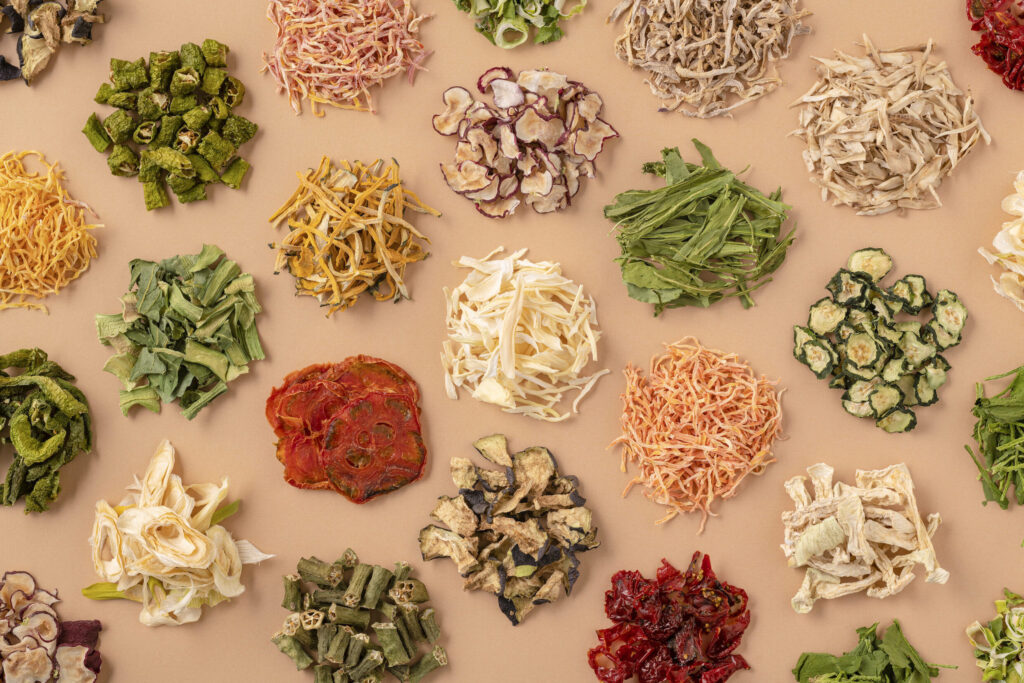
- Available for purchase in small lots from 1 kg
- We handle heirloom vegetables from across Japan
- Dried fruit and herbs also supported
How to eat and store edible flowers, and popular recipes
To use the flowers you've chosen without waste, knowing the tips for eating and storing them helps. No difficult cooking is needed. Starting with decorative uses is recommended.
How to use them in salads and sweets
The easiest is to scatter fresh flowers over a salad, chirashi sushi, or a cake. Sealed into icing cookies or jelly, the petals' color shows through as is. For flowers where bitterness bothers you, removing the calyx (the base of the flower) or quickly blanching them makes them easier to eat. Even just floating them in a clear drink makes for a good-looking cup.
Tips for storing fresh flowers and using them up
Fresh flowers are weak to drying, so wrap them in dampened kitchen paper, put them in an airtight container, and store in the fridge. The storage guide is a short 3 to 7 days, and the rule is to use them up before they wilt. Any you can't finish can be made into "flower ice" by putting flowers and water in an ice tray to freeze, for later use as a drink decoration.
| How to use | Flowers that suit it | A little extra touch |
|---|---|---|
| Coloring a salad | Viola, nasturtium | Scatter just before eating |
| Cakes and sweets | Viola, rose | Wipe off moisture and place on top |
| Drinks and ice | Small flowers in general | Make them last with flower ice |
| Baked goods, confectionery | Dried-type flowers | Working into dough |
Combine with dried ingredients
For folding into baked goods or bread, dried-type flowers are easier to handle than fresh and keep their color better. Combined with other dried ingredients, they add color and flavor at once. Using dried citrus, How to use dried lemon as a powder ingredient, for ichimi, shichimi, and making original seasonings, see How to Use Dried Mugwort is also a useful reference for making confectionery and drinks.
How to grow edible flowers at home
Flowers you like can be grown at home too, to enjoy freshly picked. You can start even from a small planter on a balcony. But here too, the basic of "growing them premised on food use" doesn't change.
Grow from edible seeds or seedlings
The most important thing in growing is using seeds or seedlings sold for food use. Ornamental seedlings may be chemically treated, so they aren't suited to being put in your mouth. Choose soil usable for growing edible vegetables too, and be mindful of eating from the growing stage on.
The basics of sunlight and watering
Many edible flowers prefer a sunny spot. Water them once the soil surface has dried and avoid overly wet soil -- that's the trick. When you want more flowers, diligently pinch off spent blooms and the next flowers keep coming up one after another.
- Place them in a sunny, well-ventilated spot
- Water once the soil surface has dried, and avoid excess moisture
- Pick off spent blooms early
- Remove insects by hand as soon as you spot them
Harvesting and pest control
Harvesting suits the cool morning hours before the temperature rises. Pick the flowers while they're open and firm. Since it's hard to rely on chemicals at home, remove insects by hand as soon as you spot them and grow them with good ventilation -- that's the basic. Picked flowers can be used in cooking as they are.
Fresh or dried, which to choose? A maker's perspective
Edible flowers come in two forms: fresh and dried. Which is better changes with the scene of use. From the perspective of one who handles dried products, we sort out the strengths of each.
Choosing between fresh and dried
Fresh flowers are appealing for their juiciness and dimensionality, suited to same-day plating. Dried flowers, on the other hand, are uniform in shape and color and keep for a long time, so they're valued in scenes of planned use such as confectionery and foodservice. That fresh lasts a few days while dried keeps about half a year to a year is also a big difference.
| Item | Fresh | Dried |
|---|---|---|
| Appearance | Juicy and dimensional | Uniform in shape and color |
| Storage period | 3-7 days | Half a year to a year |
| Suited use | Same-day plating and salads | Confectionery, baked goods, commercial use |
| Ease of handling | Requires freshness management | Can be used on a plan at room temperature |
Why dried edible flowers are chosen for commercial use
Cafes and sweets shops prefer dried because they can use just the amount needed when needed, and the finished color and shape stay consistent. Edible flowers have low production volume, and fresh flowers vary in the items and numbers that arrive day by day. Keeping them dried makes them less affected by that variation and makes it easier to reproduce the same color throughout the year.
Insights from making dried edible roses
Our company processes domestic edible roses into dried products, and flowers are even more delicate in color and aroma than vegetables, with the finish changing greatly with drying temperature and time (per our own findings). To keep a beautiful color, a step of drying them carefully right after harvest is essential. When you want to make the most of the aroma, there's also small-lot OEM of herbal tea and developing an original tea brand-- ways to use them as part of a blend, too.
A product catalog that shows around 100 items we handle
Agriture, flexibly handling everything from small lots to large lots
- Available for purchase in small lots from 1 kg
- We handle heirloom vegetables from across Japan
- Dried fruit and herbs also supported
FOR BUSINESS
乾燥野菜を業務用でお探しですか
国産の野菜・果物を乾燥し、必要に応じて粉砕してお出ししています。扱っている品目は100種前後で、規格は 乾燥品の一覧・パウダーの一覧 に掲載しています。
少量でのご購入は、姉妹ブランドの通販サイト OYAOYA で承っています。
Frequently asked questions
Summary: brighten the table with safe edible flowers
With edible flowers, choosing flowers grown for food is the first step. Just be sure to keep in mind that ornamental flowers can't be eaten even when dried. Once you know the individuality of taste and color of viola, nasturtium, rose, and others, you can use them freely to color salads and sweets.
Use fresh for same-day plating and dried for confectionery and commercial use, and there's no waste. When you want to enjoy color, do try starting with dried edible flowers, which keep well.
Download the product catalog
We will send the materials to your email address based on the information you provide.
- How to choose dried mugwort | How to identify domestic products and buy online without going wrong
- すだちの旬は8〜10月。かぼすとの違いと日持ちさせる保存のコツ