
What are Tokushima’s heirloom vegetables? Features, season, and ways to eat the 13 items organized by the association (Naruto lotus root, hisui eggplant, sudachi) explained

Tokushima's heirloom vegetables are varieties grown amid terrain including the plains of the Yoshino River basin, the Awa mountains, the mountainous area around Mt. Tsurugi, and the northeast facing the Naruto Strait. The Japan Traditional Vegetable Promotion Association organizes 13 items in total — 11 Tokushima heirloom vegetables plus 2 heirloom fruit trees.
Here we introduce items handed down in Awa, including Naruto renkon prized even at Kyoto's high-end restaurants, the pale-green-skinned hisui nasu, Awa okute daikon of the lower Yoshino River, and Genpei-imo of Iya.
TOC
The definition of "heirloom vegetable" and the scope of this article
| Certifying body | Main criteria |
|---|---|
| Kyoto Prefecture "Kyoto Heirloom Vegetables" | Cultivation history predating the Meiji era, covering the entire prefecture |
| Osaka Prefecture "Naniwa Heirloom Vegetables" | Cultivated within Osaka Prefecture from roughly 100 or more years ago |
| Nagano Prefecture "Shinshu Heirloom Vegetable Certification System" | Cultivation, food culture, and varietal traits from before the 1955–1964 period |
| Tokushima Prefecture | No prefecture-specific heirloom-vegetable certification system was confirmed. The product name "Bi-Nasu" for hisui nasu is certified under the prefecture's "Tokushima Premium Brand." The prefecture, JA, and municipalities support regional branding |
Of the 13 Tokushima items organized by the Japan Heirloom Vegetable Promotion Association (11 vegetables + 2 heirloom fruit trees), this article covers 8 major vegetables in the main text, while the 2 heirloom fruit trees (sudachi and yuko), the Jerusalem artichoke also treated as a superfood, the wild vegetable Yamabuki Ikeda umaba, and the Kuo chorogi (a Lamiaceae tuber) are introduced separately in the "Other local specialty varieties" section at the end.
What are Tokushima's heirloom vegetables? The food culture of Awa
| Area | Representative items | Regional characteristics |
|---|---|---|
| Lower Yoshino River (Itano, Ishii, Aizumi, Awa) | Awa midori, Awa okute daikon, hisui nasu | The alluvial plain of the lower Yoshino River |
| Naruto | Naruto renkon | Alluvial soil (clayey) along the old Yoshino River (association / Naruto city official) |
| Mima and Miyoshi (middle-to-upper Yoshino River, Iya) | Mima futo-kyuri, Jerusalem artichoke (Wakimachi), Genpei-imo (Iya), Yamabuki Ikeda umaba | The middle-to-upper Yoshino River and the foot of Mt. Tsurugi |
| Naka and Kaifu (southern prefecture) | Nakauchi kyuri, Kitagawa koban-imo, Kuo chorogi, yuko (Kamikatsu) | The Naka River and Kaifu River basins and the mountainous areas |
Historical background: Naruto renkon and Awa's ingredients
- Naruto renkon — A white lotus root grown in Otsu, Naruto city, an item prized even at Kyoto's high-end restaurants
- Hisui nasu — A pale-green-skinned eggplant grown in Awa city, with little harshness or bitterness and a soft, melting texture
- Awa okute daikon — A white daikon about 50 cm long grown in the lower Yoshino River plains
- Genpei-imo — A small egg-sized potato grown in the Higashi-Iya and Nishi-Iya-Yamamura areas of Miyoshi city and in Tsurugi town
FOR BUSINESS
乾燥野菜を業務用でお探しですか
国産の野菜・果物を乾燥し、必要に応じて粉砕してお出ししています。扱っている品目は100種前後で、規格は 乾燥品の一覧・パウダーの一覧 に掲載しています。
少量でのご購入は、姉妹ブランドの通販サイト OYAOYA で承っています。
Tokushima's heirloom vegetables: list of 8 major items
| # | Item | Category | Main growing region | Season |
|---|---|---|---|---|
| 1 | Naruto renkon | Lotus root | Otsu, Naruto | Late autumn–winter (new renkon June–July) |
| 2 | Hisui nasu | Eggplant (pale-green skin) | Awa | June–August (peak mid-July) |
| 3 | Awa midori | Gourd (white uri) | Ishii, Myozai District; Aizumi and Itano, Itano District | June–September |
| 4 | Awa okute daikon | Daikon (pure white) | The lower Yoshino River plains | Mid-December |
| 5 | Genpei-imo | Potato (small, egg-sized) | Higashi-Iya and Nishi-Iya-Yamamura, Miyoshi; Tsurugi town | September–March |
| 6 | Nakauchi kyuri | Cucumber (skin in two lines, white and green) | Taira, Kito-Kitagawa, Naka town, Naka District | Late July–mid-August |
| 7 | Mima futo-kyuri | Cucumber (thick, 500–800 g) | Wakimachi, Mima | Early July–November |
| 8 | Kitagawa koban-imo | Taro (red skin) | Naka town | From September |
A product catalog that shows around 100 items we handle
Agriture, flexibly handling everything from small lots to large lots
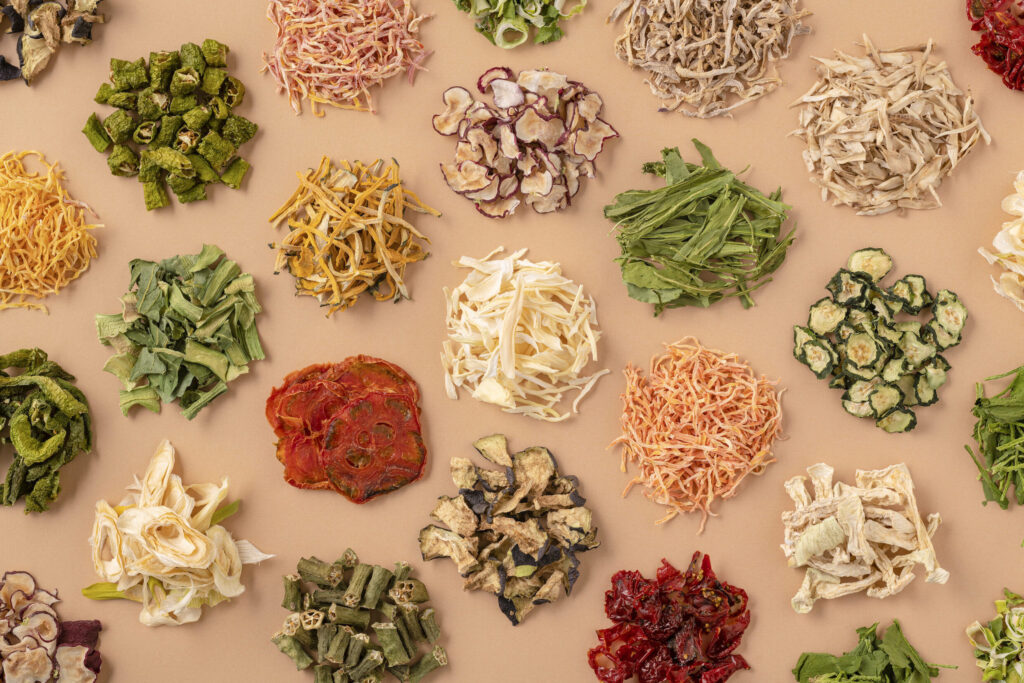
- Available for purchase in small lots from 1 kg
- We handle heirloom vegetables from across Japan
- Dried fruit and herbs also supported
Seven representative Tokushima heirloom vegetables: characteristics and how to eat them
The main text explains 7 representatives individually, with the remaining Kitagawa koban-imo introduced in the list table above.
Naruto renkon — the white lotus root prized even at Kyoto's high-end restaurants
| Season | Late autumn–winter (new renkon June–July) |
| Growing region | Otsu, Naruto |
| Well-suited dishes | Simmered dishes, sunomono, kinpira, renkon manju |
Naruto renkon is a white lotus root grown in Otsu, Naruto city, and according to the Japan Heirloom Vegetable Promotion Association's records it is an item used even at Kyoto's high-end restaurants. As a lotus-root-producing area representing Tokushima, its harvest is centered on late autumn to winter, with new renkon shipped ahead in June–July.
In vinegared dishes its whiteness stands out, and in simmered dishes, kinpira, and renkon manju its texture can be enjoyed. It is also available as a Naruto-city hometown-tax gift and by mail order.
Hisui nasu — the pale-green-skinned eggplant of Awa city
| Season | June–August (peak mid-July) |
| Growing region | Awa |
| Well-suited dishes | Dengaku, grilled eggplant, agebitashi, stir-fries |
Hisui nasu is a pale-green-skinned eggplant grown in Awa city, notable for its green appearance, true to the name "hisui" (jade). With little harshness or bitterness, it takes on a melting texture when cooked. It is distributed under the product name "Bi-Nasu" and certified as a Tokushima Prefecture "Tokushima Premium Brand" (Japan Heirloom Vegetable Promotion Association).
In dengaku, grilled eggplant, and agebitashi, the pale-green skin and soft flesh come alive. Its season is June–August (peak in mid-July), and it is available at farm stands in Awa city.
Awa midori — the white uri of the lower Yoshino River
| Season | June–September |
| Growing region | Ishii, Myozai District; Aizumi and Itano, Itano District |
| Well-suited dishes | Sake-lees pickles, Nara-zuke-style pickles, light pickles, simmered dishes |
Awa midori is a white uri about 8 cm in diameter and about 30 cm long, notable for its pale-green skin. Grown in the lower Yoshino River plains, it has been carried on as a raw material for sake-lees pickles and light pickles.
Preserved as sake-lees pickles, it is used as a summer-to-autumn preserved food. It is a variety whose high moisture content also comes alive in simmered and lightly pickled dishes.
Awa okute daikon — the 50-cm-long white daikon of the lower Yoshino River
| Season | Mid-December |
| Growing region | The lower Yoshino River plains |
| Well-suited dishes | Simmered dishes, grated, pickles, oden |
Awa okute daikon is an heirloom daikon grown in the lower Yoshino River area, notable for a length of about 50 cm and a pure-white appearance. Because it is a late-maturing variety, it is shipped toward winter and is suited to simmered dishes, oden, and grated preparations.
Mid-December is its season, and it is distributed near Tokushima city and Yoshinogawa city.
Genpei-imo — the small egg-sized potato of Iya
| Season | September–March |
| Growing region | Higashi-Iya and Nishi-Iya-Yamamura, Miyoshi; Tsurugi town |
| Well-suited dishes | Simmered dishes, dengaku, deep-fried, nikkorogashi |
Genpei-imo is an heirloom small potato grown in the Higashi-Iya and Nishi-Iya-Yamamura areas of Miyoshi city and in Tsurugi town, notable for its egg size, rich flavor, and flesh that resists falling apart when simmered. A variety handed down in the mountainous areas of the Iya valley and the foot of Mt. Tsurugi, it is used in local cuisine.
Its small size comes alive in simmered dishes, dengaku, and nikkorogashi, and deep-fried the firmness of its flesh can be enjoyed. It is distributed for a long period from its September season through the following March at farm stands in the Iya area.
Nakauchi kyuri — the white-and-green two-type cucumber of Kito, Naka town
| Season | Late July–mid-August |
| Growing region | Taira, Kito-Kitagawa, Naka town, Naka District |
| Well-suited dishes | Vinegared dishes, salad, light pickles, stir-fries |
Nakauchi kyuri is an heirloom cucumber grown in Taira, Kito-Kitagawa, Naka town, notable for skin that divides into two types, white-lineage and green-lineage, turning orange when fully ripe. The cool climate of the mountainous area and saved-seed cultivation have maintained this distinctive variety.
In vinegared dishes and salad you can enjoy the contrast of the skin colors, and the fully ripe fruit can also be used in stir-fries. Its season is the short period from late July to mid-August, and it is available at farm stands in Naka town.
Mima futo-kyuri — the 500–800 g thick cucumber of Wakimachi
| Season | Early July–November |
| Growing region | Wakimachi, Mima |
| Well-suited dishes | Simmered dishes, pickles, vinegared dishes, winter-melon-style simmered dishes |
Mima futo-kyuri is a thick, round cucumber of 500–800 g grown in Wakimachi, Mima city, with thick skin and developed seeds. Weighing 5–8 times a normal cucumber (about 100 g), dishes that use the flesh like winter melon are established in the region.
With the skin and seeds removed and simmered, it takes on a soft texture like winter melon, and in pickles and vinegared dishes it offers a firm bite. It is shipped over a long period from early July to November at farm stands in Mima city.
How to buy Tokushima's heirloom vegetables and tips for storing them
| Item | Main sources | Timing |
|---|---|---|
| Naruto renkon | JA farm stands in Naruto city, hometown-tax gifts, nationwide mail order | Late autumn–winter; June–July (new) |
| Hisui nasu | Farm stands in Awa city | June–August (peak mid-July) |
| Awa midori | JA farm stands in Ishii, Aizumi, and Itano; processed goods year-round | June–September |
| Awa okute daikon | Farm stands in Tokushima city and Yoshinogawa city | Mid-December |
| Genpei-imo | Farm stands in the Iya area and Tsurugi town | September–March |
| Nakauchi kyuri | Farm stands in Naka town | Late July–mid-August |
| Mima futo-kyuri | Farm stands in Mima city | Early July–November |
A product catalog that shows around 100 items we handle
Agriture, flexibly handling everything from small lots to large lots
- Available for purchase in small lots from 1 kg
- We handle heirloom vegetables from across Japan
- Dried fruit and herbs also supported
FOR BUSINESS
乾燥野菜を業務用でお探しですか
国産の野菜・果物を乾燥し、必要に応じて粉砕してお出ししています。扱っている品目は100種前後で、規格は 乾燥品の一覧・パウダーの一覧 に掲載しています。
少量でのご購入は、姉妹ブランドの通販サイト OYAOYA で承っています。
FAQ
Other regional specialty varieties
| Item | Category | Growing region | Features |
|---|---|---|---|
| Jerusalem artichoke | Root vegetable (leaning toward superfood) | Wakimachi, Mima | It is known for its nutritional characteristics. In season around late November |
| Kuo chorogi | Tuber (Lamiaceae) | Kuo, Kaiyo town, Kaifu District | A 1–3 cm spiral-shell-shaped tuber. Plum-vinegar-pickled as a touch of color in New Year's dishes. November–December |
| Yamabuki Ikeda umaba | Wild vegetable (butterbur) | Ikedacho, Miyoshi | Small, with strong aroma and bite. March–early summer |
| Sudachi | Citrus (heirloom fruit tree) | Tokushima city, Kamiyama town, Sanagochi village, Anan city, and elsewhere | About golf-ball sized. Tokushima-grown accounts for the vast majority of the national share. Greenhouse type March–August, open-field type August–October |
| Yuko | Citrus (heirloom fruit tree) | Kamikatsu town and elsewhere (mainly Tokushima's mountainous areas; also grown on the Kochi side) | An acidic citrus said to be a natural cross of yuzu and daidai. Little of it is distributed, earning it the name "phantom fruit." Late October–late November |
Summary
Tokushima's heirloom vegetables number 13 items in total as organized by the Japan Heirloom Vegetable Promotion Association — 11 vegetables plus 2 heirloom fruit trees. Naruto renkon, hisui nasu, Awa midori, Awa okute daikon, Genpei-imo, Nakauchi kyuri, and Mima futo-kyuri are the representative vegetables, and the items divide by terrain, from the lower Yoshino River plains to the mountainous areas of Iya and Mt. Tsurugi.
Hisui nasu, Awa midori, Mima futo-kyuri, and Nakauchi kyuri in summer; Naruto renkon, Awa okute daikon, Genpei-imo, and Kitagawa koban-imo in autumn and winter — Awa's heirloom varieties are distributed by season. Through hometown-tax gifts and farm stands, you can enjoy Tokushima's ingredients on the family table.
References / information sources
- Japan Heirloom Vegetable Promotion Association, "Tokushima Prefecture"
- National Agriculture and Food Research Organization Genebank "Native Variety Database"
Related articles
- Heirloom vegetables of Japan
- Heirloom vegetables of Hyogo
- Heirloom vegetables of Okayama
- Heirloom vegetables of Hiroshima
- Yamaguchi's Heirloom Vegetables
Download the product catalog
We will send the materials to your email address based on the information you provide.
- What are Yamaguchi’s heirloom vegetables? Features, season, and ways to eat the 37 varieties organized by the association (Iwakuni lotus root, Hagi tamage eggplant, Iwakuni red daikon) explained
- What are Kagawa’s heirloom vegetables? Features, season, and ways to eat the 12 items organized by the association (kintoki carrot, Mitoyo eggplant, manba) explained
Author of this article
Related articles
-
 Okinawa island vegetables: individualistic vegetables nurtured by a subtropical climate
 -
 Kaga vegetables: Kanazawa brand vegetables where tradition lives on
 -
 The appeal of Kansai heirloom vegetables | Specialties of Naniwa, Kyoto, and Yamato thoroughly explained
 -
 Kyoto heirloom vegetables: Kyoto specialties with a long history
 -
 A list of heirloom vegetables of the 8 prefectures of Kyushu and Okinawa|A thorough introduction to characteristics, growing regions, and seasons
 -
 Know the heirloom vegetables of Edo Tokyo | The city’s vanishing food culture
 -
 They'll make you smile! The fun names of heirloom vegetables and their origins
 -
 5 cases and strategies that succeeded in branding heirloom vegetables